Sign up

You deserve to feel great, look great & LOVE your body

Enter your email for your FREE starter kit to get healthy & lose weight without dieting:

  • This field is for validation purposes and should be left unchanged.

For the Love of Food

by | May 31, 2013
For The Love of Food

For The Love of Food

Welcome to Friday’s For The Love of Food, Summer Tomato’s weekly link roundup.

This week a cardiologist calls Foodist “groundbreaking,” why our veggies are less nutritious than they used to be, and debunking the blood type diet.

Want to see all my favorite links? (There’s lots more). Be sure to follow me on on Delicious. I also share links on Twitter @summertomato,  Google+ and the Summer Tomato Facebook page. I’m very active on all these sites and would love to connect with you. (And yes, I took that pepper heart pic myself).

Read the rest of this story »

Tags: , , , , , , , , , , , , , , ,

Is Organic Food Really The Same As Conventional?

by | Sep 5, 2012

Organic Golden Beets

On Monday a study from scientists at Stanford made headlines by concluding that there isn’t much health value in choosing organic food over conventional food. The headline didn’t surprise me in the least, I’ve seen similar ones at least a dozen times before, but there is still so much confusion among the general public around this topic that it’s worth revisiting in the wake of this new data.

Despite what organic zealots are telling you, this wasn’t a bad study. It was a meta-analysis that examined a number of relevant health measures comparing organic versus conventionally grown foods over the last several decades. They excluded processed foods from their analysis (this is a good thing), and looked at nutrient levels as well as pesticide contamination and antibiotic resistance in both produce and animal products. They were also careful about which organic standards were included in the study. Though the analysis has plenty of limitations (all meta-analyses do), their statistics were sound and the researchers were honest about their findings. What’s really annoying is how their results were interpreted by the media.

One problem is that the word “organic” is a huge umbrella that includes sustainable, biodynamic farming practices as well as huge-scale industrial operations that barely squeeze under the “certified organic” labeling standards. As a result there is a tremendous amount of heterogeneity (a scientific word for a wide range of differences) between the organic foods being tested, as well as the types of studies that are performed. As a result, it is difficult to measure consistent differences (aka statistical significance) between organic and conventional foods in this kind of study. Unfortunately, this doesn’t do much to further our understanding of how growing practices affect health.

The huge variance among farming practices that fit under the organic umbrella is not trivial. By far the largest segment of organic products on the market could be considered industrial organic, and the farms are closer to traditional industrial farms than most of us realize. Large organic farms are typically monoculture fields just like large conventional farms, though more crop rotation is required. Industrial organic poultry and beef farms also look oddly similar to conventional industrial feedlots, even if the animals are eating organic feed. In fact, both organic and conventional industrial farms are often owned by the same mega-corporations, and share the same bottom line of profit. There’s no reason to suspect that these industrial organic foods would be markedly more nutritious than conventionally grown foods.

In contrast, smaller biodynamic farms have extensive practices designed to build soil, improve robustness of crops and ensure bio and nutrient diversity. Instead of monocultures, these farms grow huge arrays of different vegetables and fruits. If a biodynamic farm raises animals they are given their natural, preferred diet of grass (for cows) or bugs and seeds (for birds). The animals are treated well and fed well, and are healthier as a result. If you want to learn more about the differences between conventional agriculture, big organic agriculture and biodynamic farming I highly recommend Michael Pollan’s excellent book, The Omnivore’s Dilemma, and Joel Salatin’s latest book, Folks, This Ain’t Normal.

Interestingly, despite the wide range in the quality of foods that qualify as organic, the Stanford study did find some significant differences. Organic produce contained significantly more phenols, the cancer fighting chemicals found in red wine, green tea, chocolate and many fruits and vegetables. However, this finding was glossed over in favor of the non-significant differences found between vitamin C, betacarotene and vitamin E levels in organic versus conventional foods.

It is reasonable to hypothesize that organic agriculture (at least in some cases) would be more nutritious because the soil standards for organics are much higher than for the depleted, synthetically fertilized conventional fields. Soil quality and weather (the raw ingredients) are by far the biggest factors in the nutrient levels of produce, with freshness and storage methods being next in line. Indeed, organic agriculture typically has more minerals and the Stanford team confirmed they contain significantly more phosphorus. But there is so much variety among plants, and from season to season, that you shouldn’t necessarily expect large, consistent differences in the levels of common vitamins like C and E from genetically identical plants.

That the Stanford team found measurable differences in total phenol content is pretty impressive. There are dozens of phenolic compounds that could benefit health in different and subtle ways. Nutrition science still can’t explain the benefits of all these nutrients, but having more of them certainly seems like a good thing.

Still lack of pesticides, not better nutrition, is the most commonly cited reason for buying organic over conventional foods. Pesticides are designed to kill things, and have been shown repeatedly to be dangerous for farm workers and other wildlife. They also accumulate more in the bodies of people who eat conventional produce compared to those who eat organic, and susceptible populations such as children, pregnant and nursing women, and the elderly are at particular risk. The Stanford study confirms organic agriculture has substantially fewer pesticide contaminations, but for some reason this finding was also glossed over since the conventional produce levels “didn’t exceed maximum allowed limits.” Logically, however, if limiting pesticide exposure is important to you (as it should be) organic produce is the better option.

The animal studies were even more encouraging. Small but significant improvements in fatty acid profiles were found for organic milk and chickens, which contained more healthy omega-3 fatty acids. More importantly, antibiotic resistant bacteria, the kind that are becoming more common (and deadly) in our own hospitals, were 33% more likely to be found on conventional meat products than on organic meat. Antibiotic resistant bacteria being created on industrial farms is one of the scariest threats to human health in modern history, and any measures that limit their proliferation should be seriously considered.

From this study it seems reasonable to conclude that organics, even industrial organics, are superior to conventional foods in some ways. Organic farms cannot use synthetic fertilizers or pesticides, sewage sludge (yes, human sewage is used on conventional food), irradiation or genetically modified organisms (GMOs), and must help maintain or improve soil quality. These practices are much better for the environment, significantly limit the amount of pesticides you are exposed to, reduce the proliferation of dangerous pathogens and may be more nutritious.

Organic agriculture certainly sounds like it has some advantages over conventional ag to me.

Do you buy organic? Why?

Tags: , , , , , , , , , , ,

Book Review: Folks, This Ain’t Normal

by | Dec 19, 2011

Joel Salatin is one of the most interesting people I have ever met. Self-described as a “Christian-libertarian-environmentalist-capitalist-lunatic-farmer,” you’re probably more familiar with him as the “beyond organic” owner of Polyface Farm featured in Michael Pollan’s landmark book The Omnivore’s Dilemma and the documentary Food, Inc. (note: if you haven’t read/watched those do so immediately).

I sat down with Joel recently to talk about his latest book, Folks, This Ain’t Normal. On the outside, Joel does not appear abnormal in the least. He was well dressed, well spoken, extremely polite and fiercely intelligent—a gentleman in every way. But once you get him talking you quickly see that his ideas make him an anomaly in modern society, not because they are far-fetched, but because they come from so many different sides of the political and societal spectrums. People are rarely this thoughtful and well-rounded, and after finishing the book this is the point I keep coming back to.

You are almost certain to disagree with some of Joel’s ideas. Folks, This Ain’t Normal runs the gamut in controversial topics. He touches on politics, religion, the environment (including global warming), sustainable agriculture, big business, peak oil, taxes, protectionism, meat eating, government regulation, women’s role in farming (he told me to my face he’s “sexist”) and likely a few more subjects that will get your blood boiling. But this is not your usual liberal-conservative political banter.

Joel is a thinker, and just a few pages into the book it is clear that he has a more intimate understanding of these topics than most experts and advocates could even dream of. Folks, This Ain’t Normal is by far the best ecology lesson I’ve ever had, and I try to be a responsible person and keep up on sustainable food issues. While most people discuss this subject academically, Joel actually knows how an ecosystem works, because he works with one every day back at Polyface Farm. For example, despite the cries of some environmentalists to do away with cows and replace them with tofu (aka soy beans), Joel explains in detail why a tillage-based crop like soy depletes soil, while a grass-based system of herbivore feeding builds and protects soil, and is necessary for environmental sustainability.

Food politics is another topic where Joel’s position runs flatly against conventional wisdom. Most of us in the food movement agree that Monsanto is the devil, and Joel is no different. But while most foodists lean liberal and think more regulation is the answer, Joel explains why those very regulations are what protect the big companies and put small farms like his out of business (exactly what Monsanto wants). So contrary to what you might guess, his position on this topic is strictly laissez faire.

As mentioned above, there’s almost certainly something that Joel writes that will offend you. (Yes, he takes more than a few shots at urban farmers market goers with award winning poodles—Joel, in my defense I at least use my fancy kitchen and make my own sauerkraut). But I’ll argue that this is precisely why you should read the book. When crafted by a thoughtful, intelligent person, opposing viewpoints are among the most valuable thing in a thinking person’s arsenal. Even if he doesn’t convince you to change your opinion, at least it forces you to question your beliefs, think a little harder and refine your position. There are no worthwhile topics that don’t have valuable insights from both sides of the fence. Thinking is good for you, and it is something that is sadly laking in our current political environment.

In this spirit, the types of people who would certainly benefit from reading Folks, This Ain’t Normal include: vegetarians, carnivores, environmentalists, McDonald’s patrons, farmers market shoppers, Chipotle patrons, Tea Partiers, liberals, Christians, scientists, atheists, politicians, big farmers, small farmers, city folks, country folks, the 99% and the 1%. In short, everyone who eats.

What Joel wants us to understand is that it isn’t him who is historically abnormal. What’s not normal is having no idea where food and water come from, nor how to keep them healthy and safe. In other words, it is the rest of us who have lost the basic life skills necessary for survival. This, he argues, is what isn’t normal.

Grade: A

Note: The audio version of the book is particularly wonderful, since Joel reads it himself.

What’s your normal?


Tags: , , , , , , ,

For The Love Of Food

by | Sep 16, 2011

For The Love of Food

Welcome to Friday’s For The Love of Food, Summer Tomato’s weekly link roundup.

Great reading this week, including an excellent piece by Michael Pollan about an unlikely ally in the political food fight, as well as Harvard’s answer to the USDA My Plate and a new website to help you find farm fresh produce in your area.

Want to see all my favorite links? Be sure to follow me on on Digg. I also share links on Twitter (@summertomato) and the Summer Tomato Facebook fan page. I’m very active on all these sites and would love to connect with you.

Links of the week

Tags: , , , , , , , , ,

For The Love Of Food

by | Oct 8, 2010

For The Love of Food

Welcome to Friday’s For The Love of Food, Summer Tomato’s weekly link roundup.

Michael Pollan thinks food community is essential, organic eggs aren’t all they’re cracked up to be and UCSF scientists help the military figure out what’s killing bees. I also found a cool mythbuster about the best way to clean your produce.

I read many more wonderful articles than I post here each week. If you’d like to see more or just don’t want to wait until Friday, be sure to follow me on Twitter (@summertomato) or the Summer Tomato Facebook fan page. For a complete reading list join me on Digg. I’m very active on all these sites and would love to connect with you.

Links of the week

What inspired you this week?

Tags: , , , , , , , ,

For The Love Of Food

by | Aug 6, 2010

For The Love of Food

Welcome to Friday’s For The Love of Food, Summer Tomato’s weekly link roundup.

New evidence that the Atkins diet may be depriving people of nutrients? You bet! There were also a few interesting articles this week about food ideology and the antagonistic tone that frequently comes up in discussions about health, food safety and politics. And Francis Lam’s greatest tomato pasta on earth article totally blew my mind (in a good way).

I read many more wonderful articles than I post here each week. If you’d like to see more or just don’t want to wait until Friday, be sure to follow me on Twitter (@summertomato) or the Summer Tomato Facebook fan page. For a complete reading list join me on the new Digg or StumbleUpon. I’m very active on all these sites and would love to connect with you.

Links of the week

  • Is Your Diet Depriving You of Nutrients? <<A new study suggests that Atkins dieters may be lacking in nutrients that are usually found in starchy foods. Dieters on the Zone diet (which is more balanced) fared the best, nutrient wise. (Low Carb Diets Blog)
  • Does high-fructose corn syrup cause cancer? <<Does it matter? Great analysis about how the facts are often beside the point when food and health get discussed in the media. (Salon)
  • “Can’t we all just get along” – It does not seem so. <<BS of the week. Along the same lines as the previous article, Bill Marler brings up the antagonistic tone that often comes up in public food dialogue, which is neither pleasant nor productive. And that sucks. Intelligent discussions don’t seem to be forthcoming these days. That’s why I’m so grateful for the wonderful conversations we have here at Summer Tomato. (Marler Blog)
  • A Dozen Eggs for $8? Michael Pollan Explains the Math of Buying Local <<Great interview with Michael Pollan about why Bay Area residents have embraced his eating philosophy. (Wall Street Journal)
  • Chili Peppers May Come With Blood Pressure Benefits <<Cartoons with red faces and exploding heads may give you the wrong idea. It appears chili peppers actually lower blood pressure in the long term. (ScienceDaily)
  • Is MSG Unhealthy? <<People sometimes ask why I don’t talk about MSG more on this blog. The truth is that the data doesn’t condemn it as much as people seem to believe. I don’t reject any food without strong science to back it up. Dr. Weil concurs. (Dr. Weil’s blog)
  • For blood pressure, can you be fit but fat? <<New research suggests body weight is a risk factor for high blood pressure independent of physical fitness levels. Best to keep both under control. (Medline)
  • Why did Whole Foods tart up my organic peanut butter? <<I agree with Tom Philpott on this one, but I still think it’s funny to get so riled up over “peanut butter.” (Grist)
  • Chioggia beets and farro salad <<Psssst. I shared one of my favorite recipe outlines over at my personal blog this week. It is super easy, and there are a zillion possible variations you can do. Beets not required. (daryapino)
  • The greatest five-minute tomato pasta on earth <<I almost choked to death when I read this, because Francis Lam had almost the exact same tomato experience I had. Then he turned it into a recipe. (Salon)

What inspired you this week?

Tags: , , , , , , , , , , , , ,

For The Love Of Food

by | May 28, 2010

For The Love of Food

Welcome to Friday’s For The Love of Food, Summer Tomato’s weekly link roundup.

I’m thrilled to announce this week the launch of an amazing project. 55 Knives is a new e-book just launched by my friend Nick at the wonderful Macheesmo blog. The 55 Knives project is a joint effort of 55 top food bloggers offering personal stories paired with hand-selected recipes. I contributed a chapter, as did many of my favorite food bloggers including Local Lemons, The Bitten Word and Chez Us. I’ve read through it and highly recommend it. 55 Knives is offered at a discounted price of $14 until next Thursday.

If you read one food article this week, make it Michael Pollan’s new piece in the New York Review of Books. I also really enjoyed the article about how health food labels are complete BS.

I read many more wonderful articles than I post here each week. If you’d like to see more or just don’t want to wait until Friday, be sure to follow me on Twitter (@summertomato) or the Summer Tomato Facebook fan page. For complete reading lists join me on the social bookmarking sites StumbleUpon and Delicious. I’m very active on all these sites and would love to connect with you there. (Note: If you want a follow back on Twitter introduce yourself with an @ message).

Links of the week

What inspired you this week?

Tags: , , , , , , , , ,

For The Love of Food

by | Feb 5, 2010
For The Love of Food

For The Love of Food

Welcome to Friday’s For The Love of Food, Summer Tomato’s weekly link roundup.

Diets are dying, the faulty vaccine-autism paper was retracted and yet another study shows low-fat diets are bad for heart disease. Could this week get any better?

And in case you missed it, definitely check out the video of Michael Pollan’s talk at the Ferry Building in San Francisco.

I read many more wonderful articles than I post here each week. If you’d like to see more or just don’t want to wait until Friday, be sure to follow me on Twitter (@summertomato) or the Summer Tomato Facebook fan page. For complete reading lists join me on the social bookmarking sites StumbleUpon and Delicious. I’m very active on all these sites and would love to connect with you there. (Note: If you want a follow back on Twitter introduce yourself with an @ message).

Links of the Week

http://fora.tv/embedded_player

What inspired you this week?

Tags: , , , , , , , , , , ,

Last Minute Foodie Gift Ideas

by | Dec 14, 2009
Photo by danesparza

Photo by danesparza

Sometimes the stars just do not align for getting your holiday shopping done early. I know I haven’t started mine yet. But there are still plenty of easy-to-find, yet super valuable gifts out there for your favorite foodies.

Personally I try to avoid giving gifts that require guessing someone else’s taste or style. Instead I rely on things that are either super useful, completely novel or just ridiculously cool.

At this stage of the game your best bets are things you can order online and have delivered in the next week, gift subscriptions, or books that you can find just about everywhere.

Here are some of the coolest tricks I have up my sleeve for 2009.

Last Minute Gift Ideas That Aren’t Lame

1. Artisan foods from FoodzieFoodzie_Facebook_Logo
Decadent food is one of the easiest ways to make someone happy. But Summer Tomato readers know that I do not take my indulgences lightly. If I’m going to eat something that isn’t healthy, I want it to be beyond awesome–the healthy food I eat is just too delicious to bother with anything less.

That’s why Foodzie is so cool. If you don’t live in San Francisco, New York or LA, finding high-end artisanal foods can be a challenge. But now thanks to Foodzie, anyone can have Bacon Jam or Single Malt Scotch Bars delivered to your doorstep. Just be sure to order in the next day or 2 or your orders won’t make it before Christmas without extra shipping costs.

2. The Omnivore’s Dilemma, by Michael Pollan[amazon-product align=”right” bordercolor=”#ffffff”]0143038583&fc1[/amazon-product]

As you might imagine, I’ve read A LOT about nutrition and have tried almost every diet myself. One of the most profound lessons I’ve learned in this research is that while the content of your diet is certainly important, how you think about and approach food is one of the most influential factors in your long-term health and happiness.

By far the best book I’ve read on food philosophy is Michael Pollan’s landmark work The Omnivore’s Dilemma. This book is remarkably well-written, meticulously researched and an overall pleasure to read. It is also the perfect gift for the curious yet unconvinced soon-to-be healthy eater.

If you are still looking for more, check out his practical guide for following these principles, In Defense of Food.

3. How To Cook Everything, by Mark Bittman[amazon-product align=”right” bordercolor=”#ffffff”]0764578650&fc1[/amazon-product]

For someone who has decided to start cooking but doesn’t know where to begin, this book has everything you need to know. Mark Bittman is the brilliant author of the New York Times food column, The Minimalist, that includes fantastic 2-3 minute cooking videos also available as a podcast.

Bittman demystifies the kitchen by explaining basic cooking concepts and fundamentals in this classic cookbook. There is even a vegetarian version for those who aren’t interested in the perfect roasted chicken.

4. Splendid Soups, by James Peterson[amazon-product align=”right” bordercolor=”#ffffff”]0471391360&fc1[/amazon-product]

The only other cookbook I consider indispensable is Splendid Soups, by James Peterson. Soup is pretty close to perfect food, especially during these cold, stormy winter months. Soup is also perfect for dinner parties and potlucks, since it stays warm all night and doesn’t require a set “dinner time.”

I recently re-ordered this cookbook for myself (my last copy actually belonged to a former housemate) even though I have most of my favorite recipes memorized. I’ve benefited so tremendously from this book, I just feel better if it is always in my kitchen.

5. Cuisinart Hand Blender[amazon-product align=”right” bordercolor=”#ffffff”]B0006G3JRO&fc[/amazon-product]

This makes a great bundle gift with Splendid Soups, since a purée is often the last step in soup-making magic. Though it is possible to make a wonderful soup in a regular blender or food processor, it is exponentially easier if you have an immersion hand blender. You can also use an immersion blender for smoothies and other blended foods, like hummus.

The Cuisinart hand blender is especially awesome because it comes with attachments that transform it into either an electric beater or a mini chopping food processor as well.

For $50 this is some of the best value you can get out of a kitchen gadget.

6. Fagor Pressure cooker[amazon-product align=”right” bordercolor=”#ffffff”]B00023D9RG&fc1[/amazon-product]

My pressure cooker is the one special piece of cooking equipment that I cannot live without. The reason is that the first time I tasted beans made from scratch I knew I could never go back to canned. But beans are such an essential part of my healthstyle that the 1-4 hr cook time is a bit too inconvenient to be practical for real life.

Enter the pressure cooker. A pressure cooker cuts bean cooking time down to under half hour. It’s also great for grains and a ton of other foods. Fagor is the only brand I recommend bothering with. You don’t want to mess around with high-pressure cooking unless you are sure about your gear.

7. Audible membership

I rave about Audible every chance I get. If you’ve never heard of it, think Netflix but for audiobooks. While a monthly audiobook subscription isn’t for everyone, for those of us with commutes or jobs with extensive manual/technical (aka mindless) work, Audible is a godsend.

Though audio is still not my favorite way to “read,” it is perfect for those books in which I only have a passing curiosity. If I find a book I love (which happens often), I will buy a hard copy as well. Sometimes I listen to a book more than once. Rarely am I disinclined to finish one.

Audible is a great way to finally read all those food and health books you’ve been meaning to get to.

Have I mentioned I love Audible?

8. Zagat subscriptionzagat_twitter_bigger

Yelp is great if you want to find the best tailor near your house or need a place to get your pets groomed, but I never use Yelp for restaurant recommendations. There are very few people I trust in food taste, and in my experience Yelp reviews reflect the typical American appetite for cheap, big and cheesy. Thanks, but I’ll pass.

When I’m curious about the best Korean food in SF or if I’m traveling to a city I’m not familiar with Zagat is where I turn. I never hesitate to renew my subscription and recommend it to anyone looking for reviews by people who actually know what they’re talking about.

9. Bialetti stovetop espresso maker[amazon-product align=”right” bordercolor=”#ffffff”]B0001WYDP0&fc1[/amazon-product]

I’m something of a coffee purist, and of all the home brew methods I’ve tried (most of them) the Bialetti stovetop espresso maker is my favorite. It’s relatively inexpensive and has the added charm of being a little old-school.

This is how everyone makes coffee at home in Italy.

10. CSA membership

Busy people have trouble finding the time to buy fresh fruits and vegetables every week. CSA, or Community Supported Agriculture brings fresh, seasonal produce to you. The idea behind a CSA is that you subscribe to a farm or collection of farms and pay a certain set price (varies by farm) for a box of their goods. For your fee you are provided with a week or two worth of fruits and vegetables of the season.

Buying someone a subscription to a CSA is a great way to encourage healthy eating and support local farmers. All CSAs are a little different, so you need to find ones in your area and contact them to work out the details. Most deliver to your house or a nearby pick up point and allow some filtering for your particular food preferences.

There are also meat and dairy CSAs, which you will become more interested in after reading The Omnivore’s Dilemma.

Visit Local Harvest to find CSAs in your area.

Good luck with your shopping and happy holidays!

Tags: , , , , , , , , , , , , , , ,

Orthorexia, Bacon Worship And The Power of Food Culture

by | Nov 2, 2009
By lepiaf.geo

By lepiaf.geo

Is it possible for healthy eating to become an unhealthy obsession?

Absolutely.

Orthorexia is a word turning up frequently in the media to describe an excessive focus on healthy eating and dietary restriction. Though the term is not yet an official psychological diagnosis according to the DSM-IV, it is being used by some clinicians to describe patients with eating disorders that resemble obsessive compulsive.

Paradoxically, orthorexics obsessed with health are not healthy and often shun food to the point of emaciation and starvation. But unlike patients with anorexia nervosa, the goal of orthorexics is not to be thin but to be “pure, healthy and natural,” according to Dr. Steven Bratman who first described the disorder in 1997. Suffers are frequently associated with a particular eating regimen such as veganism or rawfoodism.

That orthorexia has only recently been identified and characterized may be the best argument yet for Michael Pollan’s assertion in The Omnivore’s Dilemma that over the past several decades America has undergone “a national eating disorder.” Americans spend tens of billions of dollars per year on weight loss and fitness products, with only growing obesity and chronic diseases to show for it. We’ve shunned fats, sugars, starches and everything in between, and embraced each new diet trend with open arms and wallets. And perhaps not surprisingly, it appears some people are now taking it too far.

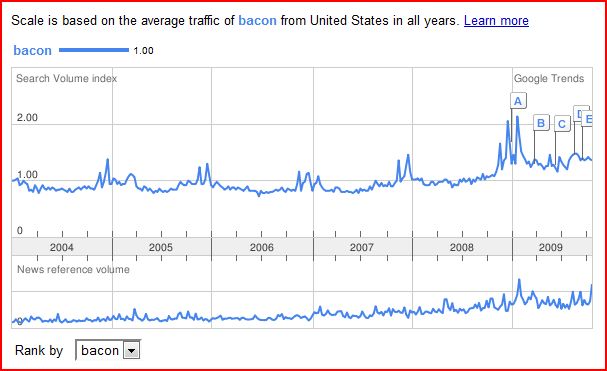
The irony is that as a condition like orthorexia has emerged as clinically relevant, we’ve also seen a notable health food backlash. Google searches for the word “bacon” have increased significantly in the past year, and books are being written from websites like This Is Why You’re Fat.

Google Bacon 2004-2009

Google Bacon 2004-2009

In other words, we have serious issues with food.

But why?

It is easy to be sympathetic toward all of these behaviors, even if their extreme forms make us a bit uneasy. For those interested in living healthy and being thin (the chronic dieters), the only guidance is offered by thousands of diet books and companies like Weight Watchers. Each of these systems has its own strict guidelines for success, while unfortunately few (if any) of them encourage us to behave in a way that we would naturally. Thus the dirty little secret of the diet industry is that the vast majority of them are ineffective for long-term weight loss.

This is why we now have a congregation of bacon worshipers. A growing segment of the population is tired of bland food and unsatisfying, ineffective diets. Bacon tastes good, and since we are all clearly dying of heart attacks anyway we may as well live it up. Right?

Even if this attitude is a bit fatalistic, at its core it reflects a desire to enjoy life. And anyone who counts themselves among the human race should acknowledge this as a sentiment that deserves respect.

But striking the perfect balance between health and gluttony is extremely difficult in a food culture where we are allowed to eat in our cars and in front of our televisions. The food industry has made sure that as far as food is concerned, there are no rules. So a bit of obsession seems like a necessity for someone that still holds the desire to eat whole, unprocessed foods from the bottom of the food chain. The healthiest foods, after all, cannot be found at your neighborhood supermarket. For taste, health and the environment, the best stuff is at your local farmers market.

But avoiding the supermarket, isn’t that orthorexic?

Not necessarily. Every day we take a little extra time to do things that are necessary and important, things like sleeping, doing laundry and brushing our teeth. We go out of our way to do these things because the alternative is simply unacceptable. Eating quality food isn’t an obsession so much as a life maintenance task that–like being clean–is not up for negotiation. Until we have farmers markets on every corner, a little extra effort will be necessary.

But delicious, high-quality food is not only about health. It is also about taste, enjoyment, community and life. Food is something that is worth building your days around, because when approached from this angle food improves your quality of life in every way. Eating like this is not a disorder, it is a culture. And it is something that we desperately need to rediscover.

When proposing the term orthorexia, Bratman suggested framing a diagnosis around two direct questions:

  1. Do you care more about the virtue of what you eat than the pleasure you receive from eating it?
  2. Does your diet socially isolate you?

In other words, seeking healthy food only becomes unhealthy when it is devoid of enjoyment and social relationships.

Several weeks ago I had the privilege of attending a lecture at UC Berkeley given by Michael Pollan. Near the end of his talk Pollan proposed reestablishing food culture in America as “The Omnivore’s Solution,” the way to break our habits of both health food obsession and unbridled gluttony. He described health as “a set of relationships,” and encouraged his audience to think of food not as a product but as something we do.

Throughout history and around the globe food cultures are what have dictated when, where and how much we should eat, and countries that have worked to preserve their cultures have fared better against obesity and other diseases of civilization. For Americans though, food culture has been replaced by nutritionism and all-you-can-eat buffets.

This kind of thinking is often branded as elitist, but it shouldn’t be. Food culture does not cost money, it is a basic tenet of life that extends across class boundaries. It costs time, but this is a priority shift that is worth investing in. According to the latest Nielsen statistics, Americans are watching an average of 5 hours of television per day. Calculate in the cost of high-definition screens and monthly cable bills and your daily food investment will start to be put into perspective.

It is undeniable that food grown locally with care costs more than the subsidized, mass-produced products that fill your favorite supermarket. But despite our reputation, Americans have never been opposed to going out of our way for and spending a little extra money on food that tastes amazing and makes us happy. (If you don’t believe me I’ll redirect you once again to This Is Why You’re Fat.)

Is it such a stretch to say that we should be able to eat healthy and still enjoy our food?

I’d love to know your thoughts.

Additional Reading from Amazon:

Downloads from Audible:

Tags: , , , , , , , , ,