Sign up

You deserve to feel great, look great & LOVE your body

Enter your email for your FREE starter kit to get healthy & lose weight without dieting:

  • This field is for validation purposes and should be left unchanged.

Summer Tomato Live – Episode #2 – Darya’s Healthstyle

by | Mar 10, 2011

Thanks to all of you who participated in the latest episode of Summer Tomato Live, your questions were great and I had a blast.

The recording of the show is above, and you’ll notice quickly that I had to re-record the audio since I had some trouble during the recording. Sorry about that, I’ll get this technical stuff right eventually.

The next live show is scheduled for Wednesday, March 16, at 6:30pm PST, and the topic is Habit forming and habit breaking. The following episode will be about healthy vegetarian and vegan diets, which I’ll try to make interesting for omnivores as well.

The episode will also be available soon on iTunes.

Today’s show notes:

Sponsors:

My go-to recipes:

My tricks for cooking without pasta:

Time saving tricks:

Exercise tips & alternatives:

How to:

Recommended healthstyle gear:

Let me know if there are any other links you’d like me to include.

Tags: , , , , , , , , , , , , , , , , ,

Farmers Market Update: Indianapolis

by | Mar 6, 2011

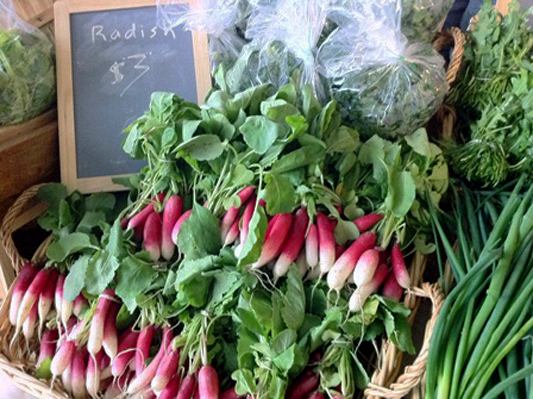
Radishes from Harvestland Farm

Radishes from Harvestland Farm

Midwest represent! I’m thrilled to have reader Chandra Flack share with us what farmers markets are like in the winter in Indiana. Who says you can’t eat well if you don’t live in CA or FL? We’re calling bollocks.

By day Chandra is a first year medical student at IU School of Medicine. By night she’s a techie, foodie, and geekgirl extraordinaire. She hopes to one day integrate her knowledge of medicine, social media, and healthy eating to focus on preventative care for her patients. Follow Chandra @chandraflack on Twitter.

Farmers Market Update: Indianapolis

by Chandra Flack

It was a brisk 32 degrees this morning as I bundled up in my winter coat to head over to the Indy Winter Farmers Market, an urban market located in the heart of downtown Indianapolis, IN.

Many of the people who live, work, and shop downtown are young 20 and 30‐something college students and beginning professionals, so the market tends to have a youthful feel to it. However, being a diverse urban environment the personality of the market’s patrons is refreshing in its variety, which is characteristic of our city.

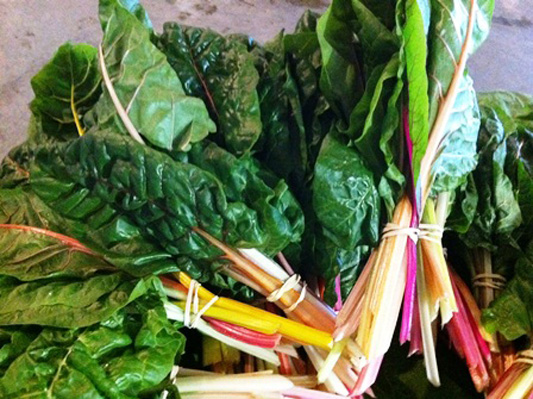
Swiss Chard (look, color!) from Good Life Farms

Swiss Chard (look, color!) from Good Life Farms

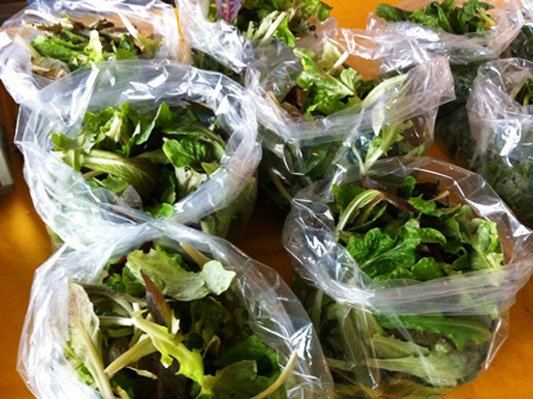
Salad greens

Salad greens

Snow is on the ground and greenery is hard to come by this time of year, unless you’re a fan of evergreens. The weather this morning is a perfect indicator of why I think the best way to enjoy a winter farmers market is to first adjust your expectations. The food simply isn’t going to be as flashy when we have to rely on tiny greenhouses and cellar stores of food harvested last fall. Don’t walk in expecting the vibrant reds and oranges and purples that you would see in the summer. Our produce comes dressed instead in subtle greens, whites, and tans.

Also, don’t necessarily expect to leave with an entire week’s worth of groceries. It will, more than likely, be necessary to supplement at the local Whole Foods or Kroger to get acceptable variety in your 5‐a‐day of fruits and veggies.

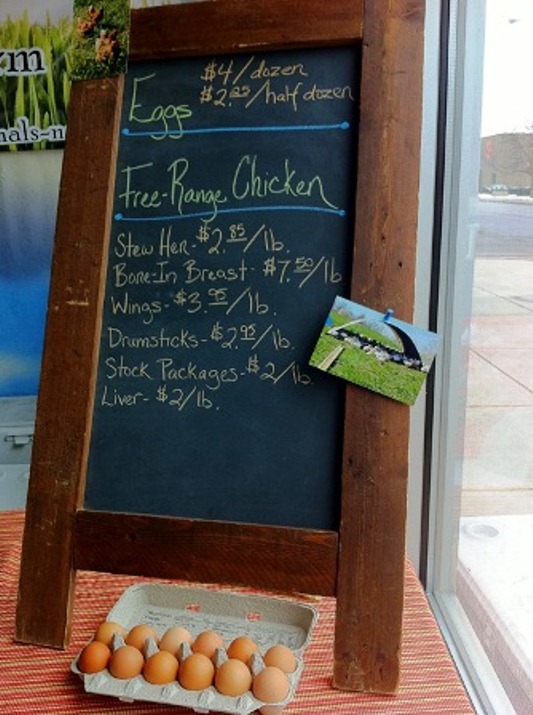
Schacht Farm

Schacht Farm

To fully enjoy the experience, its instead best to focus on what the winter market does provide — year long access to high quality meat, eggs, and milk products, as well as a more relaxed chance to form relationships with those vendors that will be selling you your long awaited strawberries, peaches, and tomatoes in the summertime.

Oh, and our market is inside so you get to enjoy climate control and as a bonus, most vendors accept credit cards.

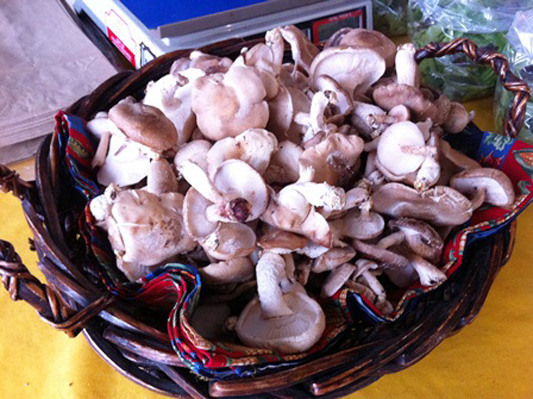
Shiitake Mushrooms and Salad Lettuce from Homestead Growers

Shiitake Mushrooms and Salad Lettuce from Homestead Growers

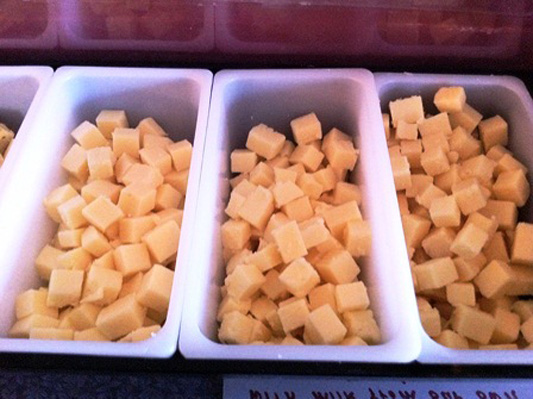
Raw Milk Cheese from Sunset Acres (Rockville, IN)

Raw Milk Cheese from Sunset Acres (Rockville, IN)

Even though it is late February and our fresh food supplies are dwindling, we do have a healthy stock of salad supplies. Thanks to greenhouses, hothouses, and hydroponics we can still enjoy arugula, radishes, basil, spinach, and many other varieties of fresh greens.

Swiss Chard (look, color!) from Good Life Farms

Swiss Chard (look, color!) from Good Life Farms

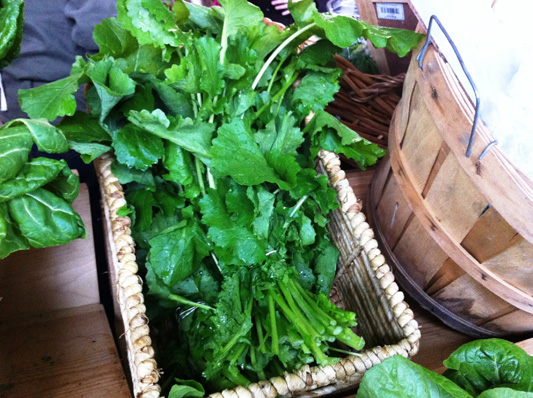
Broccoli Rabe from Harvestland Farm

Broccoli Rabe from Harvestland Farm

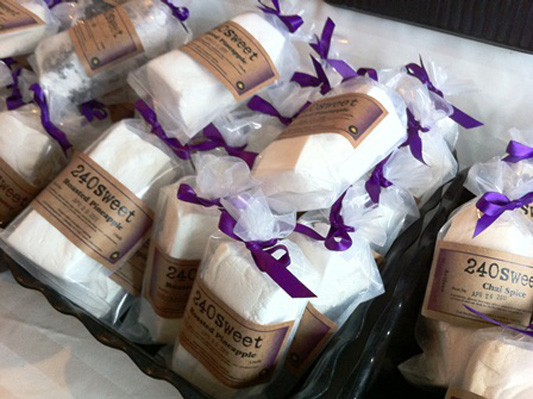
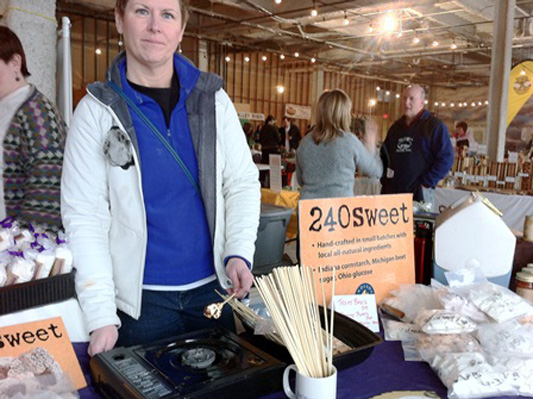
One of the more dangerous things about our farmers’ market are the artisan vendors that take over while many of our produce vendors enter hibernation for the winter. Placed conveniently near the entrance you can enjoy samples of artisan marshmallows roasted over an “open fire.” They come in all sorts of tempting flavors like roasted pineapple, chai spice, and of course, elephant ear.

Marshmallows from 240Sweet

Marshmallows from 240Sweet

Marshmallows from 240Sweet

Marshmallows from 240Sweet

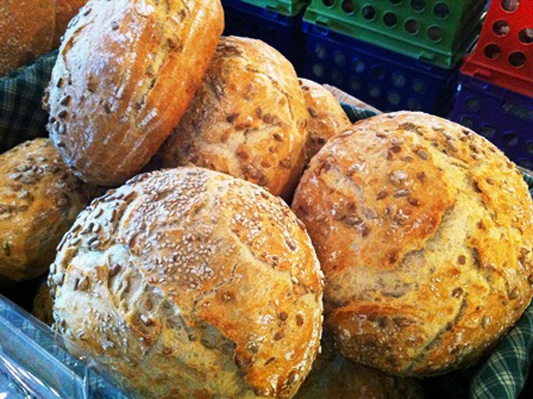
If sweets aren’t your thing there are plenty of other options. There are an unbelievable amount of baked goods, my personal favorite being freshly baked bread. After trying out a crusty baguette with baked‐inn parmesan and garlic or the flavorful, nutty sunflower bread, you’ll never be able to go back to Wonder bread.

Sunflower Bread from Brotgarden

Sunflower Bread from Brotgarden

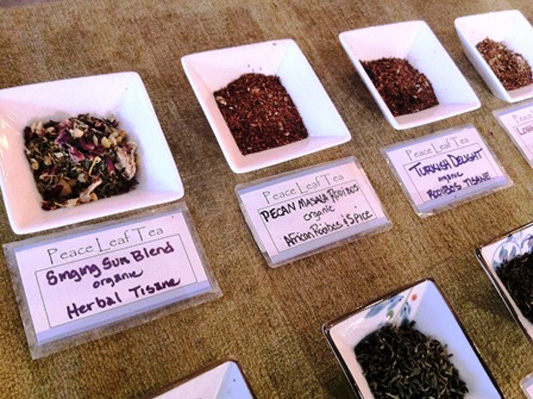
Every week I am reminded that I need to purchase the supplies to make looseleaf tea so I can try one of the many varieties that Peace Leaf Tea has available. The tea flavor is fresh and vibrant, leaving me with absolutely no desire to overly sweeten with sugar and honey. It is delicious all on its own.

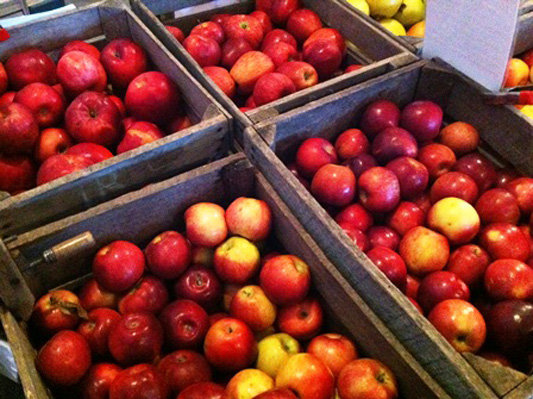
Apples at the Indy Winter Farmers Market

Apples at the Indy Winter Farmers Market

Looseleaf Tea from Peace Leaf Tea

Looseleaf Tea from Peace Leaf Tea

Indiana farmers’ markets have two main signature items. In the summertime it is corn — lots and lots of corn. In the winter, its apples. Because many orchards sell their apples on‐site during the main fall harvesting months, you’ll actually have an easier time finding apples at the farmers market later on in the winter. While slightly past their prime, they still have a crispness that is unmatched by supermarket varieties.

Ultimately, the farmers’ market (winter or summer) is a chance for me to spend time with my two most favorite things in life: people and food. Although some weeks are more plentiful than others, I enjoy knowing that I am contributing to my local economy and feeding my body food that is both delicious and healthy. I am a relative newbie when it comes to local food consumption, but I was hooked the moment I saw Darya’s first SF Farmers’ Market Update. I couldn’t wait to visit and share what we had here in the Midwest. We may not have quite as much variety as they get in sunny California, but I am still quite satisfied with our community’s effort to focus on locally produced, high quality food.

My purchases this week:

Tags: , , , , ,

For The Love Of Food

by | Mar 4, 2011

For The Love of Food

Welcome to Friday’s For The Love of Food, Summer Tomato’s weekly link roundup.

Just FYI next Tuesday March 8, at 6pm PST, I’ll be participating in a live chat hosted by Monica Reinagel, the Nutrition Diva.

I’ll be joining Monica, Ben Greenfield of BenGreenfieldFitness.com, and Gloria Tsang of Healthcastle.com to discuss the pros and cons of breakfast. I’ll be broadcasting the event here at Summer Tomato. For more info check out Nutrition Over Easy.

This week around the web people are learning to love fat again, disrupted sleep cycles can mess with your metabolism and how your thoughts can influence your habits.

I read many more wonderful articles than I post here each week. If you’d like to see more or just don’t want to wait until Friday, be sure to follow me on Twitter (@summertomato) or the Summer Tomato Facebook fan page. For a complete list of my favorite stories check out my links on Digg. I’m very active on all these sites and would love to connect with you.

Links of the week

What inspired you this week?

Tags: , , , , , , , , , , , ,

Summer Tomato Live – episode #2 – Darya’s Healthstyle & Menus

by | Mar 2, 2011

Update: Thanks to all of you who participated in episode 2 on Wednesday night. Great show! If you missed it, the recording will be available next week. In the meantime, please vote below to help choose the topic of the next two episodes of Summer Tomato Live.

______________

March 2, 2011, 4pm PST | Episode 2 of Summer Tomato Live is tonight from 6:30-7:30pm PST. Live participation is only available to subscribers of the newsletter Tomato Slice. You can sign up at any time, even during the show, and the password for participation will be emailed to you immediately.

Click here to sign up and get the password

Read this for more information on the show and newsletter

Today I’ll be discussing my personal healthstyle and menus. To watch live and join the discussion click the red “Join event” button and enter the password when prompted.

I encourage you to call in with video questions, particularly if your question is nuanced and may involve a back and forth discussion. Please use headphones to call in however, or the feedback from the show is unbearable.

The show will be recorded and release to the public next week. Show notes are below.

_______________________________________

It’s also time to pick the topic of the next shows. I want to get ahead in preparing my presentations, so please vote for 2 topics so I can plan the next 2 episodes. All these entries were sent in by subscribers.

[poll id=”9″]

Today’s show notes:

My go-to recipes:

My tricks for cooking without pasta:

Time saving tricks:

Exercise tips & alternatives:

Tags: ,

Book Review: Why We Get Fat, by Gary Taubes

by | Mar 2, 2011

I hadn’t planned on writing a formal review of Gary Taubes’ latest book, Why We Get Fat, because I already wrote an extensive review of his first book, Good Calories, Bad Calories, and the messages (and my criticisms) are basically the same. But after finishing the book I think Taubes is worth revisiting.

My biggest problem with Taubes’ first book is that it was very difficult to read, and that of course means most people won’t finish it. In Why We Get Fat Taubes repackages the data in a way that is much more logical and easy to digest. The book is substantially shorter, and is mostly free of the rants and tirades that peppered Good Calories, Bad Calories.

Instead, Why We Get Fat takes the reader through a clear and concise explanation of why all calories are not created equal, and that carbohydrates are the reason for the vast majority of the health and weight problems plaguing modern civilization. He also does a fantastic job demolishing the currently prevailing hypothesis that dietary fat and blood cholesterol are the causes of heart disease. They aren’t.

That so few people understand these points is why I recommend everyone read this book. It breaks my heart every time someone writes to me for nutrition advice and proudly points to their butter-less popcorn or baked chips as proof of their already “healthy” diet. Until it becomes common knowledge that fat is good for you and processed carbohydrates are the worst thing you can eat, I think this book is the best resource we have to explain it.

Still I do not agree 100% with Taubes’ conclusions. Though I do think the evidence is overwhelming that all calories are not created equal, I disagree that calories therefore do not matter and cannot be manipulated to help with weight loss. Taubes argues that how much we eat is dependent on our hormone levels (specifically insulin levels) that regulate energy balance, and that depending on this balance we naturally regulate our feeding and energy expenditure (exercise) so that we maintain our weight.

Taubes makes a compelling case that severe calorie restriction is counterproductive in weight management, and I agree. However there is some evidence that a small calorie deficit, on the order of 100-200 calories per day, is within the range of our natural homeostatic mechanisms and can be effective at controlling body weight.

In his book, Why We Eat More Than We Think (another must-read), Brian Wansink explores study after study where environmental cues are manipulated to get people to eat either significantly more, or significantly less than they believed. Importantly, the participants never reported any difference in satiation no matter how much they ate. Wansink argues that people can make small dietary changes resulting in a moderate 100-200 calorie per day deficit that does not affect hunger levels and can be used to effectively control weight.

Similarly, in The End of Overeating (here’s my review) Dr. David Kessler discusses how eating can become uncoupled from hunger when it is associated with external cues, making a strong case that some of us really do eat more than we need to. I think many of Kessler’s points about overeating are valid, particularly for emotional eaters. His argument is further strengthened by individual case studies of people who learn to eat less without experiencing sensations of starvation that are predicted by Taubes. One such example is Frank Bruni’s book Born Round (my review), in which he overcomes his weight struggles by moving to Italy and changing his relationship with food. Bruni is able to maintain his weight even after accepting the job of food critic at the New York Times.

These accounts conflict with Taubes’ argument that people overeat to satisfy a caloric deficit caused by a carbohydrate-induced faulty metabolism. Though there is good reason to believe Taubes’ metabolic hypothesis accounts for a large part of the health issues in today’s society, I think it is premature to conclude that this is the only force at work in why we get fat. Indeed, some research suggests learned feeding cues can directly impact insulin and metabolic pathways even in the absence of food. This data does not refute Taubes’ hypothesis, but rather makes it more complicated than he implies.

Even if we assume Taubes’ metabolic theory accounts for the majority of our health problems, insulin response (the ultimate cause of fat accumulation) should also be affected by eating rate and exercise, and vary among individuals. However Taubes handedly dismisses the possibility that any behavioral modification other than carbohydrate restriction can impact metabolic function because, he argues, we will modify our physical activity to adjust for any nutritional changes. His case is compelling, but not air tight, and my interpretation is that while carbohydrate consumption is clearly very important, there are likely other factors that may also be helpful in controlling metabolism and body weight.

In his book The 4-Hour Body (my review), Tim Ferriss describes how WordPress founder Matt Mullenweg lost 18 pounds by simply chewing each bite of food 20 times. Extra chewing or “masticating” was made popular as a weight loss technique in the late 1800s by Horace Fletcher and is explored in Gina Kolata’s book Rethinking Thin (not a particularly good read). Extended chewing and eating slowly are both effective at inducing weight loss, likely because they slow the glycemic response and almost always result in decreased meal size.

One of the most interesting points made in The 4-Hour Body was Ferriss’ personal glycemic response to a low-carbohydrate diet of just meat and vegetables. He claims that even with this meal he could easily spike his glucose to over 150 mg/dL (this is very high) by simply eating quickly, and that this effect could be controlled by slowing down and taking a full 30 minutes to finish a meal. Unfortunately I could not find a similar experiment in the scientific literature, but Ferriss’ observation suggests that behavioral modification can have a powerful impact on metabolic response independent of diet composition.

My final complaint about Why We Get Fat is that Taubes never considers that individual variation may preclude his theory from applying to everyone. He suggests that while some people are genetically blessed with a higher tolerance for carbohydrates, others will only thrive on an almost zero carbohydrate diet. Unfortunately this is the one part of the book he does not provide data to back up his assertions.

Though Taubes frequently argues the importance of paying attention to outliers, he never explores the possibility that some individuals may actually do better (rather than less bad) on a diet with slightly more carbohydrates. (Let’s assume for now that I mean slowly digesting, natural carbohydrates and not highly processed sugars and grains.) In a healthy person there is no reason to assume that such a diet would induce insulin resistance, and there may be some additional advantage outside of metabolic health for including such foods. I don’t think this is a possibility we should dismiss without solid evidence.

To summarize, Taubes does an excellent job describing the importance of carbohydrates in both weight management and health but oversimplifies the science, particularly neglecting the importance of behavioral factors on metabolism. However, the analysis presented in Why We Get Fat is still the most clear explanation of the relationship between metabolism and health that I’ve found and is an invaluable resource for the general public.

What did you think of Taubes’ latest book?

Tags: , , , , , , , , , , , ,