Sign up

You deserve to feel great, look great & LOVE your body

Enter your email for your FREE starter kit to get healthy & lose weight without dieting:

  • This field is for validation purposes and should be left unchanged.

Farmers Market Update: Easter

by | Apr 11, 2009
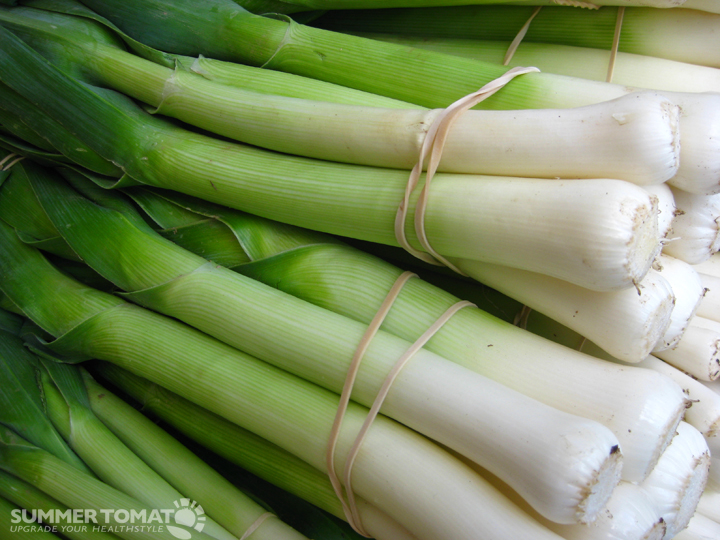
Spring Garlic

Spring Garlic

I haven’t seen crowds like this at the San Francisco Ferry Plaza farmers market since summertime. The Easter crowds were in full throttle gathering goods for tomorrow’s festivities. Luckily for market goers, the spring vegetables were certainly worth fighting over.

The signs of spring today were particularly apparent at Far West Fungi where wild miner’s lettuce, ramps and fiddleheads were all available. Miner’s lettuce (as I learned last week on KCRW’s Good Food podcast) is a delicate green ideal for spring salads. It’s leaves are shaped like a tiny lily pad with a cone of small flowers growing from the center. Ramps are tiny wild leeks that could very well be my favorite egg addition of all time. Fiddleheads are the tender curls of baby ferns. They can be sauteed and served much like asparagus.

Fiddlehead Ferns

Fiddlehead Ferns

Miner's Lettuce

Miner's Lettuce

Heirloom tomatoes are starting to appear, though they still didn’t look good enough to buy. But I could tell that one day soon there will be rejoicing at Summer Tomato.

Other notable findings include fava beans, lilacs, asparagus, rainbow chard, sugar snap peas, morel mushrooms, strawberries, artichokes, kale flowers, sorrel and arugula.

Note: The How To Get Started Eating Healthy series will continue on Monday with the next addition, Seasonal Shopping. Consider this post a warm up 😀

Lilacs

Lilacs

Rainbow Chard

Rainbow Chard

Today’s purchases:

Tags: , , , , , , , , , , ,

How To Get Started Eating Healthy: Essential Groceries

by | Apr 10, 2009
Fresh Herbs

Fresh Herbs

Having the necessary pantry items is critical to getting started eating healthy, but obviously you need a lot more than that if you actually want to cook fresh, delicious food. Today I have prepared a list of groceries that should always be in your refrigerator. Many of these items are fresh, which means you need to buy them regularly.

(This post is part of the series How To Get Started Eating Healthy. Part one is Stock Your Pantry. Subscribe to Summer Tomato to get more free healthy eating tips)

As I have explained before you must set aside a small amount of time once a week to do your grocery shopping or else healthy eating will be nearly impossible. This time needs to be non-negotiable; you must find a way to make it happen.

So why not start to upgrade your healthstyle this weekend?

Put these groceries on your weekly shopping list and never take them off:

  • Shallots or leeks These are members of the onion family, but milder and sweeter than you might be used to. Even if you think you do not like onions, I recommend starting most vegetable dishes with one of these ingredients. Shallots are like small, mild red onions. Leeks are like large green onions, but tender and delicate in flavor. Here you can see pictures of leeks and shallots.
  • Garlic People feel very strongly about garlic, some can’t get enough while others avoid it. I have found myself in both camps at some point, but now I am somewhere in the middle. I go through a small bulb every week, but rarely use more than one clove per dish. With subtle amounts of garlic you can add depth and dimension to your meal. Too much can overpower all the other flavors.
  • Lemon As I explained when discussing vinegar, acidic foods are extremely important in cooking. Lemon has the added bonus of possessing an amazing zest that adds both sweetness and brightness to your food. I panic a little if I don’t have lemon in the house.
  • Parsley Flat leaf or “Italian” parsley is the perfect herb for everything. I always buy it, even if I do not know what I am going to use it for. It is also rather robust and keeps longer in the fridge than more delicate herbs, like cilantro. If you do not normally cook with parsley, definitely buy some and try it in your next vegetable dish. I think you will be pleasantly surprised.
  • Fresh herbs Of all the other fresh herbs, I usually only pick one or two to have in my kitchen at once. Which ones I choose depends on the other foods I am buying. Mexican food thrives with cilantro and oregano. French style vegetables are beautiful with thyme. I cannot live without rosemary on my roasted potatoes. Mint is perfect with Moroccan food. Experiment! Fresh herbs can change the way you approach cooking. If you don’t know how to use something, Ask Me! or ask Google 🙂
  • Eggs I do not buy eggs every week, but I buy them regularly (always a half dozen farm fresh eggs). They are incredibly versatile and a great, quick meal any time of day. Check out my favorite scrambled eggs recipe.
  • Tofu or tempeh However you think you feel about tofu should probably be reexamined. It can be very delicious when prepared correctly. Regardless of the claims of Dr. Atkins, science tells us it is actually much healthier to get your protein from vegetable sources. I love meat in all its forms, but during the week I usually stick to vegetable protein and fish. And sometimes eggs.
  • (Soy) milk I use soy milk for my cereal and in my coffee. I know many people prefer different kinds of milk, and whatever you choose is fine. If you currently drink dairy milk, my only warning is to use it very sparingly. Consuming cow’s milk is strongly linked to increased risk of prostate cancer, breast cancer, osteoporosis (I know!), acne, type 1 diabetes and multiple sclerosis. If you were raised in America and do not follow nutrition science, I’m sure this sounds insane (it did to me). Unfortunately it is true. Easy on the milk.
  • Condiments I mentioned last time I keep my soy sauce and almond butter in the refrigerator. The other condiments I keep handy are tahini, mustard, tomato paste, capers and olives. None of these are absolutely necessary, but they are nice to have around to mix up your flavors. They do not need to be purchased very often.

These groceries are always in my refrigerator and it is fair to say that I consider them essential. However, this list is by no means exhaustive.

Please share with us your favorite essential groceries so we can all benefit.

Subscribe now to get more free healthy eating tips.

Tags: , , , , , , , , , , , , , , , , , , , , , , , , ,

How To Get Started Eating Healthy: Stock Your Pantry

by | Apr 8, 2009
Pantry

Pantry

Nothing has a bigger impact on your health than the food you choose to eat (unless you smoke cigarettes). A diet rich in whole vegetables, grains, legumes, fish and fruit can prevent and even reverse most of the diseases that devastate our society. The good news is that farm-fresh, seasonal produce happens to be some of the most delicious food on the planet.

Unfortunately, our culture does not make it easy to eat foods that are both healthy and delicious. Your typical grocery store is filled with processed, packaged junk that barely resembles the plants and animals it came from (usually corn and soybeans). Even the produce section is populated with clones shipped from halfway around the globe.

But eating healthy is not impossible. I manage to pull it off, despite a long-ish commute and impossible work schedule. All you need is a little planning and a road map.

For many people the most difficult thing about starting to eat healthy is learning how to prepare and cook food. It is very difficult to upgrade your healthstyle by eating in restaurants. You have got to be able to shop and cook for yourself.

This is the beginning of a series of posts designed to give you detailed instructions on How To Get Started Eating Healthy. It is the perfect place to begin if you are new to Summer Tomato. Once you have learned to integrate these instructions into your normal routine, nothing on this blog should pass over your head. You will be able to follow any recipe, conquer any ingredient, get healthy and love every minute of it.

For more free healthy eating tips be sure to subscribe to Summer Tomato.

Keep in mind I was once as clueless in the kitchen as I was at the farmers market. I found my healthstyle through trial and error and created Summer Tomato to share what I have learned.

If you are beginning with a barren kitchen and are not sure what you need to get started, check out the Summer Tomato Shop. Once you are there, use the navigation in the sidebar on the right and browse through Kitchen Gear.

Once you have all your pots, pans and cutting boards you need to Stock Your Pantry. I have created a list of essential items that should always be in your kitchen. Because these things all store well and can be purchased in large quantities, you do not need to buy them often. But check your supplies regularly and be sure you always have everything here:

    • Olive oil You really cannot cook anything until you have olive oil. I go through olive oil relatively quickly, so I am sure to buy large bottles. Look for cold-pressed olive oils in dark bottles. For cooking I try to get the highest quality oil I can find at a reasonable price. My current favorite is Whole Foods 365 Organic brand extra-virgin olive oil. I buy the full 1 liter bottle.
    • Sea salt Whenever I come across vegetables I do not like they tend to have two things in common: they are 1) over-cooked or 2) under-salted (or both). But salt is bad for you, right? Yes, it is bad to eat the inconceivable volumes of sodium present in processed and packaged food. But you would be hard pressed to ingest that much salt if you add it yourself. It is possible to over-salt your vegetables, but under normal circumstances you can determine the appropriate saltiness by taste. In contrast, processed food tastes gross (grosser, I should say) without salt. You can add a reasonable amount of delicious sea salt to natural foods to enhance their flavor without much worry. Sea salt helps make fresh vegetables taste amazing, and if you eat them you are substantially better off. (note: If you have very high blood pressure, potassium salt might be better for you. Talk to your doctor about your options.)
    • Pepper Pepper is an essential spice you should always have in your pantry. It has better flavor if it is freshly ground.
    • Vinegar Frequently the easiest way to salvage a struggling dish is to add some kind of acid. Acid has a slightly sour flavor that can help brighten a dish. Vinegar and lemon are the go to choices for most cooks, so you need to have them around. Vinegar (and oil) is also what I use to dress salads. Balsamic vinegar is particularly wonderful because of its sweetness. But if you don’t like it experiment until you find a vinegar you like. Red wine vinegar is my next recommendation. Rice vinegar is also handy to have around, particularly if you like cooking Asian cuisines.
    • Fancy olive oil Speaking of salads, I always keep a top-shelf, fancy olive oil in the house for when the dish I’m creating depends on olive oil itself for flavor. Salad is the most basic example, but there are many instances where a better oil is worth the investment. You should enjoy the taste of your food, a few extra dollars for an outstanding olive oil is more than worth it.
    • Soy sauce One of the easiest ways to change up the flavor profile of a dish is to add a splash of soy sauce. You should always have some. Keep it in the fridge after opening it though.
    • Whole grain cereal I have found it incredibly difficult to find cereals–even whole grain cereals–that aren’t loaded with sugar. Muesli is my best recommendation, but it usually needs some help in the flavor department. I add fruit to fix this. Oatmeal (stove top) is a perfect breakfast if you have time for it (10 minutes). Whatever you choose, make sure you find a cereal made of intact grains that you are happy to eat most every day. For variety, I alternate between cold and warm cereals and change the fruit I use with the seasons.
    • Assorted whole grains Intact grains are so old-fashioned these days they are pretty hard to come by. If you do not eat them at home, you will almost certainly never eat them. Brown rice and quinoa are the two I rely on most. Quinoa cooks easily in 15 minutes. Brown rice takes longer, but I make it in large batches and freeze it in single servings that microwave in 1 minute. I also keep whole grain couscous around, even though it isn’t a real whole grain. I just love it in Moroccan food.

    • Dried legumes Legumes are some of the healthiest foods on the planet, and are notoriously under-appreciated. Lentils and beans are not just a vegetarian protein source, they are essential to a healthy diet regardless of carnivory. One benefit of them being out of fashion is that they are incredibly cheap and can usually be purchased in an unadulterated form. Lentils are wonderful because they cook quickly, in about 20 minutes. There are many varieties of lentils with different purposes. I recommend starting with regular brown or French green lentils because they keep their shape well. Beans require soaking and still take at least an hour to cook, unless you have a pressure cooker (I couldn’t live without a pressure cooker now). You can buy canned beans if you prefer, but they are far more expensive and have inferior taste and texture.
    • Bouillon cubes I had never heard of these until I started cooking, but I use them pretty regularly now. Bouillon cubes are essentially dried, concentrated broth. I keep chicken bouillon around for couscous and soups. Beef bouillon tastes amazing and I love to add it to beans and richer dishes. They make veggie bouillon too. You can get these everywhere, probably even your local liquor store.
    • Boxed broth Since these keep for at least a year, it is good to always have a few boxes around. Soups are great to whip up for dinner when you are tired and don’t feel like cooking anything fancy. If you always have broth, you can always have soup. I buy the 1 qt chicken and veggie broths. The smaller boxes or cans are good for making sauces.

  • Canned tomatoes I keep at least one 28-oz can of diced tomatoes at all times. Canned tomatoes are the base of so many different cuisines and make for wonderful meals. Tomatoes are, ironically, one of the few canned vegetables that don’t repulse me.
  • Nuts You should see the shoebox I use to store all the nuts I buy, it is bursting at the seams. Nuts are healthy, filling and turn food from average to awesome. I throw cashews in stir frys, cook my chard with pistachios and have almonds for a snack almost every day at work. Get in the habit of cooking with nuts or adding them to salads rather than just eating them plain. My kitchen always has raw walnuts (store in the freezer, they go rancid the quickest), roasted unsalted pistachios and sliced almonds. Hazelnuts, macadamia nuts and peanuts are also wonderful. Go nuts!
  • Dried fruit With plump, juicy raisins in my oatmeal I do not need to add sugar or honey. Dried apricots are wonderful in Moroccan soups or couscous. Dates are a great after dinner treat. Dried fruits store well and come in handy, you should keep the ones you like around and be creative with them while cooking.
  • Canned fish My canned fish of choice lately is sardines. Sardines are incredibly rich in omega-3s and vitamin D. When skinless and boneless, they are also delicious on bread or in a stir fry. My second choice is canned salmon (again, please get boneless–even if it costs extra). Tuna is okay, but it is too high in mercury for me to eat it at the frequency I prefer (you should limit tuna to 1-2 servings per month, particularly if you are a woman of childbearing age). Salmon is high in omega-3s and lower in mercury than tuna. I eat canned fish 2-3 times per week.
  • Basic spices When I first discovered cooking I went to the seasoning aisle of my grocery store and bought every spice and herb I had ever heard of. This was a mistake. I have since learned that most of the ones I bought are much better fresh (e.g. parsley, sage, rosemary and thyme). But there are a few spices I still use a lot. I always keep Saigon cinnamon, cayenne pepper, chili flakes, coriander, cumin (seeds and powder), ground ginger, garlic salt and chili powder in the house. I recently got a spice grinder, so sometimes I grind my own. But these are spices that are good to have around.
  • Natural nut butter Almond butter on good bread is one of my favorite quick, filling midday snacks. It is high in calories, but very effective at curbing the appetite. I always keep an unopened jar in my pantry. If you buy the natural kind (which you should), refrigerate after opening.
  • Pasta I know it sounds sacrilegious, but I do keep pasta in my pantry because sometimes it is just the easiest option. A healthy-ish choice is Japanese soba noodles that are made from buckwheat rather than semolina. I do not have pasta very often, so I do not worry too much if I eat it occasionally.
  • Plastic wrap and zipper bags I know these aren’t food, but I consider them essential items that need to be stocked regularly. I also happen to keep mine in the pantry. Don’t forget to buy them!

Once you have these basic ingredients you are ready to start cooking for yourself. In future posts for the How To Get Started Eating Healthy series I will discuss items you need to regularly stock in your refrigerator and freezer. I will also explain how to shop seasonally and outline a few basic cooking techniques you can use to cook almost anything.

Please do not consider this list exhaustive. This is simply a blueprint for how to get started stocking your pantry to cook healthy food.

Subscribe now to get more free healthy eating tips delivered to your inbox.

Tags: , , , , , , , , , , , , , , , , , , , , , , , , , , , , , ,

Farmers Market Update

by | Apr 4, 2009
Kumquats

Kumquats

It was a perfect day in San Francisco and the farmers market was full of life. Spring is in full swing and it seems like every week something new appears.

Strawberries

Strawberries

Finally the strawberries looked good enough to eat, so I am happy to announce my breakfasts will be getting an upgrade. I also started eating salads again last week, which is refreshing. Still no (good) tomatoes, but I tasted one today and it was greatly improved from when they first came out a few weeks ago. So exciting!

I don’t eat a lot of popcorn or I would have bought this Shaman’s Blue from Tierra Vegetables. Isn’t it spectacular?

Shaman's Blue Popcorn

Shaman's Blue Popcorn

Kumquats are peaking right now (apparently Paredez Farms still felt the need to charge me $0.25 to taste one) and I recommend getting some while you can ($5/lb). It is also a great time for asparagus, baby kale, arugula, artichokes and chard.

Oh! and the morel mushrooms are beautiful at Far West Fungi.

Today’s purchases:

I cannot wait until I show up one morning at the market and it is exploding with cherries. What are you most excited about?

Tags: , , , , , , , , ,

Automatic Health: Lessons From Personal Finance

by | Apr 3, 2009
Healthy Breakfast

Healthy Breakfast

Probably the biggest misconception about health and weight loss is that it takes a tremendous amount of willpower to succeed. Another myth is that it requires a substantial time investment.  In fact, neither excessive willpower nor time are necessary to be healthy and thin. So isn’t it useless to trying to force them on yourself? I think so.

After reading a captivating article by Ramit Sethi on Tim Ferriss’ (The Four Hour Work Week) blog, I learned most people have the same delusions about personal financeas they do about health—-they think paying off debt and saving money require willpower and time. So we should not be surprised that the solutions for personal finance offered by Ramit are the same fundamental strategies necessary for investing in your personal health. Make no mistake about it, your health is an investment. And a pretty important one at that.

Today I am going to show you how the advice and reasoning Ramit uses in his article can apply to health and weight loss, and how automating these steps can help you achieve your goals. In future articles I will describe in detail how to implement each step. Be sure you are subscribed with either RSS or email so you can follow the series.

Choice Paralysis

Ramit starts by pointing out that we have dozens of choices to make every day when it comes to money. The same is true for health. Should I eat breakfast? Should I pack a lunch? Am I going to the gym?

“Faced with an overwhelming number of choices, most people respond in the same way: They do nothing.”

Clearly “nothing” is not a winning strategy. In both finance and health you must set your default activities so that you will automatically contribute to your long-term goals. Automation is the essence of healthstyle.

Establish a Foundation

Ramit says the first step to automating your personal finance system is to make sure you are getting the best deals you can from your financial institutions, meaning that you have the lowest possible interest rates and are not paying annual fees. Not doing this is equivalent to throwing money away.

In health the first step in establishing your foundation is having the tools you need to succeed. Since how you eat is the biggest factor in determining your long-term health and body weight, you must have the ability to eat properly. In our modern lives, this ultimately means you need to know how to cook for yourself. You will never get healthy eating at restaurants every day. This is the same as throwing your health away.

Therefore it is essential that your kitchen is supplied with the tools you need to cook, eat and store your food. This may seem obvious to some of you, but for many people the kitchen is a foreign and scary place. To assist both newbies and veterans in upgrading your kitchenstyles, I have put together a section of the Summer Tomato Shop called Kitchen Gear (go to the Shop then use the navigation in the sidebar on the right).

Kitchen Gear is grouped into categories that are meant to help you find exactly what you need. The Basics has all the essential items for a functional kitchen. Additionally, below each item I give a brief description of why it is on the list.

If you regularly follow my blog, however, you will soon find that I sometimes use items that are not in The Basics. Usually you can find these in Accessories. In general, Accessories are items that are not absolutely necessary for cooking, but they can make your life a whole lot easier if you have them. For example, you can peel vegetables with a knife, but a vegetable peeler makes it quick and easy.

Storage & Transport has products that help you mobilize your healthstyle, which is especially important if you work away from home during the day. There are also reusable grocery and farmers market bags available.

The Finer Things offers the top-of-the-line products that I wish I had (okay, I have a few of them). I have spent an embarrassing amount of time reading reviews of kitchen products and appliances, and these are the products I envision in my future dream kitchen. For those of you who can afford them, this is your list.

I feel confident in the quality of the items I recommend–I own or have used most of them. I also consider price in my recommendations and try to make this clear in my explanations. If, however, you feel you want an item that is different from what is on my list, you can still navigate to and purchase it through the Amazon links on this website to support this blog. My store is run through Amazon.com and almost always represents the best prices on the internet.

Automate the Basics

The next step in Ramit’s personal finance plan is to automate your bank accounts so that regular payments and savings deposits occur as soon as you get your paycheck (also automatic). This takes care of all your goals and gives you the freedom to make personal decisions with the rest of your money without worry, guilt or willpower.

If you are like most people the structure of your day stays pretty much the same all year long (particularly Monday through Friday). We wake up, go to work (or equivalent), come home, eat, spend time on personal things then go to bed. This structure provides us an excellent opportunity to optimize for health.

Breakfast. One of the simplest things you can do to improve your health is eat breakfast, particularly whole grains and fruit. To easily begin improving your metabolism and blood sugar control, find a couple whole grain cereals you like and start eating breakfast every day. If you think you do not like to eat first thing in the morning, you are most likely dehydrated. Wake up, drink water, then eat breakfast.

Lunch. For many people lunch is the most difficult meal to make healthy because they do not prepare for it, get stuck at work with no food and end up going out and eating something unhealthy. But since you know you always eat one meal at work each day, this is something you can easily automate in your favor.

Each weekend you need to plan in advance what you will be eating for lunch all week. Make sure you cover at least 4 days, but five is better. There are several ways to approach this: you can bring ingredients and prepare your own lunch at the office, make a large batch of food on weekends especially for lunch during the week, or make enough food each night at dinner that you have leftovers for the next day. All these strategies are effective because they help you avoid buying your lunch.

Shopping. In order to accomplish the two above points, you need to set aside a little bit of time each weekend to go grocery shopping and plan (or at least consider) your meals. This time must be non-negotiable; ultimately it saves you time later in the week. For my personal healthstyle the weekend always includes a trip to the farmers market, but there are many other options if this is not realistic for you.

Effective shopping has several components. You must always have the basic stocks of items in your pantry, freezer and refrigerator. You need to shop regularly for staples (milk, for example) and fresh items must be purchased weekly. Details on how to shop for all these components will be given in future posts.

Dinner. People expect the most out of dinner. It generally needs to be quick (I’m starving!), simple (I’m busy!) and delicious (I’m picky!). Luckily, the changing seasons offer great opportunity to keep variety in our dinner menus without needing too many different cooking techniques. If you can get at least a few of the basic skills under your belt, you can make an infinite number of healthy, interesting and delicious meals. Basic cooking techniques will also be summarized in future posts.

Work exercise into your daily routine. Physical activity is essential for staying fit and trim, but it doesn’t particularly matter where you get it. The important thing is that you make it happen consistently by incorporating it into your average day. Personally I walk to work, take the stairs, and make it to the gym for cardio and weights whenever I can.

Whatever method you choose as your source of physical activity must be your default, and skipping your exercise must be the exception. If you prefer using a gym, make sure you have a membership, a gym bag and the necessary apparel to workout at all times. Don’t like the gym? Find an activity that you enjoy and recruit friends to join you. Even if you prefer not to engage in formal workouts at all, you can make an effort to increase your non-exercise daily activity. Some scientists think non-exercise energy expenditure may be especially effective for people who are trying to lose weight but dislike structured workouts.

Tweaking Your Style

Ramit’s final recommendation for automating your personal finance is to customize your plan for your personal circumstances.

We are all individuals and have different needs and preferences, especially when it comes to food and exercise. I do not recommend trying to incorporate every ounce of my advice into your life at the same time. Try the things that are easiest for you and see how they work. Once a few new habits are formed, you can try to tackle some harder ones. As you grow and evolve into your own healthstyle, you may find things that never worked for you before are suddenly feasible. Or you may come up with your own hacks to optimize your health and fitness.

This blog is meant to be a source for suggestions and guidelines, not dogma or a regimented plan. Discovering and improving your own strategies for success are essential for building a lasting healthstyle that reflects both who you are and who you want to be.

How will you upgrade your healthstyle?

Read more on How To Get Started Eating Healthy:
http://forms.aweber.com/form/95/split_2017558195.htm

Tags: , , , , , , , , , , , , , , , , , , , , , , , , ,

McDonald’s Switches to 100% Grass-fed Beef

by | Apr 1, 2009

mcdonalds-cow-in-grass

UPDATE: April Fools!

Fast food mega-chain McDonald’s has just announced it will be making all its burgers from 100% grass-fed beef by the end of 2010.

McDonald’s is the largest purchaser of beef in the United States, serving more than 47 million customers daily. Since the company was founded in 1940, their beef has been supplied by feedlot livestock raised predominantly on a diet of corn and soy. As the first major fast food chain to make the shift away from traditional corn-fed beef, McDonald’s is hoping to be a leader in a new era of responsible fast food.

A spokesman for the company says the effort is motivated by consumer demand for safer, healthier products, as well as concern for the environment.

“The nation is ready for change and McDonald’s wants to be a part of the solution, not part of the problem.”

The new grass-fed cattle used by McDonald’s will also be free of antibiotics, which are only necessarily when livestock are artificially fattened on grains. Grass-fed cows are healthier and do not produce as much toxic waste as cows reared on feedlots, but they also mature more slowly. As a result, more time and money are required to raise grass-fed cows. McDonald’s acknowledges that this will result in a substantial 40% increase in the price of their burgers, but believes consumers are willing to pay for the added health and safety.

“Consumers are nervous about the increasingly dangerous problem of antibiotic-resistant bacteria that results when livestock are given large amounts of drugs, as they are on feedlots. By switching to grass-fed beef, we believe McDonald’s can play a substantial role in reducing this risk.”

The company is also aware of the positive impact this move may have on greenhouse gas emissions. It has been reported that nearly 20% of all greenhouse gases are produced by cattle, even more than are produced by automobiles and transport. They are hoping that their move away from corn-fed beef will encourage more environmentally friendly practices by the beef industry.

This new project is part of an ongoing effort by McDonald’s to offer more high-quality, environmentally friendly items to consumers. McDonald’s began serving organic milk in the U.K. in 2003 and premium coffee was added to U.S. menus in 2006. But the switch to grass-fed beef is by far the most significant “green” change any fast food chain has made to date.

The shift has only been announced for U.S. restaurants, but insiders suggest grass-fed beef may reach global consumers by 2012.

Tags: , , , , , ,