You deserve to feel great, look great & LOVE your body
Enter your email for your FREE starter kit to get healthy & lose weight without dieting:
My name is Darya Rose and I’m the creator of Summer Tomato.
I’m also a neuroscience Ph.D, author, former dieter and proud foodist. Summer Tomato teaches you how to get healthy and lose weight without dieting. Because life should be awesome.
Good stuff this week, particularly the new data about why diets don’t work, why probiotics do work and some interesting examples of how the food industry is responding to the food movement. Oh yes, and the invention of super broccoli.
Want to see all my favorite links? Be sure to follow me on on Digg. I also share links on Twitter (@summertomato), Google+ and the Summer Tomato Facebook page. I’m very active on all these sites and would love to connect with you.
UK scientists grow super broccoli <<BS of the week. Hate to break it to these guys, but broccoli was already perfect. Seriously, aren’t there bigger fish to fry? (SF Gate)
In Defense of Industrial Food <<I disagree with this, but I’m not calling BS because he brings up some important points that should be answered by the real food community. (TIME)
Lunch with Michael Pollan: Two Words of Warning <<Pollan is right about what the food industry is doing in response to the food movement (spin!), and the next few articles illustrate exactly what he means. (Michael Ruhlman)
Bruce Bradley is a consultant, author, blogger and lifelong foodie from Minneapolis, Minnesota. After working for over 15 years as a marketer for several of the world’s largest food companies, Bruce finally awakened to “the green side of life” and is an avid supporter of the eat local, real food movement. He now offers his unique insider’s perspective on processed foods via his blog and a soon-to-be-released novel, FAT PROFITS. To learn more about Bruce Bradley you can subscribe to his blog, follow him on Twitter @authorbruce or check him out on Facebook.
Farmers Market Update: Minneapolis, Minnesota
by Bruce Bradley
Minneapolis Farmers Market Sign
The Minneapolis Farmers Market has been a long-standing fixture of the Twin Cities fresh produce scene. Its current Lyndale Market location opened in 1937, but its roots trace back to a fruit and vegetable market established in 1876. Located on the outskirts of downtown, the Minneapolis Farmers Market is held outdoors under three huge red sheds and stakes claim to the title “Largest Open Air Market in the Upper Midwest.”
Run by the Central Minnesota Vegetable Growers Association, the farmers market is open from 6 a.m. to 1 p.m., 7 days a week from May to December. On Thursdays, a special farmers market is held downtown along Nicollet Mall, a place made famous by Mary Tyler Moore’s hat toss in the opening credits of her 1970’s sitcom.
Minneapolis Farmers Market
I decided to visit the farmers market downtown this week. It was a beautiful, sunny Indian Summer day in Minneapolis. Fall is at its peak here, so the red, orange, and yellow trees lining the streets created a wonderful backdrop to my shopping adventure.
Although many summer vegetables like tomatoes, green beans, and corn were still plentiful, fall vegetables have taken center stage. Brussel sprout stalks and squashes were available at many vendors and a number of local Apple Orchards were showing off their amazing crop.
Apples
During the summer my CSA keeps me pretty well stocked in vegetables. Although I love the CSA experience, what I miss about the farmers market is getting to choose exactly what I’m going to buy. That said, the hardest part of shopping at the farmers market is wanting to take home a little bit of everything and this week was no exception. Take a look at these squash! I love squash, especially all the fall varieties. Although these beautiful Carnival Squashes were calling my name, after reading Summer Tomato’s recipe for Delicata Squash, I knew delicata was on the top of my shopping list.
Winter Squash
If you love food and you haven’t gone to your local farmers market, you’re really missing out. It’s a great place to explore different varieties of vegetables that you just can’t find at your local grocery store, like these white radishes …
White Radishes
and these Indian eggplant …
Eggplant
Spinach is one of my personal favorites, and these were so green and fresh. I love making spinach salad, sautéed spinach, or … some creamy spinach soup would be especially perfect on a cool fall day. The vendor assured me she would have some more spinach this weekend, so I passed on it for now. But believe me, it was tough call.
Spinach
Raspberries are my son’s favorite, and I think the best varieties ripen in the fall. Not only are they more flavorful, but they’re also a little bit sweeter than the ones that are available during the summer. These will be perfect for dessert or breakfast in the morning, so they’re a definite addition to my bag.
Raspberries
Variety is the spice of life, and it’s always fun to check out things you’ve never seen before. Seed heads from sunflowers were new to me this trip. Although I love experimenting, my bag was already getting pretty full, so I passed on these beauties for now.
Dry Sunflowers
I also was tempted by these red moon beans. Their rich purple color was very alluring, but the vendor didn’t understand English so I couldn’t learn anything about them. I Googled them when I got home, but unfortunately I still couldn’t find anything about them. Does anybody know about this variety of bean? I’d love to learn more about them so please share what you know in the comments.
Red Moon Beams
Fresh smells are one of my favorite parts of shopping at farmers markets. I was standing a few stalls down wind from this huge bunch of dill weed and it caught my nose’s immediate attention. Yum!
Dill
Next to the dill was a colorful array of chili peppers, tomatoes, beets, and potatoes. I LOVE beets, so they were an easy choice for me to add to my bag.
Chilies and Beets
When you read Summer Tomato’s Farmers Market updates, you learn how each area of the country (and world) has their own specialties, so I thought I’d feature a couple items that I think are a little more unique to the Upper Midwest:
Pickles are a local favorite in Minnesota. Everyone seems to have their own secret recipe, and it’s something I’d like to try my hand at making sometime. The pickle bar at the farmers market is a great place to figure out exactly what your favorite type of pickle is and buy it. Bread and butter pickles are hands down my top choice.
Pickles
Two other local foods from our neighbor to the east, Wisconsin, are cheese and cranberries. I had never heard of “cheese curds” until I moved to Minnesota. Although I don’t buy them very often, they’re amazing especially when fresh. These curds were made yesterday from rBGH free milk, so I couldn’t resist them. And as any Wisconsin native will tell you, the only way to know if your cheese curds are fresh is to taste them. If they squeak between your teeth, they’re fresh, and these were squeakingly delicious.
Cheese Curds and Cranberries
Now while everyone knows cheese is a huge Wisconsin favorite, not many people know that Wisconsin is the country’s largest producer of cranberries. I didn’t pick up any of these plump berries this week, but I made a mental note to get them in a couple weeks. Thanksgiving is just around the corner and there’s nothing better than a fresh cranberry relish.
We have some fabulous reading this week including a dose of reality for the cavepeople in the room, some scary news about the effect of pollution on birth defects, and a TV commercial that makes me want to ride my bike to France.
Want to see all my favorite links? Be sure to follow me on on Digg. I also share links on Twitter (@summertomato), Google+ and the Summer Tomato Facebook page. I’m very active on all these sites and would love to connect with you.
Is MSG Safe? (Part 1 of 2) <<People ask me about MSG sometimes, and this is promising to be a good analysis. Note: I didn’t link to the full article because it has an annoying auto-play feature. You might want to turn down your volume before clicking over. (Nutrition Over Easy)
Please join me tonight at 6pm PST for Summer Tomato Live. I’ll be discussing the scary new data on vitamin supplements and answering any questions you have about food and health.
To participate click the red “Join event” button and login with Twitter or your Vokle account. The show is now open and free to everyone, so no password is necessary.
I encourage you to call in with video questions, particularly if your question is nuanced and may involve a back and forth discussion. Please use headphones to call in however, or the feedback from the show is unbearable.
If I don’t get to your question or you’d like a more in depth follow up, you can Ask Me or subscribe to the Tomato Slice newsletter.
In case you aren’t familiar with it, Summer Tomato Live is my live Q&A video show where I discuss various food and health topics and answer viewer-submitted questions.
I originally started the show along with my premium newsletter Tomato Slice as a way to better connect with my true fans. The volume of questions I get in emails, blog posts and social media could easily be a full-time job, and I simply can’t keep up with them and still maintain the quality of the site. The newsletter and the show were created to help me filter for the most serious and dedicated readers.
Until now access has been limited to paying subscribers of Tomato Slice. However for various reasons I’ve decided to separate the show and the newsletter completely. That means everyone can now watch the show live for free, and passwords will no longer be required. Hooray!
Moving forward the purpose of Tomato Slice will be to answer more in depth reader questions that are beyond the scope of the show or the Ask Me section of the blog.
The benefits of subscribing to Tomato Slice are:
1. Give subscribers unlimited access for questions and inquiries.
I am going to drastically cut back my accessibility in the Ask Me section of Summer Tomato. Starting yesterday free access will only be for short, simple questions that I can answer in a few sentences or less. I will respond to more in depth or personal questions only for subscribers or people who pay an a la carte question fee of $12.99. Read this for more info.
2. Guaranteed rapid response to questions.
It can sometimes be weeks before I get around to answering questions in the Ask Me section or emails. Questions from Tomato Slice subscribers will receive my top priority and I guarantee I’ll answer within two business days of receiving them. Keep in mind that the questions need to be asked via the newsletter in order for me to know you’re a paying a subscriber.
3. Bonus content.
I love sharing bonus thoughts and tips with Tomato Slice subscribers, but have been struggling to find the time to do this. With my full attention, weekly tips will become a more regular feature of Tomato Slice.
4. Continued access to Summer Tomato Live.
Subscribers will still have access to the live show, and I’ll still send out reminders for when shows are taking place. I will also continue to feature subscriber questions on occasion. The only difference is that shows will now be open to the public and not require a password.
5. Support Summer Tomato
More than a few subscribers have expressed to me that while they appreciate the features of Tomato Slice, the main reason for subscribing is to support the work I do at Summer Tomato. This is incredibly humbling to me, and I deeply appreciate your continued support.
I crunched some numbers yesterday and based on conservative estimates of how much time I spend working on the site and my typically monthly income, I’m hauling in a whopping $4 per hour at the moment. Obviously this isn’t sustainable in San Francisco and while I’m working hard to find additional revenue streams, your support is what is keeping me afloat in the meantime.
Summer Tomato Live will continue in the format I’ve been using for Office Hours, which is a half hour open Q&A session available to everyone. I’ll be hosting the show every other week. To keep up with the schedule you can subscribe to Tomato Slice or follow me on Vokle.
Alright Mother Nature, you win. It’s autumn now and I’ll accept it, even if San Francisco only had about five days over 80 degrees this year. I don’t need summer when I have produce like this.
Thompson Grapes
Bring on your autumn grapes. Grapes have never been my favorite fruit, but they are so sweet and crispy this year I can’t resist them. I like wine too, and harvest is soon. Grapes are ok with me.
Flame Grapes
I’ll take your apples too. These heirloom varietals don’t taste anything like the overly sweet fujis I grew up with. These apples remind me of what I’ve always wished apples tasted like whenever I have apple cider.
Autumn Apples
And these little wickson apples, the size of golf balls, are as complex as a glass of wine.
Wickson Apples
Of course I don’t mind the sweet white pomegranates, with their pink seeds and delicate flavor. They aren’t as sour as the red ones are this early in the season, and the seeds aren’t nearly as tough and woody.
White Pomegranates
I finally gave in and got some brussels sprouts too. Sure I used to hate them, but once I learned the secret to cooking these little guys they became a welcome guest on my dinner plate. I’m especially fond of the smaller sprouts like the ones I found today, because they are almost never bitter.
Early Brussels Sprouts
With Halloween approaching not even the winter squash offend me, but these days I eat them instead of carve them.
Sugar Pie Pumpkins
Yes I’ll miss summer—or at least the idea of it. I’ll miss the peaches and plums.
Peaches
I’ll revel in the last of the figs and melons.
Brown Turkey Figs
Maybe if I’m lucky you’ll give me a few more weeks of eggplant.
White Eggplant
Perhaps the sweet peppers will last until my birthday next month.
Sweet Peppers
Or maybe the spicy ones will?
Hot Peppers
What always breaks my heart most is the tomatoes. I can live a few months without strawberries, but the tomatoes really get me. Everything is better with a dry-farmed early girl tomato on it. It will be hard to see them go.
Organic Cherry Tomatoes
But I love my cauliflower. (Pretty much everyone loves my cauliflower). And it will keep me company as fall rolls in and winter approaches.
Cauliflower
I’ll embrace your root vegetables as they sweeten in the cold.
Beets and Carrots
I’ll give you some time on the persimmons though, I don’t think they’re quite ready yet.
This week the emphasis seems to be on the value of whole foods over single nutrients or supplements. Check out my article on the danger of vitamin E supplements over at KQED, the cool new study about why whole broccoli is better than its single nutrients as well as a cool trick for preventing avocados from browning.
Want to see all my favorite links? Be sure to follow me on on Digg. I also share links on Twitter (@summertomato), Google+ and the Summer Tomato Facebook page. I’m very active on all these sites and would love to connect with you.
Is “Natural” A Food Marketing Scheme? <<Big thanks to Food Republic for calling BS of the week for me on the food industry’s gratuitous use of the word “natural.”
Radical thinking on antioxidants <<I love a nice, healthy dose of reality. Antioxidants aren’t a magic bullet, not by a long shot. (Chicago Tribune)
How To Stop An Avocado From Browning <<Really cool trick from Chow (via Treehugger) on preventing avocado browning with an onion. Also sounds like the start of a great guacamole.
Or to put it another way, do you know the difference between real food and food that was designed to fool you into believing it is real?
It might not be as easy as you think.
(Spoiler Alert! If you haven’t seen the original Matrix film yet, crawl out of your cave and go watch it real quick before reading. We’ll wait.)
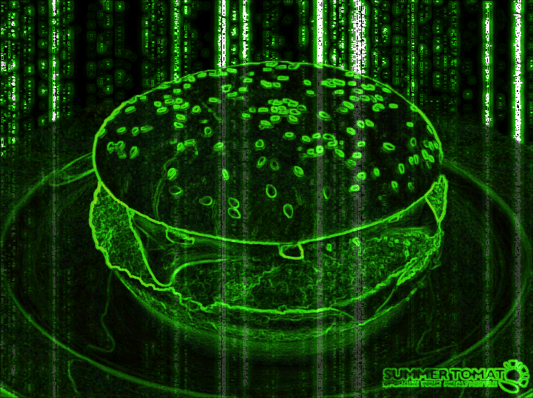
In the classic film The Matrix, machines of the future create a sophisticated computer program that produces an alternate reality for their human slaves. The program, the Matrix, placates humans into believing they are living normal lives while their bodies are imprisoned in suspended animation.
The Matrix is plugged directly into the brains of humans. They live the Matrix, breathe the Matrix, eat the Matrix. They’ve grown up with it, and have never known any other world.
Now think about a Twinkie or a McNugget. Can you remember life without them? I can’t. These products have always been a part of my world, even though it has been a long time since I’ve eaten them. I have vivid childhood memories of both products–after school snacks with friends, my 10th birthday party–and my memories are happy.
But I’ve learned to refer to Twinkies and food from McDonald’s as products and not foods because, when you think about it, they really aren’t foods. Sure you can eat them, but that just makes them a novelty–something akin to beating up your friends in Mortal Kombat.
“Do you believe that me being stronger or faster has anything to do with my muscles in this place?” -Morpheus
Real food nourishes your body by providing essential building blocks for your cells and organs. The human body evolved alongside real food and is adapted to digest it.
Edible products on the other hand were specifically designed to fool your brain and sensory perception, but your body, cells and organs have no idea what to do with them.
Twinkies and McNuggets are engineered. They do not come from the earth and are not food. Twinkies were created in the Matrix.
Do you think that’s food you’re eating now?
This may sound like rhetorical foodie fluff, but please humor me and entertain the metaphor for a little while longer.
Food should nourish your body and contribute to your overall health. Even foods that are considered fattening–bacon comes to mind–provide nourishment so long as they are based in reality.
But what is a Twinkie? What is a Pringle? What is a McNugget?
BigMacs may look, smell and vaguely taste like food, but if what you are eating is not sustaining your health and is possibly making you sick, isn’t it time to question whether it is food at all?
These are products that were created in a laboratory. They may have started as raw materials from plants, but the plants were never grown to be eaten. Industrial corn, soybeans and the cattle raised on them have been processed and redesigned to the point where they’ve been stripped of anything that allows for them to be reasonably classified as food.
Shouldn’t we then stop calling this stuff food?
Most people will initially reject this idea. Of course food is food. But I’d argue that this opinion is just another product of our environment. Haven’t we always lived in the Matrix of industrial agriculture?
We have coexisted with McDonald’s for so long it seem preposterous to speculate it doesn’t meet the definition of food.
But let’s take a closer look:
Food –noun:
1.
Any nourishing substance that is eaten, drunk, or otherwise taken into the body to sustain life, provide energy, promote growth, etc.
2.
More or less solid nourishment, as distinguished from liquids.
3.
A particular kind of solid nourishment: a breakfast food; dog food.
4.
Whatever supplies nourishment to organisms: plant food.
5.
Anything serving for consumption or use: food for thought.
(emphasis mine)
With the exception of the last point, which is clearly philosophical, all these definitions include the word nourishment.
Nourish –verb (used with object)
1.
To sustain with food or nutriment; supply with what is necessary for life, health, and growth.
2.
To cherish, foster, keep alive, etc.: He had long nourished the dream of living abroad.
3.
To strengthen, build up, or promote: to nourish discontent among the workers; to nourish the arts in one’s community.
(emphasis mine)
If it doesn’t provide nourishment, it is not food.
But relying on dictionary definitions is both semantic and impractical. It also becomes confusing when companies market products that are not real food but have added back nutrients to give the appearance of nourishment.
The important question is how do we break free?
Being convinced that these products are not food is not enough. Like the Matrix, McDonald’s is so closely tied to your perception of reality that it can fool you even when you know it isn’t real.
Remember, when Neo makes his first attempt to jump across the building roofs. He doesn’t make it.
“Everybody falls the first time.”
That’s because the Matrix feels so real that not believing it is almost impossible. Likewise, knowing that edible products are not food and that they will in fact make you less healthy is often not enough to prevent you from eating them. Your senses are easily fooled.
But better decisions are not impossible and your food world doesn’t need to be 100% black and green. Even small steps in the right direction, back into reality, can improve your health.
The first small changes you try also make subsequent steps easier.
Unplugging from the industrial food Matrix does not need to happen all at once, but you can extract yourself from it eventually. The first step is starting to see it clearly.
“I’m trying to free your mind, Neo, but I can only show you the door. You’re the one that has to walk through it.”
Are you eating in the Matrix?
For your viewing pleasure: Morpheus is fighting Neo!
This post was inspired by commenter Martin Levac who gave me permission to roll with his awesome idea.
Joan Lambert Bailey currently lives and writes in Tokyo where she is lucky enough to get her hands dirty on a local organic farm. You can read about her adventures learning about Japanese food from seed to harvest to table at Popcorn Homestead or join her on Twitter.
Farmers Market Update: Tokyo, Roppongi Market
by Joan Lambert Bailey
Farmers markets are part of a Japanese food scene that has been changing for some time and appears to be garnering more and more interest in light of the March earthquake. Public concern regarding radioactive fallout on crops and soils has fueled a series of large public demonstrations against nuclear power and has consumers searching for more information than ever about the food they put on the table. As people test their food themselves for radiation they also head to local markets where they can speak directly to growers and producers about their farms, food, and shared concerns about the current situation.
The Roppongi Market, located a few minutes walk from Tameike-sanno station in a part of the city more renowned for nightclubs pulsing to the beat of the most popular DJs and bands, expensive hotels, and high-end dining than fresh fruits and vegetables, is one of a hearty handful of western-style markets popping up around the city. By no means as large as the UN University Market, the nearly forty vendors present this Saturday offered plenty of opportunity to restock the larder for the week and beyond with throngs of seasonal fruits and vegetables along with rice, dried fish, senbei, and even a small selection of household items. As an ensemble tuned their instruments nearby, we made way over to the cluster of colorful awnings to see what deliciousness might be found on this perfect autumn day.
Farmers Market Stall
A single fresh okra sprinkled with salt and served on a stick was the unlikely magnet that pulled us over almost immediately to Tokaji Farm’s table where we were confronted with some of the best of the harvest from Shikoku Island. Just south of Osaka, Shikoku is as famous for its 88-temple pilgrimage route as its countless citrus groves and fantastic surfing. A cooperative effort of Kochi area growers, Tokaji’s table sported green yuzu (a Japanese citrus that falls somewhere between lemon and lime), lemons, three kinds of nasu (eggplants), goya (Okinawan bitter melon), peppers sweet and hot, a few last cucumbers, shoga (ginger) to tempt passing customers along with boxes of eggs that would make the Easter bunny proud. Beaten out by another customer for the last bag of okra, I opted instead for the Ginger Syrup Kit. One taste of a sample mixed with sparkling water, there was no way to walk away without it. Containing instructions, one lemon, a huge piece of ginger, pre-measured amounts of Okinawan black sugar and spices, it was all I needed to recreate that delicate sweet-sour taste reminiscent of another homemade favorite: hachimitsu.
Yuzu
While fall is synonymous with cooler temperatures, nashi (pears), and the first kaki (persimmons), it is also the season of the rice harvest. Spotted a bit off to the side, we made our way over to Shigeyuki Kanai’s table. Kanai and his 84-year-old father, the sixth and seventh generations respectively of their family to work their farm in Gunma Prefecture, produce beautiful grains of white, brown, and black rice fed by natural spring waters and weeded by ducks. If that wasn’t enough to charm us into purchasing, the samples sealed the deal. Tiny servings of plain white rice full of good flavor and just the right amount of ‘spring’ in each bite got us to buy some of each for tasty and colorful eating.
Kanai
A few steps further along we found Kanyo no Sato. Lovely as their rice looked on the table, we thought to pass by in search of other items on our list. The noonday sun caught in the petals of their fall flower bouquets made us pause for another look. And lucky for us it did as we soon discovered they offered not just rice but rice flour, mochi, and genmai (brown rice) meal. Genmai meal – a rougher, larger grind than flour – gently boiled whips up a breakfast cereal similar in concept and consistency to cream-of-wheat, and can be cooked up savory or sweet. Unable to resist the offer of something new, the genmai meal joined some of the homemade mochi squares in our bag.
Kanyo no Sato Mochi
While sorting out the instructions for making the genmai meal and just as my stomach started to rumble about lunch, we met Kyoko Tanno and her gleaming jars of jam at the neighboring table. Made from fruit and vegetables raised on her two hectare organic farm in Chiba, we couldn’t take our eyes off the brilliant orange of the carrot jam and the fat figs snuggled scrumptiously in their jars. Still a fledgling affair, she established her farm (and dog-walking business) only four years ago after moving south from Sendai. A notebook of English phrases and vocabulary kept behind the table helps her connect with Roppongi’s somewhat large ex-patriot population and provides a bit of fun mental exercise, too. After a bit more chatting in her excellent English and our beginner level Japanese, we came away with a new friend and a jar of that most yummy-looking carrot jam.
Cruising around the corner to the next row of vendors, we found ourselves face-to-face with a few of the year’s last cantaloupe, a selection of green, red, and nearly black grapes, pears, apples, garlic, and chestnuts all coming into their peak season, as well as table after table of vegetables. As we surveyed the scene to decide where we might head next, the gregarious staff at Sansouke Farm offered us samples of edamame and we were hooked. (The free sample is truly, if you ask me and my stomach, the best technique a vendor can employ for drawing in customers and getting them to buy. Works on me almost every time!)
Located in Chiba, Sanosuke Farm is all organic and according to the farmer’s mother, a miracle of growing. While she explained in enthusiastic detail the careful tending of the soil (a variety of animal manures mixed with other composted materials) that resulted in a diverse set of crops healthy enough to fend off pests and disease, she also shared the multiple uses of daizu (soy beans): soy sauce, natto (fermented soy beans), miso, and tofu along with the health benefits of each. Natto is good for the digestive system; edamame are good for the skin as well as tasty with beer; and miso is simply good all the time in nearly any form. A retired junior high school teacher, she seemed born to the farmers market table. Even as she chatted with us she managed to offer samples to passing customers and help them find the perfect sweet potato, eggplant, or squash. Happily falling victim ourselves, we came away with two bags of edamame as well as gifts of sweet potato and togarashi. I’ll relish the memory of our meeting and conversation with every bite.
Eggs
While the market stalls and their bounty by no means ended at that point, we found our shopping bag heavy, our stomachs ready for lunch, and our legs a bit tired. It was time for a last look around and a final scan of our lists before starting home with our loot. There was absolutely no room for another thing…until we spotted the beautiful display of winter squash at Kosaka Nouen’s table. Located on Tokyo’s west side in Kokobunji, Kosaka raises not just a wide variety of vegetables but also laying hens whose eggs were snapped up nearly as fast as they were set out. But it was the winter squash that caught my eye, and while I’ve hauled eggs home on the train before I don’t relish the idea. Akagawa amaguri or red chestnut pumpkin, prized as much for its flaming orange red skin as its sweet inner flesh, looked like it could withstand a bit of a jostle on the train. Already dreaming of it cut into chunks and cooked with the evening’s rice and a bit of mirin it would make a colorful dish perfect for these autumn days. Let’s just say the bag got a bit heavier.
What we bought:
Ginger syrup kit from Tokaji Farm
White, brown, and black rice from Shigeyuki Kanai
Mochi, rice flour, and genmai meal from Kaya no Sato
Carrot jam from Tanno Farm
Edamame from Sanosuke Farm joined gifts of sweet potatoes and togarashi


 Health
 Habits
 Food
Food Weight


 Better Than Butternut: Roasted Delicata Squash Recipe
 10 Simple Ways To Eat Less Without Noticing
 Juicing: Stupid and Pretentious or Nourishing and Enlightening?
 10 Tasty Carbs That Won’t Make You Fat
 How To Start Working Out When You Don’t Like To Exercise
 Focus More on Your Brain and Less on Your Diet if You’re Serious About Losing Weight
 Home Court Habits: The Secret to Effortless Weight Control
 10 Reasons You Aren’t Losing Weight When You Think You’re Doing Everything Right
 How To Burn More Calories Without Breaking A Sweat
 The 7 Habits of Highly Effective Foodists