10 Simple Kitchen Tips You Wish Someone Told You Earlier

by | May 22, 2013

Photo by me and the sysop

For myself and people of my generation, cooking represents the worst kind of irony. Feeding ourselves is our most basic human need, but for some reason no one bothered to tell us how to do it (or even that it was important to learn).

So we grew up, left the house and became dependent on restaurants and instant meals, only to find out 10 years later that this “food” has been killing us slowly.

Now what are we supposed to do?

Learning to cook is important, but can be intimidating if you’ve never done more than boil water, open cans and zap frozen entrees. Navigating the kitchen is much easier if you know a few simple tricks that seasoned chefs take for granted.

10 Simple Kitchen Tips You Wish Someone Told You Earlier

1.Use tongs to cooking pretty much everything

Spatulas are awesome for anything that needs to be flipped or scraped, like eggs and pancakes. For everything else, tongs are the way to go. They’re much more nimble and less awkward to use, and you’ll find far fewer things jumping from your pan onto the floor. If you have non-stick cookware, be sure to use tongs with nylon tips. And always go for the 12-inchers.

2. Store everything in tupperware

As much as I’d like to be the kind of person who trims their herbs, puts them in an vase then wraps them in a damp paper towel so they last a week, I’m way too lazy for that. The good news though is that tupperware keeps almost everything fresh for much longer than your crisper, including berries, salad greens and produce that has already been cut. Because it is reusable, it is also more ecofriendly.

3. If you own a knife, don’t use a garlic press

Peeling and pressing garlic is a huge waste of time. To use a clove of garlic, set it on a cutting board and smash it with the flat side of a big knife (any chef’s knife will do). The papery skin will come right off, and you can mince it real quick right there in about 10 seconds. Done.

4. Keep a separate cutting board for things you don’t want flavored with garlic and onion

Assuming you follow any recipe ever, you’ll probably be using your cutting board for cutting onions or garlic. If so, I recommend getting a separate board you keep aside for cutting fruit, cheeses and other things that you’d prefer didn’t absorb the odors of previous meals.

5. Herbs that are supposed to be green should be purchased fresh, not dry

With the possible exception of dried oregano (great in Mexican, Greek and Italian foods), herbs are always better fresh. They’re also cheap and available almost anywhere. In particular, always buy fresh parsley, basil, cilantro, thyme, tarragon or chives if you can help it (a few should be in your fridge at all times). The dried versions are OK if not too old, but they’re very delicate and the jar will probably go bad before you use it twice.

6. Don’t bother with pre-filled spice racks

If you want spices to serve their purpose (making food taste better), you shouldn’t own a pre-filled spice rack. Spices go off quickly, and when their color starts to dull they’ve lost a lot of their flavor. There are several dried spices that are invaluable in my kitchen (cinnamon, cloves, curry powder, cumin, coriander, chili pepper, etc.), but you should purchase them as you need them, and in small quantities unless you use them frequently.

7. Overcooking is probably your biggest kitchen mistake

Overcooked vegetables are mushy and flavorless, overcooked meat is tough and chalky, overcooked grains are soggy and fall apart. In other words, overcooked food is bad food. Learn the art of taking food off the heat just before it is done, and let it finish cooking with its internal temperature. You can always cook it more, but you can never cook it less.

8. If it tastes OK but not great, it probably needs salt—and maybe some vinegar or olive oil

The media loves to bash salt, but I’m not convinced that sodium (rather than processed food) is the real problem. Also, the small amount you use when cooking at home won’t compare to what you’d get at a restaurant or in a packaged meal. Though over-salted food certainly tastes bad, under-salted food is bland and boring and a little dash can often save a dish.

If you think you’ve added enough salt but something is still off, try a small splash of vinegar or lemon (any acid) to brighten the flavor. If the food is dry or sticky, try adding a touch of olive oil. These three things can fix almost any lackluster meal.

9. Don’t buy regular big onions, use shallots or leeks

For most everyday cooking, milder onions will enhance your dish and give it more nuance. Big, strong onions certainly have their place in cooking (soups, roasts, etc.), but most kitchen experiments will be improved by more subtle onion flavor.

10. Fruit (other than berries) shouldn’t be stored in the fridge

Refrigerators dull the taste of most produce, so if you bought something that doesn’t need to go in there leave it out. Most fruits including apples, oranges, pears and bananas don’t belong in the refrigerator unless you’re not planning on eating them soon. I don’t refrigerate tomatoes, avocados or peppers either. Very hot climates are an exception, however.

What are your favorite simple kitchen tips?

Originally published June 1, 2011.

Tags: , , , , , , , , ,

Oops, I accidentally lost too much weight. Now what?

by | May 20, 2013

Photo by austinanomic

Most people don’t start reading Summer Tomato with a desire to gain weight, but I’ve been surprised to receive more than a few emails over the past few years that read something like this:

“Thanks so much for all your work on Summer Tomato. I’ve been following your advice for about a year and absolutely love my new healthstyle. I’m exploring foods I never knew existed, and feel absolutely great. My only question is, what if I want to stop losing weight or even gain a few pounds? I hardly noticed that I’ve slipped below my ideal weight, and a few friends and family members have mentioned that I was looking especially thin. Is there a way I can put on some healthy weight without resorting to eating unhealthy foods?”

Certainly most people do not have this problem, and it may seem like a dream to those who have been struggling with weight all their lives. But being underweight is no more desirable than being overweight—it is not attractive and can be unhealthy if not monitored carefully.

The question is, how do you gain weight without eating unhealthy foods?

It may seem obvious, but the truth remains that if you’re underweight you need to make a concerted effort to eat more. Your food choices need not be unhealthy, you can put on weight eating anything so long as you eat enough.

The secret is to focus on foods that have a lot of calories. While most junk foods certainly qualify, a few healthy foods fit the bill as well. Foods high in protein and fat are your best options, and can generally be added to your diet easily without having to take in a much larger volume of food.

Meats, fish, eggs, oils and nuts are a great place to start. They are very calorie dense, and can be easily added to almost any meal. You can also focus on oil and protein rich vegetables such as avocados, coconut, legumes, olives and seeds.

Nut butters and spreads can be a particularly rich source of healthy calories, just be sure to buy the natural versions without added sugar. Tahini is a delicious, oily paste made of roasted sesame seeds that is wonderful drizzled over vegetables like broccoli and kale.

Cheeses and other full fat dairy products can also be a nutrient dense source of calories, though be careful to not overdo your dairy consumption, particularly if you’re a male.

Also remember that there’s room for occasional indulgences in any healthstyle. If you’ve been saintly in denying yourself bread, sugar and other delicious treats and then find yourself a tad underweight, it may be time to loosen up a little.

What do you eat to gain weight?

Originally published May 16, 2011.

Tags: , , , ,

For The Love Of Food

by | May 17, 2013
For The Love of Food

For The Love of Food

Welcome to Friday’s For The Love of Food, Summer Tomato’s weekly link roundup.

In case you missed it, here’s the archive of my appearance on Dead to the World with David Gans (KPFA radio) from Wednesday night. One of my longest discussions of Foodist to date. It will only be available until May 29:

http://www.kpfa.org/archive/id/91603

UPDATE: Here’s a more permanent version if you want to listen after the KPFA archive expires.

This week around the interwebz the salt police take a blow, chili peppers reduce Parkinson’s risk, and why sunshine is important for more than just vitamin D.

Want to see all my favorite links? (There’s lots more). Be sure to follow me on on Delicious. I also share links on Twitter @summertomato,  Google+ and the Summer Tomato Facebook page. I’m very active on all these sites and would love to connect with you. (And yes, I took that pepper heart pic myself).

Links of the week

What inspired you this week?

Tags: , , , , , , , , , , , , ,

Is Healthy Dessert Even Possible?

by | May 15, 2013

Photo by roygbivibgyor

There’s been a lot of talk lately about the dangers of sugar, and one reader asked:

So if you bake things from scratch with things like unsweetened apple sauce instead of sugar and whole grains and seeds etc… can they still be considered healthy? Like are healthy muffins or banana breads possible?

The reason this is hard to answer is because “healthy” is not a black and white word. Instead it is a fuzzy word with many shades of gray. That is because health is not made or broken by any single food, it reflects your daily choices and habits. Health is a pattern, not an event.

Adding less sugar or more nutritious ingredients may indeed move an item a few degrees in the healthy direction, but it won’t change the fact that a muffin is a muffin and will always contain some sugar and flour, and never be an example of healthy eating.

But that doesn’t mean you can’t eat a muffin and continue to be healthy.

The problem with a “healthier” muffin is a philosophical one, because the reality is we do not eat muffins for health. We eat them for enjoyment, which is arguably as important as health when considering your quality of life.

So is it worth sacrificing the pleasure you get from eating a muffin to make it slightly closer to something it will never be?

I think this answer will be different for everyone. For myself, it is definitely no. I’d rather eat fewer (or smaller) tastier muffins than any lesser version of the same.

But muffins don’t mean much to me, whereas for some of you muffins represent a cherished time with your grandmother, a Sunday morning ritual with your child, or some other deep, meaningful activity worth continuing regardless of health considerations.

In these cases, maybe there is a place for the slightly healthier muffin. Or maybe there is another habit you have that can be made healthier, so the impact of the occasional muffin is less significant.

Foods like muffins mean something different to everyone because they must be considered in the context of the diet as a whole. A breakfast muffin is certainly a worse idea if you had a 7 layer cake the previous evening, or if there are nachos in your immediate future.

The challenge for us as individuals is to be selective about which of our food habits we prioritize, which we drop, and which we upgrade.

It’s up to you to make the call.

Lastly, just to be sure we aren’t getting too serious with all this philosophy today, here’s the venerable Betty White describing her own delicious muffin.

Do you try to make desserts healthier?

Originally published April 20, 2011.

Tags: , , , ,

The Foodist’s Plate

by | May 13, 2013

Foodist Plate


Few things annoy me more than rules about eating. Rules remind me of restriction, which reminds me of deprivation, which smells an awful lot like dieting. And as every foodist knows, dieting does more harm than good toward your health and weight loss efforts, and saps the fun out of life. Thanks, but no thanks.

Unfortunately, “eat whatever you want” isn’t the best health advice either, especially in 2013 when food-like products are easier to find than real food most of the time. This is a problem I’ve been dealing with for years here at Summer Tomato, and tackled head on in my new book Foodist.

Focusing on real food is a good start. I describe real food as anything that looks like it came from the land, air or sea, and not from a lab or factory. But with so much confusing and seemingly contradictory dieting advice out there, it can be helpful to have more tangible guidelines about what a healthy meal actually looks like.

To help with this I designed the Foodist’s Plate, created roughly in the same format as the USDA’s MyPlate. I think the MyPlate is a huge improvement over the antiquated Food Pyramid of yore, but there are still enough flaws in its design to warrant a do-over.

USDA_MyPlate_green

The Foodist’s Plate differs from MyPlate in several ways. First, I moved fruit off the dinner plate altogether and indicate that approximately half of your plate should be filled with vegetables.

I have nothing against fruit, and think it makes a wonderful snack or dessert, so I placed it to the side. The reason I did this is because research has shown that when you tell people to “eat more fruits and vegetables” they tend to ignore the vegetable part and just eat more fruit. For optimal health, however, vegetables should be the focus and the Foodist’s Plate reflects this. Enjoy fruit whenever you like, but when making dinner emphasize the veggies.

I also specify that the vegetables should be cooked in natural, minimally processed oils. It is completely baffling to me that the USDA spent decades telling us that fats and oils are public enemy No.1 for health, then completely ignore it on their latest recommendations (unless you dig through 20 pages of literature––you all did that, right?). It’s no wonder people are confused about dietary fat.

The latest research shows that while processed oils (e.g. trans fats) are unhealthy, natural oils do not contribute to heart disease, while making food more satisfying and improving the absorption of some nutrients by the body. Cooking with oils improves the nutrition of your food.

Another big difference between the Foodist’s Plate and MyPlate is my take on grains and “protein.” Since protein is a nutrient, and not an actual food, I instead encourage choosing wild fish or pastured (grass-fed) meats, if possible. I emphasize wild, natural meats because the antibiotics, hormones and unsanitary living standards (think E. coli) of industrially produced meats are far more worrisome than animal fats, in terms of health.

For the starchy section of the plate, I reduced the portion size and emphasize beans (or lentils) and intact grains, which I distinguish from the confusing term “whole grains.” Briefly, intact grains still look like grains and include things like rice, oats, quinoa and farro. Because of the FDA’s legal definition of “whole grain,” things like wheat and corn can still be processed into oblivion and still qualify as “whole.” This is why things like Cheerios can still be called “whole grain,” and I call BS.

I removed dairy from the Foodist’s Plate altogether not because I think it is dangerous, but because I consider it optional, like nuts and seeds. I enjoy cheeses, yogurt and other dairy products (though I always choose non-industrial dairy to avoid artificial hormones––my skin does not react well to these at all), but with up to 70% of the globe being lactose intolerant, it’s hard to consider milk and dairy essential to health.

For liquids, water is what you should be drinking most of the time. Coffee and tea (without added sugar) as well as moderate amounts of alcohol may be uniquely healthy and can be enjoyed in reasonable quantities.

To give you a sense of appropriate portions I include a measurement for the Foodist’s Plate of 10 inches. Dinner plates have become enormous, and since a clean plate is a powerful psychological indicator that a meal is over, it can be helpful to use smaller plates if you’re looking for a painless way to cut down on your daily calories without noticing.

Keep in mind that the Foodist’s Plate is intended only to be a helpful guide, not a rigid eating plan. There are thousands of ways to have a healthy meal, even if you leave off entire sections of the plate. There’s no need to freak out about any one meal or ingredient. Similarly, don’t be discouraged even if your average meal falls outside the range of what the Foodist’s Plate suggests. It is intended as an aspirational goal for when everything is going right.

If you do not have regular access to local, organic foods, do the best with what you have. Eating vegetables and fruits from any source (organic, local, or not) is better than not eating them at all. If wild-caught fish or grass-fed meats are unavailable in your area or are too expensive to be a regular part of your diet, that doesn’t condemn you to a lifetime of disease and excess belly fat. Maybe you’ll need to rely a little  more on beans and lentils, or have to eat farmed or canned fish every now and then (I did all this and more through college and grad school). You can still eat healthier than the vast majority of Americans and continue to eat the foods you love by simply making an effort to eat more fresh vegetables and fewer processed foods.

Upgrading your healthstyle is about figuring out what works for you, regardless of the circumstances you find yourself in.

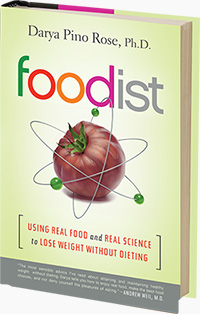
For more on how to get healthy and lose weight without dieting check out my book Foodist.

Tags: , , , , , ,