Archive for May, 2011

May 30 2011

Why I use the “S” word

Filed under Random,Reflections

Photo by Charlotte Astrid

In response to last week’s post How To Eat Dessert And Still Stay Skinny, I got an email from a reader asking why I use the word “skinny” when it undermines my message of health:

“I’ve been following your blog etc for a few months now. I love it and have shared your posts widely…. Unfortunately, your emphasis on being “skinny” really puts me off, not just in this article but in your bio and elsewhere in your writings.

To me, and folks in my world, to value “skinny-ness” is to encourage excessive — and often obsessive — emphasis on body size without regard to health. This dangerous message is everywhere in our society, and not consistent with the rest of your message. Do you see how this undermines your credibility — despite your academic credentials?

Please consider changing your language from “skinny” to “a healthy weight.”  I don’t think this is just semantic.”

This is a very important point, and I want to thank the reader again for bring up her concerns. Since I’m sure there are at least a few of you with the same question, I wanted to share my response:

“Thanks for writing, I really appreciate your input. I totally get your point, but there are a few reasons I make the word choices that I do.

First, I’d guess that given your stance the reason you enjoy Summer Tomato at all is that I actually do make a concerted effort to not use the words “skinny” or “thin” in the text of my articles, particularly when I talk about goals and motivation. (My bio is a different story, I was intentionally trying to illustrate the thoughts of a chronic dieter.)

But I do occasionally use these words in headlines. The reason is that one of the major categories of people I’m hoping to win over with my message is dieters. I want them to focus on being healthy and stop dieting.

The problem is, to get their attention in the first place I need to speak their language. The word skinny rings bells with these people and draws them in, and then my message is different from what they expect and that’s how changes are made.

The phrase “healthy weight” does not even come close to bringing in the click throughs as the word skinny, which I’ve seen in my Facebook and Twitter traffic analytics. I’m less interested in preaching to the choir then helping lost people find a new way to live.

Another important point is that I feel the phrase “healthy weight” has been greatly over-used and has come to mean something a little bigger than it should. Sadly, the latest statistics suggest many overweight people believe they are a healthy weight, simply because the average has been so skewed in the upward direction over the past 20 years.

Health is definitely my message, but I’m very careful to not let people off the hook just because they are the same size as their friends and family.

I’m walking a very tight rope with my message balancing health, weight loss and quality of life, and I’m acutely aware of the power of words. I hope you understand that to make the biggest impact I need to reach the people who need me the most, even if sometimes it comes off as less academic and more mainstream.

My hope is that I’m in a position to bridge these two worlds and get diet trends headed in the right direction again.”

To be clear, I read a lot of great blogs that do preach to the choir, and I share them here regularly.

But one of the best things about the Summer Tomato community is that it includes people from all walks of life, from young college students frustrated with their bodies to baby boomers and academics with more letters after their names than in them. We also have foodies trying to balance their love of food and need for health, and geeks just trying to get fit enough to beat their friends at Kinect.

Most people that come to Summer Tomato for the first time don’t know that the solution to all these goals is the same. My main mission here is to help people see that healthy habits (not dieting) is what makes you both thin and healthy, and provide you with the tools to create a healthstyle that works for you.

I hope one day these points will be obvious to everyone, but in the meantime my experience has shown me that the best way to capture someone’s attention is with the promise of looking great and eating amazing food.

I was happy to get a sweet reply back from this reader signed,

Even a bigger fan than before,

R

What do you think about the “S” word?

33 responses so far

May 29 2011

Farmers Market Update: Best Cherries Ever

Mountain of Cherries

Mountain of Cherries

I’ve been doing this farmers market thing for awhile now, and I have to say that cherries are without a doubt some of the most difficult fruit to photograph. They’re so bright red that it washes out nearly every detail on the fruit, and drowns every other color in the frame.

Consequently I rarely feature my cherry images, and today would have been no different if I didn’t think leaving them out would be a crime. Because anyone who went to the San Francisco farmers market this weekend knows that the cherries were the star of the show.

Tasty Strawberries

Tasty Strawberries

And that’s no small feat this time of year. Today I tasted a strawberry so good I thought it had been injected with sugar, because it reminded me more of the sweetened agua fresca drinks from the taquerias in the Mission district than it did any natural fruit.

But still the cherries were better. Not only that, they’re better than they were last year and possibly the year before that. Honestly it was difficult to not buy some from every farm I stopped at, and I do regret not coming home with more. Don’t miss the cherries this year folks.
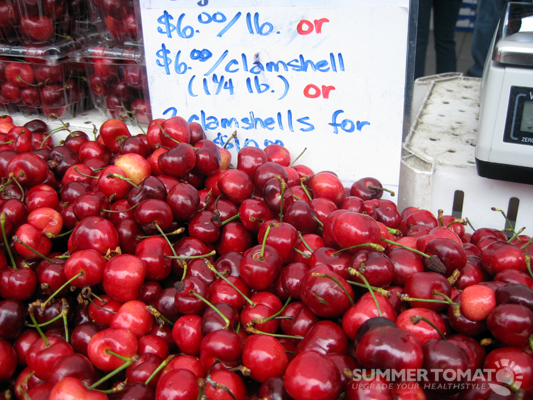
Brooks Cherries

Brooks Cherries

Of course there were other notable spring treats as well. Rhubarb is here, and before the season ends I’m determined to try to figure out how to use it. Most of the recipes I’ve seen for it are sweet, which I’m not so excited about. If you know of any good savory recipe, please let me know.
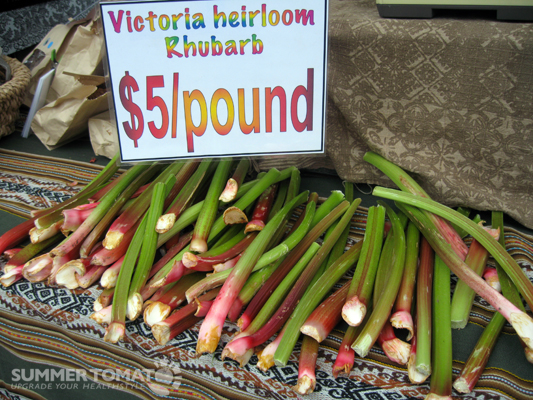
Rhubarb

Rhubarb

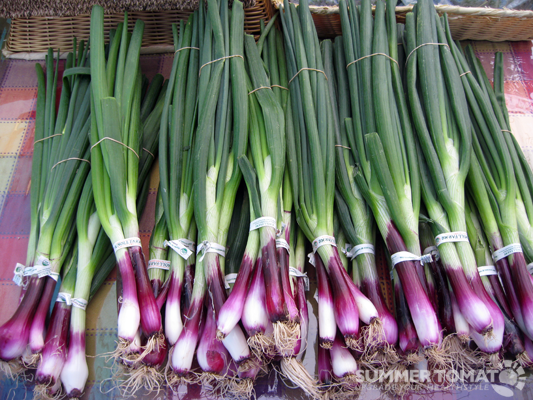
Generally all the spring vegetables are still amazing. I’m especially loving the sweet spring onions, though I’m normally not a huge onion person. This year I’m adding green onions to everything from eggs to salad. The leeks are excellent too.
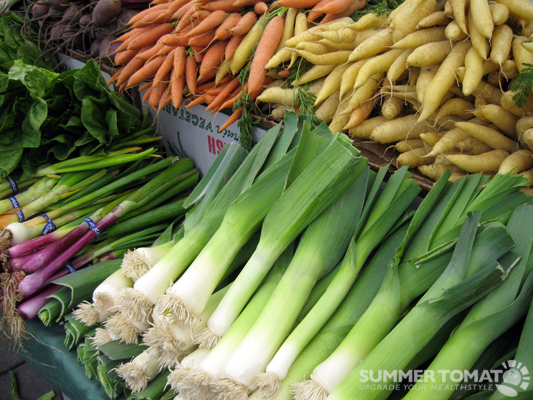
Spring Vegetables

Spring Vegetables

Oddly even summer produce is starting to appear. I was stunned today to see watermelon and peppers this early in the season. The vendor told me it was from their farm in Southern California, which makes a bit more sense.
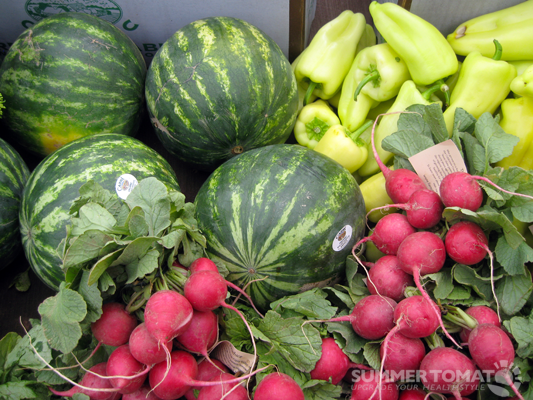
First Watermelon

First Watermelons

But as much as I love summer, I’m not ready to skip ahead just yet. I still haven’t tried any of these beautiful blueberries on my morning muesli.
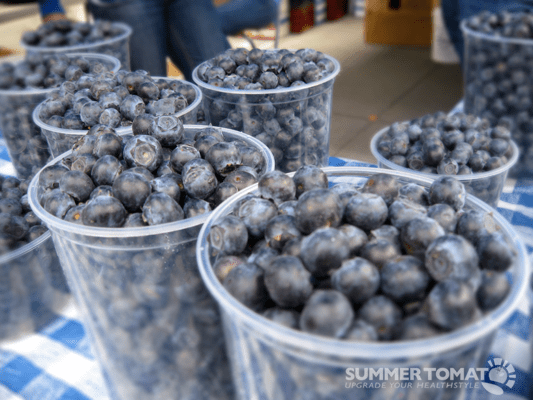
Blueberries

Blueberries

Nor have I found anything to do with green almonds yet this season.
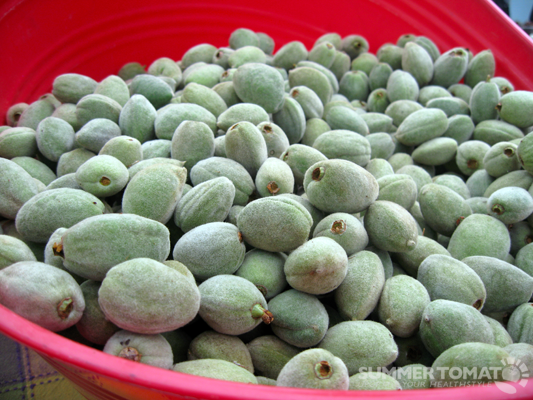
Green Almonds

Green Almonds

And the last of the citrus fruits shouldn’t be ignored either. This late in the season tangelos, navel oranges and kumquats are the best. Though we had some spectacular blood orange juice this weekend as well.

Kumquats

Kumquats

It’s truly an amazing time of year for the farmers market. Don’t miss it.
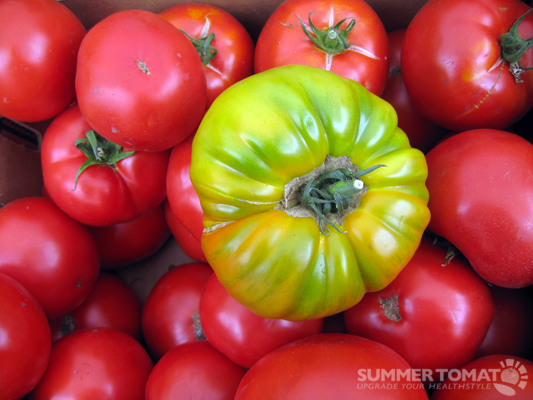
Big Tomatoes

Big Tomatoes

Today’s purchases:

2 responses so far

May 27 2011

For The Love Of Food

Filed under Link Love,News

For The Love of Food

Welcome to Friday’s For The Love of Food, Summer Tomato’s weekly link roundup.

This week I found a surprisingly in depth and thoughtful piece on genetically modified foods, an even more impressive food commitment by Facebook founder Mark Zuckerberg, and a few good signs that the politics of food labels are headed in the right direction—truth.

Also, for you geeks my thesis work is finally published. Here’s the deets.

Want to see all my favorite links? Be sure to follow me on on Digg. I also share links at Twitter (@summertomato) and the Summer Tomato Facebook fan page. I’m very active on all these sites and would love to connect with you.

Links of the week

What inspired you this week?

8 responses so far

May 25 2011

How To Eat Dessert And Still Stay Skinny

Filed under Eating,Healthstyle,Tips

Photo by E.Baron

Cutting processed foods and refined sugars out of your diet is arguably the most important dietary change you can make to improve health and lose weight. But will one slice of birthday cake inevitably tighten your pants and cut your life short?

Not necessarily.

Quality of life is hard to measure, but it certainly involves some balance between good health and hedonistic enjoyment of things that might not be perfectly healthy. The question is how we find this balance for ourselves, and how do we make sure our behavior helps us keep that balance?

The answer, of course, will be different for everyone. Competitive athletes have higher physical demands for maintaining ideal health than, say, a scientist. And I’m not a fan of watering down my favorite foods—especially desserts—with “healthier” ingredients. But there are a few general guidelines that can help the majority of us live a little without constantly fighting the battle of the bulge.

9 Tips For Dealing With Dessert

1. Eat dessert once per week or less

As a general rule I try to keep my dessert consumption to once per week or less (it is often less). A larger person may be able to get away with a bit more, but setting a weekly maximum can help you keep tabs on your sugar consumption. If you are actively trying to lose weight, aiming for once every two weeks or less is ideal.

Sugar is problematic for several reasons. Most of you probably realize by now that excess sugar causes rapid blood sugar and insulin spikes that force extra calories to be stored as fat. Over time these spikes will alter your sensitivity to insulin, negatively impacting your metabolism and risk of type 2 diabetes. Extra insulin signaling is also associated with heart disease, high blood pressure and accelerated aging.

The less refined sugar you eat the better, but assuming most of us aren’t willing to give it up completely it is helpful to have a weekly maximum to keep consumption in a reasonable range.

2. Pick your occasions

Once you decide to budget your sugar consumption, it is time to start choosing your priorities.

Is your weekly group meeting at the office (the one where there’s always doughnuts) really a special occasion? In other words, is that stale chocolate doughnut you wolf down while half asleep really worth the extra workout or skipping dessert with your kids this weekend? Probably not.

If you think about it, there’s a good chance you don’t even enjoy that doughnut as much as you assume you do. And we both know you’ll feel horrible after eating it anyway. So why do you believe that you want it?

When you stop and really think about your food choices, you’ll often find that many of them come from conditioning rather than true preference. But just because 12-year old you liked low-quality sweets doesn’t mean the adult you has to continue eating them.

Save desserts for the times that are really worth it, and realize you aren’t missing much by skipping the Costco brownie bites.

3. Don’t eat dessert alone

Special occasions are moments of celebration you share with people you care about. One of the wonderful things about life is these moments happen all the time. Our weeks and months are perpetually marked by birthdays, weddings, promotions, vacations and a million other reasons to celebrate. Use these special times as cues for when to indulge.

On the other hand, there is nothing particularly special about sitting alone on your couch watching TV. Try to get out of the habit of eating dessert alone, especially if this is something you rely on for comfort. If you just want something sweet, try having a piece of fruit or some herbal tea instead.

I recommend not keeping any pre-made desserts in the house at all. Why torture yourself?

4. Know dessert when you see it

If you’re eating dessert several times a day but only think you are eating it once or twice per week, none of these rules are going to help you maintain your health and physique.

Last week I wrote about the hidden sugars in common foods such as sandwiches, salads and fruit yogurts. There are clearly benefits to eating a salad, but syrupy dressings contribute to your sugar intake whether there is lettuce around or not. Overly sweet non-dessert foods make it more difficult for you to enjoy real indulgences without consequences.

Be aware of the sugar content in the foods you eat and actively try to minimize it in the bulk of your diet (i.e. choose sandwiches without teriyaki or BBQ sauce, salads with savory (not sweet) dressing, cocktails without juice or syrup, and plain yogurt).

If you’re eating healthy and minimizing sugar 90+% of the time, your waist will hardly notice the occasional birthday cupcake.

5. Little indulgences count

Just as you cannot ignore the 27 grams of sugar in Yoplait yogurt, you can’t grab 2 or 3 pieces of candy every afternoon from the bowl in the office without it adding up.

Be aware of the little cheats you make throughout the week and don’t kid yourself about their impact. If you decide that the work day is just too hard to get through without these, that’s fine. But you aren’t doing yourself any favors by pretending they don’t exist. Remember to count them in your mental dessert tally and keep it in mind when you’re looking lustfully at your grandma’s homemade apple pie and wishing you hadn’t had so much sugar this week.

6. Choose quality over quantity

If your goal is to limit your sweets but you don’t want to feel like you’re missing out, make sure your choices emphasize quality over quantity.

A few bites of good quality dark chocolate is infinitely more satisfying than a handful of Hershey’s kisses. Desserts can rack up 25-100 calories per bite. Get the most bang for your buck by picking foods with actual flavor and not just extra sugar and salt.

Hint: This tip should also help you stick to tips #2 and #5.

7. Go splitsies

Half a dessert is 100% better for you than a whole dessert.

If you really really want to try one of those cookies your co-worker has been bragging about for months but have already had your ice cream this week, try taking only half of one. Better yet, find someone to split it with you so you aren’t tempted to finish it. If it’s that good, a few bites should be plenty satisfying.

8. Resist peer pressure

Some people take a special pleasure in encouraging others to do things they know are bad for them. These people also tend to be good at recruiting others to join in their banter.

Be prepared to get nagged occasionally for not wanting to eat foods that aren’t worth it. But if you have decided in advance to stick to desserts you know taste better than what your friends are pushing, it really isn’t that hard to ignore them.

Who’s really missing out here?

9. Use the gym

Despite our best efforts, we all eat too much dessert every now and then. This isn’t good, but it isn’t the end of the world either.

When this happens to me I use it as an opportunity to amp up my workout routine. By far my best runs are on days when we have birthday cake in lab–I feel like I can run for days with all my extra energy.

Your muscles use sugar as fuel, so use it up while you can and give your metabolism a little boost (having a little extra blood sugar and insulin around when you’re exercising can actually improve your metabolism) and prevent those spare calories from being stored as fat.

You’ll probably feel better after working it off too.

How do you deal with dessert in your healthstyle?

Originally published March 31, 2010
StumbleUpon.com

24 responses so far

May 23 2011

Tips To Keep Produce Fresh

spring vegetables

Vegetables

“How do you store fruits and veggies so they don’t go bad? It seems like I can never keep things fresh…”

I employ several different strategies to keep my produce in good condition until I’m ready to eat it. Here are my tricks for buying, cooking and maintaining the freshest fruits and vegetables.

Shop Regularly

Although it is probably self-evident, I think it is important to state that the freshest vegetables are the ones you bought today. They are even fresher if you get them at the farmers market (picked yesterday) rather than a grocery store that imports produce from around the world. In order to keep fresh vegetables and fruit in the house and eat healthy, you must shop for produce and groceries at least once a week.

Download my free guide for more tips on How To Get Started Eating Healthy.

Shop Strategically

This is my true secret to keeping food fresh. Different foods have different shelf lives, and you can take advantage of this fact when planning your meals for the week. Always make sure you buy a few robust vegetables for your Thursday and Friday night dinners (or try to schedule your restaurant dates for later in the week).

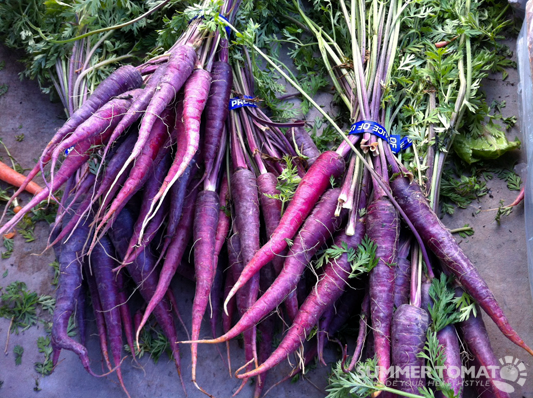
Cruciferous vegetables (both leaves and roots) store the best and can last well over a week in the crisper. Examples of cruciferous vegetables are broccoli, kale, collards, cabbage, chard, cauliflower and brussels sprouts. Root veggies include carrots, beets, parsnips, sunchokes and potatoes.

Summer squash can last for many days in a dry plastic bag in the crisper, and winter squash can last weeks on a shelf. Eggplant has a shelf-life similar to summer squash and can be stored in the same manner. I’ve heard eggplant keeps even better outside the fridge, but I’ve never tried.

Delicate vegetables like lettuce, spinach and other spring greens are not as robust and should be eaten more quickly. Juicy fruits like berries, stone fruits and even tomatoes are more time sensitive and should be incorporated into meals earlier in the week.

Cook Intelligently

Having a rough idea of what meals you are going to make during the week can help you keep veggies fresh in several ways. In addition to planning your dishes around which vegetables last the longest, you can also prepare large batches of food early in the week then freeze or refrigerate the leftovers to eat later.

Avoid over-shopping by buying ingredients to use in multiple different dishes, rather than buying extra items for vastly divergent menus. For example, rather than purchasing red peppers for a stir fry and radishes for a salad, you can skip the radishes and add your extra pepper to your salad instead.

When buying herbs, I like to get one bunch of Italian parsley (it keeps a long time and is incredibly versatile) and only one bunch of a more delicate herb like thyme or cilantro. With this strategy you can explore recipes of different cuisines that utilize similar ingredients. For instance, if I have cilantro I may make Mexican food one night and a Vietnamese dish another night. Both incorporate fresh vegetables and herbs, but the flavor profiles of these cuisines are entirely different.

This is where it comes in handy to have a well-stocked pantry–go beyond the basics and learn to work with ingredients like fish sauce, coconut milk or quinoa. This is a great way to delve into a cuisine and explore different flavors.

Store Properly

Proper food storage can also go a long way in keeping your produce as fresh as possible. Generally speaking, most vegetables maintain their crispness best in the aptly named refrigerator compartment, the crisper. Crispers have different humidity settings than the rest of the fridge and are optimized for vegetables.

I find that leafy greens and herbs keep best in dry plastic bags or tuppers. When you get home with a large bag of salad greens from the farmers market, rinse them clean and spin them in a salad spinner. Let them sit out for an hour or so to completely dry, then put them in large tuppers to store for the week. With this strategy the crisper is not necessary.

Most fruit (including tomatoes) I keep outside the refrigerator to protect the taste, but berries are an exception. I have had fantastic luck using a reader’s suggestion to keep berries in a jar or tupper with the lid closed tight. I always put my berries away immediately after getting them home, trying to handle them as little as possible to keep any mold or bacterial spores out. I try to roll the berries into their new container without actually touching them with my hands. I buy berries much more often now :)

Revival Techniques

Sometimes despite your best efforts you end up with a wilted head of lettuce or a floppy bunch of basil. But if wilting is your only problem and the plant looks otherwise edible (still green and free of mold), all is not lost!

The reason plants wilt is they lose water from their cells to the environment through osmosis. But the osmotic properties of leaves can be used to your advantage. You can revive wilted greens by submerging them in a bath of cold water for 30-60 minutes, which replenishes the water in the leaves and allows them to regain their crispness! It is astounding how much they will perk up.

I learned this trick from a friend and fellow scientist–one of the many advantages of being a little nerdy.

Mold is another issue when storing fruits and vegetables, but you can sometimes salvage a batch of food if you catch it early and carefully remove all traces of it to keep it from spreading to the rest of your produce (this may involve finding a new container for the uncontaminated portion). Remember, mold is a living, growing thing that breeds more of itself. Keeping foods in sealed containers and touching them as little as possible with your hands can help control it.

Finally, fruits produce gases that cause neighboring fruits to ripen more quickly. If you have something that is perfectly ripe or over ripe, you may want to keep it away from the rest (unless of course you want the nearby fruit to ripen faster). Likewise, keeping fruits in bags will trap the gases and cause them to ripen more quickly.

Conclusion

With a few tricks and a strategic plan it is possible to keep fresh fruits and vegetables in the house for an entire week. Beyond that it is a little tough if you want your food to be truly fresh.

How do you keep your veggies fresh?
StumbleUpon.com

This article was originally published June 22, 2009.

23 responses so far

Older Posts »