Farmers Market Update: Halloween

by | Oct 31, 2010
Hanging Pomegranates

Hanging Pomegranates

It’s Halloween weekend, always one of my favorite times to visit the beautiful San Francisco Ferry Plaza Farmers Market.

Baby Pumpkins

Baby Pumpkins

Crazy Farmer

Crazy Farmer

I can’t tell you how anxious I was to get to the market this weekend. I’ve been traveling a lot and haven’t been around on a weekend in what feels like forever.

At this point I’ve come to terms with the fact that summer is over and I’m completely ready to embrace autumn. Today I stocked up on some of my favorite autumn veggies like Delicata squash and Brussels sprouts.

Brussels Sprouts Stalk

Brussels Sprouts Stalk

Delicata Squash

Delicata Squash

I was also excited to get my hands on some apples today. The Arkansas black apple I tried may have been the best apple I’ve ever had in my life. It was crisp, slightly sweet and had distinctive notes of cinnamon. Mind blowing. But the star fruits right now are the pomegranates. It’s also a great time for grapes and Fuyu persimmons.

Cut Pomegranate

Cut Pomegranate

This is a particularly interesting time of year for California produce. Some of the unusual items I found today include heirloom tobacco leaves and dried sunflower seeds. The tobacco wasn’t cured, so is not yet smokable.

Dried Sunflower Seeds

Dried Sunflower Seeds

Dried Heirloom Tobacco

Dried Heirloom Tobacco

You can also find an assortment of root vegetables. Carrots and scarlet turnips were particularly beautiful this week. Carrots have been turning up on a lot of menus around the city lately.

Scarlet Turnips

Scarlet Turnips

Carrots

Carrots.

The onions and sunchokes are also remarkable.

Sunchokes

Sunchokes

Spanish Onions

Spanish Onions

But despite the new arrivals, we still have a terrific selection of late summer vegetables like peppers, eggplant and tomatoes.

Assorted Eggplant

Assorted Eggplant

Shishito Peppers

Shishito Peppers

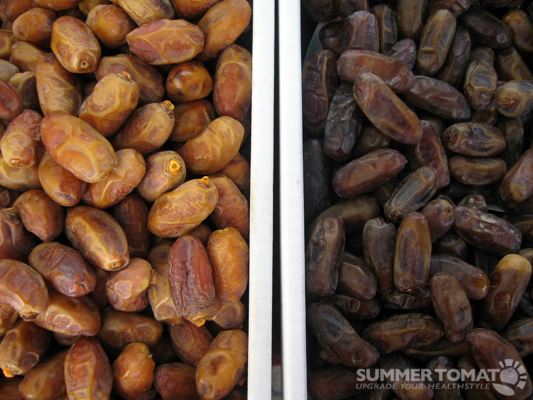
Some final notes: Dates are on their way out (get them while you can) and Meyer lemons are on their way in.

First Meyer Lemons

First Meyer Lemons

Dates

Dates

Today’s purchases:

What did you find at the market this week?

Tags: , , , , , , , , , , , , , , , , , ,

For The Love Of Food

by | Oct 29, 2010

For The Love of Food

Welcome to Friday’s For The Love of Food, Summer Tomato’s weekly link roundup.

Extra fructose in soda and a lack of sucrose (real sugar) in Mexican Coke is more than enough BS for me this week. Also see how a kid’s diet is linked to ADHD and what might be causing fertility problems in men.

I read many more wonderful articles than I post here each week. If you’d like to see more or just don’t want to wait until Friday, be sure to follow me on Twitter (@summertomato) or the Summer Tomato Facebook fan page. For a complete reading list join me on Digg. I’m very active on all these sites and would love to connect with you.

Links of the week

What inspired you this week?

Tags: ,

5 Scariest Halloween Candy Ingredients You Should Avoid

by | Oct 27, 2010
Candy Domo

Photo by mateoutah

I’m all for sweet treats on special occasions, but halloween candy is a different beast.

Michael Pollan warns that we should avoid anything that our great grandmothers wouldn’t recognize as food. How would she feel about these scary ingredients?

5 Scariest Halloween Candy Ingredients You Should Avoid

1. High Fructose Corn Syrup (HFCS)

They call it “corn sugar,” I call it bad for you. There is still debate over whether HFCS is worse for you than regular sugar, but let’s not forget that regular sugar is really bad for you too, so it doesn’t really matter. HFCS is in virtually every candy and very hard to avoid.

2. Artificial colors

Food coloring (especially Blues 1 and 2, Red 3, Green 3, and Yellow 5) are associated with a handful of cancers and a bunch of other scary reactions. Many of them have been banned in various countries around the world, but they are still commonly used. A certain percentage of the population is so sensitive to Yellow no. 5 they break out in hives and have asthma attacks. Tasty huh?

3. Trans fat

Trans fat may have been banned in restaurants, but it is still in most candy bars like Snickers and Three Musketeers. There is no safe amount of trans fat in your diet and you should avoid it like the plague.

4. Sodium

To balance the nauseating sweetness of HFCS-supercharged candies, most are balanced with a hefty dose of salt. Though you can safely add salt to natural foods, the staggering amounts in processed foods are dangerous and often result in high blood pressure and stroke.

5. Carnauba wax

Though carnauba wax has not been shown to be toxic to humans it is a common ingredient in car waxes, shoe polish, cosmetics, floor polish, surfboard wax and, of course, halloween candy. Do you really want to be eating food that requires shining?

What halloween candies do you avoid?

Tags: , , , , , , , ,

Farmers Market Update: Tokyo

by | Oct 24, 2010
Shisikaikai

Shisikaikai

I’ve always wanted to go to Tokyo, and this seals the deal. Huge thanks to Joan for giving us a glimpse of the local food movement direct from Japan.

Joan Lambert Bailey lives, farms, and gardens in Tokyo. Follow her from seed to harvest to market at Popcorn Homestead and Everyday Gardens, as well as greenz.

Follow Joan on Twitter @JoanLBailey

Farmers Market Update: Tokyo

by Joan Lambert Bailey

First thoughts of Tokyo usually do not include farmer’s markets. Yet, this megalopolis balances its abundance of concrete, neon, and skyscrapers with a healthy dose of green spaces large and small that in the last few years have begun to include a handful of western-style farmers markets. A burgeoning local food movement fueled by food safety concerns as well as a cultural penchant for local, seasonal foods draw growers, producers, and eaters together in ever-increasing numbers to mix and mingle over tables brimming with seasonal fare.

Fruit Stall

Fruit Stall

Ryohei Watanabe Farm

Ryohei Watanabe Farm

Heading down to the weekly United Nations University Farmers Market is to enter one of the city’s larger hives of fresh, local foods. An easy (albeit slightly uphill) walk from hopping Shibuya, the market attracts growers and producers from literally all over the country. (“Local” here often means not only the city or region the market is located in, but Japan itself.) On our most recent trip we met vendors from the northernmost island of Hokkaido, as far south as the island of Kyushu, mountainous Nagano, and the Izu-Hanto Peninsula. Many also come from as close as Chiba, a fantastically beautiful growing area just southwest of Tokyo, as famous for its rice and vegetables as it is for it’s surfing.

Edamame

Edamame

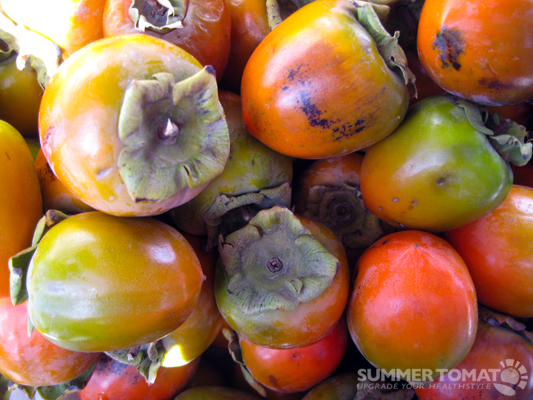
Kaki

Kaki

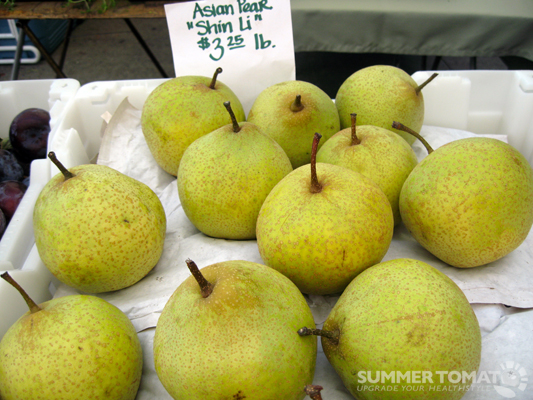
The day we went a spell of cool rainy weather had just broken and bursts of sunshine seemed to sprout shoppers in every corner of the market. Lined up two deep at nearly each of the more than seventy stalls arrayed under white awnings in front of the university, the atmosphere buzzed with good food shopping. Vendors offered up a mix of the last of the summer – eggplants, okra, nashi (Japanese pear) and edamame – alongside the first tastes of fall and winter – kaki (persimmon), chestnuts, apples, sweet potatoes and early winter greens. The first of this year’s rice harvest as well as new miso, honey, jam, green yuzu, grapes, and satoimo (taro) helped fill out the days selection, too. It’s easy to find enough ingredients for a week’s worth of meals. (I confess that I usually overdo because I can’t resist a good-looking vegetable!)

Baskets

Baskets

Satoimo

Satoimo

On our first turn about to see what was on offer I stopped to visit Ryohei Watanabe of Farm Campus, a new CSA where members purchase a cross-section of rows of assorted seasonal vegetables with the option to work the fields themselves. Along with brochures about his CSA, Ryohei offered up moroheya – a tasty and nutritious leafy green, lovely winter squash in all sizes, Chinese greens, okra, green peppers, and eggplant. He’s toying with the idea of planting late season sweet corn, an experiment I’m anxious to hear (and taste) the results of when the time comes. Meanwhile, I couldn’t resist the squash, and so a medium Yukigesyo was the first purchase to land in my bag.

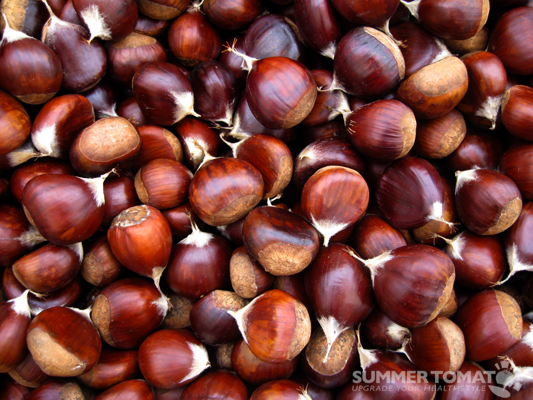
Down the lane a bit, just past a beautiful display of blue, red, and yellow potatoes from Hokkaido, I ran into KOGA Ecological Club. A student group from Kokugakuin University, KOGA members work with aging farmers in a shiraku (hamlet) in Chiba. Learning farming from preparing fields for harvest to selling the harvest at market, they offered chestnuts, samples of newly harvested boiled peanuts, as well as kodaimai, an heirloom rice distinctive for its easy growing as well as its red coloring, and togarashi (Japanese hot peppers). Clearly enjoying themselves, this table drew in a bevy of customers for their infectious enthusiasm as much as their tasty wares. Caught up in it myself, I added chestnuts, kodaimai, and togarashi to our upcoming menu.

Kodaimai

Kodaimai

Swinging around to the other side of the market past stalls selling rock salt, mushroom spore filled logs for home growing, and fresh bread, I stopped to sample the steamed buns filled with sweet potato from Shikisaisai in Fukushima. An all organic farm run by a young couple, they alone could have filled our larder for the week. Reasonably priced bags of newly harvested brown rice and big shapely sweet potatoes dug just the day before joined the usual combination of later summer and early winter vegetables. This first taste of the year’s limited sweet potato harvest (high heat paired with drought conditions are making for a very limited supply of this signature fall crop) made it inevitable that two of them would get added to our menu for steaming with that evening’s rice.

Just next to Shikisaisai, the Sunny Products booth offered up a myriad of vegetables along with some tasty looking eringi, one of the many seasonal mushrooms swinging into their peak just now and considerably cheaper than the famous matsutake. Like a handful of other vendors at this particular market, Sunny Products is a distributor rather than a grower. Carefully labeled items let customers know the name of the farm and its location, and staff are able to discuss a particular grower as well as share recipes. It’s perhaps no surprise to learn that the eringi journeyed home to our table, too.

Circling back around, I ventured over to a particularly nice looking display of kaki (persimmon) near Farm Campus’ stall. Perhaps the fruit of the season in Japan, kaki trees can be found in urban and suburban areas as well as outlying areas heavy with fruit. This booth served up three varieties from Aichi and Fukuoka Prefectures – long and chubby, round and fat, and square and stout – with slightly differing levels of sweetness. Tasty fresh, dried, or even soaked in sake for extended periods of time, the kaki never disappoints. I came away with one of each to compare for myself and for a colorful dessert option.

Read more about How to pick a persimmon

What we bought:

  • Yukigesyo Winter Squash
  • Chestnuts
  • Kodaimai Heirloom Rice
  • Togarashi
  • Sweet potatoes
  • Eringi Mushrooms
  • Kaki

Tips and Insights

  • The UN University Market runs every weekend on both Saturday and Sunday from 10am to 4pm. Most vendors come both days, but not all. It’s worth the effort to try and come both days or switch back and forth from week to week.
  • Every third Friday of the month a Night Market is held. Food vendors, live music, and farmers make for a unique evening out in the city. Even on the chilliest of evenings it’s not to be missed!
  • Not all vendors, of course, speak English, but smiles, a general show of interest and a sincere “Arigato!” (thank you) at the end all go a long way for a positive food shopping experience.
  • Not all vendors are organic or necessarily farmers. Some are distributors, like Sunny Products, and others are Tokyo relatives of the growers. Asking where the food comes from and how it got to Tokyo is fine, and the majority of vendors will have brochures or business cards with a website listed, too.
  • Bring an extra shopping bag as well as a small notebook. If you’re like me, you end up buying more than you thought, and it’s easier to remember the name of a new fruit or vegetable if you can jot it down. Plus, a recipe often follows, and you’ll get so many good ones you should be prepared.
  • Plenty of interesting food carts are on hand, too, selling everything from coffee and pastries to full meals – vegetarian, organic, and meaty – with accompanying tables and chairs.
  • A few craft vendors are also present selling beautiful handmade goods that make excellent gifts for anyone (including yourself!) on your list.
Tags: , , , ,

For The Love Of Food

by | Oct 22, 2010

For The Love of Food

Welcome to Friday’s For The Love of Food, Summer Tomato’s weekly link roundup.

Before we get started, I’ve been collecting feedback from readers on what you do and don’t like about Summer Tomato and how I can make it better moving forward. If you have 2 minutes, please go to my 7 question survey and let me know what you think.

Summer Tomato survey

Thanks in advance for your time. I’ll be sending out a newsletter next week with answers to commonly asked questions and requests.

On the web this week I found a simple shopping technique that can help you make healthier choices and the best cooking and recipe iPhone apps. I also explored the mysterious case of the missing mango and learned how and why to get more exercise without breaking a sweat.

I read many more wonderful articles than I post here each week. If you’d like to see more or just don’t want to wait until Friday, be sure to follow me on Twitter (@summertomato) or the Summer Tomato Facebook fan page. For a complete reading list join me on Digg. I’m very active on all these sites and would love to connect with you.

Links of the week

Tags: , , , , , , , , , , ,