Archive for May, 2010

May 31 2010

10 Reasons You Hate To Cook (And What To Do About It)

Filed under Cooking,Healthstyle,Tips

Photo by liber

I don’t like the word hate and try not to use it. I especially dislike it when it is applied to any kind of food or cooking.

Do you really hate asparagus? Or are you just whining about something you haven’t bothered to learn to appreciate? Yeah, I thought so.

My theory is that most people who profess to hate cooking are actually just making excuses to avoid it. Why would anyone really hate cooking? What did cooking ever do to you?

The sad part is that cooking is a wonderful skill to have. Not only does it save you time and money on food, it also contributes to better health (usually), brings you closer to friends and family, and is a great creative outlet for stressful lives.

You don’t have to love cooking, but knowing the basics and feeling competent in the kitchen can open a world of opportunity to improve your quality of life. But sure, go ahead and hate it if you want.

For those of you that thought you hated to cook but are now cautiously curious about what you’re missing, here are a few of the obstacles that may be preventing you from getting past your pessimism and what to do about them.

10 Reasons You Hate To Cook

(And What To Do About It)

1. You suck at it

The first thing you need to do is understand the difference between not liking cooking and not liking to be bad at cooking. Big difference. I didn’t like being bad at cooking either, but there is a pretty easy solution: learn how. It’s much easier than you think.

2. You’re slow

I know you’re busy. We all have better things to do than slave away over one lousy meal. But when you aren’t experienced in the kitchen the planning, shopping, chopping, cooking and cleaning involved in making a meal can feel like it takes forever. That’s because it does.

I can always spot a kitchen rookie by how long it takes them to chop an onion (seriously it takes like 20 seconds max). The good news is with a little practice and some decent knives (see point 3) you can slash the time you spend making a meal until you barely notice.

Ditto for cleaning up. Seriously, put some muscle into it and it’s over in no time!

3. You have crappy knives

I generally don’t advise spending money to solve problems, but knives in the kitchen are an exception. Spending $50 on a half-way decent chef’s knife can do wonders for your kitchen confidence and efficiency.

And you probably already know what an inspiration a shiny new toy can be.

4. You pick complicated recipes

Some of the best meals I’ve ever eaten have less than 5 ingredients. If you’ve never cooked anything in your life, cassoulet shouldn’t be your first choice.

Rather than finding a recipe and deciding to cook it, start with an ingredient that is seasonal and you know you enjoy. It’s hard to mess up kale and garlic. Learn to fly before you jump off a cliff.

5. You choose out of season ingredients

The main reason people don’t like _(fill in the vegetable)_ is because they have only had it from industrial farms that grow foods out of season. I agree, you’d have to be a masochist to like these impostors.

Farmers markets offer the solution. Buy high-quality ingredients at the height of the season. Pick the ones at the market that inspire you. Trust me, this will completely change your cooking experience. You don’t know what you’re missing.

6. Your pantry is inadequate

It can be really annoying to flip through a recipe book or food blog and realize that you need to make one or many grocery trips in order to make any dish because you don’t have olive oil, salt, pepper, red wine vinegar or red chili flakes. If you don’t know what belongs in a basic pantry, check out my free How to get started eating healthy guide for a rundown.

7. You skipped the farmers market

If you’ve tried cooking and a recipe turned out bad the most likely cuprit is your ingredients, not your skills. Not even a great chef can save bad broccoli. Start with the best and messing up becomes nearly impossible. But whatever you start with, try not to overcook it.

8. You only cook for large groups

Your first cooking forays shouldn’t be huge productions. Start simply and don’t bite off more than you can chew by promising to host a dinner or bring food to a potluck of 30 people. Start by volunteering to help in the kitchen with someone who knows what they’re doing. Make a side dish, or a simple one pot meal for yourself.

Practice makes perfect, and you want your first experiences to go smoothly to build your skills and confidence.

9. You only cook for special occasions

New cooks don’t need any extra pressure in the kitchen. If you’re just learning your way around the range, maybe you should hold off on hosting Thanksgiving dinner or Mother’s day brunch. It can be stressful to just coordinate a large meal, you don’t need the added pressure of possibly ruining a family holiday. If you want to contribute, volunteer to make the salad or biscuits. Start your real kitchen adventures in the privacy of your own home.

10. You don’t ask for help

If you are truly new to cooking, you may as well acknowledge that you will be slow and lack the basic skills and intuition of a seasoned chef. You are definitely capable of getting there, but in the mean time make your experience as pleasant as possible by letting others contribute their expertise and knife skills when you want to cook. It is also nice to have an extra pair of hands for cleanup.

Do you really hate cooking? Or are you just looking around the room and saying that you hate things?

17 responses so far

May 30 2010

Farmers Market Update: Perfect Day

Bay Bridge

Bay Bridge

Saturday was a perfect day in San Francisco. It was warm, clear and beautiful. The farmers market was full of cherries, peaches and strawberries, and I tasted the best apricot ever at Frog Hollow Farm.

Basically it was too nice to stay inside writing about it. Photos will have to suffice today.

Bing Cherries

Bing Cherries

Green Garlic

Green Garlic

Loquats

Loquats

Peppers

Peppers

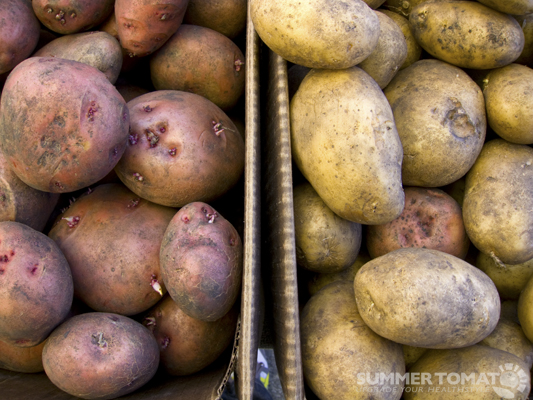
Potatoes

Potatoes

Red Onions

Red Onions

Saturn Peaches

Saturn Peaches

Shallots

Shallots

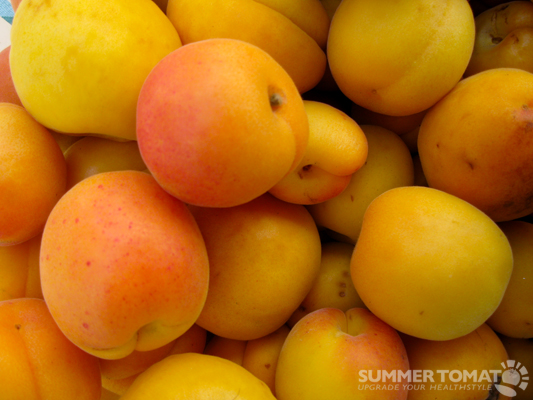
White Peaches & Apricots

White Peaches & Apricots

One response so far

May 28 2010

For The Love Of Food

Filed under Link Love,Random

For The Love of Food

Welcome to Friday’s For The Love of Food, Summer Tomato’s weekly link roundup.

I’m thrilled to announce this week the launch of an amazing project. 55 Knives is a new e-book just launched by my friend Nick at the wonderful Macheesmo blog. The 55 Knives project is a joint effort of 55 top food bloggers offering personal stories paired with hand-selected recipes. I contributed a chapter, as did many of my favorite food bloggers including Local Lemons, The Bitten Word and Chez Us. I’ve read through it and highly recommend it. 55 Knives is offered at a discounted price of $14 until next Thursday.

If you read one food article this week, make it Michael Pollan’s new piece in the New York Review of Books. I also really enjoyed the article about how health food labels are complete BS.

I read many more wonderful articles than I post here each week. If you’d like to see more or just don’t want to wait until Friday, be sure to follow me on Twitter (@summertomato) or the Summer Tomato Facebook fan page. For complete reading lists join me on the social bookmarking sites StumbleUpon and Delicious. I’m very active on all these sites and would love to connect with you there. (Note: If you want a follow back on Twitter introduce yourself with an @ message).

Links of the week

What inspired you this week?

7 responses so far

May 26 2010

Unplug And Recharge With One Meal A Day

Green Apple, Yellow Teapot

Photo by Chris Isherwood back soon

Few things are as irrevocably tied to our health and well being as food. But while much attention is given to the kind of foods we eat, the way we eat and our relationship with food can be just as important.

Eating traditions and food culture have been all but abandoned in the US. Thanks to busy schedules, technological advances, and the aggressive marketing of convenience foods by the food industry it is now both possible and acceptable to eat anytime and anywhere.

But what price do we pay for this new found convenience?

Efficiency and multitasking are appealing in a society where time is arguably our most precious commodity, but we must remember that in the food world what we gain in expediency we sacrifice in quality of life.

When our goals are to cook as little as possible, eat whenever convenient, and not worry about the origins of our food, we lose both the joy and good health food should bring to our lives.

Meal time is an opportunity to unplug from the daily grind and recharge both physically and mentally. Rather than viewing eating as a regular chore that needs to be accomplished as efficiently as possible, we should approach food as a source of health and pleasure to be nurtured and enjoyed.

The most basic satisfaction we take from food is the sensual pleasure of eating itself. Good food is delicious, and appreciating this gift of nature can bring tremendous joy to you and those you care about. A good meal deserves your full attention and requires little more than stepping away from the screen and sitting at a table.

Food also has the power to bring people together and strengthen relationships. A strong social network can have a tremendous impact on your quality of life, and meal time is one of the easiest ways to nurture this basic human need. Instead of gathering around the TV at dinner, try using this opportunity to share quality food and conversation with people you care about.

But the joys of food are not limited to highbrow meals with other people. Both cooking and sitting down to eat by yourself without disruptions from multimedia can create rare moments of peace and thoughtfulness, a chance to break away from the constant demands on your attention. Taking time to reflect each day can do more to reduce your stress levels than banging out just a few more emails while inhaling a sandwich.

Food also has the power to deepen your appreciation of nature and your community. When food is important to you, ingredients (and where they come from) quickly take center stage. Great ingredients are a product of both nature and the skill of the grower. Understanding all that goes into making a wonderful meal helps you appreciate the seasons, the soil and the agricultural community that are responsible for growing your food. Understanding and respecting the origins of what you eat helps connect you to our planet and your local community.

Since we eat three times a day, the various joys we get from food can contribute immensely to our quality of life. Though it might not be possible to slow down and unplug every time you eat, striving to step away from multimedia at least one meal a day can help you work more efficiently the rest of the time.

When we pay it our full attention, food simultaneously recharges us in both body and spirit. In this way, unplugging and enjoying a meal is its own form of multitasking.

How does cooking and eating improve your quality of life?

StumbleUpon.com

8 responses so far

May 24 2010

Grilled Fennel With Lemon Oil

Grilled Fennel

Grilled Fennel

This grilled fennel turned out absolutely amazing and was very simple to make. I got the idea from a dish I tried recently at a local restaurant, Pizzeria Delfina, but honestly did not believe my version would be anywhere near as awesome. To my surprise, it was pretty darn close. Needless to say I am super proud of myself for this one and I hope I can convince you to try it.

Fennel is a unique vegetable that looks like a cross between celery and an onion, but tastes like neither. The flavor resembles anise or black liquorish when raw (a taste I still really struggle with), but takes on a sweeter, more herbal flavor when cooked. I have always been a fan of cooked fennel, despite my aversion to raw preparations. But I had no idea how far this misunderstood vegetable could be elevated by throwing it on the grill.

Don’t have a grill, you say? Awesome, neither do I. Backyards aren’t exactly standard in city apartments. For this recipe I used an apartment-friendly alternative to an outdoor grill, the humble grill pan.

A grill pan is special because it features raised ridges that can leave those wonderful, coveted grill marks on your food. Grill marks not only give your food a lovely appearance, they also add a unique flavor because sugars and fats caramelize where they come in contact with the hot pan. This effect cannot be achieved in a standard fry pan and the grill pan is a delicious alternative for cooking meats, fish and most vegetables.

My favorite grill pan (also the favorite of Cook’s Illustrated) is only about $40, far cheaper than a traditional outdoor grill or indoor electric grill. You can buy it at Amazon.

Feel free to use which ever grilling method is easiest for you.

When picking out your fennel, I recommend using several baby fennel bulbs rather than one large one (they’re in season now). Baby fennel is more tender because it does not have a large, hard inner core like full-sized fennel. A tender center allows you to leave the bulb mostly intact on the grill, making it easier to turn and cook evenly.

I purchased Lisbon lemon olive oil from Stonehouse Olive Oil at the Ferry Building in San Francisco. You can find lemon oil at specialty grocery stores, and it is a wonderful ingredient for spring vegetable dishes. But if you prefer, you can make due with extra virgin olive oil and a meyer (or regular) lemon.

This is a side dish. I paired mine with asparagus ravioli and sorrel.

Grilled Fennel with Lemon Oil

Ingredients:

  • Fennel (~1 lb)
  • Extra virgin olive oil
  • Lemon olive oil (or 1/2 Meyer lemon juice and zest)
  • Sea salt
  • Fresh Italian parsley, chopped

If you are using baby fennel, cut off the green stems and the very bottom of the root (but not so much that the layers have nothing to attach to). Then cut the fennel in half lengthwise, and then again into 4-6 bite-sized wedges.

The goal is to get your fennel into manageable chunks, which means (ideally) all the layers would still be attached at the bottom. This is much more difficult if you have removed the core. In my experiment (I made the mistake of buying large fennel) I removed the core on one half before cooking and left the other half with the core in while cooking. It was easier to get the fennel to cook evenly on the half where the core was still attached. You can remove the core after cooking if it is still tough.

If you are using a large fennel bulb simply trim off the stems, slice off the bottom and cut the bulb in half lengthwise. Cut each half into even-sized wedges, about 0.5 inch thick.

For an outdoor grill, simply brush your fennel wedges with olive oil, sprinkle with sea salt and grill until soft and tender, turning occasionally.

For a grill pan, heat the pan on medium high heat for 3-5 minutes. Lightly coat fennel in olive oil and sea salt (use a bowl and stir). When the pan is hot, add 1-2 tbsp olive oil and gently swirl it in the pan so it coats the surface. Place fennel in a single layer on the hot grill, lower the heat to medium and cook until translucent, tender and slightly browned, turning occasionally. For me this took about 10 minutes. I recommend using tongs with nylon headsto turn your fennel in the pan.

Your fennel should have grill marks and be caramelized in places. I suggest exercising patience and allowing fennel to become extremely tender, but you can choose your desired crunchiness. Remove the fastest cooking fennel pieces from the grill when they are done and place them in a bowl.

When all the fennel is finished cooking, drizzle it lightly with lemon oil (or juice and zest) and sprinkle with freshly chopped parsley. Adjust salt and zest if necessary.

Have you tried grilling fennel?

24 responses so far

Older Posts »