Sign up

You deserve to feel great, look great & LOVE your body

Enter your email for your FREE starter kit to get healthy & lose weight without dieting:

  • This field is for validation purposes and should be left unchanged.

Is It Healthier To Eat Like A Caveman?

by | Mar 7, 2012

Photo by Lord Jim

“What do you think of the Paleo diet which advocates zero grain consumption?”

The Paleolithic diet is one of the most rapidly growing diet trends of the past several years. Followers of the Paleo diet argue that humans have not evolved to eat agriculture-based foods and can only achieve optimal health by consuming a hunter-gatherer style diet. Thus the Paleo diet is completely devoid of grains and legumes, and also shuns dairy, salt, refined sugar and processed oils. The diet is composed primarily of meats, fish, vegetables, fruits, roots, nuts and seeds.

(The Wikipedia article on the Paleo diet is actually pretty good if you’d like to read up on the details. I particularly like the Opposing views section.)

Like most diets the Paleo diet has a little bit of good science behind it, but also a lot of logical leaps and baseless assumptions. The evolutionary argument that humans are somehow maladapted to agriculture-based diets is particularly unconvincing (resting on many unproven assumptions), yet is the fundamental premise on which the Paleo diet bases its recommendations.

The reasoning behind the Paleo diet is less interesting to me, however, than the impact of the diet itself. Will “eating like a caveman” really help you be healthier?

Possibly, but not necessarily.

The most obvious advantage of the Paleo diet is the lack of processed foods. There is ample evidence that societies on traditional diets boast far better health than those on modern, Western diets–and the hallmark of modern diets is food processing. Paleo diets therefore are low in sugar, refined carbohydrates, trans fats, excess salt and pretty much everything else that leads to “diseases of civilization.”

Paleo diets are also abundant in healthy, nutrient-rich foods such as vegetables, fruits, nuts, fish and meats. I have no doubt that anyone willing to stick to a Paleo eating plan will have a healthy weight and remain virtually free of heart disease, diabetes, hypertension and may even have lower rates of cancer.

But the question still remains, is it necessary to eat Paleo to be healthy?

This is where I take issue with the Paleo philosophy. While a diet completely free of processed foods is undeniably healthy, the Paleo diet goes beyond this and demands considerable sacrifice.

Paleo diets do not allow for any grains or legumes. This pretty much eliminates every traditional cuisine on earth including Japanese, Italian, Indian and Greek. Not only is this a culinary tragedy, it ignores the fact that these cuisines feed some of the world’s healthiest and longest-lived individuals.

Traditional, global diets that exclude highly processed foods but also include grains and legumes have been some of the most successful for health. Diseases of civilization are only problematic in Western cultures where processed foods make up a large proportion of the calories and few whole food are consumed.

Proponents of the Paleo diet argue that it is necessary to eliminate grains and legumes because they contain “antinutrients,” substances that can interfere with the body’s absorption of other important vitamins, minerals and proteins. However, well-nourished individuals who eat a varied diet of unprocessed foods (including grains and legumes) are not nutrient deficient and are generally healthy.

Given that it is possible to thrive on a diet that includes some grains, legumes and even small amounts of processed foods, one must question if giving up the culinary joys of travel and global cuisine are really worth the sacrifice.

In my experience, food substitutions and modified recipes designed to mimic traditional meals can sometimes be tasty but can never replace true authenticity.

Another contention I have with the Paleo diet is the assumption that the same eating patterns will work for everyone. People’s lives differ in countless ways. We each have different levels of daily activity, demands on our time and food preferences. We also have different genetic backgrounds, which can result in significant differences in metabolism and hormone levels. These individual variations make dietary needs different for each of us.

Because of our individual differences, there is undoubtedly a percentage of the population that thrives on the Paleo diet and finds it easy to stick to and achieve results. Hooray! However there may also be a segment of the population (myself included) that finds living without grains and legumes to be chronically unsatisfying and unsustainable.

Try telling a foodie they can never eat cheese or drink wine again and see how far you get pitching a Paleo diet.

If you currently eat a typical Western diet with little variety and many processed foods, tend to have better success following rigid diet plans, and have no qualms about giving up or modifying traditional meals to meet your dietary demands, then you might have luck following the Paleo diet. However there is no reason to believe it is the only path to good health.

The best diet is the one that works for you. Finding a healthstyle you can embrace and enjoy is essential if you want to build a lifetime of healthy habits.

Do you follow a Paleo diet? What do you think?

Originally published February 22, 2010.

Tags: , , , , , , , , , , , , , , ,

Meal Planning Without Shopping Lists

by | Feb 15, 2012

Photo by evelynishere

Photo by evelynishere

Food shopping can be intimidating, especially if cooking is new to you.

A common approach to this problem is to pick your recipes beforehand, make a list of what you need and then shop until everything from the list is in your basket. But being comfortable shopping without a list is a valuable skill worth adding to your healthstyle toolkit.

Lists can come in handy, especially when you’re planning a large meal or event where organization is essential. But at a farmers market, shopping lists aren’t nearly as useful.

You can never be 100% certain of what you’re going to find at the market each week. Sure there are things you can usually count on (I know I can find kale at my market year round), but having a long catalog of ingredients for a particular recipe is likely to be frustrating.

A shopping list you can’t fulfill will leave you scrambling, running around the market looking for absent ingredients or inferior substitutes. No fun. The last thing you want to do is turn the farmers market into a source of anxiety.

Still the best reason to avoid lists at the farmers market is that discovering new and interesting foods is what makes shopping there such a treat. It takes an open mind and curious eyes if you hope to find the next tree tomato.

So how do you free yourself from the shackles of shopping lists without ending up with a pile of random vegetables and no obvious meals?

When shopping at a farmers market, the best meal planning strategy combines both structure and flexibility. Start with an idea of what you want to accomplish, then let the season’s offerings nourish your spirit of adventure and round out your menus.

Meal Planning at the Farmers Market

Step 1. Quantify

Think about how many meals you want to get from your purchases (e.g. 4 dinners, 5 lunches), and be sure to have that many main course ideas (vegetables being the centerpiece) given that a few will probably repeat.

At this point it is okay to have one or two things in mind you know you want to make, but the rest of your meals should be inspired by wandering through the aisles and seeing what catches your eye.

Step 2. Visualize

As you discover which foods will be the focal points of your meals, start to think about how you might like them cooked (even if you don’t know how). Think about what other flavors usually taste good with what you’re buying–consider herbs (parsley, thyme, mint, cilantro, etc.), proteins (meats, fish, eggs, legumes) and side dishes.

If you can’t think of anything, try to remember how these foods have been served to you in a restaurant. If you still aren’t sure what other flavors would be a good choice, ask the vendor you are buying from. Farmers are usually pretty good at cooking the foods they grow.

Step 3. Consolidate

For all the different ideas you had for meals, think of those with common flavors. Look for similarities between the dishes and overlapping ingredients. For example, most dishes will need some kind of onion, garlic or both. The farmers market is also a great place to get herbs and spices.

Look around and see what is available, purchasing the ingredients that are the most versatile. Flavors that can be included in several different dishes also give you the flexibility to change up your meal plans in middle of the week if you are suddenly struck with inspiration.

Step 4. Collect

As your ideas solidify, be sure to collect all the elements you need. iPhone apps can be particularly helpful with this if you want to double check ingredient lists. Because most popular recipes are born from available seasonal ingredients, it is likely you will find everything you need while shopping at the farmers market. If not, you might need to pick up the rest of your ingredients at a regular grocery store–not the end of the world.

To make sure you don’t forget anything, think about each dish individually and deconstruct each of the elements in your mind. This will jog your memory if you forgot to grab a lemon or some garlic.

Step 5. Plan

It is good to have a rough idea of when you are going to eat each of the meals you visualized. Some vegetables hold up better than others over the course of a week in the refrigerator. Plan to eat the most delicate produce in the first day or two, and save the hearty kale and broccoli for later in the week. Here are some tips to keep produce fresh.

Conclusion

Creative shopping without lists takes some practice, but you don’t have to be a master chef or flavor expert to get it right. When cooking with delicious, seasonal ingredients you can’t go wrong with simplicity. Start with the basics and work your way up as you get more comfortable in the kitchen and at the market.

Do you use shopping lists?

Originally published January 20, 2010.

Tags: , , , , , , , ,

Foodist Recalibration

by | Jan 1, 2012
Photo by o5com

Photo by o5com

It’s been a rough couple of months. I’ve been out of town almost every weekend since the beginning of November, and sadly can’t remember the last time I went to my beloved farmers market.

Though the traveling was fun, I couldn’t be happier to ring in 2012 with a fresh start. I don’t diet or “cleanse” (I’ve yet to hear a scientific explanation of what that actually means), but I’m taking the first two weeks of January to eat extra healthy and recalibrate back to my regular happy self.

I have just three simple rules I’ll be sticking to. Of course my emphasis will be on eating lots of healthy vegetables, fish, legumes, pastured meats, fermented foods, etc. But to really get back on track I’ll also be temporarily eliminating the three most inflammatory (and weight loss unfriendly) foods.

Summer Tomato’s Health Recalibration

1. No sugar.

Everyone knows sugar is bad for you. And although I believe there’s a place for small amounts of it in a healthy diet, I’ll be living without any added sugar for the next two weeks.

If you plan on following along, I’d also recommend avoiding sugar substitutes. Calorie-free sweeteners have never been shown to assist with weight loss, and you aren’t doing yourself any favors by keeping your palate craving overly sweet foods. If you’re desperate for a little treat during this time, fruit is your best bet.

2. No wheat.

I typically limit my bread consumption to about once or twice a week, but for the next two weeks I’ll be going without it completely. Wheat is incredibly inflammatory and is associated with a huge range of health problems. Eliminating wheat and gluten, wheat’s main protein, for awhile gives your body a chance to heal from the damage done over the holiday season.

If you suspect you might be sensitive to gluten, two weeks might not be enough of a break to get you back to feeling normal. Four to eight weeks without it is what is typically recommended to test for sensitivity, so feel free to extend past two weeks if you’re troubleshooting health problems like fatigue, depression, arthritis or digestive issues.

I recommend avoiding all processed flours during recalibration, but you carbohydrate lovers still have lots of delicious options to get you through. I’ll be relying on rice, quinoa, potatoes and legumes to keep me from being a cranky low-carber. If you absolutely must eat pasta during the recalibration, there are plenty of good gluten-free options. Quinoa pastas aren’t too bad, and rice noodles are also usually gluten-free.

Keep in mind if you want to go fully gluten-free you should also skip barley. Oats don’t contain wheat gluten but are often contaminated during processing. Gluten-free oats are available at some stores.

Lastly, remember that soy sauce is made with wheat and contains gluten. A gluten-free option called tamari is an excellent substitute that basically tastes the same.

3. No dairy.

This one will be the hardest for me since cheese, yogurt and the occasional half-and-half do make regular appearances in my diet. However, dairy can make insulin regulation difficult and it can help to cut it out for a couple weeks.

Eliminating dairy products can help with other problems as well. Cow’s milk is the only food that is directly linked to acne. It can also be an inhibitor to weight loss, even in very small amounts. Like gluten, dairy can also trigger inappropriate immune responses, making it particularly problematic for people with rheumatoid arthritis, lupus, multiple sclerosis and other autoimmune diseases.

For milk lovers, I recommend almond milk or coconut milk as tasty substitutes, just be sure you get the unsweetened varieties. Here’s why I don’t usually drink soy milk.

4. Alcohol

I love me a glass of nice wine or a well-crafted artisan cocktail. I drink alcohol fairly regularly, and there is a good amount of evidence that it protects against coronary heart disease. Though there have been reports about alcohol increasing cancer incidence, the risks are typically mitigated by a healthy diet that contains plenty of folic acid.

So why do I recommend a two week break from the sauce? For starters, alcohol lowers your inhibition and makes it much harder to stick to the recalibration. It’s hard enough, you don’t need any extra excuses. The more important reason, however, is alcohol’s effect on your liver. Like fructose (the sugar molecule that is processed by the liver), alcohol promotes body fat accumulation and insulin resistance. For recalibration to be effective, you’ll need to be a teetotaler for at least two weeks. Sorry.

I started on January 1, but Monday January 2, is probably a more reasonable start date for most of you.

Who’s with me?

Tags: , , , , , , , , , , ,

Summer Tomato Holiday Wish List 2011

by | Dec 12, 2011

Photo by WTL photos

It’s time to start holiday shopping for all the wonderful healthy foodies in your life. My goal this year was to be extra creative and come up with an interesting and useful mix of items that I personally adore. I also tried to hit a range of price points.

Hopefully there’s some stuff in here you wouldn’t have thought of on your own. Happy shopping!

The 2011 Summer Tomato Holiday Wish List

1. Fitbit ($99)

Paying more attention to my daily activity has been the most positive behavioral change I’ve made this year. Since the Jawbone Up is no longer an option, my pedometer endorsement this holiday season goes to the awesome Fitbit pedometer.

Though the web interface and social features aren’t the greatest, there is a beautiful simplicity in the Fitbit’s ability to show you your daily steps at the push of a button. The latest version also shows you how many flights you’ve climbed, a nice feature for those of us who pride ourselves on taking the stairs whenever possible. I wear mine everywhere.

2. Harsch Gairtopf Fermenting Crock Pot – 5 Liter ($119.95)

What better way to get more probiotics into your diet than doing your own lactofermentation? We’ve been making our own sauerkraut, pickles and kimchi at home using this 5 liter fermenting crock pot. The biggest worry when doing this stuff on your own is contamination. This device is clever because you fill the seal with water, which allows gas to escape but doesn’t allow any air inside.

We’ve tried several methods of fermentation at home, and this is by far our favorite. It is way easier than it sounds, and the sauerkraut we’ve made is superior to anything we’ve ever found at the store or the farmers market. Bye bye stomach aches.

3. Wild Fermentation: The Flavor, Nutrition and Craft of Live-Culture Foods, by Sandor Ellix Katz ($14.48)

If you do decide to dabble in home fermentation (or are just curious and want to learn more before trying it out) you should also pick up this book. It was recommended to me personally by Michael Pollan, and is the definitive and most accessible book on the subject.

4. Modernist Cuisine: The Art and Science of Cooking, by Nathan Myhrvoid ($450.15)

Arguably the most amazing food book ever created, Modernist Cuisine combines breathtaking photography with cutting edge science and foolproof recipes. Created by the former CTO of Microsoft, this ostentatiously 1% item is the epitome of awesome for the special foodie in your life.

5. Bodum Bistro Automatic Gravity Activated Salt and Pepper Grinder ($39.74)

This is admittedly a little ridiculous, but the way it works is clever and I think it would make a great gift, particularly for guys getting into cooking (my boyfriend thinks it’s the coolest thing in our entire the kitchen). Basically it is both a salt and pepper grinder that creates perfectly calibrated seasoning by just tilting it over your food. It works really well and I’ve liked it way more than I expected.

6. Sleep Mate ($54.95)

Few things are as valuable as a good night’s sleep. If you’ve ever had trouble sleeping, particularly if you’re sensitive to background noise, the Sleep Mate really can help by creating soothing, ambient background noise. It’s like a blanket for your ears.

7. Withings WiFi Body Scale ($159)

When this scale first came out a couple years ago I thought it was a joke. Why would anyone want their scale to tweet out their weight to the world? But while the social feature got the most attention in the press, it is an optional feature (I opted out) and the scale is actually really cool.

The Withings scale talks wirelessly to your computer, creating simple to understand graphical displays of your weight and body fat over time. It can even tell the difference between different people in the house just by stepping on it. I was skeptical of the body fat readings, but I’ve found them to be very similar to measurements I’ve had from hydrostatic testing. And as long as you weigh yourself at the same time every day in the same outfit (aka first thing in the morning in your birthday suit) then the readings are consistent and can be a great way to track progress over time.

8. Bodum Pavina Double-Wall Thermo Tea/Coffee Cup (set of 2, $14)

Not only do these insulated cups look amazing, they keep your tea or coffee remarkably warm without heating the glass enough to burn your hands. We swear by them.

9. Sous Vide Supreme ($399)

By far one of the coolest cooking methods around, sous vide gives you the ultimate control when cooking meats and vegetables. It’s pricey (though it has dropped about $100 in the past year), but if you can afford it and are obsessed with food it is a fabulous addition to the kitchen.

Related: You may also want to pick up the vacuum sealer ($129.99) and some vacuum bags ($19.99) to get started.

10. Nesco 700 Watt Food Dehydrator ($59.49)

Baked kale chips are good, but dehydrated ones are even better and last longer. With a food dehydrator you can make your own dried fruit, vegetables and even beef jerky to your own preferences (cranberries without sugar!). Definitely go with this higher-powered device over the cheaper ones, you’ll get more consistent results in way less time.

Need more ideas? Check out last year’s list.

What do you want for Christmas?

Tags: , , , , , , , , , , , , , ,

Feeding A Crowd: 10 Tips for Healthy Entertaining

by | Dec 9, 2011

Photo by star5112

Sarah Newkirk is a New Hampshire native, Brooklyn booster, brand strategist, aspiring nurse practitioner, eternal student, inept yoga enthusiast and reformed picky eater committed to healthy living. She just started blogging at thelivelongjune.tumblr.com.

Feeding A Crowd: 10 Tips for Healthy Entertaining

The holiday season is in full swing, which means many of us are stepping up and taking our turn at hosting a party. It’s also a time of year when culinary temptations are kicked up a notch, leading many of us to stray from the healthy habits we’ve worked so hard to cultivate.

When you’re in charge of the menu, why not offer your guests healthier options and even a nudge in the right direction? Many people secretly welcome the chance to take a night off from overindulgence. When done right, they won’t notice anything other than the amazing food and great time.

Here are some tips on how to prepare and serve up a healthy, satisfying and festive spread when entertaining large groups:

1. Plan ahead

Even if you’re comfortable in the kitchen, cooking for larger groups than you’re used to can be intimidating. But really it’s easier than you think, and with careful planning you’ll pull it off without a hitch. Do some reconnaissance early, and plan a well-balanced meal around what’s fresh and in season. Concentrate on foods that hold up well and can be served at room temperature. Schedule in a test run the weekend before if you’re making a recipe for the first time.

2. Do in advance

Do as much of the prepping and cooking as you can in the days leading up to the big event. On the day of, you should be focused on reheating (slowly, so that you don’t go overboard and restart the cooking process), assembly and other final touches. This will help you keep on schedule and ensure you’re not a cranky mess when your guests show up.

Braised meats, baked beans and most soups actually taste better on the second or third day after they are cooked. One of my staples is a main-course chickpea and leek soup with pancetta that holds up extremely well for at least three days. All I do the day I serve it is reheat, grill some bread and make a green salad.

Two days before the party, make your dips and sauces and cook your beans and grains. One day before, cut and roast your veggies and make grain-based salads like this one. Shrimp cocktail (a party classic for a reason) should be cooked the day before to allow it time to thoroughly chill in the fridge.

Most desserts can be prepared a day or two in advance, then either served chilled or baked off after the party is underway. A few weeks ago I made this dessert for a few friends (adding an extra apple and skipping the whipped cream). It took me less than 10 minutes to warm up the apples and layer the two components into serving glasses as everyone was finishing up dinner.

Some things need to be done the day of the party, like frying, dressing a fresh vegetable salad and anything involving foods that visibly oxidize (e.g. avocados and raw apples.) Keep this list of tasks manageable and you won’t get in over your head.

3. Serve reasonable quantities of food

Most people make way too much food when entertaining, usually out of a combination of poor planning (see tip 1) and the fear of being judged a bad host in the unlikely event the food runs out. Resist the temptation. You’re not doing your guests any favors by making them feel obligated to stuff their faces. Develop a realistic estimate of what you’ll need based on the anticipated headcount, and proceed accordingly. If serving buffet style, set out reasonable quantities and refill when the food runs low.

4. Make it yourself

In a convenience-driven world, taking the time to make things from scratch showcases your love of food and makes your guests feel special. When they know it’s homemade, people will slow down and savor their food, helping with portion control.

Even if you’re relying on prepared food to make things easier (nothing wrong with that), try your hand at making your own dressings, toppings and condiments. They’ll lend a homemade (or, dare I say, Semi-Homemade – hey, it’s not a terrible concept) feel to the entire dish, impress your guests with your rock-star kitchen skills, and can often be made days or even weeks in advance. One of my favorites is ketchup: so much better than commercial versions, and I’ll bet you’ll prefer making it, like I do, with a fraction of the sugar.

5. Let your guests know what’s on the menu

If your guests are left to guess whether a full dinner will be served or if the appetizers are the meal, they’ll probably go to town on the cheese platter and regret it later. Make a menu card and set it on the serving table at the beginning of the night, and let the anticipation build.

6. Server lighter, more nutritious appetizers

Appetizers laden with empty calories are dietary Kryptonite, setting the stage for a night of overeating. Start the evening with a more satisfying mix of fats and proteins that won’t overwhelm the appetite. Spiced nuts, black bean dip, guacamole and devilled eggs are all great options.

Include more decadent options in the mix if that’s what you love to cook, just make them filling, nutrient-rich and worth the indulgence. Bacon-wrapped dates stuffed with cheese and almonds have been known to cause normally even-keeled guests to nearly collapse with delight, and they’re rich enough that most people will consume in moderation. Anything that good has a place in my world and on my menu as a special-occasion treat.

Bread, crackers and chips are a popular foundation for many appetizers, but are typically (not always) low in nutritional value. If they’re nothing more than an edible personal serving platter and not adding much flavor or texture, consider swapping in lighter options. Some to try: cucumber cups, lettuce leaves, apple slices, water crackers or toothpick skewers.

7. Offer non-alcoholic beverage options

Rather than make hydration seekers rifle around in your kitchen, set out a pitcher of water and appropriate glassware alongside the liquor. Guests with a morning meeting, unannounced early-stage pregnancy or just the desire to take it easy will appreciate a non-alcoholic option that is still fun. I mix seltzer with cherry syrup and add limes for a homemade cherry-lime ricky.

8. Give healthier options an upgrade

Treats do a good job at selling themselves, while healthy options might need some help to compete. Think contrasting colors and textures, unexpected sweet-and-savory combinations, and big flavors that satisfy in smaller quantities. Remember back to something truly exceptional you ate at a restaurant, and search online for a similar recipe. Put some time into creating food that’s as visually appealing as it is delicious.

Make it accessible as well: any guest who respects the integrity of a host’s upholstery (not to mention his or her own clothing) will shy away from food that’s awkward to eat. Cut your veggies bite-sized, pre-slice the meat into easily speared pieces, and serve sauces on the side.

9. Serve the food earlier …

Food at parties is often served later than most people are used to eating (largely due to lack of planning on the part of the host—see tip 1 again). This means your guests are probably drinking on an empty stomach, which speeds alcohol absorption. Late-night eating is also linked to weight gain.

Be nice to your guests and start putting the food out by 8 (7 if you live in an early-dining town.)

10. … and put it away when the time comes

After it’s been a few hours and everyone’s had ample time to eat, bring the food to the kitchen and pack it up. I set my iPhone alarm as a reminder, as I’m normally enjoying my own party too much at that point to remember. Don’t worry about the late arrivals; odds are they double-booked and already dined elsewhere.

You’ll get a head start on clean up and save your guests the indignity of picking at an already picked-over spread after a few too many cocktails (I’ve certainly been there).

At its best, this time of year is about being generous, slowing down and enjoying time with the people you care about. I feel fortunate to have enough food to share. When it’s your turn to host, good luck and have fun.

What are your tricks and tips for healthy entertaining?

Tags: , , ,

Thanksgiving Healthy Eating Tip: Slow Down

by | Nov 14, 2011

Photo by Photo Monkey

Worrying about carbs, calories and diets is one of the most unproductive things you can do on a holiday that celebrates thankfulness. Instead of giving you a list of healthy side dishes or tips on how to cut out calories, this Thanksgiving I offer just a single piece of advice: slow down.

The actual content of your Thanksgiving dinner matters very little in the grand scheme of things. A few hundred calories here or there can make a difference when projected over weeks and years, but for one meal the impact is negligible. Your body will adjust naturally and you’ll burn off those extra calories the next day, so don’t worry about it.

But for people trying to get healthy or lose weight, not worrying about food can feel very strange. There is always the fear that if you aren’t vigilant and conscious of what and how much you eat you may gorge yourself stupid and all your hopes of fitting into your favorite jeans by the end of the year will be ruined.

Overeating is certainly a possibility when food anxiety is a constant force in your life, but Thanksgiving is a perfect opportunity to start getting over it. Really. It may seem counterintuitive that such a food-forward holiday can be stress free, but let’s not forget that the real point of Thanksgiving isn’t turkey or pie, but being thankful.

Since most of us won’t be harvesting our own meals this year (hats off to anyone who is), it is silly to pretend this particular dinner requires more thankfulness than any other meal we eat. Turkey, stuffing and cranberry sauce are tradition, but do not necessarily reflect our 21st century needs and values.

With the emergence of modern media, there are other essential pieces of our lives that we can no longer afford to take for granted. Free time is one. Exercise is another. But most important of all these is our real, human, non-Twitter relationships, particularly those with family and friends. It is far too easy to neglect these basic elements of our existence when we have so many other obligations and distractions, but failure to nurture them can severely affect our overall quality of life.

If you care about your health and want to keep your eating under control on Thanksgiving, why not focus your attention on strengthening relationships and spending time with the people you care about? Instead of worrying about yourself and what you want to accomplish, ask people about themselves and discuss mutual interests.

Let food be part of the celebration, but not the purpose of your day.

Once food is no longer the center of attention the only thing you need to keep in mind is to eat slowly–it is pretty tough to overeat if you are biting and chewing at a snail’s pace.

Slow eating helps you eat less food and appreciate it more. It also helps you make wiser food choices, since decisions about what to put on your plate are made less impulsively.

But slow eating does require some conscious effort. If you are in the habit of shoveling food in your mouth without taking time to put down your fork and chew (or breathe), it is easy to slip back into this pattern. Also, if people around you are all guzzling their food in a fury, you might feel a natural compulsion to keep pace and match their eating speed.

I’ve written before about how to become a slow eater, but at large family dinners some of these tactics can be particularly useful. Start by actively trying to keep conversations engaged while you eat. Chewing and talking are (hopefully) mutually exclusive, so the more you converse the longer it will take you to get through your meal.

Making an effort to put your fork down between bites is another effective way to slow your pace at the dining table. To give your hands something to do between bites, reach for your glass and take regular sips of your water (it is best not to rely exclusively on wine for this tactic) or wipe your lips with your napkin.

And don’t forget to chew.

Trying to eat slowly is much easier than trying to summon the will power to skip the mashed potatoes and biscuits. And slowly savoring the foods you love is far more enjoyable than inventing a clever recipe to replace the sugar or fat in your pumpkin pie.

Spend time with people, enjoy your meal and have a wonderful Thanksgiving.

How do you approach health and food on Turkey Day?

Originally published November 23, 2009.

Tags: , , , , , , , , ,

Are You Eating In The Matrix?

by | Oct 12, 2011
Do You Think That's Food You're Eating?

Do you think that's food you're eating?

Or to put it another way, do you know the difference between real food and food that was designed to fool you into believing it is real?

It might not be as easy as you think.

(Spoiler Alert! If you haven’t seen the original Matrix film yet, crawl out of your cave and go watch it real quick before reading. We’ll wait.)

In the classic film The Matrix, machines of the future create a sophisticated computer program that produces an alternate reality for their human slaves. The program, the Matrix, placates humans into believing they are living normal lives while their bodies are imprisoned in suspended animation.

The Matrix is plugged directly into the brains of humans. They live the Matrix, breathe the Matrix, eat the Matrix. They’ve grown up with it, and have never known any other world.

Now think about a Twinkie or a McNugget. Can you remember life without them? I can’t. These products have always been a part of my world, even though it has been a long time since I’ve eaten them. I have vivid childhood memories of both products–after school snacks with friends, my 10th birthday party–and my memories are happy.

But I’ve learned to refer to Twinkies and food from McDonald’s as products and not foods because, when you think about it, they really aren’t foods. Sure you can eat them, but that just makes them a novelty–something akin to beating up your friends in Mortal Kombat.

“Do you believe that me being stronger or faster has anything to do with my muscles in this place?” -Morpheus

Real food nourishes your body by providing essential building blocks for your cells and organs. The human body evolved alongside real food and is adapted to digest it.

Edible products on the other hand were specifically designed to fool your brain and sensory perception, but your body, cells and organs have no idea what to do with them.

Twinkies and McNuggets are engineered. They do not come from the earth and are not food. Twinkies were created in the Matrix.

Do you think that’s food you’re eating now?

This may sound like rhetorical foodie fluff, but please humor me and entertain the metaphor for a little while longer.

Food should nourish your body and contribute to your overall health. Even foods that are considered fattening–bacon comes to mind–provide nourishment so long as they are based in reality.

But what is a Twinkie? What is a Pringle? What is a McNugget?

BigMacs may look, smell and vaguely taste like food, but if what you are eating is not sustaining your health and is possibly making you sick, isn’t it time to question whether it is food at all?

These are products that were created in a laboratory. They may have started as raw materials from plants, but the plants were never grown to be eaten. Industrial corn, soybeans and the cattle raised on them have been processed and redesigned to the point where they’ve been stripped of anything that allows for them to be reasonably classified as food.

Shouldn’t we then stop calling this stuff food?

Most people will initially reject this idea. Of course food is food. But I’d argue that this opinion is just another product of our environment. Haven’t we always lived in the Matrix of industrial agriculture?

We have coexisted with McDonald’s for so long it seem preposterous to speculate it doesn’t meet the definition of food.

But let’s take a closer look:

Food –noun:

1. Any nourishing substance that is eaten, drunk, or otherwise taken into the body to sustain life, provide energy, promote growth, etc.
2. More or less solid nourishment, as distinguished from liquids.
3. A particular kind of solid nourishment: a breakfast food; dog food.
4. Whatever supplies nourishment to organisms: plant food.
5. Anything serving for consumption or use: food for thought.

(emphasis mine)

With the exception of the last point, which is clearly philosophical, all these definitions include the word nourishment.

Nourish –verb (used with object)

1. To sustain with food or nutriment; supply with what is necessary for life, health, and growth.
2. To cherish, foster, keep alive, etc.: He had long nourished the dream of living abroad.
3. To strengthen, build up, or promote: to nourish discontent among the workers; to nourish the arts in one’s community.

(emphasis mine)

If it doesn’t provide nourishment, it is not food.

But relying on dictionary definitions is both semantic and impractical. It also becomes confusing when companies market products that are not real food but have added back nutrients to give the appearance of nourishment.

The important question is how do we break free?

Being convinced that these products are not food is not enough. Like the Matrix, McDonald’s is so closely tied to your perception of reality that it can fool you even when you know it isn’t real.

Remember, when Neo makes his first attempt to jump across the building roofs. He doesn’t make it.

“Everybody falls the first time.”

That’s because the Matrix feels so real that not believing it is almost impossible. Likewise, knowing that edible products are not food and that they will in fact make you less healthy is often not enough to prevent you from eating them. Your senses are easily fooled.

But better decisions are not impossible and your food world doesn’t need to be 100% black and green. Even small steps in the right direction, back into reality, can improve your health.

The first small changes you try also make subsequent steps easier.

Unplugging from the industrial food Matrix does not need to happen all at once, but you can extract yourself from it eventually. The first step is starting to see it clearly.

“I’m trying to free your mind, Neo, but I can only show you the door. You’re the one that has to walk through it.”

Are you eating in the Matrix?

For your viewing pleasure: Morpheus is fighting Neo!

This post was inspired by commenter Martin Levac who gave me permission to roll with his awesome idea.

Originally published November 11, 2009.

Tags: , , , , , , , , , ,

Introducing Mercado: The Official Summer Tomato Farmers Market Bag

by | Sep 28, 2011

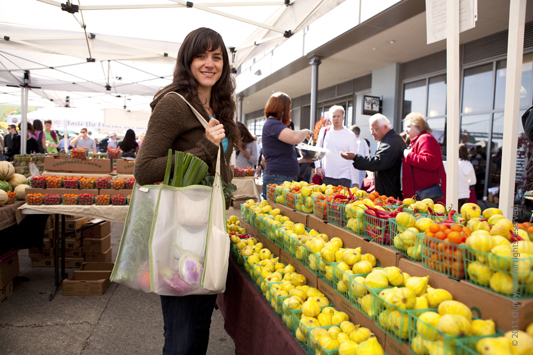
I’m beside myself with excitement that the official Summer Tomato farmers market bag, Mercado, from Quirky Inc. is finally here!

It was nearly a year ago that I presented the Quirky design community with my farmers market problem. The issue when you buy ripe, seasonal produce from your local farmers market is that it’s extremely juicy and delicate, making it nearly impossible to get home safely in any standard soft bag. I had been using two bags and carrying tuppers and lids to help protect my most delicate items, but I knew there was a better way.

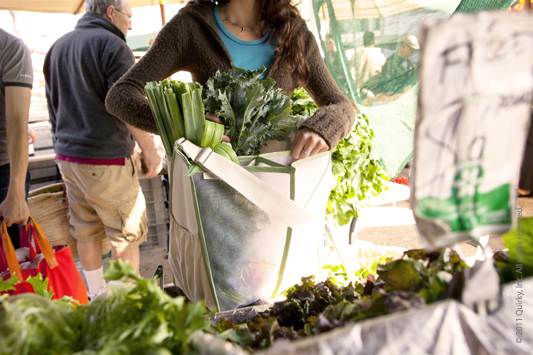
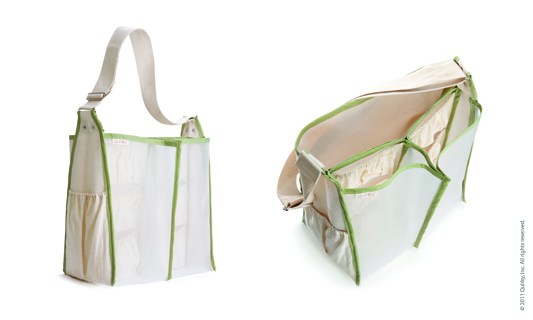
Quirky member Peter Wachtel created the winning design, and it is both cool and functional. A large compartment on the inner half of the bag holds your bigger, sturdier produce like kale, onions and cauliflower.

The outer half of the bag is composed of two smaller pockets made from a soft nylon mesh, which is held open and rigid by a wire frame. This prevents the sides of the bag from collapsing in and bruising softer items.

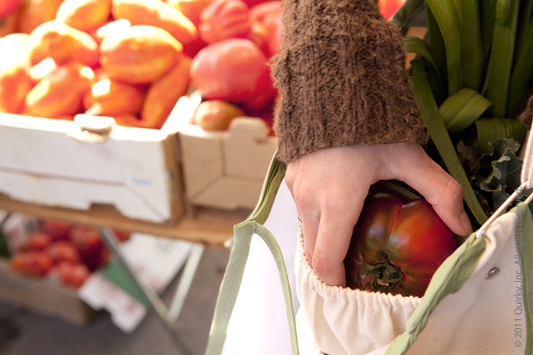
In addition there are several small pockets lining the inside of the nylon compartments that are ideal for cradling your most delicate items like peaches, pears and tomatoes.

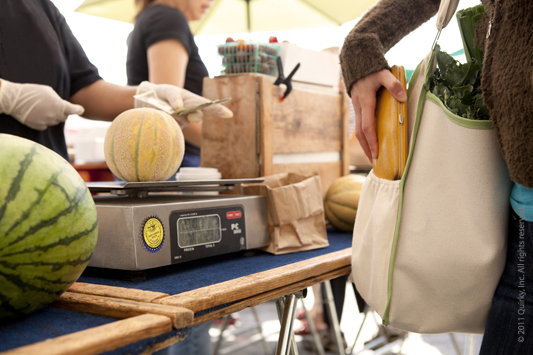
The bag has a wide, adjustable strap and two deep side pockets that are ideal for your wallet, keys and shopping list. The outer parts of the bag are made from a thick, durable canvas that is attractive and comfortable.

I’m totally in love.

Mercado is currently in the presale stage. The way Quirky works is that a product must collect a minimum number of orders before it goes into official production. If you place your order(s) now you’ll get the bag for a discounted price of $19.99.

It will retail at $24.99, so you’ll save some cash by ordering early. Obviously you won’t be charged unti the bag actually goes into production.

Lastly, you can earn 10% on any sales you refer to Quirky for the bag. Just use the referral link they give you when you click “Spread the word and earn 10% on sales!” Help us get the bag made and make some money in the process. Woohoo!

Place your order here

Thanks for your support!

Tags: , , ,

Lifehacker: Get Fit

by | Sep 19, 2011

http://revision3.com/player-v9429

Lifehacker is one of my favorite websites and podcasts, and this week is their Get Fit episode.

Because cooking at home is my #1 piece of advice for losing weight and getting healthy, I shared some of my best kitchen tips in this week’s episode. I hope you enjoy.

What are your favorite cooking hacks?

Tags: , , , , ,

What To Look For When Picking Fruits And Vegetables

by | Aug 17, 2011

Photo by Vvillamon

Most people know instinctively to avoid bruised or blemished produce, but there is much more involved in the art of choosing fruits and vegetables.

While buying fresh food is always a little bit of a craps shoot (and not every rule will apply to every piece of produce), these tips will give you the basic skills you need to hold your own at the farmers market.

What To Look For When Picking Produce

1. Bright color

After you’ve checked for bruises, blemishes and pests (harder to see on vegetables like cauliflower and cabbage, so double check), look for fruits and vegetables with the brightest, most inviting colors. The tastiest, vine-ripened produce should be vibrant, with its skin entirely saturated with color. If the item has a dull color or whitish sheen that means it is either not fully ripe or was deprived of sun or nutrients.

For fruits like cherries look for stems that are green instead of brown, since these fruits will be fresher.

2. Heavy weight

Generally you want to pick produce that is the heaviest relative to the rest of your options. Light weight produce is more likely to be dry and mealy, but heavier produce will be juicy and crisp.

The best way to tell is to pick up two similarly sized fruits, one with each hand. After you’ve tried a few it will be obvious that certain fruits are much heavier than the rest, and those are your best bets. This applies to both fruits and vegetables, but mostly to fruits.

3. Firm, but not hard

Because the best produce is moist and juicy (see point #2), it should also be perfectly plump. This means that it will be firm to the touch—think crisp and succulent—but not hard, squishy or limp.

While the perfect amount of firmness will vary for each type of produce, comparing within the batch can be very informative. For soft fruits, gently picking a piece up should tell you if it’s too soft or hard.

For vegetables with stalks like carrots and broccoli, be sure the ends don’t give too much when you try to bend them (but don’t try too hard or they might snap).

While this tip works as a general rule, keep in mind that it doesn’t apply to everything. Figs, for example, are better very soft, as are certain kinds of persimmons.

4. Fragrant aroma

Probably the most telling test of the quality of your fuit is how it smells. Unripe fruits smell like nothing, or at best the cardboard it was packed in. But ripe produce almost always smells faintly (and often overwhelmingly) of how it is supposed to taste.

Hold the part of the fruit that was attached to the stem close to your nose and breathe deeply. Compare a few of your options. The strongest smelling fruit will be the most ripe and ready to eat immediately. If you’d like your fruit to last for a few days, it is best to go with a piece that still smells good, but has a less overwhelming scent.

It’s also worth smelling your vegetables, though this tip does not apply to them all (eggplant is a notable exception). Green leafy vegetables and herbs are particularly fragrant. But even carrots, artichokes and squash can have a distinctive smell. Peppers are my personal favorite.

What are your tips for picking perfect produce?

Tags: , , , , , ,