Sign up

You deserve to feel great, look great & LOVE your body

Enter your email for your FREE starter kit to get healthy & lose weight without dieting:

  • This field is for validation purposes and should be left unchanged.

Farmers Market Update: Salad Time

by | Jul 18, 2010
Tokyo Turnips

Tokyo Turnips

At this time of year, salad might be my favorite food. I know, salad sounds boring. It sounds cold, tasteless and painfully healthy. The kind of healthy that no one really wants to be.

But in early summer health is the last thing on my mind when I choose to make salad. Truth is I just can’t wait to eat all the beautiful greens and fixings I find each week at the farmers market. Food like this is a treat, and probably not at all what you think of when you think of salad.

Any good salad starts with greens. The little gem lettuces, arugula, spinach, mizuna and even more untraditional greens like purslane.

Purslane

Purslane

Salad Mix

Salad Mix

Purslane is a succulent green that is supposedly high in omega-3 fatty acids. Personally I eat it for its lemony flavor and unique texture. It’s a great addition to any salad mix.

After greens I like to layer flavors and textures into my salads. Cucumbers from the farmers market are completely different from the flavorless, waxy beasts I remember from childhood salads.

Armenian Cucumbers

Armenian Cucumbers

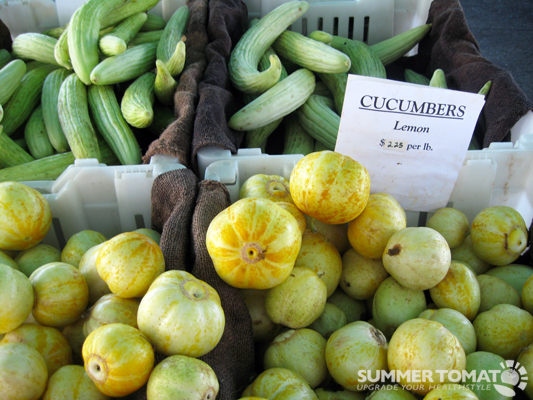
I love the long, curly Armenian cucumbers, but you can also find Mediterranean cucumbers, lemon cucumbers and several other varieties I’ve never tried. Most don’t require peeling. If you don’t have cucumbers, raw sweet summer squash are delicious in salads too.

Zephyr Squash
Zephyr Squash

Lemon Cucumbers

Lemon Cucumbers

Turnips, radishes and carrots are particularly good salad additions in early summer, contributing a distinctive crunch and deeper flavor than the delicate lettuces and cucumber. If you choose good quality turnips and radishes, their greens can be added to your salad mix as well.

Rainbow Carrots

Rainbow Carrots

French Breakfast Radishes

French Breakfast Radishes

Summer tomatoes add both sweetness and brightness to salads, because of their relatively high sugar and acid content. For salads I prefer the deeply flavored heirloom varieties such as cherokee purple and brandywine varieties. Roasted peppers can serve a similar function.

Sweet Peppers

Sweet Peppers

Summer Tomatoes

Summer Tomatoes

To add substance I turn to foods that are higher in fat and protein, like avocados, nuts, eggs, grain or meats. Today I picked up some avocados and eggs from the farmers market. My favorite salad green of late is the chewy and rustic farro grain. If you haven’t tried it yet I highly recommend it.

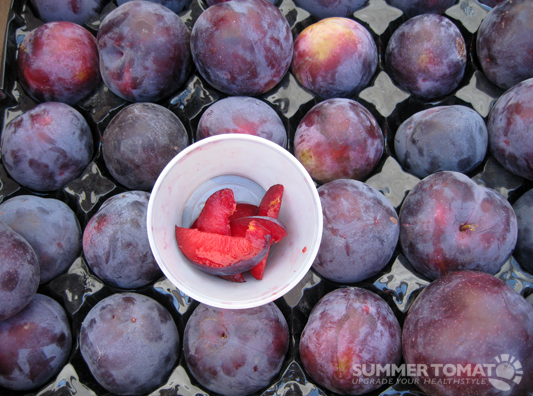
I like to finish my salad with summer fruits and herbs. Any stone fruit is fantastic and pairs nicely with balsamic vinaigrettes. Figs are also delicious if you can find them.
Pluots

Pluots

Other things I loved this week include the Ruby grand nectarines from Frog Hollow and organic cauliflower.

Organic Cauliflower

Organic Cauliflower

Frog Hollow Ruby Grand Nectarines

Frog Hollow Ruby Grand Nectarines

Today’s purchases:

Tags: , , , , , , , , , , , ,

Summer Salad With Poached Egg

by | Jun 16, 2010
Poached Egg Salad

Poached Egg Salad

Several weeks ago I wrote about how to make your salads more satisfying by adding extra protein, fat and whole grains. In this recipe I experiment with poaching eggs, which turned out to be easier than I expected.

To me poached eggs have always seemed like an impossible delicacy best left to San Francisco’s finest brunching establishments. The few times I tried poaching eggs before turned out to be a disaster, so I erroneously assumed the skills required were beyond my grasp.

Turns out I just wasn’t doing it right and it is actually pretty easy.

As you might guess, my fear of cooking poached eggs was conquered by the wisdom of Mark Bittman in his book How To Cook Everything. For me the problem was in the temperature of the water. To keep the eggs from being torn apart by boiling bubbles, the temperature must be kept just below the boiling point.

Problem solved.

Summer Salad With Poached Egg

Ingredients:

  • Gem lettuces
  • Treviso (or radicchio)
  • Summer tomato
  • Yellow crooked neck squash
  • Mediterranean cucumber
  • Avocado
  • French green lentils (cooked)
  • Green onion
  • Basil
  • Extra virgin olive oil
  • Red wine vinegar
  • Dijon mustard
  • Farm fresh eggs
  • White vinegar
  • Salt and pepper

For the eggs, start heating a deep skillet or shallow pot with 1 inch deep water. Add 1 tsp salt and 1 tsp white vinegar. Heat the water until it barely bubbles, around 200 degrees Fahrenheit.

For salads I recommend using your best farmers market greens, but anything colorful you can find will work (this salad is wonderful with frisée). The list above is what I used, but obviously whatever you have around is fine.

I’m a big fan of adding raw summer squash to salads, but the quality of the squash is very important if you are eating it raw. The fresher the better.

Chop your greens and vegetables while your water is heating and prepare your salad dressing. With eggs I love to use a red wine Dijon vinaigrette. Something about the mustard and egg combination is divine.

My vinaigrette recipe is as simple as it gets:

Add 1/4 cup high-quality extra virgin olive oil and just under 1/4 cup red wine vinegar. Add 1-2 tsp Dijon mustard to taste, salt and pepper to taste and whisk with a fork for a few seconds. Taste and adjust the condiments until you like it.

Personally I do not think it is necessary to add sugar to salad dressing, but some people do. You can also add 1 tsp of finely diced shallots or some minced garlic if you want extra flavor.

In a large bowl, toss your vegetables with your dressing. After this add your lentils (or brown rice or nuts), and toss again. Season with sea salt and freshly ground pepper to taste. Use tongs to plate your salad and get ready to prep your eggs.

Rinse your eggs and crack them one at a time into a small bowl or large serving spoon. Gently lower each egg into the warm water and release it into the pan (use a larger pan for batches greater than 2). Allow the egg to cook until the yolk has filmed over and the white is set, about 3-5 minutes.

Remove egg with a slotted spoon, drain off water and carefully place the egg on top of your salad. Garnish with pepper and serve immediately. Poached eggs go particularly nicely with sour toast.

Do you have any tips for poaching eggs?

Originally published June 24, 2009.

Tags: , , , , , , , ,

For The Love Of Food

by | Mar 26, 2010

For The Love of Food

Welcome to Friday’s For The Love of Food, Summer Tomato’s weekly link roundup.

I was so focused on finding new material to share with you that I nearly forgot that yesterday was the 1 year birthday of Summer Tomato! Thanks to all of you who have supported me and this blog over the past 12 months. I can’t tell you how much your kind and thoughtful emails and comments mean to me. I feel blessed everyday to have such an amazing community of people who love life, food and health as much as I do, and I look forward to much more to come. Cheers!

I also want to remind you that Summer Tomato readers can still get 20% off all online purchases at Samovar Tea Lounge until March 31. Samovar has amazing teas and tea accessories. I definitely recommend browsing their shop if you’re a tea fan.

Use the code: summertea at checkout to apply the discount.

There was some interesting news this week (and some BS called) on both saturated fat and high-fructose corn syrup, the foods Americans love to hate. The science is complicated, so be sure to read the stories carefully. Also don’t miss the video of Kevin Rose and Tim Ferriss causing trouble down at my beloved San Francisco Ferry Building.

I read many more wonderful articles than I post here each week. If you’d like to see more or just don’t want to wait until Friday, be sure to follow me on Twitter (@summertomato) or the Summer Tomato Facebook fan page. For complete reading lists join me on the social bookmarking sites StumbleUpon and Delicious. I’m very active on all these sites and would love to connect with you there. (Note: If you want a follow back on Twitter introduce yourself with an @ message).

Links of the week

What made your meals happy this week?

Tags: , , , , , , , , ,

For The Love of food

by | Feb 19, 2010
For The Love of Food

For The Love of Food

Welcome to Friday’s For The Love of Food, Summer Tomato’s weekly link roundup.

There were an unusual number of thoughtful articles published this week. To start, read up on the important legislation that was passed for organic dairy production (yippie!). There is also some bad news about bagged salad greens you should be aware of, along with some valuable info on choosing a CSA if, per chance, the salad story makes you want to opt out of the industrial food chain (if it didn’t, check out the salmonella pepper article).

I read many more wonderful articles than I post here each week. If you’d like to see more or just don’t want to wait until Friday, be sure to follow me on Twitter (@summertomato) or the Summer Tomato Facebook fan page. For complete reading lists join me on the social bookmarking sites StumbleUpon and Delicious. I’m very active on all these sites and would love to connect with you there. (Note: If you want a follow back on Twitter introduce yourself with an @ message).

Links of the week

http://video.ted.com/assets/player/swf/EmbedPlayer.swf

What inspired you to eat well this week?

Tags: , , , , , , , , , , , , , , ,

Winter Salad Tip: Making Tough Greens Soft

by | Jan 11, 2010
Winter Salads

Winter Salads

Today Nathalie Lussier is sharing her secret tips for making tough winter greens soft enough to eat in salads. Winter salads are a perfect use for all the lovely radishes, kohlrabi, carrots, beets and other sweet vegetables available this season at the farmers market.

Top off your salad with hazelnuts, grapefruit and some shaved cheese for a satisfying winter meal or side dish.

Nathalie Lussier helps people overcome unhealthy food cravings so they can eat more fruits and vegetables, and experience the magick of raw foods. She’s known as The Raw Foods Witch.

How To Use Winter Greens In A Salad

by Nathalie Lussier

Winter might not strike you as salad season, but there are plenty of delicious hearty greens to be had this time of year. One trick is to marinate the leaves so they soften and are easier to chew.

Here’s how to prepare some of these tougher greens and enjoy rich, satisfying salads year round.

Choosing Hearty Greens

The foundation of any good salad is the green component. Usually we think of lettuce, but there is a world of other greens to explore.

So what options do we have when it comes to hearty greens?

1. Kale: Kale is a tough vegetable that can handle the cold. It has a strong taste, but with a little bit of massaging it can make a really satisfying salad green. There are a few varieties, from the most common curly green to the spotty dinosaur (aka Tuscan) and beautiful purple kales. They are each slightly different and you should experiment with them all.

2. Cabbage: Cabbage is a tried and true winter veggie, but we can go beyond the usual coleslaw, saurkraut and cooked cabbage. Different colored cabbage adds beauty and variety to your salads, as well as sweetness and a crispy texture.

3. Swiss Chard: A relative of spinach, Swiss chard has a thick midrib that comes in a rainbow of colors like green, white, red, pink, and yellow. Swiss chard is great in salads and can be easier to chew than some of the others.

Washing & Cutting The Greens

kale-destem

De-stemming Tuscan Kale

Wash the greens thoroughly, you never know when a caterpillar will decide to make her home in a leaf of kale.

The way you cut the greens is important because you want them to absorb the marinade and soften.

Cutting Kale and Swiss Chard

For both kale and Swiss chard, you need to remove the stems by using a knife and slicing them out vertically. You can then chop up the stems and add them back to the salad like you would celery or other hard vegetables.

After you’ve removed the stems, slice the kale and chard horizontally into 1 inch strips. Put the sliced greens in a large bowl.

Don’t worry if you think you sliced up too much, it will shrink down in size as it marinates.

Cutting Cabbage

If you’re using cabbage, cut the cabbage in half and then use a knife to cut thin strips. These should look like coleslaw slices. You may have to cut them lengthwise if they are too long.

I recommend you cut the whole cabbage and make a big batch, unless you have something else planned for the other half. Making large batches at once makes future healthy meals that much easier.

Massaging & Marinating The Greens

This is the magic part that will take regular tough greens and turn them into the perfect salad.

Ingredients

  • Your chosen greens or a combination of them (1 bunch)
  • 2 tbsp Extra Virgin Olive Oil or more as needed
  • Juice of 1/2 a lemon
  • Pinch of Celtic sea salt

Now it’s time to get your hands dirty! Add the ingredients into your mixing bowl and massage them into the greens with your hands.

You really want to squeeze the oils and juices into the greens, because that’s what will make them truly mouthwatering.

The Final Touches

After you’ve thoroughly massaged your winter green salad, add any other chopped vegetables you like, or any of these salad toppings.

Dress the greens and veggies for a hearty, satisfying winter salad!

Don’t let tough winter greens turn you off salads. Once you know how to make those winter greens more palatable, you’ll be eating delicious raw salads all year round!

Do you have any winter salad tips?

Tags: , , , , , , , , , ,

How To Eat Healthy When You Have No Time

by | Dec 7, 2009
Photo by liquene

Photo by liquene

I’m always pretty busy, but these past couple weeks I have been especially slammed with work. I have a big thesis committee meeting coming up in lab that I want to be very well-prepared for. I also launched a 25-page free healthy eating guide last week, all amidst my 30th birthday and Thanksgiving in different cities.

I’ve had a lot of people ask me how I do it all (I stay focused and work hard), but some of you have asked an even more interesting question:

How do I have time to eat healthy?

The most truthful answer is that I always have time to eat healthy, because it is not something I consider optional. Healthy eating doesn’t really take any more time than unhealthy eating, it just requires a little more foresight. Luckily I have automated my healthstyle so that healthy eating is actually easier for me than eating junk.

However, when time is especially strained I do make a few adjustments to save on prep time and clean up.

Here are a few tricks I’ve been using to have healthy meals in under 15 minutes.

8 Quick Healthy Eating Tips

  1. Focus on single vegetable meals. If I were asked to make the quickest meal I could think of, I would grab a bunch of kale, a clove of garlic, some sea salt and maybe some pistachio nuts, put them in a pan and cook them for about 7 minutes. You can do this with chard, spinach, fennel, broccolini or any other green vegetable. For protein and carbohydrate I throw in some beans or lentils at the end. These aren’t the most creative meals in the world, but they are healthy, filling, quick and delicious enough to make friends jealous. I could live on these dinners for weeks at a time, and they only leave one pan to clean.
  2. Count on legumes. As mentioned above, it is important to have something other than vegetables in your meals or you will get really hungry. Nuts are a great addition to anything, but the most bang for your buck is beans and lentils. I make huge batches of these once or twice a week and throw them in virtually everything I cook. A pressure cooker makes legume preparation a piece of cake. If I’m really in a hurry I will just dress some legumes with vinaigrette, maybe throw in some herbs or fruit and call it lunch.
  3. Eat salads. I also add beans and lentils to salads to make them more substantial. It takes less than 5 minutes to slice up some Napa cabbage, toss in some beans, cut up a pear and sprinkle on walnuts with olive oil and balsamic vinegar for a quick lunch. Salads don’t require cooking and I just eat it out of the bowl I make it in.
  4. Scramble eggs. By far the fastest cooking protein you can get is eggs. Scrambling 2-3 eggs takes about 2 minutes. Saute some spinach with a little garlic (you can use the same pan if you cook the greens first) and you have a healthy homemade meal in under 10 minutes. This works for breakfast, lunch or dinner.
  5. Eat breakfast for dinner. Eggs aren’t the only food that can break the typical American meal pattern. If cooking at night really isn’t an option, sometimes I will just double up on my normal breakfast of muesli, fruit and plain yogurt and have it for dinner. Sure I’d rather eat leafy greens, but intact grains are sure better (and faster) than the burrito place down the street.
  6. Cook in large batches. In addition to legumes I also make intact whole grains in big batches and freeze them in single servings. These can be thawed in the  microwave in 1-2 minutes and added to any meal (stirfry, salads, soups, etc.) to make them more satisfying. During the autumn and winter I also rely on roasted winter squash like kabocha for additional vegetables/carbohydrates. My favorite is to cut a kabocha squash in half, remove seeds, rub the inside with olive and sea salt and roast, face down for 30-45 minutes at 400F. Three or 4 slices of winter squash make a plate of greens a lot more interesting. Store your cooked squash in a tupper and add it to various meals throughout the week. I like kabocha, red kuri and delicata squashes because, unlike butternut, you can eat the skin (no peeling).
  7. Have a reliable takeout option. The only trouble I sometimes run into is not having enough ingredients in the house to make a solid meal before heading out. For times like this I rely on a local artisan market, Bi-Rite, that has awesome healthy prepared foods. I’ll pick up a pint of lentil, chickpea or quinoa salad from their deli fridge and a piece of fruit, then I’m good to go. It is worth it to hunt down a place like this near your home or work that you know you can count on to pick something up in a pinch. Whole Foods has great prepared food options if you can find one near you.
  8. Carry fruit and nuts. The worst case scenario is that you get stuck outside the house with nothing but vending machines within walking distance. If you always have trail mix or nuts in your bag you can usually put off a meal until you can find something healthy. Don’t leave home without it.

What tricks do you use to eat healthy when you have no time?

Tags: , , , , , , , , , , , , , , ,

Quick Fix: Mexican-style Quinoa Salad

by | May 18, 2009
Mexican-style Quinoa Salad

Mexican-style Quinoa Salad

Cinco de Mayo is one of my absolute favorite holidays. Half my family is Mexican, so I have memories of tacos and Coronas by the pool while basking in the first hints of summer sun. Good times!

Unfortunately this year I was too busy to even go out with friends for some real Mexican food (or at least San Francisco’s version of it). Instead I made a quick, healthy quinoa salad using Mexican herbs and spices to help me feel like I didn’t completely neglect my heritage.

You can find all these ingredients at your regular grocery store. I used arugula, but you can substitute spinach if you prefer. I also recommend being creative with your spices (jalepeño or cumin come to mind). If you have fresh salsa or pico de gallo around you can stir in a spoonful or two at the end to accentuate the Mexican flavor.

I recommend making extra so you have leftovers for lunch the next day!

Mexican-style Quinoa Salad

(serves 2-3)

Ingredients:

  • 1 cup dry quinoa
  • Half bag of arugula or baby spinach
  • 1 avocado, diced
  • 1/2 cup grape tomatoes, halved
  • 1/2 cup chopped red pepper
  • 1 spring onion or shallot
  • 1 clove garlic, minced
  • 1/2 cup cilantro leaves, stems removed
  • Cayenne pepper
  • Lime
  • Tapatio or favorite Mexican hot sauce

Rinse and cook quinoa. Crush and mince your garlic. While your quinoa is boiling, halve your tomatoes and dice your onion and pepper. If using a spring onion, save some of the green onion slices for garnish. Remove the stems from your cilantro. Dice your avocado and sprinkle it with salt.

When your quinoa is finished cooking, heat a frying pan on medium high heat and add 2 tbsp olive oil. Add onions and red peppers and cook on medium high heat until caramelized, about 10 minutes. Add garlic and cook until fragrant, about 30 seconds. Turn off heat and add quinoa, stirring to mix. Fold in arugula or spinach and season with salt and cayenne pepper to taste.

Transfer quinoa mixture to a large serving bowl and add avocado, tomatoes and cilantro. Squeeze in juice of half a lime and add a few dashes of Tapatio or Tabasco to taste. Gently stir, being careful not to mash the avocado chunks.

Adjust salt and spices. Garnish with green onion slices, extra cilantro leaves and a wedge of lime.

Do you try to recreate nostalgic moments with certain spices and flavors?

Tags: , , , , , , , , , , ,

Quick Fix: Warm Sausage Salad à la Trader Joe’s

by | Jan 7, 2009

A couple weeks ago I was visiting friends and family down in Southern California (Orange County & Inland Empire) and on the first night found myself without my farmers market, without my Whole Foods and without a decent (or healthy) restaurant for miles and miles and miles. And miles.

The evening was getting late, so the only respectable option on the horizon was my beloved Trader Joe’s. But I have to admit, TJ’s is not exactly my first choice when it comes to produce. While they do have a small produce section with moderate variety, the stuff they carry is always pre-packaged and a little, well, let’s call it *off-fresh*. Not bad or old, but not exactly the pinnacle of freshness either.

I do not mind their bagged salad greens, however. Even at Whole Foods I buy the boxed kind because it always seems a little cleaner than the bulk bin. I don’t mind farmers market dust, but back-of-a-grocery-store-loading-dock dirt? I’ll pass.

So salad it was. I bought their herb salad mix, which has a nice assortment of interesting flavors. Salad is tough in the winter though. For starters, tomatoes are inedible. The Persian cucumbers looked okay, so I bought those and a bag of avocados.

What really takes the meal to the next level though is a sausage, onion, red pepper and mushroom sauté. The heat from the pan wilts your greens, adding a warmness to your fresh green salad. Eureka!

The secret is to use a sweet onion. Trader Joe’s always has several different onion varieties in little bags, so just read the labels and you’ll be fine.

Trader Joe’s also has a fantastic cooked sausage selection and I like them all. This time we went with Cilantro Chicken, but follow your heart when you are picking a flavor for your own salad.

If you are vegetarian you can substitute tofu or just skip the sausage.

A perfect any-season healthy meal in about 15 minutes.

——————–

Warm Sausage Salad à la TJ’s

(serves 2)

Ingredients:

  • 2 Trader Joe’s cooked sausages (any flavor)
  • 1 bag of salad greens
  • 1 small (or 1/2 medium) sweet onion
  • 1 small red bell pepper (optional)
  • 6-8 brown crimini mushrooms
  • 1 small avocado
  • 2 Persian or Japanese (small) cucumbers
  • Good quality olive oil
  • Good quality vinegar
  • Salt and pepper

Slice onion and bell pepper into slivers about 1 inch long. Clean mushrooms and slice into desired thickness. Dice the cucumber and avocado. Cut sausages into thin slices.

Heat olive oil in a large pan on medium-high heat until it swirls easily. Add onions and peppers and cook until translucent, 1-2 minutes.

While the onions and peppers are cooking, empty salad bag into a large bowl add and the cucumber and avocado. In the summer, tomatoes are a nice addition too. Who doesn’t love summer tomatoes?

Dress the greens with olive oil and vinegar (balsamic is my favorite), and season liberally with sea salt and cracked pepper. Toss with tongs and set aside.

Don’t forget to monitor your vegetables while you are tending to your greens.

When ready, add mushrooms to the pan and sprinkle with a little salt and pepper. Cook until mixture starts to slightly brown then add sausage, making sure the cut ends touch the surface of the pan. Continue to cook until the edges of the sausage start to brown, 4-6 minutes.

Scrape contents of the pan on top of the greens and mix well with tongs. This salad serves well with a chunk of baguette and even a bowl of TJ’s boxed Tomato and Red Pepper soup.

Enjoy!

Tags: , , , , , ,

Lunch: Office Envy

by | Oct 7, 2008

Several weeks ago I held a poll asking which meal people found the most difficult to keep healthy: breakfast, lunch, snack or dinner. The overwhelming response was lunch.

To me this implies that the vast majority of you do not bring your lunch to work, but opt to eat out every day instead. Indeed, it is extremely difficult (and boring) to be healthy if you rely on restaurants for your meals. But if you want to eat healthy you must find a way to bring your lunch, and eating out needs to be the exception rather than the rule.

I have heard several reasons why people choose to eat out for lunch, and would love for you to share your own personal reasons in this week’s poll. But so far, the most common reason I hear is peer pressure. People do not want to be the odd man out at the office. No one wants to be left alone at their desk with a salad, even if the alternative is a Big Mac and trans fat-laden fries. And it isn’t any better to try and choke down a soggy McDonald’s salad while everyone else enjoys their delicious salt and cholesterol.

I completely sympathize with these arguments and at first glance I can see how they seem almost impossible to overcome. But in my experience, it does not have to be this way. Believe it or not, most people agree about what food looks really delicious, and bright, colorful and fresh is always appealing. So as you can imagine, the first step to successfully bringing your lunch to work on a regular basis is to make sure you pack food you actually want to eat. An added bonus is that if you sit down with a meal that looks and smells amazing, it is likely your friends at work will not only respect your decision, but may even be a little jealous. Instead of being the poor sucker on a diet, you will be the new lunch trend-setter!

A couple years ago I started a mini revolution at work. Giant café sandwiches and personal pizzas were the norm in the lunch room. Knowing this was not an option for me, I started dropping by my local market on my way in to work on Monday morning. I would pick up a bag of spinach, a basket of cherry tomatoes, an avocado or two, zucchini or cucumber, red bell pepper, a bag of walnuts, some kind of salad dressing and fruit. This adds maybe 5-10 minutes to my commute (shopping can also be done on weekends). My office kitchen is stocked with plates, forks and knives, but clearly it would not be hard to bring these items in if necessary. A large tupperware is particularly nice to have around because it makes your lunch portable.

Chopping the vegetables and fruit onto a bed of spinach or mixed greens takes about 5 minutes, and within that time I am invariably bombarded with compliments and praise from envious people microwaving their Healthy Choice entrees. Since I started this approach fresh, seasonal salads have become a common sight in our lunch room, and a trend has grown toward healthier, homemade lunches in general. Importantly, this new lunch culture started without an ounce of resentment or exclusion from the former pizza crowd.

One obvious barrier to this method would be if your office lacks a refrigerator. But even then all is not lost. Cut up vegetables are perfectly stable in a tupperware for several hours without refrigeration so long as they are not dressed. I keep bottles of California olive oil (Trader Joe’s) and balsamic vinegar (TJ’s again) at my desk, along with walnuts and salt and pepper grinders.

If you feel the need for a more substantial lunch, brown rice, boiled eggs and smoked salmon are fantastic additions to any salad. Adding fruits like figs, berries, pears or grapes help create a gourmet “wow factor” that elevates your lunch from good to exceptional.

Alternatively, one could make a smaller salad and use it as a supplement to a purchased lunch. For example, one of those giant sandwiches can last you two days if you fill up first with seasonal greens.

I admit that I buy my lunch at least once every week or two, but on those days it is a choice that I make and it is never because healthy eating is too difficult or elusive. If you hope to hit your 60th birthday in full stride, healthy eating must become at least a semi-automatic part of your routine.

Consider that you eat lunch at work 5 days a week. I say that makes for a fantastic opportunity to streamline your healthstyle.

What do you think, does that really sound so bad?

Tags: , , , , , , , , , , , , ,