Sign up

You deserve to feel great, look great & LOVE your body

Enter your email for your FREE starter kit to get healthy & lose weight without dieting:

  • This field is for validation purposes and should be left unchanged.

10 Steps To A Perfect Valentine’s Day Dinner

by | Feb 1, 2009

Call me old-fashioned, but I still think Valentine’s Day should be about romance. But that doesn’t mean you have to stick to the usual Valentine’s clichés to do it right.

For me, nothing is less romantic than aping exactly what everyone else is doing. Roses are beautiful, but there are 364 other days in the year to buy roses. (Hint boys: If you really want to woo your lady, bring her flowers when she isn’t expecting it).

Valentine’s Day dinner is your perfect opportunity to get creative.

When most people think of a romantic meal they envision a fancy French restaurant with candles, snooty waiters and expensive wine. I will not deny that I love restaurants like this, but you couldn’t pay me to go to one on Valentine’s Day.

The problem is that every year on February 14 restaurants are bombarded with customers, and to prepare they usually arrange a special prix fixe (i.e., price fixed, pronounce “pre-fee”) menu that costs way more than normal. Prix fixe menus are arranged into several courses where you pick from a short list of items for each course. These menus are almost always more limited than the restaurant’s traditional menu and lock you in to a preset number of items that you may or may not want.

Why not do something really romantic and make dinner yourself?

Cooking a romantic meal is not actually as hard as it sounds. The trick is investing time and money to be sure you get the best ingredients. The next step is picking through recipes until you find ones that are within your means.

I recommend aiming high. Preparing ambitious and exotic recipes is incredibly rewarding and will give you and your lover a fresh appreciation for the artistry of fine food and cooking.

Here are 10 steps for planning your perfect Valentine’s Day dinner:

  1. Plan in advance. The reason cooking at home is more romantic than going out is that you take the time and effort to do something thoughtful for your sweetheart. Do not skimp on the planning stage, that’s equivalent to buying a gift from Walmart. You will need the time for research and ingredient acquisition.
  2. Pick your ideal meal. At the beginning do not exclude recipes because you think you cannot cook them. You may be surprised by how easy it is to make a perfect filet mignon on an electric stove.
  3. Compile recipes. The internet is overflowing with fantastic gourmet recipes. Spend an hour or two searching for your favorite dishes and find the ones that sound the most delicious and seem within your means. At this stage you can start excluding recipes/dishes that are outside your technical prowess, but beware there is an easier way to do almost everything. You should also start noting the similarities between recipes for the same dish. This will help you when it comes time to put the meal together.
  4. Don’t forget dessert. Baking is more of an exact science than normal cooking. If this is out of your league (it is definitely out of mine), it may be a good idea to order something exquisite from your favorite bakery.
  5. Make the final cut. Choose dishes not only because you like them, but because the flavors go well together and you think you can get them all on a plate at about the same time. Consider presentation and appearance as well. Things that can be made a few hours or even days ahead are particularly nice. I usually end up mashing a few different recipes together to create the dish I want.
  6. Invite your date. Now that you have your menu it is time to invite your sweetie to your Valentine’s Day dinner. Tell him/her you have an amazing meal planned especially for them. Awwww, so sweet!
  7. Research your ingredients. Start early to make sure you can get the best of everything you want. If you don’t know what the best is, find out! If you want to have a special cut of meat or a certain spice or vegetable, spend some time on the internet to discover where and when you can get them in your city. Farmers markets are the best place to get most foods, but are usually only held 1-2 days per week. Luckily for you, this year Valentine’s Day falls on a Saturday. Do your planning now and go to the market early so you do not miss out.
  8. Prepare your kitchen. Check your kitchen to make sure you have everything you need for your perfect meal. If your recipe requires special equipment, go buy it right away. If you cannot find it, do some research on acceptable alternatives or see if you can borrow what you need from a friend.
  9. Arrange your props. Candles, music, champagne flutes and mushy cards add to the ambiance of your special evening. Do not forget to pay attention to these details.
  10. Make your meal and have a wonderful time. If you start with good ingredients, it is hard to mess up too bad, but do not let it ruin your evening if things don’t turn out as perfectly as you envisioned. Remember, you are doing something incredibly special for the one you love and that will earn you major bonus points. It is a scientific fact that a meal cooked from the heart tastes better than anything handed to you on a silver platter.

What are your favorite special occasion recipes?

UPDATE: This article is also available at Synapse.

Tags: , , , , , , , , , , ,

10 Super Bowl Snacks That Aren’t All Bad

by | Jan 21, 2009

As much as I wish it weren’t true I know several people that consider the Super Bowl to be the biggest, most important holiday of the year. For most of us though, the Big Game is just another excuse to party.

The only problem is that at most Super Bowl parties, junk food runs the field.

If you have been following this blog you probably noticed that I am not the biggest fan of diets. But one thing I loathe even more than a regimented diet is diet food.

I mean, low-calorie egg rolls? What’s the point?

So I am not going to tell you to buy baked potato chips, unless of course you actually prefer them to the other kind. I am personally fond of Kettle Chips, but I eat them so rarely that if they are around and I feel like having a few I don’t worry about it. You shouldn’t stress out too much about things you enjoy.

On the other hand, you should clearly avoid putting down several bags of Kettle Chips (or anything else) on Super Bowl Sunday. But there are still a ton of delicious snacks you can enjoy during the game without doing too much damage to your health or physique.

Buy what you like, but try to choose most of your snacks from this healthy list:

  1. Tortilla chips – Despite my previous endorsement of fine potato chips, tortilla chips are probably a better option. They have slightly fewer calories, a little more fiber and, most importantly, have a better fat profile (more polyunsaturated and less saturated fats). These days you don’t have to worry as much about trans fat (hydrogenated oils) as you used to because it has been banned in several states, but it is worth checking the back of the bag to be sure.
  2. Salsa – As far as health goes, salsa is almost a perfect food. Tomatoes, onions, cilantro, limes and chilies are all great for you. Salsa is low in calories, has little to no fat or carbs and makes almost everything taste better. One way to improve store bought salsa is to use it as a base and add your own fresh tomatoes, onions and cilantro. It really makes a big difference.
  3. Guacamole – Although it is high in calories, this avocado-based dip is filled with monounsaturated fats that are both healthy and filling. Make your own to avoid all the extra weird ingredients added to the store bought kind. Just mash up some avocados, squeeze in some lime and season with sea salt and pepper. My secret is to add half a cup or so of the salsa I made—this is a tastier way to enhance the flavor than those mysterious powder mixes. If you finish making it and it is still bland, add more lime and/or salt. A small minced garlic clove can be a nice addition too.
  4. Cut vegetables – I am grossed out by those slimly little bullet-shaped carrots that come in a bag, but real fresh carrot sticks are fantastic. If you can, get your vegetables from the farmers market the day before. This time of year you can find carrots, celery, bell pepper, radishes and daikon. The flavors of market fresh veggies will astound you and elevate this otherwise boring snack food into something divine. What a difference a real vegetable makes!
  5. Nuts – Nuts are one of the easiest, healthiest snack foods out there. It doesn’t even really matter what kind you get, they all have their own benefits. As usual, I recommend going with premium quality if you are going to serve them solo. I am particularly impressed with the value of nuts from Trader Joe’s. They are about half the price of nuts everywhere else and taste even better.
  6. Tacos – If you are serving a meal to your guests then tacos are a great, healthy option. Grilled meats (or veggies) are pretty harmless in taco-sized quantities. Use the small little corn tortillas (keep them warm and soft by wrapping them in a clean towel and leaving them in a low temperature oven) and serve cut up tomatoes, onions, cilantro (pico di gallo) and hot sauce. Authentic Mexican tacos do not have cheese on them, so just skip it. Your friends will love you I promise.
  7. Fruit – Everyone loves a platter of fresh cut fruit. This time of year we have all kinds of citrus and apples to choose from. Kiwis are in season too if you are looking for something more exotic.
  8. Steamed artichoke – Artichokes are bursting with antioxidants, and serving them whole makes for a beautiful snack that a room full of people can enjoy. Cut off the top third of the leaves, trim the remaining pointy leaves with scissors, remove the stem and steam it upside down in a covered pot. After 20 minutes turn it with tongs so the leaves are pointing up. Drizzle with olive oil, Meyer lemon juice, chopped Italian parsley and sea salt, and steam for another 20 minutes or until the leaves are easy to remove. With this much flavor you don’t even need a dip.
  9. Hummus – This Middle Eastern dip is delicious and much healthier for you than your standard Super Bowl party fare. Serve it next to those cut up vegetables. My recipe is here.
  10. Cucumber water – Even if your guests are spending most of the day by the kegerator, it is in everyone’s best interest to stay hydrated. Slice up some cucumbers and add them to a pitcher of water for a simple and impressive refresher.

What are your favorite healthy Super Bowl snack foods?

UPDATE: This article is also available at Synapse.

Tags: , , , , , , , , , , , , , ,

Healthy Lunch: Chicken Chard Soup

by | Jan 21, 2009

Since summer ended I have been searching for the perfect winter lunch to bring to work. I want something healthy, delicious and, given the season, warm.

Roasted vegetables are a pretty good choice, but I learned the hard way that they don’t quite have the long-term appeal of summer salads (i.e., I got sick of them really fast).

My latest experiment is soup.

Soup appeals to me for many reasons:

  1. It stores and transports easily and can be heated up in a minute or two in the microwave. This makes it a perfect food for the office.
  2. Almost any recipe can be turned into a soup, so you can enjoy cuisines from all cultures–you could eat soup every day for the rest of your life and never eat the same one twice.
  3. Soups are easy to modify, and hard to mess up.
  4. As many of you know, I have a lot of experience making soup.

I accepted the challenge.

The first place I turned was my faithful Splendid Soups, by James Peterson. I can’t imagine there is a better soup recipe book on the planet. Not only have I used it to make dozens of spectacular soups, but it has made me a better overall cook as well. This book is truly a treasure.*

I had several goals for my first soup:

First, I wanted it to be healthy and light, meaning it should have something green (e.g. chard) in it and be broth based rather than cream based.

Second, I wanted to use the whole chicken I bought at the farmers market. I don’t normally eat meat for lunch, but I had been wanting to experiment with whole chicken and this seemed like the perfect opportunity.

I ended up modifying one of the vegetable recipes in the book to include chicken. Peterson gives detailed instructions on how to use chicken in any soup, so I simply followed his technique.

My soup turned out divine, but preparing it took longer than I had hoped.

Word of advice: Ask the butcher to quarter the chicken for you (unless you are planning on roasting it). This was only the second time I had quartered a chicken, and though it wasn’t very difficult it definitely cost me 20-30 minutes because of my inexperience. Oops.

Chicken Chard Soup

Ingredients:

  • 1 medium chicken, quartered
  • 1 large bunch of Swiss chard, trimmed
  • 3 garlic cloves, minced
  • 2 medium sweet onions, diced
  • 2 jalepeno peppers, seeded and chopped
  • 1 28-0z can of diced tomatoes, drained
  • 4 cups (1 box) chicken broth
  • 2 cups water
  • 1 tsp fresh thyme, finely chopped
  • 0.5 cup parsley, finely chopped
  • Juice of 1 Meyer lemon
  • 2-3 tbsp olive oil

Heat some olive oil in a pan just large enough for the chicken to cover the bottom. Add the chicken skin-side down and cook on medium heat for about 8 minutes. Turn with tongs and cook for another 5 minutes, remove from heat and set aside. If at any point the chicken begins to burn, lower the heat.

Shred the chard by cutting out the stems (I like to leave a few in, but I cut them in half), stacking and rolling the leaves, then cutting them in thin, 0.25 inch strips. This is the same chiffonade technique we use on basil, sage and mint leaves.

In a 4-quart pot, cook onions, garlic and chilies in olive oil on medium heat for about 10 minutes. Allow the onions to become translucent, but not brown. Add thyme and cook 2 more minutes.

Add broth, water, tomatoes and chicken and bring to a simmer. Simmer gently for 15 minutes or until the chicken feels firm to the touch. Remove chicken and set it aside to cool. Add chard to the soup and simmer 10 more minutes.

Remove chicken skins and cut chicken into bite-sized chunks. Return chicken meat to the soup, add parsley and simmer 2 more minutes. Add lemon juice, salt and pepper to taste and serve with crusty bread.

This soup will keep up to 5 days in a cold refrigerator.

*Note: If you decide to buy Splendid Soups (or any other item from Amazon), please consider using one of the links from this site and help support my blog. My favorite books and kitchen equipment are listed in the Shop.
Tags: , , , , , , , , , , , ,

Green Up Your Pasta Puttanesca With Kale

by | Jan 11, 2009

I was never sure if I liked pasta puttanesca. In fact I am not even sure how many times I had eaten it before last week. That’s why I was so surprised when I found myself suddenly craving this distinctly Mediterranean medley of flavors.

Who knew?

I admit that anchovies, capers and olives scare me a little (okay, a lot) with their pungency. For that reason–once I decided I had to make it–I was careful to get high-quality ingredients (the antidote to every scary food you think you don’t like). The last thing I wanted was overly fishy pasta for dinner.

I got my anchovies from Whole Foods, and the kalamata olives and capers from Trader Joe’s. I got my canned tomatoes from TJ’s as well.

The only other ingredients required were olive oil, garlic, chili flakes and parsley.

The recipe I used was a super easy one from Cook’s Illustrated (you have to pay for a subscription to see their recipes) that claimed you could make the entire sauce while your pasta is boiling. I have the utmost faith in Cook’s to guide me through a flawless meal, so I made very few changes to their original recipe.

My main concern was that as a single, busy person in the city I wanted a more balanced meal than just pasta and sauce, and I would rather not go to the trouble of making a side dish. I solved this problem by adding some steamed dinosaur kale to the puttanesca, which turned out to be a perfect, crispy complement to the robust sauce and chewy pasta. The dish ended up truly fabulous.

You can use whatever kind of pasta you like, but this time I went with rigatoni.

———-

Pasta Puttanesca With Kale

(modified from Cook’s Illustrated)

Ingredients:

  • 28 oz can of diced tomatoes
  • 8 anchovy fillets, minced
  • 0.5 cup pitted kalamata olives, coarsely chopped
  • 3 tbsp capers, rinsed
  • 0.5 bunch dinosaur kale, cut into 1 inch squares
  • 0.25 cup parsley, finely chopped
  • 4 cloves garlic, pressed
  • 2 tbsp olive oil
  • 1 tsp red chili flakes
  • rigatoni or pasta of choice

Place a steam basket into pot of shallow water and boil. Add kale and cover. Steam 10 minutes.

Bring several quarts of water to a rolling boil (prepare sauce in the meantime). When water is boiling add 1 tsp salt and pasta. I prefer to make only enough pasta for one meal (~0.5 cup dry), since it does not keep particularly well once cooked. The sauce makes 4 servings and stores up to 3 days in the refrigerator.

Press or finely mince garlic and soak it in 1 tbsp of water in a small cup or bowl. Open your can of tomatoes and drain them, reserving 0.5 cup of liquid. Prepare all other ingredients before adding pasta to the water.

Immediately after starting your pasta boiling, heat a pan on medium heat and add 2 tbsp olive oil. When the olive oil swirls easily in the pan add anchovies, garlic mixture and chili flakes. Stir continuously until garlic just begins to brown, about 2 minutes, then add tomatoes and simmer.

When pasta is done, drain it and return it to the pot. Moisten pasta with some reserved tomato liquid and toss.

After sauce has simmered about 8 minutes toss in capers, olives, kale and parsley. Mix to combine. I tossed in some excellent Stonehouse olive oil at this point to brighten it up. (Don’t bother with this if you only have cheap olive oil.)

Add an appropriate volume of sauce to your pasta, toss and serve immediately.

If you enjoy this recipe, please come back and tell us what you think!

Tags: , , , , , , , , , , ,

Quick Fix: Warm Sausage Salad à la Trader Joe’s

by | Jan 7, 2009

A couple weeks ago I was visiting friends and family down in Southern California (Orange County & Inland Empire) and on the first night found myself without my farmers market, without my Whole Foods and without a decent (or healthy) restaurant for miles and miles and miles. And miles.

The evening was getting late, so the only respectable option on the horizon was my beloved Trader Joe’s. But I have to admit, TJ’s is not exactly my first choice when it comes to produce. While they do have a small produce section with moderate variety, the stuff they carry is always pre-packaged and a little, well, let’s call it *off-fresh*. Not bad or old, but not exactly the pinnacle of freshness either.

I do not mind their bagged salad greens, however. Even at Whole Foods I buy the boxed kind because it always seems a little cleaner than the bulk bin. I don’t mind farmers market dust, but back-of-a-grocery-store-loading-dock dirt? I’ll pass.

So salad it was. I bought their herb salad mix, which has a nice assortment of interesting flavors. Salad is tough in the winter though. For starters, tomatoes are inedible. The Persian cucumbers looked okay, so I bought those and a bag of avocados.

What really takes the meal to the next level though is a sausage, onion, red pepper and mushroom sauté. The heat from the pan wilts your greens, adding a warmness to your fresh green salad. Eureka!

The secret is to use a sweet onion. Trader Joe’s always has several different onion varieties in little bags, so just read the labels and you’ll be fine.

Trader Joe’s also has a fantastic cooked sausage selection and I like them all. This time we went with Cilantro Chicken, but follow your heart when you are picking a flavor for your own salad.

If you are vegetarian you can substitute tofu or just skip the sausage.

A perfect any-season healthy meal in about 15 minutes.

——————–

Warm Sausage Salad à la TJ’s

(serves 2)

Ingredients:

  • 2 Trader Joe’s cooked sausages (any flavor)
  • 1 bag of salad greens
  • 1 small (or 1/2 medium) sweet onion
  • 1 small red bell pepper (optional)
  • 6-8 brown crimini mushrooms
  • 1 small avocado
  • 2 Persian or Japanese (small) cucumbers
  • Good quality olive oil
  • Good quality vinegar
  • Salt and pepper

Slice onion and bell pepper into slivers about 1 inch long. Clean mushrooms and slice into desired thickness. Dice the cucumber and avocado. Cut sausages into thin slices.

Heat olive oil in a large pan on medium-high heat until it swirls easily. Add onions and peppers and cook until translucent, 1-2 minutes.

While the onions and peppers are cooking, empty salad bag into a large bowl add and the cucumber and avocado. In the summer, tomatoes are a nice addition too. Who doesn’t love summer tomatoes?

Dress the greens with olive oil and vinegar (balsamic is my favorite), and season liberally with sea salt and cracked pepper. Toss with tongs and set aside.

Don’t forget to monitor your vegetables while you are tending to your greens.

When ready, add mushrooms to the pan and sprinkle with a little salt and pepper. Cook until mixture starts to slightly brown then add sausage, making sure the cut ends touch the surface of the pan. Continue to cook until the edges of the sausage start to brown, 4-6 minutes.

Scrape contents of the pan on top of the greens and mix well with tongs. This salad serves well with a chunk of baguette and even a bowl of TJ’s boxed Tomato and Red Pepper soup.

Enjoy!

Tags: , , , , , ,

Quick Fix: Baby Bok Choy and Tofu

by | Dec 15, 2008

Bok choy with tofu is one of my favorite quick meals of the winter, and few seasoning combinations pack as powerful a punch as soy sauce and garlic.

Bok choy is also known as Chinese cabbage. This succulent cruciferous vegetable thrives during the winter months and is cheap and readily available at almost any market. I like the baby variety because it is easier to adjust the serving size and is simple to cook. If you can’t find baby bok choy you can subsitute regular bok choy and cut it up accordingly.

If you think you do not like tofu, my guess is that you just haven’t had it cooked like it is supposed to be and I urge you to give it another try. Most perceived taste aversions can be overcome with a little effort.

Tofu is not just for vegetarians. I have grown to like it so much that sometimes I get cravings for it. Strange, I know.

One of the wonders of tofu is that it absorbs flavors beautifully, particularly garlic. Moreover, adding garlic to soy sauce is one of the easiest ways to get everyone in the house out of their rooms sniffing the air and asking what heavenly dish you are creating. It smells amazing and tastes even better.

Baby Bok Choy and Tofu

Ingredients:

  • 2-4 stalks baby bok choy
  • tofu
  • 1 clove of garlic, minced
  • Dark soy sauce to taste

Carefully rinse baby bok choy and cut into quarters, longwise. Once it is cut check between the leaves to be sure no remaining dirt is hiding in the stem. If there is rinse again.

Cut tofu into bite-sized cubes. Heat olive oil in a pan and add bok choy cut sides down. Cook for several minutes, then make room for tofu on the bottom of the pan and add tofu. Cook 2 minutes then stir, making sure to cook both faces of the bok choy and tofu.

Once bok choy begins to wilt and become a little translucent, add garlic to the pan in a single layer. Leave for about 30 seconds, then splash soy sauce liberally into the pan. I like to use a good quality dark tamari soy sauce for this dish. Stir and continue to cook.

Allow soy sauce to reduce until it begins to form a glaze on the bok choy and tofu. Turn ingredients once or twice so all sides get coated. Add more soy sauce if necessary.

Remove from heat when bok choy reaches desired tenderness, about 8-10 minutes. Serve on a bed of brown rice.

Tags: , , , , ,

Stinging Nettle and Israeli Couscous With Lemon, Parsley and Capers

by | Dec 9, 2008

Saturday at the farmers market I was talked into buying some stinging nettle and I must admit, I was pretty skeptical. Who wants to put something in their mouth that has stinging in the name?

But despite my reluctance, I could not deny that the nettle (to avoid negative connotations I am going to ditch the “stinging” part) was beautiful, fluffy and green, things that I generally associate with delicious. Besides, I pride myself on not being afraid of trying and cooking new foods.

I accepted the challenge. Now what to do with these weird things?

Eating the nettle alone did not sound particularly appealing. If I really love it I could always go back and get some more, right? I had heard that nettle has an earthy, green flavor, so I thought it might pair well with pasta, garlic and lemon.

I do not usually keep pasta in the house (I prefer fresh pasta if I am going to bother eating it), but I did recently purchase some Israeli couscous from Trader Joe’s. Israeli couscous, also called ptitim, is basically just giant couscous. It is made out of semolina wheat, the same kind of flour Italian pasta is made from. (No, couscous is not a whole grain).

I was starting to form a mental image of my meal: Mediterranean style Israeli couscous with greens and garlic. Oh! And I just bought a beautiful Meyer lemon at the farmers market. It’s juice and zest would be a perfect complement to brighten the dish. And since we are going Mediterranean, Italian parsley and capers would be lovely accents.

On a whim I decided to roast an acorn squash as well and use the nettle dish as a stuffing. It was good, but I do not think it was the best pairing and I do not recommend it. I looked nice, but the flavor profiles were a little off.

The nettle and couscous dish on its own was spectacular though. I wish I would have paired it with my Romanesco broccoli instead.

I should also confess that my lips are stinging a bit, but in the good way.

Stinging Nettle and Israeli Couscous With Lemon, Parsley and Capers
Ingredients:
  • 1/2 bag of stinging nettle
  • 1/2 cup dry Israeli couscous
  • 1/3 bouillon cube
  • 1/2 shallot
  • 1 clove garlic
  • 1-2 tbsp chopped Italian parsley
  • 1/2 Meyer lemon, juice and zest
  • 1 tbsp capers

Start some water boiling. Heat 1 tbsp olive oil in a sauce pan on medium heat and add couscous. Toast couscous in olive oil, stirring frequently until light brown, about 5 minutes (just following the instructions on the box here). Slowly add 1/2 cup of boiling water to couscous, add bouillon cube and return to boil. Reduce heat, cover and simmer until tender, about 12 minutes.

In the mean time dice your shallot, garlic and parsley. Rinse your nettle in a strainer (you can touch it a little, but I would keep your hands off as much as possible). Heat a little olive oil in a pan and add the chopped shallot. Cook shallot for 2 minutes then add garlic. After 30-60 seconds add nettle and salt, then stir and cover. After one minute, uncover the nettle, stir again and add parsley.

If the couscous is ready, add it to the pan. If not, turn off the heat until couscous is ready to add. Stir couscous into the greens until well mixed. Squeeze lemon juice into the pan and add grate lemon zest directly on top of the dish. Add capers, salt and pepper to taste and serve immediately. This is probably enough for 2 people as a side dish. Yum!

Anyone else have any nettle ideas?

Tags: , , , , , , , , , ,

Easy Potluck Idea: Homemade Hummus

by | Dec 5, 2008
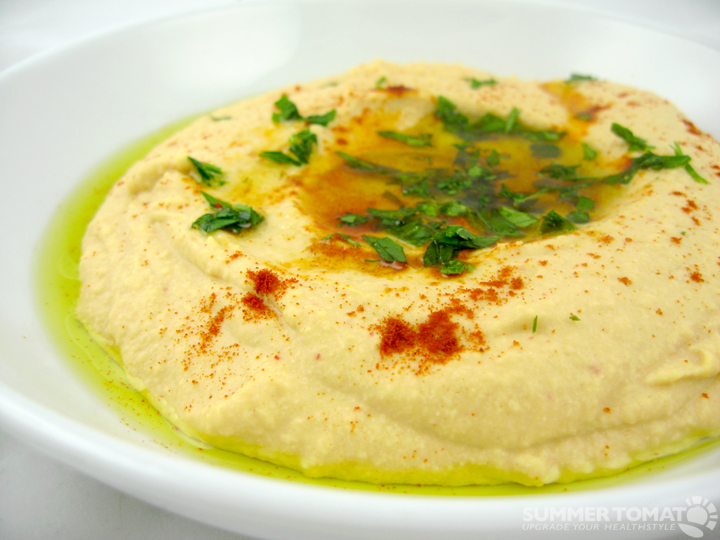
Hummus

Hummus


Last night I went to a potluck and I have to admit, I was dreading it a little.

It’s not that I don’t love my friends or cooking for them, but I have been feeling queasy this week (I contracted some nasty food poisoning on my vacation–that’s what I get for not cooking my own meals!) and have not had much energy for anything, especially food.

But I have a food blog. Not only did I have to bring something, it had to be impressive!

I needed something quick, easy and delicious, made mostly from ingredients I have laying around. Hummus was my answer. Hummus is a Middle Eastern style dip made of chickpeas. Remember all that talk about how easy and delicious homemade beans are in the pressure cooker? Well chickpeas (aka garbanzo beans) are no exception.

Hummus is a perfect potluck contribution because it is easy to make, easy to transport and exotic enough to be impressive. Also, homemade hummus is way better (tasting, but also for you) than anything you can buy at the store… no offense to Trader Joe’s.

You can make the basic recipe with beans, tahini, garlic and spices, but I have added a couple extra ingredients if you want to take your hummus to the next level.

Ingredients:
  • 1 cup dried chickpeas
  • 2 cloves of garlic
  • tahini to taste
  • 1 Meyer lemon
  • 1/2 tsp paprika (gourmet paprika or fresh ground sweet chili powder is best)
  • 1/2 tsp cumin
  • 1/4 tsp cayenne pepper (or more if you’re feeling spunky – optional)
  • pure olive oil or canola oil
  • good quality extra virgin olive oil
  • sea salt to taste
  • preserved lemon (optional)
  • parsley (optional)

I always have tahini in my fridge, but if you do not it is fairly easy to find. Tahini is a paste made out of sesame seeds with a consistency similar to natural peanut butter (the oily kind). It has a delicious smokey flavor and I use it to garnish many different dishes.

Olive oil is a key ingredient in this recipe, but it is important to understand that you cannot put extra virgin olive oil into a blender, or it will turn unpleasantly bitter. Use either pure olive oil or canola oil for blending, then add a good extra virgin olive oil on top as a garnish. Your extra virgin olive oil should have a bright green color, not a dull yellow or brown.

You can use canned beans if you are in a pinch, but I don’t recommend it.

Here’s what to do:

Pick over, rinse and soak the dry chickpeas overnight in excess water (they expand quite a bit). The next day rinse them again, put them in a pressure cooker and cook on high until done (mine works in 12 minutes). Once they are cooked, use a slotted spoon to move chickpeas from the liquid into a large bowl. Reserve the liquid. Throw out any chickpea shells that have separated from the bean.

If you do not have a pressure cooker, you can boil the chickpeas until they are soft, about an hour and a half. Add more water if necessary.

While the beans are cooking place whole, unpeeled garlic cloves into a toaster oven and bake at 400 for 3-5 minutes (I like them less cooked). Let them cool a bit then remove the peel, which should come off easily.

Add the garlic to your beans (mince it if you prefer to add it raw), along with 1/2 cup (or whatever) of the liquid they cooked in, 2 tbsp pure olive oil, 1/2 tsp of salt and lemon juice to taste (I use the whole thing).

Also add 2-3 tbsp of tahini (honestly I eyeball it and keep adding tahini until I’m happy with the taste) and the other spices. I recently purchased some amazing New Mexico chili powder from Tierra Vegetables and a few slices of preserved lemon from Boulette’s Larder that added incredible dimension to this already wonderful recipe. I am particularly impressed with the preserved lemon, which contributed a unique, rich lemon flavor unlike anything I have ever tasted.

David Lebovitz claims that making your own preserved lemons is not very difficult if you want to try. Rinse the lemons before adding them to your recipe, I added 5-6 slices.

Blend the ingredients together using a hand blender. If you do not have a hand blender you can use a regular blender or food processor. They work the same but are harder to clean.

Puree the mix until smooth, adding more liquid if necessary. Once the hummus is creamy, taste it with a clean spoon and adjust the salt, lemon and tahini.

When finished, move hummus to a tupper (for potluck) or serving bowl. Use a spoon to make a crater in the center, garnish with extra virgin olive oil and sprinkle with paprika and chopped parsley. California extra virgin olive oil is the best choice, in my opinion, and Trader Joe’s has a great one that is affordable. In San Francisco, however, I like to use Stonehouse olive oil. They have a store at the Ferry Building.

Serve with warm pita wedges or bread.

Hummus can be modified in a million different ways. It is fantastic with roasted peppers, eggplant, sun-dried tomatoes, herbs and different kinds of nuts.

Be creative!


What is your favorite hummus recipe?

Tags: , , , , , , , , , , , , ,

Are You Bean Careful?

by | Dec 3, 2008

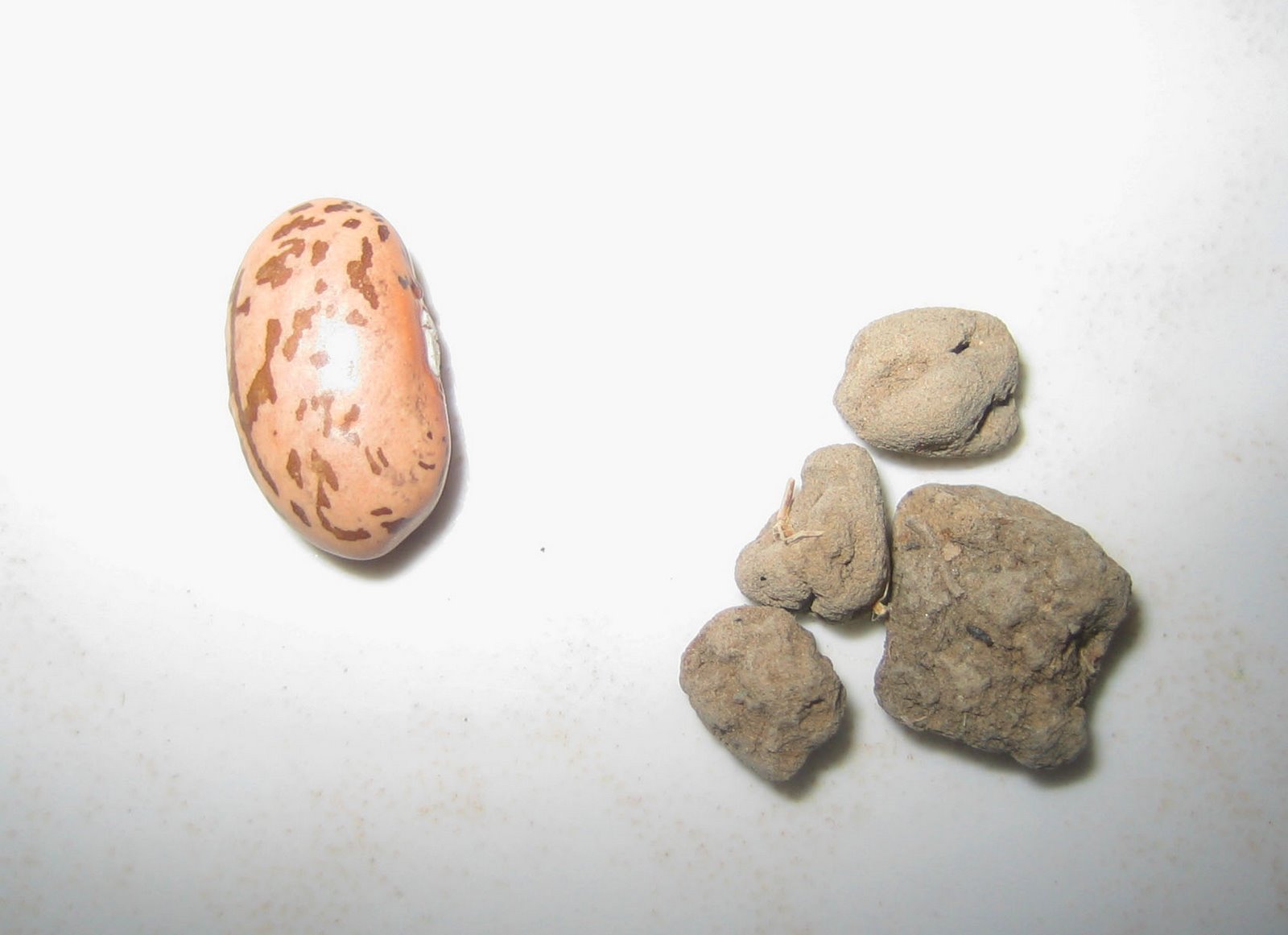
Yesterday I mentioned that if you are going to use dried beans for cooking you should pick them over for pebbles before using them. Today I want to show you that I’m not kidding.

For my apartment’s last Soup Night I decided to make a recipe I found in the New York Times. The recipe was for Andean Bean Stew With Winter Squash and Quinoa, and it called for a pound of dried pinto beans. Since I was cooking for 20 people I doubled the recipe and bought a full 2 lbs of dried beans.

That’s a lot of beans, folks.

Because of the huge volume I had to be extra careful when looking for pebbles. To pick through beans I like to lay them out on a large cookie sheet, as shown. You can sort through a smaller amount of beans on a solid-colored plate or even in a clear bag on the counter.

As you can see from the top picture, 2 lbs of beans from the bulk bin at Whole Foods yielded 4 not-so-small pebbles.

Finding these little guys didn’t take more than a minute or two, and I guarantee you my guests appreciated the extra effort.

Let this be your warning. I do not wish to send you into shark-filled waters if you happened to be inclined to go buy dried beans this weekend. The last thing I need is a bunch of angry emails from your dentists!

Lentils are known to harbor pebbles as well, so searching for small rocks is a good habit to cultivate with all dried legumes.

The Soup
On the food front, the recipe turned out absolutely amazing! Since doubling the recipe required two whole winter squash anyway, I chose one large butternut squash and one kabocha squash. Both were delicious, but I was particularly fond of the kabocha (just look at that color!). It was denser, but the texture was creamier and the flavor more sweet and nutty than the butternut.

Peeling the kabocha was no easy task, however. I always just use a vegetable peeler for butternut, but on the kabocha the skin was so tough this was not an option. Instead I boiled it whole for 3 minutes on each side (it floats) and took the skin off with a pairing knife. Alright, I admit I had a boy do the peeling.

Does anyone have an easier way to peel a kabocha?

The Andean stew was very hearty, but our guests were not shy about finishing every last drop. I highly recommend it, particularly for a cold winter weekend.

This picture was taken after the quinoa was added but before it finished cooking.

Don’t forget to bean careful!

UPDATE: I have since learned that a kabocha does not need peeling. If it is cooked through the skin is soft and edible. My new favorite trick is to cut one in half, scoop out the seeds and roast it face down for 40 minutes. Mmmm.

Tags: , , , , , , , , , ,

How To Cook Dried Beans Using A Pressure Cooker

by | Dec 2, 2008
Squash, Peppers and Beans

Squash, Peppers and Beans Recipe

I am not a vegetarian, but for convenience, financial and health reasons I do not cook a lot of meat. Consequently my dietary protein comes from many different sources, not the least of which is beans.

I realize that many of you have preconceived notions of beans and what goes along with eating them, but I am going to ask you to keep your mind open until I finish my explanation. If you read all the way to the bottom, you are more than welcome to unleash your fury in my comments section.

Let me begin by stating that I am not talking about canned kidney beans. I do not eat beans from a can unless I am desperately short on time. Not that there is anything wrong with canned beans: they are quick, healthy and relatively inexpensive. However, I have found canned beans to be very one dimensional in flavor and even less appealing in texture. They are also more prone to cause the digestive problems many people associate with “the musical fruit.”

Dried Beans

A little over a year ago my apartment acquired a pressure cooker that opened my eyes to the potential of dried beans. Dried beans, which are even less expensive than canned beans, can take hours to cook under normal circumstances. But a pressure cooker can cut this time to under half an hour and allows you to prepare large batches that can be stored frozen for months.

In my estimation, however, the best reasons to cook your own beans are taste, texture and variety. Home cooked beans taste worlds better than canned. First off, they do not have the characteristic slimy ooze of canned beans. (Definitely rinse your beans if you do buy canned). Dried beans also have a richer, more complex flavor without the metallic tinge you get with S&W. (Hint: Your beans will taste even more delicious when cooked in bouillon or broth.)

The mouthfeel of home cooked beans is also superior to canned. Different varietals have unique tastes and textures, so with each bean you try you embark on a new adventure. Some are silky and delicate, others rich and creamy. Larger beans tend to be heartier than smaller beans, but there is really no telling how they will taste until after you cook them.

While there are only five or six kinds of canned beans commonly available, the number of dried beans is innumerable. Rancho Gordo is an heirloom bean vendor I visit regularly at the San Francisco Ferry Plaza Farmers Market that has a fantastic variety of dried beans. Ever had a Black Calypso bean? Me neither, but I cannot wait to try them! Visit the Rancho Gordo website if you want to order online.

There are also fantastic bean selections at most health food stores, including Whole Foods. Check the bulk bins for the best deals.

Soaking Beans

One caveat of cooking your own beans is that they require a significant amount of soaking time. I recommended that you rinse them well and soak them overnight. All this requires is 5 minutes of planning the day before, and if you prepare large batches you do not have to soak beans very often. Be sure to pick over your beans for pebbles before cooking them.

Another bonus of rinsing and soaking beans is that it eliminates many of the sugars that your body cannot digest, thereby reducing (in my experience eliminating) unpleasant bodily byproducts. Toss out your soaking water when you are finished and add fresh water or broth for cooking.

Pressure Cooker Precautions

Pressure cookers can be dangerous if used improperly, so it is imperative that you follow the instructions carefully. In general, it is important to get a tight seal on the lid and be sure the pot is not over-filled (total volume should be less than half the volume of the pot). However, it is necessary to add sufficient liquid to the beans to prevent burning and dehydration. You also want to avoid adding salt until after your beans have cooked.

Follow the instructions on your pressure cooker to determine the appropriate amount of cooking time, usually 10-20 minutes. The contents of the pot are under a tremendous amount of pressure while cooking, so be sure to allow the pot to depressurize completely before attempting to remove the lid. This takes an additional 10-15 minutes.

Here is the pressure cooker I use.

I imagine that a slow cooker would be equally advantageous in cooking beans, but I have never tried it.

What are your favorite tricks to make beans more user friendly?

Tags: , , , , , , , , , , , , , , ,