Archive for January, 2012

Jan 30 2012

“Natural” Sugar Substitutes and Artificial Sweeteners: For Better Or For Worse?

Filed under Basics,Body Weight

Photo by Steve Snodgrass

It’s no secret that I don’t like sugar. But something funny happens every time I recommend people eat less of it: I get bombarded with questions about whether this or that sugar substitute is a good choice.

Sometimes people ask about more natural or “less processed” sweeteners like honey, agave or molasses. Other folks want to know about calorie-free sweeteners like stevia and sucralose (Splenda). But the gist of the question is always the same: what should I eat if I want to have something sweet?

My answer, to many people’s surprise, is to pick whichever one tastes best with what you’re eating (even if it’s plain old cane sugar) and don’t worry about it.

The thing about sugar is no matter what form it comes in, it’s still sugar and is not good for you. Moreover, foods that require sweetening (e.g. pastries) usually have enough other unhealthy ingredients that swapping out the sugar isn’t going to make a huge difference. Sure maybe molasses has a little more vitamin D, or agave ranks a little lower on the glycemic index (because it has more fructose, similar to high-fructose corn syrup), but that doesn’t change the fact that these are still highly concentrated sources of sweetness and should never be eaten in large quantities.

But that doesn’t mean you shouldn’t eat them at all. There’s room for small amounts of sugar in a healthy diet, and it doesn’t matter much where it comes from. Don’t forget to keep everything you eat in perspective. You could get hit by a bus tomorrow, then how virtuous would you feel for ruining your grandmother’s famous apple pie recipe by swapping out sugar for Splenda? We all know pie isn’t the healthiest thing in the world, but some experiences have more value than nutrition alone. As long as you don’t choose experiences over health every single day, those occasional indulgences are not going to kill you.

Artificial sweeteners have other problems as well. Despite their lack of calories, evidence shows that people who use non-caloric sweeteners do not weigh any less than people who don’t use them, and there is no evidence that they help with weight loss. People tend to think they are being virtuous if they choose lower-calorie foods over higher-calorie foods. But without an obvious benefit, what is the point exactly?

Lack of effectiveness is not my only issue with artificial sweeteners. Some studies have suggested that consuming calorie-free sweeteners enhances a person’s appetite and cravings for sweet foods, and this has been proposed as one of the reasons they are not effective at helping people lose weight.

The safety of several of the most popular sugar substitutes has been questioned as well. Though I’ve never found any of the arguments about the dangers of saccharin (Sweet’N Low) or aspartame (Equal) particularly convincing (the original studies were flawed and currently both are officially considered safe for human consumption), they are relatively recent additions to the human diet and the long-term consequences for you as an individual remain unknown. So if you really want to cut back on sugar enough to suffer through the taste of these of these impostors, keep in mind that you are essentially volunteering yourself for a long-term human health experiment that may or may not work out in your favor.

In my opinion still the strongest reason to avoid artificial sweeteners is taste. To me there is something innately unsatisfying about the taste of no-calorie sweeteners, and bad tasting desserts are a paradox of the worst kind. But the assault on your taste buds doesn’t stop there. Artificial sweeteners keep your palate accustomed to overly sweet foods (most are hundreds of times more sweet than table sugar), making it more difficult to re-acclimate to the taste of real food. So not only do artificial sweeteners ruin your dessert experience, they also ruin your healthy eating experience. Awesome, right?

I make one notable exception with these recommendations. Diabetics have a medical condition that prevents them from eating sweet foods that impact blood sugar. This includes cane sugar, honey, agave, molasses, and most other forms of natural sweeteners. The only exception is the stevia plant, which is a natural calorie-free sweetener that has been used therapeutically for hundreds of years. Stevia has been shown in some cases to reduce hyperglycemia and hypertension in patients with pre-existing conditions, and is probably the best option for those who cannot tolerate any kind of caloric sweetener. Because the benefits do not exist for non-diabetic patients and, like other calorie-free sweeteners, stevia is still hundreds of times sweeter than sucrose, I do not recommend it except in these specific clinical conditions.

What’s your sweetness of choice?

16 responses so far

Jan 29 2012

Farmers Market Update: January in San Francisco

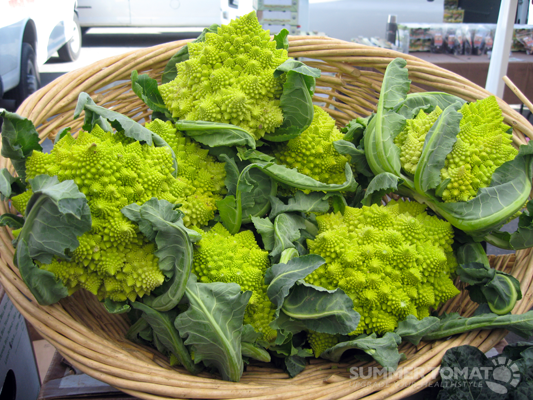
Romanesco

Romanesco

January in San Francisco is apparently a zillion times nicer than summer. Sure we had some rain last week, but it was so warm, clear and beautiful today I actually went to the market in a summer dress. After last year’s summer of fog, this is was glorious.

Bay Bridge

Bay Bridge

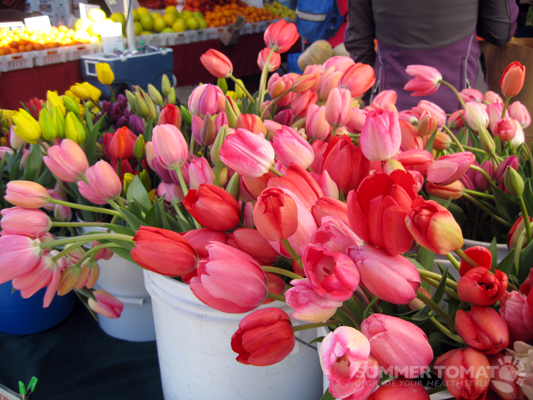
I don’t know if this is global warming or what. It’s certainly strange to see tulips, usually a hallmark of spring that appears in early April or late March, on the last weekend in January. Hard to complain though.

Tulips in January

Tulips in January

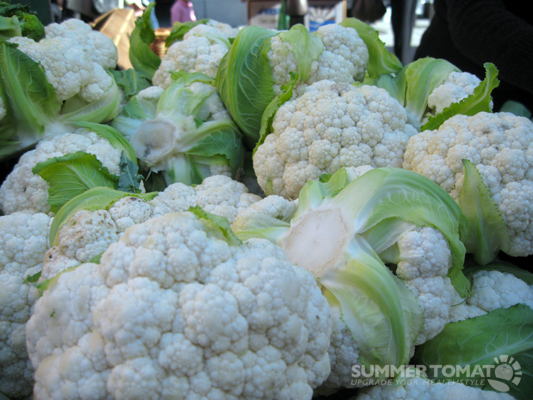
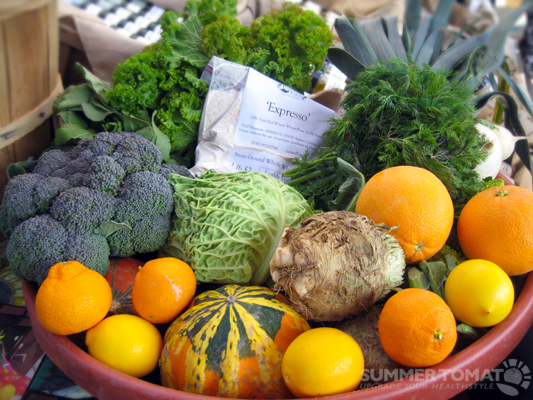
Despite the sun, most of the produce is still fairly wintery. One of the reasons I love this time of year is that brassica vegetables (the leafy greens) are so delicious now that eating lots of them is an absolute joy.

Cauliflower

Cauliflower

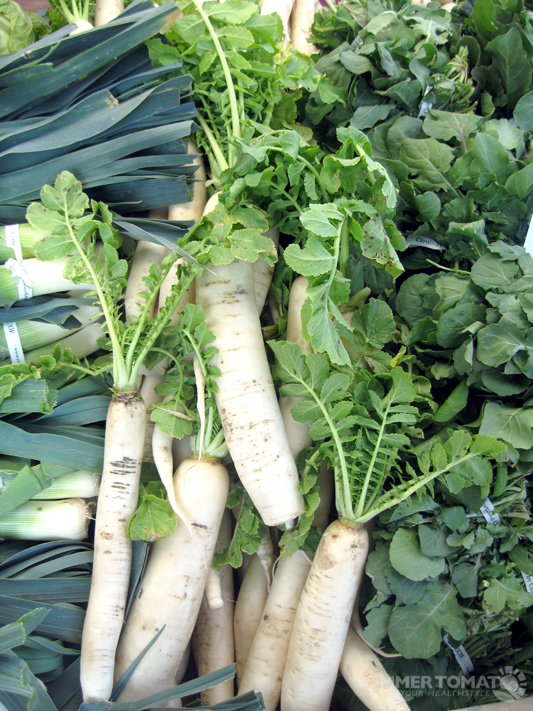
I can’t get enough kale, broccoli, and cauliflower. This weekend we got a bunch of cabbage, daikon and carrots to make a big batch of healthy, probiotics-filled sauerkraut.

Leeks, Cabbage and Daikon

Leeks, Cabbage and Daikon

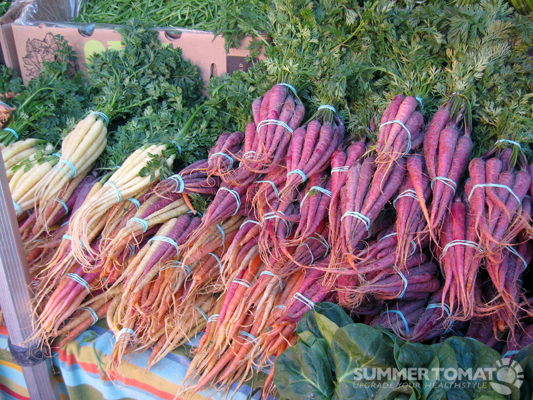
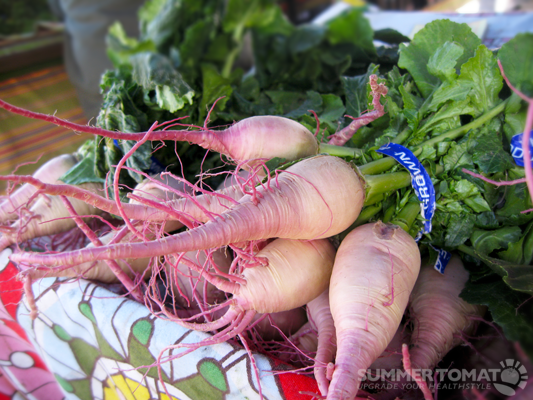
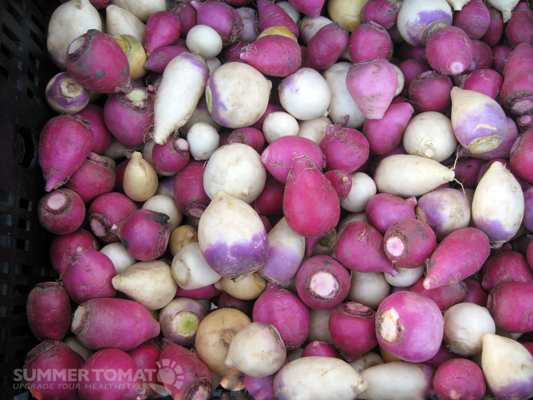
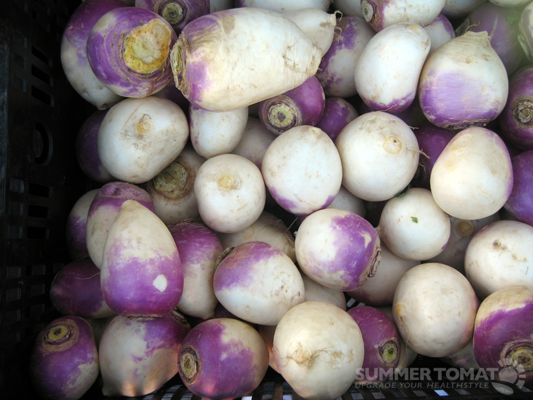
And speaking of carrots, they and other root vegetables like turnips and radishes are as sweet as can be. My puppy Toaster has learned to prefer these amazing farmers market carrots (yes my dog loves vegetables, go figure) and will actually turn his nose up at the ones I get at Whole Foods. Such a snob!

Colorful Carrots

Colorful Carrots

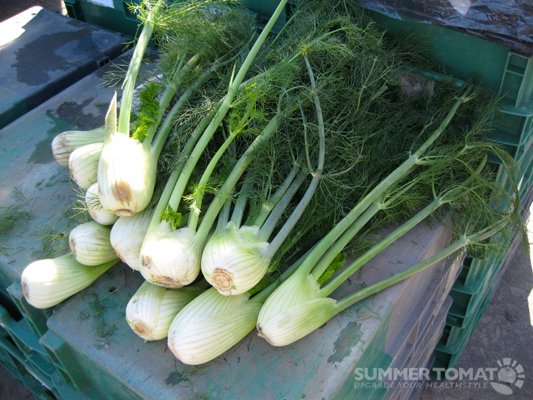
It’s also a great time for fennel.

Fennel

Fennel

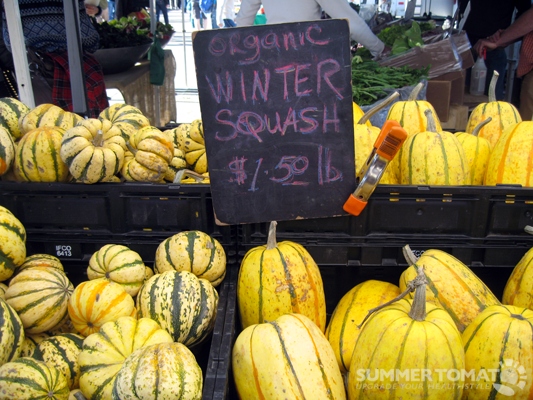
For those of you still obsessed with my winter squash recipe, unfortunately they’re getting harder to find. That is, unless you prefer delicata the size of a watermelon.

Organic Winter Squash

Organic Winter Squash

All in all it was a lovely day. Happy winter!

Yellow Oyster Mushrooms

Yellow Oyster Mushrooms

Today’s purchases (~$20):

4 responses so far

Jan 27 2012

For The Love Of Food

Filed under Link Love,News

For The Love of Food

Welcome to Friday’s For The Love of Food, Summer Tomato’s weekly link roundup.

Some awesome news in the science of weight loss (hint: it involves making your fat into a calorie burning machine), why you should only eat organic strawberries (at least for now), plus two awesome winter recipes I’m dying to try.

Want to see all my favorite links? Be sure to follow me on on Digg. I also share links on Twitter (@summertomato), Google+ and the Summer Tomato Facebook page. I’m very active on all these sites and would love to connect with you.

Links of the week

What inspired you this week?

3 responses so far

Jan 25 2012

8 Simple Tips To Avoid Late Night Snacking

Photo by xJasonRogersx

Snacking can be a mixed blessing for anyone learning to eat healthy. On one hand, a small healthy snack after a workout or an hour or so before a late meal can help you avoid making bad, hunger-induced food decisions later. On the other hand, snacking can easily grow out of control and be a source of hundreds of excess calories.

Late night snacking almost never falls into the good snacking category and is usually driven by cravings or habit rather than legitimate hunger. Here are a few tips to help you make healthy post-dinner food decisions and break the habit of late night snacking.

8 Simple Tips To Avoid Late Night Snacking

1. Eat a satisfying dinner

This may seem obvious, but is often overlooked by someone actively trying to lose weight. Though dinners shouldn’t be excessively large, they should be balanced, nourishing and satisfying enough to keep you happy until bed time.

2. Eat fruit

Late night snacking is often fueled by a desire for sugar or dessert. A small piece of fruit can be a great way to satisfy this craving and help you make it to bedtime without indulging in unhealthy sweets.

3. Drink herbal tea

Often a desire to snack can be quenched by simply changing the flavor in your mouth. Warm mint or chamomile tea can substitute for dessert without actually contributing any calories.

4. Brush your teeth

Dentists will tell you it’s good to brush your teeth as soon as possible after a meal to avoid tooth decay. An added bonus of this strategy is that toothpaste tends to make foods taste bad and sap your desire for late night snacks.

5. Drink some water

Water is often overlooked as a simple and effective way to avoid excessive eating. Not only is thirst often mistaken for hunger, water can also help fill your stomach during the extra time it takes for your brain to realize you are no longer hungry. Sparkling water flavored with a little citrus or cucumber is particularly effective at distracting your mouth from the desire to keep chewing.

6. Call a friend

Since late night snacking isn’t a symptom of real hunger, psychological tactics can be effective at helping you make it to bed without extra calories. Eating and talking are not compatible, so calling a friend or family member can be a great way to occupy your mind and mouth until the cravings pass.

7. Get moving

Light exercise can be great for killing the desire to eat. Try burning a few calories instead of eating them by taking a walk or making a booty call instead.

8. Play video games

Though I do not consider the Nintendo Wii a particularly effective form of exercise, one bonus of playing video games is it occupies both of your hands and makes it difficult to eat. It also gets your mind off the kitchen and onto something more fun. I’d vote for video games over television any day of the week.

What are your favorite tricks to avoid late night snacking?

Originally published May 3, 2010.

18 responses so far

Jan 23 2012

5 Classic Super Bowl Foods That Are Surprisingly Healthy

Filed under Special Occasions,Tips

Photo by Надя Антонова / Nadja Antonova

Healthy eating is important, but sometimes on special occasions you just don’t want to compromise. Luckily, sometimes you don’t have to.

Some of the most classic Super Bowl foods actually aren’t as bad for you as most people think. Just make sure that real, good-quality ingredients are used in all your recipes and enjoy.

5 Classic Super Bowl Foods That Are Surprisingly Healthy

1. Chili

Beans, tomatoes, onions, spices and grass-fed beef are the things healthy meals are made of—just don’t forget to eat some leafy greens at some point during the day.

Really good chili doesn’t require cheese, but if you can’t live without it just make sure you get real cheddar and not the processed fake stuff. Check the ingredients.

2. Chicken wings

Chicken wings are tasty, and depending on what you put on them they can be healthy as well. What’s important is that you avoid breading and sweet sauces. Traditional Buffalo wings are probably not the best option (they’re breaded and fried), but Chef John’s famous Super Bowl pastrami wings would be perfect.

3. Guacamole

I’d be lying if I said you didn’t have to watch your portions with guacamole—it’s easy to eat a lot and it is very high in calories. But fortunately it is very filling and all the calories are of the healthy variety. The monounsaturated fats in avocados are very effective at raising healthy HDL cholesterol, without negatively impacting other blood measures.

4. Salsa

Of course there can be no talking about Guacamole without mentioning his fiery little sister Salsa. On the health front, you can’t beat the combo of tomatoes, onions, chili, cilantro and lime, and it tastes good on pretty much anything. So go nuts, you can enjoy this one guilt free.

5. Bean dip

Black bean dip is a classic at Super Bowl parties. If you start with dried beans and soak them overnight before cooking and pureeing them for the dip, you can even avoid the digestive issues most people associate with legume consumption. If you’re tired of Mexican flavors (the ingredients are similar to those in salsa and guacamole) try using chickpeas in a Mediterranean-style hummus instead.

What are your favorite Super Bowl recipes?

19 responses so far

Older Posts »