Sign up

You deserve to feel great, look great & LOVE your body

Enter your email for your FREE starter kit to get healthy & lose weight without dieting:

  • This field is for validation purposes and should be left unchanged.

Mercado: The Ultimate Farmers Market Bag – Now Shipping!

by | Apr 22, 2012

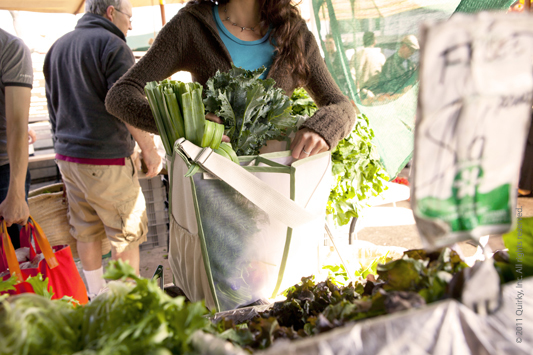
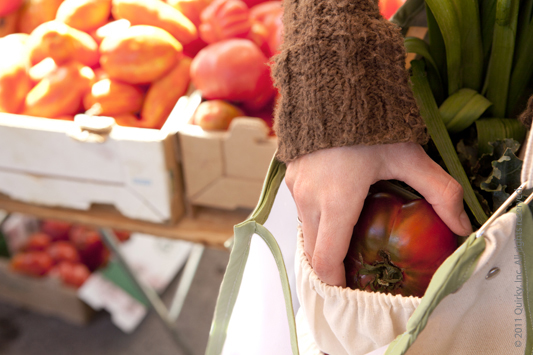
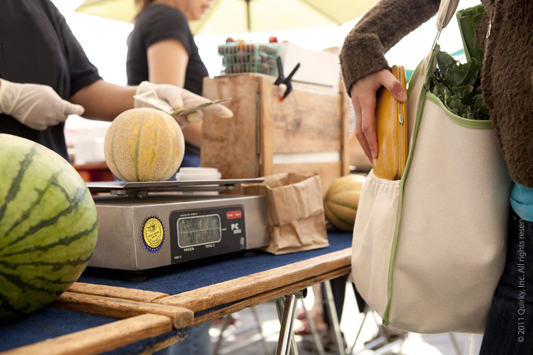
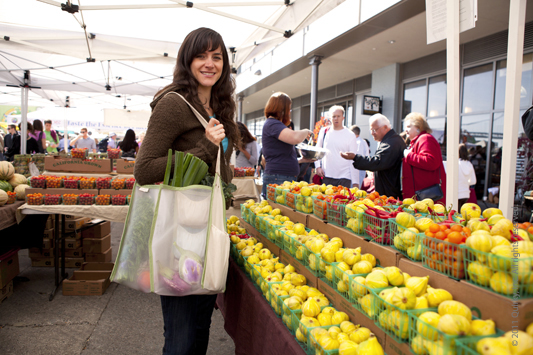
It’s been nearly 7 months since we took pre-orders for Mercado, the farmers market bag that I asked the Quirky Inc. community to help me design, and the wait is finally over. Mercado is now shipping and we are accepting new orders.

I think you’ll love the final product, we spent months making sure every detail is perfect. I tested multiple versions of the bag and they integrated all my suggestions on design and materials to create the best product possible.

Mercado: The Ultimate Farmers Market Bag

I couldn’t be happier with the outcome, and it’s just in time for farmers market season. If you submitted a pre-order you should have received an email yesterday. Click on the link they provide to confirm your shipment. Please check your spam folder if you can’t find the email.

You can order the bag directly from Quirky. You can even grab a custom link that lets you earn 10% on sales if you share it with your friends and followers. The bag will practically pay for itself 😉

Mercado: The Ultimate Farmers Market Bag

Thanks everyone for your patience and continued support. I can’t wait until Mercado arrives in your mailboxes!

Order Mercado Now

Tags: , , , ,

Meal Planning Without Shopping Lists

by | Feb 15, 2012

Photo by evelynishere

Photo by evelynishere

Food shopping can be intimidating, especially if cooking is new to you.

A common approach to this problem is to pick your recipes beforehand, make a list of what you need and then shop until everything from the list is in your basket. But being comfortable shopping without a list is a valuable skill worth adding to your healthstyle toolkit.

Lists can come in handy, especially when you’re planning a large meal or event where organization is essential. But at a farmers market, shopping lists aren’t nearly as useful.

You can never be 100% certain of what you’re going to find at the market each week. Sure there are things you can usually count on (I know I can find kale at my market year round), but having a long catalog of ingredients for a particular recipe is likely to be frustrating.

A shopping list you can’t fulfill will leave you scrambling, running around the market looking for absent ingredients or inferior substitutes. No fun. The last thing you want to do is turn the farmers market into a source of anxiety.

Still the best reason to avoid lists at the farmers market is that discovering new and interesting foods is what makes shopping there such a treat. It takes an open mind and curious eyes if you hope to find the next tree tomato.

So how do you free yourself from the shackles of shopping lists without ending up with a pile of random vegetables and no obvious meals?

When shopping at a farmers market, the best meal planning strategy combines both structure and flexibility. Start with an idea of what you want to accomplish, then let the season’s offerings nourish your spirit of adventure and round out your menus.

Meal Planning at the Farmers Market

Step 1. Quantify

Think about how many meals you want to get from your purchases (e.g. 4 dinners, 5 lunches), and be sure to have that many main course ideas (vegetables being the centerpiece) given that a few will probably repeat.

At this point it is okay to have one or two things in mind you know you want to make, but the rest of your meals should be inspired by wandering through the aisles and seeing what catches your eye.

Step 2. Visualize

As you discover which foods will be the focal points of your meals, start to think about how you might like them cooked (even if you don’t know how). Think about what other flavors usually taste good with what you’re buying–consider herbs (parsley, thyme, mint, cilantro, etc.), proteins (meats, fish, eggs, legumes) and side dishes.

If you can’t think of anything, try to remember how these foods have been served to you in a restaurant. If you still aren’t sure what other flavors would be a good choice, ask the vendor you are buying from. Farmers are usually pretty good at cooking the foods they grow.

Step 3. Consolidate

For all the different ideas you had for meals, think of those with common flavors. Look for similarities between the dishes and overlapping ingredients. For example, most dishes will need some kind of onion, garlic or both. The farmers market is also a great place to get herbs and spices.

Look around and see what is available, purchasing the ingredients that are the most versatile. Flavors that can be included in several different dishes also give you the flexibility to change up your meal plans in middle of the week if you are suddenly struck with inspiration.

Step 4. Collect

As your ideas solidify, be sure to collect all the elements you need. iPhone apps can be particularly helpful with this if you want to double check ingredient lists. Because most popular recipes are born from available seasonal ingredients, it is likely you will find everything you need while shopping at the farmers market. If not, you might need to pick up the rest of your ingredients at a regular grocery store–not the end of the world.

To make sure you don’t forget anything, think about each dish individually and deconstruct each of the elements in your mind. This will jog your memory if you forgot to grab a lemon or some garlic.

Step 5. Plan

It is good to have a rough idea of when you are going to eat each of the meals you visualized. Some vegetables hold up better than others over the course of a week in the refrigerator. Plan to eat the most delicate produce in the first day or two, and save the hearty kale and broccoli for later in the week. Here are some tips to keep produce fresh.

Conclusion

Creative shopping without lists takes some practice, but you don’t have to be a master chef or flavor expert to get it right. When cooking with delicious, seasonal ingredients you can’t go wrong with simplicity. Start with the basics and work your way up as you get more comfortable in the kitchen and at the market.

Do you use shopping lists?

Originally published January 20, 2010.

Tags: , , , , , , , ,

Summer Tomato Holiday Wish List 2011

by | Dec 12, 2011

Photo by WTL photos

It’s time to start holiday shopping for all the wonderful healthy foodies in your life. My goal this year was to be extra creative and come up with an interesting and useful mix of items that I personally adore. I also tried to hit a range of price points.

Hopefully there’s some stuff in here you wouldn’t have thought of on your own. Happy shopping!

The 2011 Summer Tomato Holiday Wish List

1. Fitbit ($99)

Paying more attention to my daily activity has been the most positive behavioral change I’ve made this year. Since the Jawbone Up is no longer an option, my pedometer endorsement this holiday season goes to the awesome Fitbit pedometer.

Though the web interface and social features aren’t the greatest, there is a beautiful simplicity in the Fitbit’s ability to show you your daily steps at the push of a button. The latest version also shows you how many flights you’ve climbed, a nice feature for those of us who pride ourselves on taking the stairs whenever possible. I wear mine everywhere.

2. Harsch Gairtopf Fermenting Crock Pot – 5 Liter ($119.95)

What better way to get more probiotics into your diet than doing your own lactofermentation? We’ve been making our own sauerkraut, pickles and kimchi at home using this 5 liter fermenting crock pot. The biggest worry when doing this stuff on your own is contamination. This device is clever because you fill the seal with water, which allows gas to escape but doesn’t allow any air inside.

We’ve tried several methods of fermentation at home, and this is by far our favorite. It is way easier than it sounds, and the sauerkraut we’ve made is superior to anything we’ve ever found at the store or the farmers market. Bye bye stomach aches.

3. Wild Fermentation: The Flavor, Nutrition and Craft of Live-Culture Foods, by Sandor Ellix Katz ($14.48)

If you do decide to dabble in home fermentation (or are just curious and want to learn more before trying it out) you should also pick up this book. It was recommended to me personally by Michael Pollan, and is the definitive and most accessible book on the subject.

4. Modernist Cuisine: The Art and Science of Cooking, by Nathan Myhrvoid ($450.15)

Arguably the most amazing food book ever created, Modernist Cuisine combines breathtaking photography with cutting edge science and foolproof recipes. Created by the former CTO of Microsoft, this ostentatiously 1% item is the epitome of awesome for the special foodie in your life.

5. Bodum Bistro Automatic Gravity Activated Salt and Pepper Grinder ($39.74)

This is admittedly a little ridiculous, but the way it works is clever and I think it would make a great gift, particularly for guys getting into cooking (my boyfriend thinks it’s the coolest thing in our entire the kitchen). Basically it is both a salt and pepper grinder that creates perfectly calibrated seasoning by just tilting it over your food. It works really well and I’ve liked it way more than I expected.

6. Sleep Mate ($54.95)

Few things are as valuable as a good night’s sleep. If you’ve ever had trouble sleeping, particularly if you’re sensitive to background noise, the Sleep Mate really can help by creating soothing, ambient background noise. It’s like a blanket for your ears.

7. Withings WiFi Body Scale ($159)

When this scale first came out a couple years ago I thought it was a joke. Why would anyone want their scale to tweet out their weight to the world? But while the social feature got the most attention in the press, it is an optional feature (I opted out) and the scale is actually really cool.

The Withings scale talks wirelessly to your computer, creating simple to understand graphical displays of your weight and body fat over time. It can even tell the difference between different people in the house just by stepping on it. I was skeptical of the body fat readings, but I’ve found them to be very similar to measurements I’ve had from hydrostatic testing. And as long as you weigh yourself at the same time every day in the same outfit (aka first thing in the morning in your birthday suit) then the readings are consistent and can be a great way to track progress over time.

8. Bodum Pavina Double-Wall Thermo Tea/Coffee Cup (set of 2, $14)

Not only do these insulated cups look amazing, they keep your tea or coffee remarkably warm without heating the glass enough to burn your hands. We swear by them.

9. Sous Vide Supreme ($399)

By far one of the coolest cooking methods around, sous vide gives you the ultimate control when cooking meats and vegetables. It’s pricey (though it has dropped about $100 in the past year), but if you can afford it and are obsessed with food it is a fabulous addition to the kitchen.

Related: You may also want to pick up the vacuum sealer ($129.99) and some vacuum bags ($19.99) to get started.

10. Nesco 700 Watt Food Dehydrator ($59.49)

Baked kale chips are good, but dehydrated ones are even better and last longer. With a food dehydrator you can make your own dried fruit, vegetables and even beef jerky to your own preferences (cranberries without sugar!). Definitely go with this higher-powered device over the cheaper ones, you’ll get more consistent results in way less time.

Need more ideas? Check out last year’s list.

What do you want for Christmas?

Tags: , , , , , , , , , , , , , ,

Introducing Mercado: The Official Summer Tomato Farmers Market Bag

by | Sep 28, 2011

I’m beside myself with excitement that the official Summer Tomato farmers market bag, Mercado, from Quirky Inc. is finally here!

It was nearly a year ago that I presented the Quirky design community with my farmers market problem. The issue when you buy ripe, seasonal produce from your local farmers market is that it’s extremely juicy and delicate, making it nearly impossible to get home safely in any standard soft bag. I had been using two bags and carrying tuppers and lids to help protect my most delicate items, but I knew there was a better way.

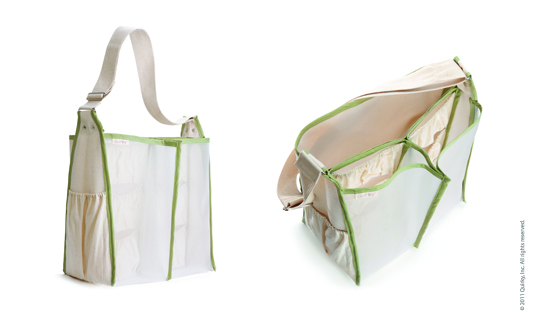
Quirky member Peter Wachtel created the winning design, and it is both cool and functional. A large compartment on the inner half of the bag holds your bigger, sturdier produce like kale, onions and cauliflower.

The outer half of the bag is composed of two smaller pockets made from a soft nylon mesh, which is held open and rigid by a wire frame. This prevents the sides of the bag from collapsing in and bruising softer items.

In addition there are several small pockets lining the inside of the nylon compartments that are ideal for cradling your most delicate items like peaches, pears and tomatoes.

The bag has a wide, adjustable strap and two deep side pockets that are ideal for your wallet, keys and shopping list. The outer parts of the bag are made from a thick, durable canvas that is attractive and comfortable.

I’m totally in love.

Mercado is currently in the presale stage. The way Quirky works is that a product must collect a minimum number of orders before it goes into official production. If you place your order(s) now you’ll get the bag for a discounted price of $19.99.

It will retail at $24.99, so you’ll save some cash by ordering early. Obviously you won’t be charged unti the bag actually goes into production.

Lastly, you can earn 10% on any sales you refer to Quirky for the bag. Just use the referral link they give you when you click “Spread the word and earn 10% on sales!” Help us get the bag made and make some money in the process. Woohoo!

Place your order here

Thanks for your support!

Tags: , , ,

What To Look For When Picking Fruits And Vegetables

by | Aug 17, 2011

Photo by Vvillamon

Most people know instinctively to avoid bruised or blemished produce, but there is much more involved in the art of choosing fruits and vegetables.

While buying fresh food is always a little bit of a craps shoot (and not every rule will apply to every piece of produce), these tips will give you the basic skills you need to hold your own at the farmers market.

What To Look For When Picking Produce

1. Bright color

After you’ve checked for bruises, blemishes and pests (harder to see on vegetables like cauliflower and cabbage, so double check), look for fruits and vegetables with the brightest, most inviting colors. The tastiest, vine-ripened produce should be vibrant, with its skin entirely saturated with color. If the item has a dull color or whitish sheen that means it is either not fully ripe or was deprived of sun or nutrients.

For fruits like cherries look for stems that are green instead of brown, since these fruits will be fresher.

2. Heavy weight

Generally you want to pick produce that is the heaviest relative to the rest of your options. Light weight produce is more likely to be dry and mealy, but heavier produce will be juicy and crisp.

The best way to tell is to pick up two similarly sized fruits, one with each hand. After you’ve tried a few it will be obvious that certain fruits are much heavier than the rest, and those are your best bets. This applies to both fruits and vegetables, but mostly to fruits.

3. Firm, but not hard

Because the best produce is moist and juicy (see point #2), it should also be perfectly plump. This means that it will be firm to the touch—think crisp and succulent—but not hard, squishy or limp.

While the perfect amount of firmness will vary for each type of produce, comparing within the batch can be very informative. For soft fruits, gently picking a piece up should tell you if it’s too soft or hard.

For vegetables with stalks like carrots and broccoli, be sure the ends don’t give too much when you try to bend them (but don’t try too hard or they might snap).

While this tip works as a general rule, keep in mind that it doesn’t apply to everything. Figs, for example, are better very soft, as are certain kinds of persimmons.

4. Fragrant aroma

Probably the most telling test of the quality of your fuit is how it smells. Unripe fruits smell like nothing, or at best the cardboard it was packed in. But ripe produce almost always smells faintly (and often overwhelmingly) of how it is supposed to taste.

Hold the part of the fruit that was attached to the stem close to your nose and breathe deeply. Compare a few of your options. The strongest smelling fruit will be the most ripe and ready to eat immediately. If you’d like your fruit to last for a few days, it is best to go with a piece that still smells good, but has a less overwhelming scent.

It’s also worth smelling your vegetables, though this tip does not apply to them all (eggplant is a notable exception). Green leafy vegetables and herbs are particularly fragrant. But even carrots, artichokes and squash can have a distinctive smell. Peppers are my personal favorite.

What are your tips for picking perfect produce?

Tags: , , , , , ,

For The Love Of Food

by | Jul 29, 2011

For The Love of Food

Welcome to Friday’s For The Love of Food, Summer Tomato’s weekly link roundup.

There were so many awesome stories this week narrowing them down to the top 10 was difficult. Several studies were published on environmental factors that influence healthy food choices, Monica Reinagel shares an interesting method on breaking weight loss plateaus and I found one of the most inspiring videos I’ve ever seen.

Want to see all my favorite links? Be sure to follow me on on Digg. I also share links on Twitter (@summertomato) and the Summer Tomato Facebook fan page. I’m very active on all these sites and would love to connect with you.

Links of the week

What inspired you this week?

Tags: , , , , , , , , , , ,

5 Tips For Buying The Freshest & Most Sustainable Salmon

by | Jun 13, 2011
Wild Alaskan Salmon

Wild Alaskan Salmon

Natalie Mann is the founder of Ambrolio Foods, a website dedicated to delicious and healthy foods. A nutritionist with a degree from Cornell University, Natalie has spent decades working in the food industry. As a parent with two sons, she also has firsthand experience with finicky eaters, dairy allergies, and gluten intolerance.

5 Tips for Buying the Freshest & Most Sustainable Salmon

by Natalie Mann

Buying salmon used to be easy.

Fresh-fished salmon was abundant, prices were reasonable, and warnings about overfishing, water pollution, and PCBs weren’t making headlines.

In 2011, all that has changed.

More than half of the salmon purchased in the United States comes from fish raised in man-made farms. Prices are much higher, and sustainability and safety are pressing concerns.

To lend insight into your next salmon purchase, here’s a quick guide for buying the freshest and most sustainable salmon possible.

5 Tips For Buying The Best Salmon

1. Fresh fish, including salmon, should NOT smell.

If the fish counter and surrounding area smells ‘fishy,’ walk away and don’t make a purchase.

If you don’t detect any odors at the counter, but your salmon smells fishy when you open the package at home, return it.

2. Fresh salmon should glisten, not look dull.

Salmon should look bright and shiny. Its flesh should be firm, clean, and evenly colored. Natural white marbling on the fish is an indicator of good omega-3 fatty acids. (See photo)

3. Wild Alaskan salmon is the most eco-friendly.

Many resources, including the Environmental Defense Fund, cite wild Alaskan salmon as the most sustainable choice. Fresh, frozen at sea, and canned salmon from Alaska are all good options.

4. Fresh, wild Alaskan salmon is a seasonal item.

In Alaska, the salmon fishing season starts in May and ends by late-October. Outside of this time you will only find good smoked or canned salmon.

5. Farmed Atlantic salmon should be avoided.

Farmed salmon are raised in large, densely packed pens that pollute surrounding waters with waste and chemicals. In addition, farmed salmon are more prone to illness in crowded net-pens, and antibiotics are often used to treat disease.

Farmed salmon have elevated levels of PCBs. The Environmental Defense Fund has issued a warning to limit the consumption of Atlantic salmon. This warning pertains to everyone, but is particularly important for young children. See the EDF site for specific details.

Conclusions

  • In 2011, our salmon choices impact our oceans as well as our bodies.
  • At the seafood counter, ask questions. Farmed or wild? Previously frozen? How fresh – delivered when?
  • At restaurants, ask if the salmon is delivered daily and whether it’s wild or farmed.

What do you consider when buying salmon?

Tags: , , ,

Summertime Farmers Market Checklist

by | Jul 12, 2010
Heirloom Tomatoes

Heirloom Tomatoes

A harsh reality hit me this past Saturday. Believe it or not, I was woefully unprepared to bring everything I wanted home from the farmers market.

It wasn’t obvious to me at first. After all I had remembered to stop at the ATM for cash, brought with me my large market bag, and even had my trusty roll of plastic bio-bags to collect all the delicious summer greens (plastic is so 2008).

This was not a rookie farmers market mistake I made, this was more of a seasonal oversight. Dedicated farmers market shoppers (particularly fruit lovers) have a special concern in the summer that does not exist in the winter: soft produce.

Nothing is sadder than arriving home from the farmers market and finding your bags full of mashed plums and tomato sauce. If you purchase a decent amount of produce you are almost certain to have some fruit casualties if you rely on only one large market bag, even if you’re careful to place them at the top. The tender skins of summer fruit are simply too delicate to withstand any pressure, whether it’s from weight, neighboring produce or the sides of your market bag.

Losing produce is even more heartbreaking when you realize that those stone fruits and heirloom tomatoes could have easily cost upwards of $3.50 per pound.

Luckily there are ways to avoid this tragedy. I recommend a two tiered approach. First, bring a few stackable tupper containers. You want them to be big enough that they allow two or three fruits to fit comfortably inside without pressure from the lid, and without the fruits pressing too firmly against each other.

On the other hand, you don’t want the fruits rolling around inside the tupper. You can avoid this if you place the fruits inside the tupper while they are still inside their paper or plastic bag. Be particularly careful if any of the fruit or tomatoes you purchase have protruding stems, since these can puncture and ruin neighboring fruits.

It is also useful to bring a second, smaller market bag so you can keep your delicate produce completely separate from your heavier purchases. This will save you from worrying about what goes where in your bag and you can focus all your energy on finding the best produce.

Glance through this checklist next time you head out to your local summer market to be sure you have everything you need.

Summertime Farmers Market Checklist

1. Cash

Don’t count on vendors taking credit cards or there being an ATM nearby.

2. 2 Large farmers market bags

One bag to carry the heavy stuff, and another (it can be smaller) for your delicate fruits and tupper.

3. 2-3 Medium-sized tupper containers

Look for wider, flatter containers that can keep peaches and plums in a single layer, stems facing down.

4. Small biodegradable or green bags for produce

These are to carry loose greens and other produce.

5. Sunglasses

It’s summer, and bright out!

6. Camera

Farmers market produce is inspiring and the market changes every week. If you’re anything like me, you’ll want to capture the beauty.

How do you get your soft produce home safe from the farmers market?

Tags: , , , , , ,

Don’t Eat This, Don’t Eat That: How To Eat Healthy Without Fast Food

by | Jun 9, 2010
Quarter Pounder

Quarter Pounder

Last week in For The Love of Food I called out Men’s Health as B.S. of the Week for their article, “Eat healthy at the airport.” There seems to be a growing trend in the number of weight loss programs that support eating fast food. The idea is that some menu items have slightly fewer calories than others and do not contribute (as much?) to weight gain.

It is true you can lose weight eating anything (so long as you do not eat very much of it), but that does not make eating fast food a good idea. What is misleading about these programs is the grossly inappropriate use of the word “healthy.”

Credit the book Eat This, Not That for this special brand of quackery on which Men’s Health bases their article. They begin with the example of McDonald’s (because, you know, where else are you supposed to go eat?) and suggest you order the Quarter Pounder without cheese (and without fries and soda) over the Premium Grilled Chicken Club.

The reason?

The Quarter Pounder has only 410 calories compared to the 570 calories of the chicken sandwich, a 30% reduction.

To me this sounds the same as saying 7 cigarettes is healthier than 10 cigarettes.

Sure it might be “better” to smoke a little less, but do you really believe you are doing yourself any favors? You’re still ingesting something toxic. Would you be happy if China promised to put a little less melamine in your child’s baby formula?

After decades of consuming slightly smaller doses of poison is it logical to think you’d be a more sprightly 80 year old than you would have been eating full dose poison? I don’t think so.

Rationalizing

Rationalization is the name of the game here:

“Some people are going to eat fast food no matter what, it might as well have fewer calories.”

“It’s impractical to not eat fast food. What if I’m in a hurry?”

“There’s nothing else to eat at the airport, do you want me to starve?”

“I cannot afford to eat anything healthier. Value meals are the best!”

“I just eat crap then spend extra time in the gym, so it balances out.”

“I love junk food and could never stop eating at McDonald’s.”

*shiver*

The problem with all these faux arguments is that they are based on the assumption that fast food is an inevitable part of life, too powerful to resist or avoid. My guess is we can thank the McDonald’s marketing team for this twisted bit of psychology, but that does not mean we have to accept it.

Here is why those arguments don’t hold water:

  • The “fact” that some people will continue to eat fast food does not preclude the need to have a diet that endorses it.
  • There is always something to eat besides fast food. In fact, there was actually a time when Burger King didn’t exist!
  • A few healthy-ish options can be found at the airport, but if you do a tiny bit of planning beforehand you don’t have to be stuck eating there in the first place. Another thing to consider is that starving would be healthier, since caloric restriction has been consistently shown to improve health, prevent disease and extend life. (But don’t worry, going hungry isn’t necessary.)
  • The organic kale and tempeh I ate for dinner last night cost the same (~$3.50) as that flaccid Quarter Pounder in the photo, and smelled 1000% better (yeah, I actually bought one). [For the record: I did ask for it without cheese and they just botched my order–can you imagine it looking even more tasteless? Blah. So much for tricking yourself into eating fewer calories.]
  • Working out is very important for your health, but it does not give you essential vitamins, minerals and all the other wonderful things offered by whole foods–exercise cannot substitute for a healthy diet.
  • There is room in your healthstyle for any food on special occasions. Personally I prefer to use my occasions for exquisite (rather than cheap) meals, but for some of you special may mean going out with the guys for game night or a road trip from L.A. to S.F. (i.e. the In-N-Out in Kettleman City). What is important is that you make sure foods that do not contribute (or are detrimental) to your health make up an extremely small proportion of your diet.

The Real Problem

I contend that the real issue is not that there is nothing else to eat besides fast food, but that we are not trained to recognize any other option. There is a whole world of food out there that does not include unsanitary chain restaurants.

The little secret those of us who don’t eat fast food know is that this other world is far tastier than the one of processed foods and chain restaurants. Also, the convenience factor is easily overcome if you approach it right.

The Answers

Your first defense against eating foods you didn’t plan for (isn’t that what fast food really is?) is to make sure you have a plan. Always.

Rule #1 is to know what, when and where you are going to eat all your meals throughout the day by the time you leave your house in the morning. Not doing this is setting yourself up for an uh-oh. If you are not able to know for certain the specifics of your meal plans, at least try to envision the most likely scenarios and think of ways to make them as healthy as possible. Trust me, these decisions are a lot easier if you make them before you are starving and willing to eat a deep-fried shoe.

Rule #2 is to always have a back up plan. Is there any chance that your friend will bail on you for dinner? Or that you will get stuck at work so long your neighborhood grocery will close? In cases like this it is best to have a plan B. I keep stuff in my freezer and pantry that can be whipped up at any given moment. I also store food in my desk at work for emergencies.

My go-to back up plan is carrying a small bag of nuts like almonds or cashews around with me where ever I go. That way I have something to snack on until I can get myself into a more favorable eating environment. Keep a small bag of nuts in your purse, glove compartment of your car, gym bag, desk drawer or carry on luggage. Your hidden snack should be in whatever container you will be sure to have with you at all times.

Nuts make a particularly good snack because their high fat and protein content (the super good-for-you kinds) make them very satisfying. One day when you are not starving try eating exactly 8 almonds, take a sip of water and wait half an hour. For me, this usually staves off hunger for at least another 45-60 minutes, and sometimes up to 2 hours.

It is more difficult to restrict your intake to 8 or 10 nuts when you are starving, however. But it is easier to exercise self-control if you believe (through experience) that a certain quantity is sufficient to satisfy your appetite. This is why I recommend you try this once before you find yourself in an emergency situation.

If for some reason you end up hungry and do not have your handy bag of nuts, you still have non-Whopper options:

  • Grocery stores Most grocery stores have fresh sections with cut up vegetables, fruits, hummus, lean meats and lots of other healthy items (nuts included). Pretend like you are having a picnic and nibble on a few of these things instead or resorting to the drive-thru. You will get plenty of calories, I promise.
  • Delis A small sandwich with lean meats and vegetables is a pretty good, easy option if you can find a deli. I would not call this an ideal meal, but it’s better than a BigMac for sure.
  • Non-chain restaurants If I am resigned to eating in a restaurant I haven’t planned on the first thing I look for is a non-chain restaurant, preferably a place that specializes in soups, salads and sandwiches. These places are usually well stocked in vegetables and often boast organic produce. They can be a little pricier than a Happy Meal, but it is worth it if you don’t have to eat a gray colored mystery meat patty, right?
  • Colorful plates Wherever I decide to dine, I search the menu for dishes that sound like they have a high percentage of vegetables, preferably multicolored. Ordering a side salad or vegetables instead of potatoes is an easy way to accomplish this mission.
  • Little bread Giant servings of generic, processed breads made of refined white flour are the biggest problem at most mediocre restaurants. If you can, try to order something that doesn’t require too much bread. This is especially true if you will be sitting on an airplane for the next several hours.
  • Avoid cheese Cheese is delicious and I love to eat it occasionally. However, it is common these days for restaurants to bury plates in cheese to mask the crappy ingredients they used for the rest of the dish. Chili’s low quality cheese is hardly worth the extra few hundred calories being used to cover up the fattening, mediocre food you ordered.
  • No sweets Sugar is one of the most dangerous things you can eat and should always be consumed with caution. We all love desserts, but you will be much better off saving your sweet tooth for truly special occasions. Airport terminals really aren’t that special.
  • Healthy fats I go out of my way to find healthy fats like nuts, fish and salad oils when I am eating solely to satisfy my hunger. These fats will make sure you stay full as long as possible.
  • Lean proteins As far as satisfaction goes, what is true for fats is true for proteins. Because they digest so slowly proteins help you feel full longer. Fish, eggs, nuts, beans and even whole grains like brown rice can give your meal a more satisfying impact.
  • Eat simply When you are eating on-the-go and in restaurants you are unsure about, your best bet is to stick to simple items. Avoid menu descriptors like glazed, gooey, cheesy, creamy, fiesta, piled, smothered, etc. Sauces are really a problem at airport-style restaurants. Stick to predictable items to keep yourself out of trouble. A turkey sandwich or chop salad are usually pretty safe.

The basic message is to find fresh foods and eat as balanced as possible. No matter what you order this is probably not going to be the most delicious meal of your life, so you may as well try to make it as healthy as possible. A little planning–like eating before heading to the airport–can go a long way in saving special occasions for food that is truly special.

What are the biggest obstacles you encounter when stuck somewhere without food?

Article was originally published June 3, 2009.

Tags: , , , , , , , , , , , , , , , ,

Grilled Fennel With Lemon Oil

by | May 24, 2010
Grilled Fennel

Grilled Fennel

This grilled fennel turned out absolutely amazing and was very simple to make. I got the idea from a dish I tried recently at a local restaurant, Pizzeria Delfina, but honestly did not believe my version would be anywhere near as awesome. To my surprise, it was pretty darn close. Needless to say I am super proud of myself for this one and I hope I can convince you to try it.

Fennel is a unique vegetable that looks like a cross between celery and an onion, but tastes like neither. The flavor resembles anise or black liquorish when raw (a taste I still really struggle with), but takes on a sweeter, more herbal flavor when cooked. I have always been a fan of cooked fennel, despite my aversion to raw preparations. But I had no idea how far this misunderstood vegetable could be elevated by throwing it on the grill.

Don’t have a grill, you say? Awesome, neither do I. Backyards aren’t exactly standard in city apartments. For this recipe I used an apartment-friendly alternative to an outdoor grill, the humble grill pan.

A grill pan is special because it features raised ridges that can leave those wonderful, coveted grill marks on your food. Grill marks not only give your food a lovely appearance, they also add a unique flavor because sugars and fats caramelize where they come in contact with the hot pan. This effect cannot be achieved in a standard fry pan and the grill pan is a delicious alternative for cooking meats, fish and most vegetables.

My favorite grill pan (also the favorite of Cook’s Illustrated) is only about $40, far cheaper than a traditional outdoor grill or indoor electric grill. You can buy it at Amazon.

Feel free to use which ever grilling method is easiest for you.

When picking out your fennel, I recommend using several baby fennel bulbs rather than one large one (they’re in season now). Baby fennel is more tender because it does not have a large, hard inner core like full-sized fennel. A tender center allows you to leave the bulb mostly intact on the grill, making it easier to turn and cook evenly.

I purchased Lisbon lemon olive oil from Stonehouse Olive Oil at the Ferry Building in San Francisco. You can find lemon oil at specialty grocery stores, and it is a wonderful ingredient for spring vegetable dishes. But if you prefer, you can make due with extra virgin olive oil and a meyer (or regular) lemon.

This is a side dish. I paired mine with asparagus ravioli and sorrel.

Grilled Fennel with Lemon Oil

Ingredients:

  • Fennel (~1 lb)
  • Extra virgin olive oil
  • Lemon olive oil (or 1/2 Meyer lemon juice and zest)
  • Sea salt
  • Fresh Italian parsley, chopped

If you are using baby fennel, cut off the green stems and the very bottom of the root (but not so much that the layers have nothing to attach to). Then cut the fennel in half lengthwise, and then again into 4-6 bite-sized wedges.

The goal is to get your fennel into manageable chunks, which means (ideally) all the layers would still be attached at the bottom. This is much more difficult if you have removed the core. In my experiment (I made the mistake of buying large fennel) I removed the core on one half before cooking and left the other half with the core in while cooking. It was easier to get the fennel to cook evenly on the half where the core was still attached. You can remove the core after cooking if it is still tough.

If you are using a large fennel bulb simply trim off the stems, slice off the bottom and cut the bulb in half lengthwise. Cut each half into even-sized wedges, about 0.5 inch thick.

For an outdoor grill, simply brush your fennel wedges with olive oil, sprinkle with sea salt and grill until soft and tender, turning occasionally.

For a grill pan, heat the pan on medium high heat for 3-5 minutes. Lightly coat fennel in olive oil and sea salt (use a bowl and stir). When the pan is hot, add 1-2 tbsp olive oil and gently swirl it in the pan so it coats the surface. Place fennel in a single layer on the hot grill, lower the heat to medium and cook until translucent, tender and slightly browned, turning occasionally. For me this took about 10 minutes. I recommend using tongs with nylon headsto turn your fennel in the pan.

Your fennel should have grill marks and be caramelized in places. I suggest exercising patience and allowing fennel to become extremely tender, but you can choose your desired crunchiness. Remove the fastest cooking fennel pieces from the grill when they are done and place them in a bowl.

When all the fennel is finished cooking, drizzle it lightly with lemon oil (or juice and zest) and sprinkle with freshly chopped parsley. Adjust salt and zest if necessary.

Have you tried grilling fennel?
http://forms.aweber.com/form/30/split_210533730.htm

Tags: , , , , , , , , , , , , , , , , , ,