Sign up

You deserve to feel great, look great & LOVE your body

Enter your email for your FREE starter kit to get healthy & lose weight without dieting:

  • This field is for validation purposes and should be left unchanged.

I Love You Mom, But You Suck At Cooking Vegetables

by | Jun 18, 2012

Photo by Telephone Melts

A strange thing happens to some people after their first few experiences with perfectly cooked farmers market vegetables. It is not always easy to admit, but after awhile you might find yourself thinking that the veggies you grew up eating were, ahem, pretty horrible.

It is common for people of both my generation and my parents’ generation to have been raised on frozen spinach, canned beets, over-steamed carrots and boiled broccoli—foods that would make anyone with taste buds pick up their fork and run to the nearest steakhouse.

Is it any wonder that vegetables rarely rank on anyone’s favorite foods list?

Unfortunately, sometimes these negative early experiences can create life long food aversions that could have been avoided with a little extra TLC in the kitchen. They also help propagate the unhealthy eating habits that are now so common in America.

But our exposure to bad vegetables isn’t really Mom’s fault. Over the past 50 years America has been seduced by the allure of convenience. We’ve come to believe that meals come in packages and cooking is too hard and time consuming to bother with. We rely on supermarkets for our fruits and vegetables, which we expect to be the same year round.

The watering down of our food culture is directly responsible for our vegetables losing flavor (they are bred for shelf life, not taste) and us losing our ability to make them palatable. As a result vegetables have become an afterthought, something we eat from guilt and obligation, not from love.

But the good news is that this trend is reversing. People are starting to understand that where food comes from is important and has a tremendous impact on how it tastes. We are learning that it is worth it to go out of our way and spend a little extra money (at least occasionally) for the best ingredients. Restaurants are beginning to pride themselves on serving locally sourced foods–it is no longer uncommon to see farm names printed next to ingredients on menus here in San Francisco.

Focusing on quality ingredients and real foods is forcing us to reexamine cooking as well. I remember how surprised I was the first time I realized that instant oatmeal only saves about 3 minutes compared to real oatmeal and that sautéing fresh spinach is easier than making a bag of the soggy frozen kind. Not only are we starting to understand that taste is worth sacrificing a little convenience for here and there, but also that the inconvenience we feared isn’t as big a deal as we might have guessed.

But not everyone has been converted quite yet.

Learning to shop for and cook seasonal foods does involve a learning curve, and the first steps are always the most difficult and intimidating. (These aren’t exactly skills we pick up in school or learn in our daily lives.) To get and cook real food requires finding local farmers markets and knowing how to work a stove, for starters. Since farmers markets don’t usually run daily, a bit of foresight and planning are necessary if you hope to make it a part of your weekly routine. Working a stove demands some basic understanding of how food reacts when heated.

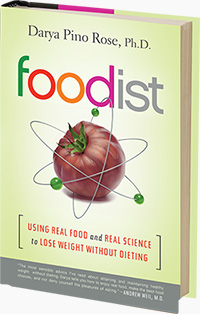
One of the reasons I wrote Foodist is to show you that these things aren’t actually as difficult as they may seem at first. And once you acquire just a few basic cooking skills—stir fry in olive oil, oven roasting, basic grain and legume preparation—expanding your culinary repertoire to include dozens of your favorite dishes isn’t much of a stretch.

One of the perks of starting with great ingredients is that messing up a meal is much more difficult than it is when you start with low-quality ingredients and rely on additional hacks and seasonings to mask the lack of flavor. Bad vegetables are almost always either over-cooked or under-salted, so if you can get these right you are most of the way there. Just a few extra seasoning tricks like garlic, chili flakes or lemon zest can elevate almost any green vegetable into something worth building a meal around.

Cooking vegetables well is neither an art nor a science. Learn to prepare a few of your favorites well, then branch out from there. Then next time you visit your parents, maybe you can volunteer to cook dinner and show them how broccoli is supposed to taste.

Have bad childhood memories turned you off to any foods?StumbleUpon.com

Modified since originally published on March 8, 2010.

Tags: , , , , , , , , , ,

Tips To Keep Produce Fresh

by | Jun 11, 2012
spring vegetables

Vegetables

“How do you store fruits and veggies so they don’t go bad? It seems like I can never keep things fresh…”

I employ several different strategies to keep my produce in good condition until I’m ready to eat it. Here are my tricks for buying, cooking and maintaining the freshest fruits and vegetables.

Shop Regularly

Although it is probably self-evident, I think it is important to state that the freshest vegetables are the ones you bought today. They are even fresher if you get them at the farmers market (picked yesterday) rather than a grocery store that imports produce from around the world. In order to keep fresh vegetables and fruit in the house and eat healthy, you must shop for produce and groceries at least once a week.

Download my free guide for more tips on How To Get Started Eating Healthy.

Shop Strategically

This is my true secret to keeping food fresh. Different foods have different shelf lives, and you can take advantage of this fact when planning your meals for the week. Always make sure you buy a few robust vegetables for your Thursday and Friday night dinners (or try to schedule your restaurant dates for later in the week).

Cruciferous vegetables (both leaves and roots) store the best and can last well over a week in the crisper. Examples of cruciferous vegetables are broccoli, kale, collards, cabbage, chard, cauliflower and brussels sprouts. Root veggies include carrots, beets, parsnips, sunchokes and potatoes.

Summer squash can last for many days in a dry plastic bag in the crisper, and winter squash can last weeks on a shelf. Eggplant has a shelf-life similar to summer squash and can be stored in the same manner. I’ve heard eggplant keeps even better outside the fridge, but I’ve never tried.

Delicate vegetables like lettuce, spinach and other spring greens are not as robust and should be eaten more quickly. Juicy fruits like berries, stone fruits and even tomatoes are more time sensitive and should be incorporated into meals earlier in the week.

Cook Intelligently

Having a rough idea of what meals you are going to make during the week can help you keep veggies fresh in several ways. In addition to planning your dishes around which vegetables last the longest, you can also prepare large batches of food early in the week then freeze or refrigerate the leftovers to eat later.

Avoid over-shopping by buying ingredients to use in multiple different dishes, rather than buying extra items for vastly divergent menus. For example, rather than purchasing red peppers for a stir fry and radishes for a salad, you can skip the radishes and add your extra pepper to your salad instead.

When buying herbs, I like to get one bunch of Italian parsley (it keeps a long time and is incredibly versatile) and only one bunch of a more delicate herb like thyme or cilantro. With this strategy you can explore recipes of different cuisines that utilize similar ingredients. For instance, if I have cilantro I may make Mexican food one night and a Vietnamese dish another night. Both incorporate fresh vegetables and herbs, but the flavor profiles of these cuisines are entirely different.

This is where it comes in handy to have a well-stocked pantry–go beyond the basics and learn to work with ingredients like fish sauce, coconut milk or quinoa. This is a great way to delve into a cuisine and explore different flavors.

Store Properly

Proper food storage can also go a long way in keeping your produce as fresh as possible. Generally speaking, most vegetables maintain their crispness best in the aptly named refrigerator compartment, the crisper. Crispers have different humidity settings than the rest of the fridge and are optimized for vegetables.

I find that leafy greens and herbs keep best in dry plastic bags or tuppers. When you get home with a large bag of salad greens from the farmers market, rinse them clean and spin them in a salad spinner. Let them sit out for an hour or so to completely dry, then put them in large tuppers to store for the week. With this strategy the crisper is not necessary.

Most fruit (including tomatoes) I keep outside the refrigerator to protect the taste, but berries are an exception. I have had fantastic luck using a reader’s suggestion to keep berries in a jar or tupper with the lid closed tight. I always put my berries away immediately after getting them home, trying to handle them as little as possible to keep any mold or bacterial spores out. I try to roll the berries into their new container without actually touching them with my hands. I buy berries much more often now 🙂

Revival Techniques

Sometimes despite your best efforts you end up with a wilted head of lettuce or a floppy bunch of basil. But if wilting is your only problem and the plant looks otherwise edible (still green and free of mold), all is not lost!

The reason plants wilt is they lose water from their cells to the environment through osmosis. But the osmotic properties of leaves can be used to your advantage. You can revive wilted greens by submerging them in a bath of cold water for 30-60 minutes, which replenishes the water in the leaves and allows them to regain their crispness! It is astounding how much they will perk up.

I learned this trick from a friend and fellow scientist–one of the many advantages of being a little nerdy.

Mold is another issue when storing fruits and vegetables, but you can sometimes salvage a batch of food if you catch it early and carefully remove all traces of it to keep it from spreading to the rest of your produce (this may involve finding a new container for the uncontaminated portion). Remember, mold is a living, growing thing that breeds more of itself. Keeping foods in sealed containers and touching them as little as possible with your hands can help control it.

Finally, fruits produce gases that cause neighboring fruits to ripen more quickly. If you have something that is perfectly ripe or over ripe, you may want to keep it away from the rest (unless of course you want the nearby fruit to ripen faster). Likewise, keeping fruits in bags will trap the gases and cause them to ripen more quickly.

Conclusion

With a few tricks and a strategic plan it is possible to keep fresh fruits and vegetables in the house for an entire week. Beyond that it is a little tough if you want your food to be truly fresh.

How do you keep your veggies fresh?
StumbleUpon.com

This article was originally published June 22, 2009.

Tags: , , , , , , , , ,

How To Make Eggs Taste As Good As Bacon

by | May 30, 2012
Fried Eggs

Fried Eggs

Something magical happened a few weeks ago. While trying to figure out what to do with the first fresh eggs I’d found at the farmers market this season, I discovered the greatest egg ingredient in the history of mankind.

Okay, maybe I’m exaggerating a little (truffles are pretty darn good on eggs), but not much.

Generally I am a big fan of adding some kind of ground red pepper (usually chipotle or ancho) to fried or scrambled eggs. But this day I tried something a bit different.

Digging through my pantry I remembered that I had a ton of smoked paprika left over from the hummus I made. I decided to do an experiment and sprinkle the smoked paprika onto my eggs.

I can’t believe I went all my life without knowing about this.

But before I explain why exactly the smoked paprika made my eggs so amazing, I want to address what I’m sure many of you are wondering:

How healthy are fried eggs?

Answer: Eggs are perfectly healthy, and frying doesn’t make them any less so.

Personally I cook my eggs in olive oil (it’s just easier), but even if you use butter it isn’t a problem since the amount you need to cook is so small.

What scares people about frying eggs is an irrational fear of dietary fat. But theoretically the amount of oil you use to fry an egg should be about the same as you need to scramble eggs, so it isn’t clear why fried eggs would pose any more of a problem. I use olive oil to scramble eggs as well.

The other issue people have with eggs is the yolk. It amazes me how often people proudly inform me that they eat eggs but “only the whites,” as if this were some unique virtue.

I understand that the public health message we’ve heard about eggs for the past few decades has been extremely negative, but eggs have since been completely exonerated from heart disease accusations. There was a time when it was assumed that dietary cholesterol (which is definitely higher than normal in eggs compared to other foods) would raise blood cholesterol, but it doesn’t for most people. In fact, the healthy fats in egg yolks are likely to positively impact your good HDL cholesterol.

Moreover, dietary fats in general have been shown to be excellent at satiating hunger, and are thus a terrific replacement for calories from refined carbohydrates. That makes egg yolks your ally in fighting heart disease and burning fat, not your enemy.

Then there’s the fact that egg yolks are incredibly rich in vitamins and minerals, since they are meant to be nourishment for a developing life.

And finally there’s the most important part, that farm fresh egg yolks are out-of-this-world delicious.

Which brings me back to how to make the best eggs in the universe.

First you must start with high-quality eggs. Two factors have the biggest impact on egg flavor. The first is the diet of the hen who laid the egg, and the second is the egg’s freshness. Thus for best results you want to find the freshest pastured eggs you can get your hands on. Pastured means the hens that lay the eggs are allowed to peck around on grass eating bugs and whatever else they find.

Your best shot at finding pastured fresh eggs is at a farmers market or direct from a farm, since if they are already on a grocery shelf they probably aren’t very fresh. Try to find eggs less than 1 week old. Their day of boxing should be clearly marked on the carton. It requires a little math, but I’m not the one who made up these rules.

Chances are good that if your eggs are very fresh then they are from pastured hens, but this is not guaranteed. Ask the farmer and try to hold out for hens that are allowed to roam free in grass during the day. If you cannot get fresh pastured eggs, “cage-free” is your next best bet for flavor (though these may still be fed a limited diet).

Without asking the farmer it is hard to tell the difference between real pastured eggs and industrial eggs labeled “cage-free” that are still fed standard or organic chicken feed. One good indication will be the price, since pastured eggs tend to run $6-10/dozen here in SF. Trust me, it’s worth it.

I do not endorse the taste or healthfulness of industrially produced eggs (even the fancy kinds), and if you do eat them you should be careful to cook them completely.

(Aside: I never worry about the safety of eggs from farms I trust, so I always eat them runny. If you think runny eggs are gross, I don’t blame you. Runny industrial eggs are gross, and before I had fresh eggs I would have completely agreed with you. But fresh egg yolk is incredible, and it is something you have to taste to really appreciate. I definitely recommend stepping out of your comfort zone on this one.)

Once you have great eggs, fry them one at a time in 1 tbsp olive oil or butter on medium low heat and sprinkle with sea salt, course ground black pepper and a pinch of smoked paprika. The paprika adds a depth and complexity above what even chipotle peppers can offer, and the smokiness is reminiscent of—I kid you not—bacon. Needless to say, it is the perfect compliment to eggs.

Fry your eggs for just two minutes or so on each side, being careful to keep the yolk intact while turning. You really don’t want to overcook eggs, which will turn them rubbery and ruin the effect.

I haven’t actually tried these eggs with bacon yet, though I certainly plan to. But bacon is no longer a requirement for making a show stopping breakfast of champions. Here I served them with some ruby chard sautéed with pistachios and garlic.

Did you guys know about smoked paprika on eggs and if so, why was I not informed?

Originally published March 3, 2010.StumbleUpon.com

Tags: , , , , , , , , , , , , , ,

How To Break A Diet Soda Addiction: Tips From A Former (Diet) Cokehead

by | May 16, 2012

It’s the rare person who has never been a victim of Diet Coke. I’ve definitely been there, and I’m not proud of it. My friend E—geek girl extraordinare—overcame her Diet Coke addiction, and can help you find your way to recovery.

Since 2008, E. Foley has been helping geeks find love. She writes amazing online dating profiles and guides her clients through the perilous waters of the dating scene. She’s totally proud to report that she’s even caused a couple geek weddings! As part of her quest for her healthstyle, she is an admin at Plus5CHA, a fitness & health community for geeks. (Visit GeeksDreamGirl.com or follow @geeksdreamgirl on Twitter.)

How To Break A Diet Soda Addiction: Tips From A Former (Diet) Cokehead

by E. Foley

Hi, everyone. My name is E and I’m an addict.

(Hi, E.)

CNN recently posted an article entitled “Can you get hooked on diet soda?” Before I clicked on it, I thought to myself, “Duh, of course you can. Been there, done that.”

The addict in the opening paragraph of the article sounds just like me a few years back:

First thing every morning, Ellen Talles starts her day by draining a supersize Styrofoam cup filled with Diet Coke and crushed ice. The 61-year-old from Boca Raton, Fla., drinks another Diet Coke in the car on the way to work and keeps a glass nearby “at all times” at her job as a salesclerk. By the end of the day she has put away about 2 liters.

“I just love it,” she says. “I crave it, need it. My food tastes better with it.”

My preferred poison was Diet Pepsi, but I’ll still refer to myself as a recovering (diet) cokehead. It was my coffee in the morning, it was my pick-me-up mid-morning, it was my lunch beverage of choice, it was how I washed down my afternoon snack, and it was the drink of multiple refills if we went out for dinner. Two liters a day? Easily.

It took me three tries over several years to fully break my addiction.

Each time I quit I went through the horrible withdrawal symptoms. Headaches, irritability, and the unrelenting desire to take one long draw on a cold bottle of Diet Pepsi and feel the sweet rush of it as it traveled from my tongue to my brain. Even though it’s been several years since my last Diet Pepsi, I can still remember that feeling. That rush I got when feeding my addiction is still there, buried in my brain.

Which is, of course, why I will still refer to myself as a (diet) cokehead. I could, if I chose to feed the beast, reawaken the same addiction and be back to a two-liter a day habit.

5 Tips For Quitting Your Diet Soda Addiction

1. Don’t feel like you have to go cold turkey.

It’s what worked for me, but it may not work for you. Maybe set a rule for yourself that you only drink diet soda when you’re out at a restaurant. Since your SummerTomato-esque healthstyle involves more meals at home, that’ll cut down on the diet soda you drink. Later, you can start substituting other drinks when you eat out until you’re eventually soda-free.

2. Remove the addictive substance from your environment.

Smokers will attest that it’s harder to quit when someone else’s cigarettes are in the house. It’s the same for a diet soda addiction. Try to enlist your family, partner, or housemates to quit with you. If they can’t or won’t, see if you can put the soda in another location. Get a mini fridge for it and put it in another room. Out of sight, out of mind.

3. Be prepared for the withdrawal symptoms.

Your body is addicted to this substance. Your brain is addicted to the high you get from it. When that feeling disappears, your body will fight tooth and nail to get it back, to get that next fix. You’ll probably feel downright terrible – headaches, irritability, lack of focus.

  • Time your quitting so you can be out of focus and irritable without it affecting your life too much. Don’t quit diet soda the week of the giant research paper or the big work project or your wedding. That’s just a recipe for disaster on both fronts.
  • Get some ibuprofin, or your anti-headache medicine of choice. Remember, these headaches are temporary and they will go away. No sense to suffer through them when you can dull the pain.

4. Substitute a tasty beverage that you enjoy.

When I quit, my savior was unsweetened iced tea with lemon. It gave me enough caffeine to dull the headaches and it was sugar-free and natural. Nowadays, my #1 beverage is water, followed by unsweetened iced tea. Here are some substitutes for diet soda:

  • Water. It’s not as boring as it sounds. Flavor it up with a squirt of lemon, lime, or orange.
  • Sassy Water. I tried this recipe from The Flat Belly Diet and it’s pretty darn good. If you hate straight-up water, give it a shot. It tastes very fresh and zippy.

2 liters water (about 8 ½ cups) 1 teaspoon freshly grated ginger 1 medium cucumber, peeled and thinly sliced 1 medium lemon, thinly sliced 12 small spearmint leaves. Combine all ingredients in a large pitcher and let flavors blend overnight.

  • Unsweetened Tea. As a former resident of NC, I can tell you that asking for unsweetened iced tea in the South will get some really odd looks (especially after you tell them you won’t require fake sugars either). But most places have it, and you’ll discover quickly which restaurants have unsweetened iced tea worth drinking.Hot tea is also amazing, especially if you get loose leaf tea rather than grocery store teabags. My favorite loose leaf teas come from Adagio Teas and their Ingenuitea teapot is super spiffy for brewing.
  • Italian Soda. If you can afford a few extra calories, consider stepping down from diet soda to Italian Soda. You make Italian soda by mixing carbonated water with flavored simple syrup. Torani syrups come in a myriad of flavors and are made with cane sugar (not HFCS). It’s 100 calories for two tablespoons, but trust me, you do not need two tablespoons, or even two teaspoons, to transform your water into something a bit more flavorful. Be careful to watch your consumption of Italian soda. It won’t have all the calories (or chemicals) of a HFCS soda, but the empty calories do add up. (Torani does make sugar-free syrup, but it may be better to go the more natural route, even if it does mean a few more calories.)

5. Get a sponsor.

No, you’re not an alcoholic. Diet soda isn’t going to ruin your life and relationships the way alcoholism can. But you will need help sometimes, and it’s good to have a friend or three you can call or text or visit when you’re feeling the need to swing into a 7-11 for a Big Gulp. Have your lifelines on speed dial and don’t be afraid to use them.

You can do it!

Why don’t you drink soda?

Originally published March 9, 2011.

Tags: , , , , , , ,

How To Become A Slow Eater

by | Apr 18, 2012
day211/mom always said not to play with your food. but this is too much fun!

Photo by he half-blood prince

Busy people are experts in efficiency. Everything we do is quick, effective and goal-directed. But when it comes to eating, efficiency is not the highest virtue.

Quick eating almost always results in overeating. This is because your brain is not focused on the eating process, but on the goal of filling your stomach. Unfortunately, a full stomach does not automatically create satiety in the brain.

Satiety is only perceived after a culmination of sensory cues and signals indicate a meal is over. Some of these cues are internal, such as spending time chewing, tasting and swallowing. Others are external, like seeing an empty plate or noticing a restless dining partner.

Only after about 20 minutes will you actually be able to tell if your belly is full or not, but if you’ve been stuffing your face the entire time it is already too late.

You can learn to eat more slowly by focusing on satiety cues rather than on cleaning your plate. Here are 12 tips for learning how to slow down and eat less.

12 Tips For Eating Slowly

  1. Practice Eating quickly is a habit that needs to be broken. Make a point to practice mindful eating by scheduling it into your day. Write it in your calendar, leave notes on your fridge and send yourself reminders before meals until your new habits become automatic. Habits typically take 3-4 weeks to develop, here’s some tips on how to develop mindful eating practices.
  2. Sit at a table Sitting at a table to eat tells your brain you are having a meal. If you eat while running errands or standing at the counter you can quickly lose track of how much you’ve eaten. Even if you eat a lot while standing, you may still feel like you haven’t had a meal and want to eat more later.
  3. Serve small portions A clean plate is an incredibly powerful cue that a meal is finished. For this reason, large portion sizes often lead to overeating simply because of our tendency to eat what is in front of us. Serve yourself smaller portions as a reminder to take your time and savor each bite. Use small plates so your brain doesn’t perceive the portions as skimpy.
  4. Remove distractions If you are reading or watching TV, you are not paying attention to the food you put into your mouth. I know you are busy and want to multitask, but resist the urge for 15 minutes and eat a real meal. I admit I’m bad at this one, but I always eat less if I go offline while I eat.
  5. Chew You might think that you chew your food, but there’s a good chance you are swallowing a lot of it whole. Take smaller bites and chew your food thoroughly. Notice the texture of what you are eating and appreciate what it adds to your meal. This is something I need to remind myself of directly before I eat, so I keep this on my to-do list.
  6. Drink Another way you can force yourself to slow down is to consciously sip your drink throughout your meal. This requires you to put your fork down, chew and swallow before eating more. It also adds liquid to your stomach and can help you feel more full. Water is a perfect choice, but even sipping wine can slow down your meal.
  7. Put down your fork The classic recommendation to put down your fork (or sandwich) between bites has stuck around for one simple reason: it works. When we are not eating mindfully our hands go into shoveling mode, where your fork is primed with another bite almost instantly after popping the last one in your mouth. Putting your fork down forces you to relax a bit and focus on chewing what you already have.
  8. Have a conversation You only have one mouth, and if you are using it to talk it’s really difficult to shove food into it. Eat with friends, have a great conversation and use this as an opportunity to slow down your meal.
  9. Eat with other slow eaters We all have an unconscious tendency to imitate people we are near. If you are dining with a ferocious eater, you might find yourself mimicking their bad habit and eating quickly just to keep up. To train yourself to eat slower, try finding slow eaters to influence you instead.
  10. Don’t eat when you’re starving Nothing makes me more likely to eat quickly than being famished. But sooner or later circumstance will get the better of you and you’ll end up hungrier than you should be. I always carry almonds or other nuts around with me for times like this, and I eat exactly 10 nuts to tide me over for an hour or so. After about 15-20 minutes, my hunger subsides enough for me to regain control of my eating speed.
  11. Dim the lights Environment can have a big impact on our mental state, and you can set your dinner mood by dimming lights or lighting candles. Dim lights induce an inner calmness and make it easier to slow down. On the flip side, be careful when eating under bright, fluorescent lights as they can spur frantic overeating.
  12. Play mellow music Slow, mellow music can also help set an appropriate eating pace. Miles Davis’ Kind of Blue is one of my favorite dinner albums. However, this trick only works if the music is truly slower than your natural, silent eating pace. If your music is any faster you may experience the opposite effect.

What are your favorite tricks for slowing down your dining?

This article was originally published September 9, 2009.

Tags: , , , , , ,

Is Coconut Palm Sugar A Healthy Sugar Substitute?

by | Mar 12, 2012

Photo by Robyn’s Nest

Artificial sweeteners and sugar substitutes can be very appealing to people looking to cut their calories or control blood sugar, and I get a lot of questions about them. Generally I don’t recommend processed or sweetened foods and encourage people to break free from regular sugar consumption, but I recently discovered coconut palm sugar and decided to look into it.

Coconut palm sugar has garnered attention as being a low-carb sugar substitute that is more nutritious than typical granulated sugar. Because of its complex flavor it is also gaining a reputation in foodie communities, with establishments like the popular Samovar Tea Lounge in San Francisco switching 100% of its sweeteners over to coconut palm sugar.

Pure coconut palm sugar is a natural product made from the nectar of the coconut palm tree. There are several different varieties of palm (Palmyra, date, etc.), and “coconut palm” specifically refers to the coco nucifera plant.

Most of the “palm sugar” commonly sold in Asian markets is not pure coconut palm sugar but is blended with other fillers such as white cane sugar. Pure certified organic coconut palm sugar is sold under the brand name Sweet Tree in the US, and can be found at some natural food stores.

The information in this article applies only to 100% pure coconut palm sugar. Check your labels carefully.

Pure coconut palm sugar reportedly has a naturally low glycemic index (GI)–a measure of how food impacts blood sugar–which has led some people to claim that it is a valuable sugar substitute for people with diabetes or those looking to control blood sugar (the low-carb camp). Indeed, a lower GI may be a good indication that a food is safer for diabetics, though it is not a guarantee.

When I first saw that coconut palm sugar has a low GI I figured it would be composed largely of fructose, similar to the popular sweetener agave nectar (and high-fructose corn syrup). Fructose does not impact blood sugar because it is transported directly to the liver and converted to fat. For an explanation of this mechanism, check out Dr. Lustig’s video on the dangers of fructose.

I was surprised to find, however, that coconut palm sugar is reportedly very low in fructose, and its main sugar component is sucrose (aka table sugar). What confuses me is that the GI of coconut palm sugar is supposed to be 35, while the GI of sucrose is 64. Something doesn’t add up.

I could only find a summary of how GI was measured and not the published study itself. Also, this information was only available on the website of a company that sells coconut palm sugar. This doesn’t mean the number is inaccurate, but it is a little suspicious and I’d like to see the study repeated by another credible source or two before taking it as fact.

(UPDATE: At one time I found reports of newer tests that found discrepancies with the reported GI of Sweet Tree products, but the page has since been taken down)

The number of calories in coconut palm sugar is almost identical to the number in regular table sugar and its closer relative, brown sugar. But coconut palm sugar is notably higher in various micronutrients, probably because it is less processed than industrial sugars.

But does anyone really eat sugar for health benefits?

There are a number of good reasons to consider using coconut palm sugar as a substitute for white or brown sugar in your kitchen. For me the most obvious benefit is that it tastes amazing, similar to brown sugar but with a rich complexity I’ve never tasted in industrial sugars.

Overall coconut palm sugar is a tastier and possibly healthier substitute for granulated or brown sugar. I wouldn’t go so far as to call it a health food, or even low-carb just yet.

Substitute coconut palm sugar for traditional sugar at a 1:1 ratio in normal cooking and baking.

Have you tried coconut palm sugar? What do you think?

Originally published March 10, 2010.

Tags: , , , , , , , , , , , , , ,

Thanksgiving Healthy Eating Tip: Slow Down

by | Nov 14, 2011

Photo by Photo Monkey

Worrying about carbs, calories and diets is one of the most unproductive things you can do on a holiday that celebrates thankfulness. Instead of giving you a list of healthy side dishes or tips on how to cut out calories, this Thanksgiving I offer just a single piece of advice: slow down.

The actual content of your Thanksgiving dinner matters very little in the grand scheme of things. A few hundred calories here or there can make a difference when projected over weeks and years, but for one meal the impact is negligible. Your body will adjust naturally and you’ll burn off those extra calories the next day, so don’t worry about it.

But for people trying to get healthy or lose weight, not worrying about food can feel very strange. There is always the fear that if you aren’t vigilant and conscious of what and how much you eat you may gorge yourself stupid and all your hopes of fitting into your favorite jeans by the end of the year will be ruined.

Overeating is certainly a possibility when food anxiety is a constant force in your life, but Thanksgiving is a perfect opportunity to start getting over it. Really. It may seem counterintuitive that such a food-forward holiday can be stress free, but let’s not forget that the real point of Thanksgiving isn’t turkey or pie, but being thankful.

Since most of us won’t be harvesting our own meals this year (hats off to anyone who is), it is silly to pretend this particular dinner requires more thankfulness than any other meal we eat. Turkey, stuffing and cranberry sauce are tradition, but do not necessarily reflect our 21st century needs and values.

With the emergence of modern media, there are other essential pieces of our lives that we can no longer afford to take for granted. Free time is one. Exercise is another. But most important of all these is our real, human, non-Twitter relationships, particularly those with family and friends. It is far too easy to neglect these basic elements of our existence when we have so many other obligations and distractions, but failure to nurture them can severely affect our overall quality of life.

If you care about your health and want to keep your eating under control on Thanksgiving, why not focus your attention on strengthening relationships and spending time with the people you care about? Instead of worrying about yourself and what you want to accomplish, ask people about themselves and discuss mutual interests.

Let food be part of the celebration, but not the purpose of your day.

Once food is no longer the center of attention the only thing you need to keep in mind is to eat slowly–it is pretty tough to overeat if you are biting and chewing at a snail’s pace.

Slow eating helps you eat less food and appreciate it more. It also helps you make wiser food choices, since decisions about what to put on your plate are made less impulsively.

But slow eating does require some conscious effort. If you are in the habit of shoveling food in your mouth without taking time to put down your fork and chew (or breathe), it is easy to slip back into this pattern. Also, if people around you are all guzzling their food in a fury, you might feel a natural compulsion to keep pace and match their eating speed.

I’ve written before about how to become a slow eater, but at large family dinners some of these tactics can be particularly useful. Start by actively trying to keep conversations engaged while you eat. Chewing and talking are (hopefully) mutually exclusive, so the more you converse the longer it will take you to get through your meal.

Making an effort to put your fork down between bites is another effective way to slow your pace at the dining table. To give your hands something to do between bites, reach for your glass and take regular sips of your water (it is best not to rely exclusively on wine for this tactic) or wipe your lips with your napkin.

And don’t forget to chew.

Trying to eat slowly is much easier than trying to summon the will power to skip the mashed potatoes and biscuits. And slowly savoring the foods you love is far more enjoyable than inventing a clever recipe to replace the sugar or fat in your pumpkin pie.

Spend time with people, enjoy your meal and have a wonderful Thanksgiving.

How do you approach health and food on Turkey Day?

Originally published November 23, 2009.

Tags: , , , , , , , , ,

Are You Eating In The Matrix?

by | Oct 12, 2011
Do You Think That's Food You're Eating?

Do you think that's food you're eating?

Or to put it another way, do you know the difference between real food and food that was designed to fool you into believing it is real?

It might not be as easy as you think.

(Spoiler Alert! If you haven’t seen the original Matrix film yet, crawl out of your cave and go watch it real quick before reading. We’ll wait.)

In the classic film The Matrix, machines of the future create a sophisticated computer program that produces an alternate reality for their human slaves. The program, the Matrix, placates humans into believing they are living normal lives while their bodies are imprisoned in suspended animation.

The Matrix is plugged directly into the brains of humans. They live the Matrix, breathe the Matrix, eat the Matrix. They’ve grown up with it, and have never known any other world.

Now think about a Twinkie or a McNugget. Can you remember life without them? I can’t. These products have always been a part of my world, even though it has been a long time since I’ve eaten them. I have vivid childhood memories of both products–after school snacks with friends, my 10th birthday party–and my memories are happy.

But I’ve learned to refer to Twinkies and food from McDonald’s as products and not foods because, when you think about it, they really aren’t foods. Sure you can eat them, but that just makes them a novelty–something akin to beating up your friends in Mortal Kombat.

“Do you believe that me being stronger or faster has anything to do with my muscles in this place?” -Morpheus

Real food nourishes your body by providing essential building blocks for your cells and organs. The human body evolved alongside real food and is adapted to digest it.

Edible products on the other hand were specifically designed to fool your brain and sensory perception, but your body, cells and organs have no idea what to do with them.

Twinkies and McNuggets are engineered. They do not come from the earth and are not food. Twinkies were created in the Matrix.

Do you think that’s food you’re eating now?

This may sound like rhetorical foodie fluff, but please humor me and entertain the metaphor for a little while longer.

Food should nourish your body and contribute to your overall health. Even foods that are considered fattening–bacon comes to mind–provide nourishment so long as they are based in reality.

But what is a Twinkie? What is a Pringle? What is a McNugget?

BigMacs may look, smell and vaguely taste like food, but if what you are eating is not sustaining your health and is possibly making you sick, isn’t it time to question whether it is food at all?

These are products that were created in a laboratory. They may have started as raw materials from plants, but the plants were never grown to be eaten. Industrial corn, soybeans and the cattle raised on them have been processed and redesigned to the point where they’ve been stripped of anything that allows for them to be reasonably classified as food.

Shouldn’t we then stop calling this stuff food?

Most people will initially reject this idea. Of course food is food. But I’d argue that this opinion is just another product of our environment. Haven’t we always lived in the Matrix of industrial agriculture?

We have coexisted with McDonald’s for so long it seem preposterous to speculate it doesn’t meet the definition of food.

But let’s take a closer look:

Food –noun:

1. Any nourishing substance that is eaten, drunk, or otherwise taken into the body to sustain life, provide energy, promote growth, etc.
2. More or less solid nourishment, as distinguished from liquids.
3. A particular kind of solid nourishment: a breakfast food; dog food.
4. Whatever supplies nourishment to organisms: plant food.
5. Anything serving for consumption or use: food for thought.

(emphasis mine)

With the exception of the last point, which is clearly philosophical, all these definitions include the word nourishment.

Nourishverb (used with object)

1. To sustain with food or nutriment; supply with what is necessary for life, health, and growth.
2. To cherish, foster, keep alive, etc.: He had long nourished the dream of living abroad.
3. To strengthen, build up, or promote: to nourish discontent among the workers; to nourish the arts in one’s community.

(emphasis mine)

If it doesn’t provide nourishment, it is not food.

But relying on dictionary definitions is both semantic and impractical. It also becomes confusing when companies market products that are not real food but have added back nutrients to give the appearance of nourishment.

The important question is how do we break free?

Being convinced that these products are not food is not enough. Like the Matrix, McDonald’s is so closely tied to your perception of reality that it can fool you even when you know it isn’t real.

Remember, when Neo makes his first attempt to jump across the building roofs. He doesn’t make it.

“Everybody falls the first time.”

That’s because the Matrix feels so real that not believing it is almost impossible. Likewise, knowing that edible products are not food and that they will in fact make you less healthy is often not enough to prevent you from eating them. Your senses are easily fooled.

But better decisions are not impossible and your food world doesn’t need to be 100% black and green. Even small steps in the right direction, back into reality, can improve your health.

The first small changes you try also make subsequent steps easier.

Unplugging from the industrial food Matrix does not need to happen all at once, but you can extract yourself from it eventually. The first step is starting to see it clearly.

“I’m trying to free your mind, Neo, but I can only show you the door. You’re the one that has to walk through it.”

Are you eating in the Matrix?

For your viewing pleasure: Morpheus is fighting Neo!

This post was inspired by commenter Martin Levac who gave me permission to roll with his awesome idea.

Originally published November 11, 2009.

Tags: , , , , , , , , , ,

Introducing Mercado: The Official Summer Tomato Farmers Market Bag

by | Sep 28, 2011

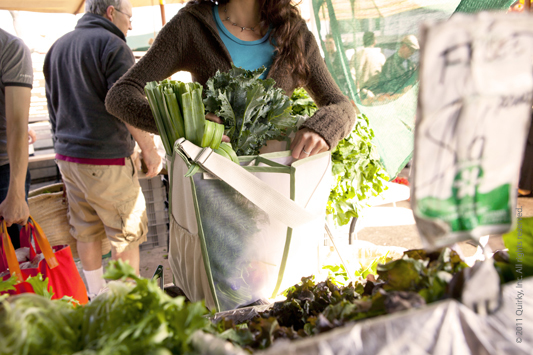
I’m beside myself with excitement that the official Summer Tomato farmers market bag, Mercado, from Quirky Inc. is finally here!

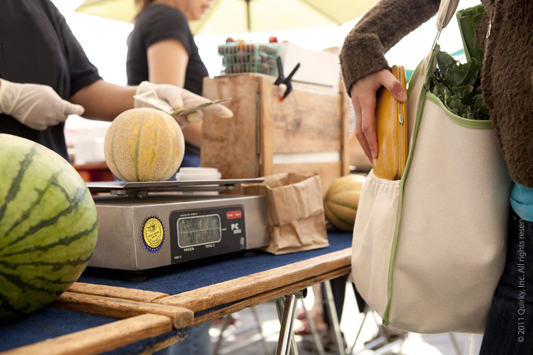
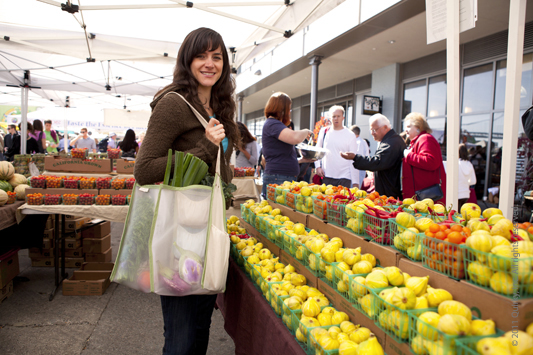
It was nearly a year ago that I presented the Quirky design community with my farmers market problem. The issue when you buy ripe, seasonal produce from your local farmers market is that it’s extremely juicy and delicate, making it nearly impossible to get home safely in any standard soft bag. I had been using two bags and carrying tuppers and lids to help protect my most delicate items, but I knew there was a better way.

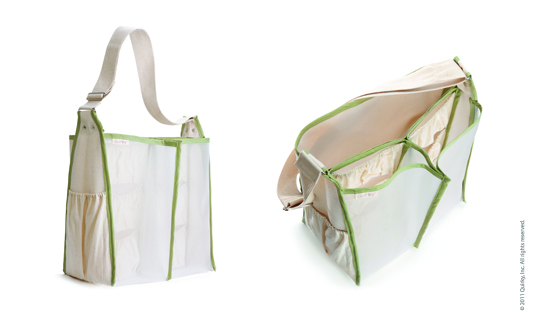
Quirky member Peter Wachtel created the winning design, and it is both cool and functional. A large compartment on the inner half of the bag holds your bigger, sturdier produce like kale, onions and cauliflower.

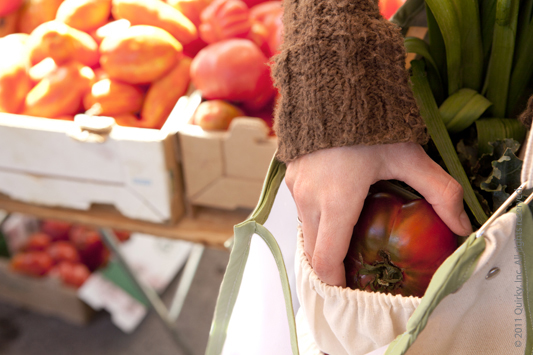
The outer half of the bag is composed of two smaller pockets made from a soft nylon mesh, which is held open and rigid by a wire frame. This prevents the sides of the bag from collapsing in and bruising softer items.

In addition there are several small pockets lining the inside of the nylon compartments that are ideal for cradling your most delicate items like peaches, pears and tomatoes.

The bag has a wide, adjustable strap and two deep side pockets that are ideal for your wallet, keys and shopping list. The outer parts of the bag are made from a thick, durable canvas that is attractive and comfortable.

I’m totally in love.

Mercado is currently in the presale stage. The way Quirky works is that a product must collect a minimum number of orders before it goes into official production. If you place your order(s) now you’ll get the bag for a discounted price of $19.99.

It will retail at $24.99, so you’ll save some cash by ordering early. Obviously you won’t be charged unti the bag actually goes into production.

Lastly, you can earn 10% on any sales you refer to Quirky for the bag. Just use the referral link they give you when you click “Spread the word and earn 10% on sales!” Help us get the bag made and make some money in the process. Woohoo!

Place your order here

Thanks for your support!

Tags: , , ,

How Mindful Eating Can Help You Eat Less

by | Aug 8, 2011
Red Flame Grapes

Red Flame Grapes

Today’s guest post is by Jyoti Mishra Ramanathan, a fellow UCSF neuroscientist who studies attention and distraction in the human mind. In her article Jyoti reveals how attention impacts our experience of food and how we can harness this power to help us eat less without feeling deprived.

Learning to be a mindful eater will permanently change your relationship with food and is essential for upgrading your healthstyle.

Mindful Eating and Portion Control

by Jyoti Mishra Ramanathan

I grew up in India where life revolves around food. One wakes up to plan breakfast and as soon as that is over plans lunch, then immediately prepares for a typical 3-4 course dinner. When I visit aunts or my grandma, I’m barraged with food at every moment: eat this, eat that! Oh! You aren’t eating enough! Oh! Do you not like my dishes?

If you don’t accept all or any food that comes your way, it is seen as a sign of disrespect. And if this isn’t enough to make you over-eat, remember too that food is sacred in India. How could one waste the grains on one’s plate when there are millions around us suffering from hunger? Consequently, I grew up believing it is normal to forever be bursting at my seams–to eat to the point where taking another bite might even make me sick.

But a few years ago my eating habits changed.

I was at a meditation workshop and one evening we were told we’d be given one grape for dinner. This sounded impossible. However, I obediently sat cross-legged with the other attendees and was handed my single juicy purple grape.

As I popped it in my mouth, I was told to shut my eyes and sense the grape in its totality: I rolled my tongue around it becoming aware of the soft and smooth exterior of the tiny fruit, I imagined its rich purple color, and then as I slowly bit into it, I savored every trickle of juice that I could extract from the grape.

The process took me a full five minutes and never in my life have I remembered eating such a delicious grape, although it was from no extraordinary vine. Miraculously, I felt full as well.

Try the grape exercise. I do not promise the satisfaction of a full meal, but it is a beautiful exemplar of mindful eating that consequently taught me portion control.

4 Simple mindful eating tips

1. Never eat distracted, i.e. while watching TV or running to catch the bus. Observe the deliciousness on the plate, the colors, textures, flavors and smells, savoring each bite. As the meal makes its way to the stomach, start to notice the fullness in your tummy. I found that there is an initial satiation simply from this sensory overload of observant eating.

One could stop here, but this is not enough nourishment and hunger tugs again relatively soon. But as you slowly chew on your food and enjoy each bite, you experience a real fullness that completely satisfies your hunger. This sensation precedes the contentment of the taste buds, which may still desire a few extra bites of that rich chocolate cake. But as I learned to identify the hunger satiety point at each meal, I found I could also control the desires of my taste buds.

2. Do not visit a restaurant starving. It is harder to control how much you eat when faced with novel delicacies at a restaurant, especially when you get there on an empty stomach. My best defense against this is to eat a small snack right before. My favorite is a quick salad.

At home I always keep miscellaneous salad ingredients on hand: mixed greens, cheese, raisins, walnuts, candied almonds, grains like quinoa, blueberries, avocado, sundried or cherry tomatoes, baby carrots, figs, grilled chicken strips, smoked salmon, etc. Mix-and-match any of these in varying proportions and add some homemade dressing. Each time you will have a novel salad that never gets boring. After a light snack it is much easier to have restraint while ordering and eating, keeping both waistline and budget in check.

3. Share a meal. My husband and I more often than not share an appetizer, entrée and dessert at a restaurant. This is not because we can’t afford more. We simply enjoy sharing–describing the new tastes to each other, immersing ourselves in the experience and appreciating new food. In these happy moments satiety emerges effortlessly.

Try this even when out with a group of friends: order for 3 with a group of 4 and share. If there is still food left over and there are no pets or family at home, I offer my extras to the homeless. I just gave away a carrot cake a couple of nights ago and the delight in those eyes was like someone who had just found a treasure!

4. Don’t aim for 100% full. Hara Hachi Bu is Japanese for eating until 80% full. Okinawan islanders practice this and are known to be one of the longest living people on the planet. Their longevity is attributed to this moderate calorie restriction in combination with consuming plenty of fruits and vegetables, which protect against free radicals that damage your body’s cells.

Conclusion

In summary, there are many benefits to portion control: feeling better right after a meal, long-term health, weight management, saving cash by eating less and perhaps even living longer.

Practice mindful eating to make portion control a reality for you.

How do you control your portion sizes?

Originally published September 2, 2009.

Tags: , , , , , , , , , , , ,