Sign up

You deserve to feel great, look great & LOVE your body

Enter your email for your FREE starter kit to get healthy & lose weight without dieting:

  • This field is for validation purposes and should be left unchanged.

Stinging Nettle and Israeli Couscous With Lemon, Parsley and Capers

by | Dec 9, 2008

Saturday at the farmers market I was talked into buying some stinging nettle and I must admit, I was pretty skeptical. Who wants to put something in their mouth that has stinging in the name?

But despite my reluctance, I could not deny that the nettle (to avoid negative connotations I am going to ditch the “stinging” part) was beautiful, fluffy and green, things that I generally associate with delicious. Besides, I pride myself on not being afraid of trying and cooking new foods.

I accepted the challenge. Now what to do with these weird things?

Eating the nettle alone did not sound particularly appealing. If I really love it I could always go back and get some more, right? I had heard that nettle has an earthy, green flavor, so I thought it might pair well with pasta, garlic and lemon.

I do not usually keep pasta in the house (I prefer fresh pasta if I am going to bother eating it), but I did recently purchase some Israeli couscous from Trader Joe’s. Israeli couscous, also called ptitim, is basically just giant couscous. It is made out of semolina wheat, the same kind of flour Italian pasta is made from. (No, couscous is not a whole grain).

I was starting to form a mental image of my meal: Mediterranean style Israeli couscous with greens and garlic. Oh! And I just bought a beautiful Meyer lemon at the farmers market. It’s juice and zest would be a perfect complement to brighten the dish. And since we are going Mediterranean, Italian parsley and capers would be lovely accents.

On a whim I decided to roast an acorn squash as well and use the nettle dish as a stuffing. It was good, but I do not think it was the best pairing and I do not recommend it. I looked nice, but the flavor profiles were a little off.

The nettle and couscous dish on its own was spectacular though. I wish I would have paired it with my Romanesco broccoli instead.

I should also confess that my lips are stinging a bit, but in the good way.

Stinging Nettle and Israeli Couscous With Lemon, Parsley and Capers
Ingredients:
  • 1/2 bag of stinging nettle
  • 1/2 cup dry Israeli couscous
  • 1/3 bouillon cube
  • 1/2 shallot
  • 1 clove garlic
  • 1-2 tbsp chopped Italian parsley
  • 1/2 Meyer lemon, juice and zest
  • 1 tbsp capers

Start some water boiling. Heat 1 tbsp olive oil in a sauce pan on medium heat and add couscous. Toast couscous in olive oil, stirring frequently until light brown, about 5 minutes (just following the instructions on the box here). Slowly add 1/2 cup of boiling water to couscous, add bouillon cube and return to boil. Reduce heat, cover and simmer until tender, about 12 minutes.

In the mean time dice your shallot, garlic and parsley. Rinse your nettle in a strainer (you can touch it a little, but I would keep your hands off as much as possible). Heat a little olive oil in a pan and add the chopped shallot. Cook shallot for 2 minutes then add garlic. After 30-60 seconds add nettle and salt, then stir and cover. After one minute, uncover the nettle, stir again and add parsley.

If the couscous is ready, add it to the pan. If not, turn off the heat until couscous is ready to add. Stir couscous into the greens until well mixed. Squeeze lemon juice into the pan and add grate lemon zest directly on top of the dish. Add capers, salt and pepper to taste and serve immediately. This is probably enough for 2 people as a side dish. Yum!

Anyone else have any nettle ideas?

Tags: , , , , , , , , , ,

Holiday Gift Ideas For the Health Conscious

by | Dec 8, 2008

Know anyone who is trying build healthy habits? Want to give yourself a leg up on your New Year’s resolution? Here are some simple gift ideas for anyone wanting to embrace a healthy lifestyle:

  1. Eat, Drink and Be Healthy, by Walter Willett. This is my favorite nutrition book. Dr. Willett, a physician and Harvard nutrition scientist, presents a comprehensive guide explaining the basics of nutrition science and why few things are as important as what you choose to eat. His recommendations are based on solid science, but everything is explained in clear, simple language and is easy for anyone to understand. This book will change the way you think about food and nutrition.
  2. Subscription to Cooks Illustrated magazine. It is almost impossible to have a healthy diet if you are eating out for most of your meals. Cooking at home can be a pleasure, but to many people it is a source of fear and anxiety. Cooks Illustrated is a resource that demystifies cooking and makes it virtually idiot proof. Their staff tests recipes over and over in “America’s Test Kitchen” so you don’t have to. The result is the easiest, most reliable method for making almost any meal.A bonus of subscribing is that they also offer product and appliance reviews. I often find myself browsing their website with my online subscription, but they also have a beautiful print magazine if you prefer to peruse recipes on the go. Because of Cooks Illustrated I feel like I can cook just about anything I set my mind to, even things I have never tasted before. I couldn’t live without my Cooks!
  3. Braun Hand Blender. This is the magic kitchen appliance. If you or someone you know is not the type to buy every single piece of fancy kitchen equipment, this is the perfect item. Its many attachments make it so you have a blender, food processor and mixer all in the palm of your hand. Everything you need rolled into one tiny device!
  4. CSA membership. Busy people have trouble finding the time to buy fresh fruits and vegetables every week. CSA, or Community Supported Agriculture brings fresh, seasonal produce to you. The idea behind a CSA is that you subscribe to a farm or collection of farms and pay a certain set price (varies by farm) for a box of their goods. For your fee you will be provided with a week or two worth of fruits and vegetables of the season. All CSAs are a little different, so you need to find ones in your area and contact them to work out the details. Most deliver to your house or a nearby pick up point and allow some filtering for your particular food preferences. For the truly dedicated, there are also meat and dairy CSAs.
  5. In Defense of Food, by Michael Pollan. Michael Pollan is a journalist and UC Berkeley professor who has spent the past several years figuring out the best way to eat in the Western world. This book distills everything he found, and his advice is surprisingly simple: Eat food. Mostly plants. Not too much. In Defense of Food is a quick, easy read that is both entertaining and filled with valuable information.
  6. Wii Fit. I’m not sure if a video game can really be exercise, but it sure beats sitting on your butt watching T.V. I cannot deny that on cold evenings when I have worked too long at home to squeeze in a workout I have resorted to my Wii to get the blood pumping. Wiis are not easy to acquire (I have had success with Wii Alerts), but if you can get your hands on one they are easily worth the money.
  7. Pressure cooker. You probably do not eat enough legumes. People have weird ideas about beans and assume they are accompanied by foul smells, but home-cooked beans are an entirely different species. A pressure cooker can make it so you have a week’s supply of your favorite beans in under half an hour. What’s not to love?
  8. Full body massage. The latest research suggests that stress may be as bad for you as red meat. Luckily getting rid of stress can be one of the best experiences of your life. Everyone loves a trip to the day spa. A full body massage is the perfect gift for that person who has everything.
  9. Lunch box. Eating out for lunch every single day is not an option if you want to be healthy. But that does not mean you have to be a nerd. REI makes a great, affordable lunch cooler that is both stylish and functional. Want more of a selection? Browse the offerings at Amazon.com through the link on the sidebar.
  10. Email subscription to Summer Tomato. It’s free and comes with a 25-page healthy eating guide! Get to know what fruits and vegetables are in season, learn about the latest nutrition research and discover simple and delicious recipes for health straight from my brain to yours. This is the ultimate gift for the ultimate connoisseur! (OK, I admit this is kind of a cheap gift. I recommend it, but you should probably get one of those real gifts I mentioned too 😉

Good luck shopping and happy holidays!

Check out my 2009 healthy gift ideas

Tags: , , , , , , , , , , , , , ,

The Chocolate Persimmon

by | Dec 7, 2008

Ever since I mentioned the chocolate persimmon the questions have been rolling in. Are there really chocolate persimmons? What do they taste like? Where can I find them?
I even know someone who dreamt about them.

This weekend I finally got a hold of some chocolate persimmons of my own, the first I have seen this season.

Officially called Tsurunoko, chocolate persimmons are of the non-astringent variety, similar to fuyus. However they are unique in that the flesh inside is more brown than orange and the flavor is sweeter. These are highly sought after fruits; when ripe they do indeed possess subtle notes of chocolate flavor.

Like the fuyu, the texture of a chocolate persimmon is firm (not jelly-soft like the hachiya).

Keep your eyes out for Maru, or “cinnamon persimmons,” and Hyakume, “brown sugar persimmons” as well.

The vendor at the San Francisco Ferry Plaza Farmers Market said that the weather has not been favorable for persimmons this year because it is too dry. The season will be short, so be sure to get yours next week.

Has anyone else been able to find chocolate or other specialty persimmons?

Tags: , , , , , , , ,

Farmers Market Update

by | Dec 6, 2008

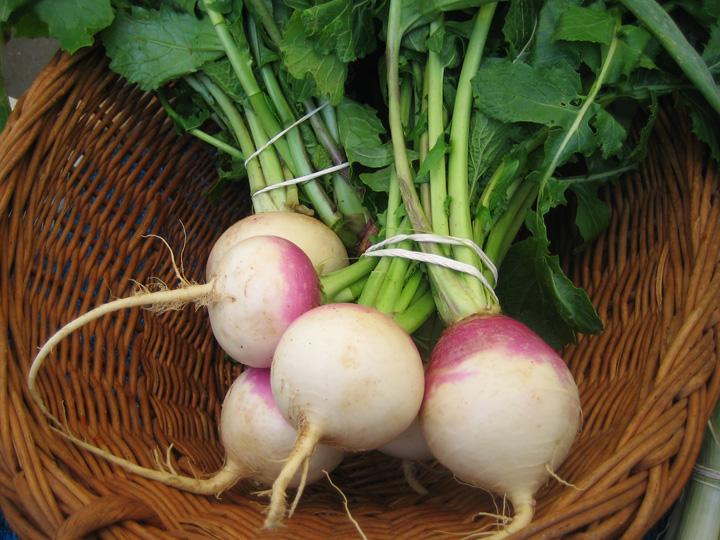
turnips

It was 40 degrees when I woke up this morning. I am sure some of you consider that warm, but to me it may as well have been below zero. Cold, any cold, makes me extremely uncomfortable. The last thing I wanted to do was get out of my warm comfy bed, but the farmers market was calling. chocolate persimmons

For two weeks now I have been longing for a refrigerator full of vegetables and today I finally got one.

Despite the frigid temperature it was a beautiful day in San Francisco. The sun was shining and the Ferry Building was bustling. One nice thing about the winter time is that the crowds are not as cumbersome as they are in the summer, so it is easier to linger and savor the quaint beauty of locals seeking fresh market goods.

As expected, citrus fruits are starting to reach their peak. Grapefruits, oranges, pomelos and lemons have traded in their sour acidity for tangy sweetness, and today I bought my first Mandarin oranges.stinging nettles

The most exciting find though was the elusive chocolate persimmon. Orange on the outside and brown on the inside, these sweet pulpy treats are nothing short of wonderful. I was told there are only a couple weeks left in the season, so get them while you can!

As for vegetables, someone at Star Route (Marin Organics) finally talked me into buying those stinging nettles we discussed a few months ago. I will let you know how it goes.

Still on a mission to perfect the roasted root vegetable lunch, I also stocked up on rhizoid goodies.

Today’s purchases:

  • Chocolate persimmons
  • Hachiya persimmons
  • Pomegranate
  • Mandarin oranges
  • Meyer lemon
  • Pink lady apple
  • Fuji apple
  • Leeks
  • Romanesco broccoli
  • Golden beets
  • Rutabaga
  • 1 giant carrot
  • 1 giant parsnip
  • Stinging nettles
  • Yellow eye beans
  • Dinosaur kale
  • Soul Food eggs
  • Acme epi loaf
  • Nossa Senhora de Fatima (Blue Bottle) coffee
Tags: , , , , , , , , , ,

Easy Potluck Idea: Homemade Hummus

by | Dec 5, 2008
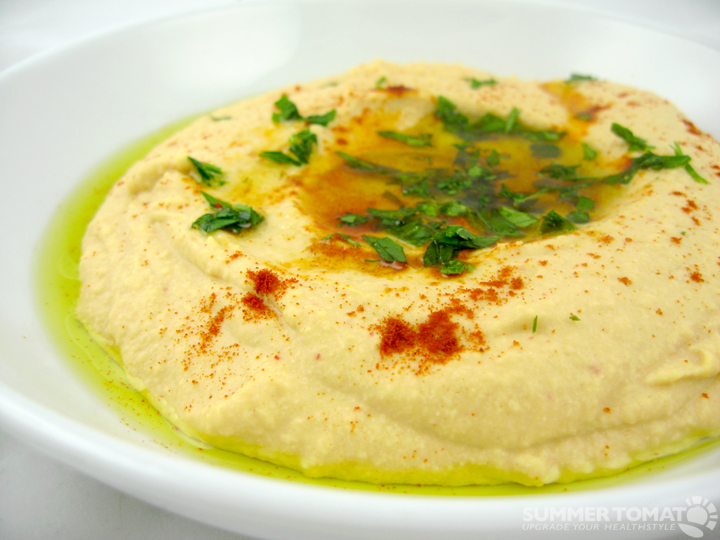
Hummus

Hummus


Last night I went to a potluck and I have to admit, I was dreading it a little.

It’s not that I don’t love my friends or cooking for them, but I have been feeling queasy this week (I contracted some nasty food poisoning on my vacation–that’s what I get for not cooking my own meals!) and have not had much energy for anything, especially food.

But I have a food blog. Not only did I have to bring something, it had to be impressive!

I needed something quick, easy and delicious, made mostly from ingredients I have laying around. Hummus was my answer. Hummus is a Middle Eastern style dip made of chickpeas. Remember all that talk about how easy and delicious homemade beans are in the pressure cooker? Well chickpeas (aka garbanzo beans) are no exception.

Hummus is a perfect potluck contribution because it is easy to make, easy to transport and exotic enough to be impressive. Also, homemade hummus is way better (tasting, but also for you) than anything you can buy at the store… no offense to Trader Joe’s.

You can make the basic recipe with beans, tahini, garlic and spices, but I have added a couple extra ingredients if you want to take your hummus to the next level.

Ingredients:
  • 1 cup dried chickpeas
  • 2 cloves of garlic
  • tahini to taste
  • 1 Meyer lemon
  • 1/2 tsp paprika (gourmet paprika or fresh ground sweet chili powder is best)
  • 1/2 tsp cumin
  • 1/4 tsp cayenne pepper (or more if you’re feeling spunky – optional)
  • pure olive oil or canola oil
  • good quality extra virgin olive oil
  • sea salt to taste
  • preserved lemon (optional)
  • parsley (optional)

I always have tahini in my fridge, but if you do not it is fairly easy to find. Tahini is a paste made out of sesame seeds with a consistency similar to natural peanut butter (the oily kind). It has a delicious smokey flavor and I use it to garnish many different dishes.

Olive oil is a key ingredient in this recipe, but it is important to understand that you cannot put extra virgin olive oil into a blender, or it will turn unpleasantly bitter. Use either pure olive oil or canola oil for blending, then add a good extra virgin olive oil on top as a garnish. Your extra virgin olive oil should have a bright green color, not a dull yellow or brown.

You can use canned beans if you are in a pinch, but I don’t recommend it.

Here’s what to do:

Pick over, rinse and soak the dry chickpeas overnight in excess water (they expand quite a bit). The next day rinse them again, put them in a pressure cooker and cook on high until done (mine works in 12 minutes). Once they are cooked, use a slotted spoon to move chickpeas from the liquid into a large bowl. Reserve the liquid. Throw out any chickpea shells that have separated from the bean.

If you do not have a pressure cooker, you can boil the chickpeas until they are soft, about an hour and a half. Add more water if necessary.

While the beans are cooking place whole, unpeeled garlic cloves into a toaster oven and bake at 400 for 3-5 minutes (I like them less cooked). Let them cool a bit then remove the peel, which should come off easily.

Add the garlic to your beans (mince it if you prefer to add it raw), along with 1/2 cup (or whatever) of the liquid they cooked in, 2 tbsp pure olive oil, 1/2 tsp of salt and lemon juice to taste (I use the whole thing).

Also add 2-3 tbsp of tahini (honestly I eyeball it and keep adding tahini until I’m happy with the taste) and the other spices. I recently purchased some amazing New Mexico chili powder from Tierra Vegetables and a few slices of preserved lemon from Boulette’s Larder that added incredible dimension to this already wonderful recipe. I am particularly impressed with the preserved lemon, which contributed a unique, rich lemon flavor unlike anything I have ever tasted.

David Lebovitz claims that making your own preserved lemons is not very difficult if you want to try. Rinse the lemons before adding them to your recipe, I added 5-6 slices.

Blend the ingredients together using a hand blender. If you do not have a hand blender you can use a regular blender or food processor. They work the same but are harder to clean.

Puree the mix until smooth, adding more liquid if necessary. Once the hummus is creamy, taste it with a clean spoon and adjust the salt, lemon and tahini.

When finished, move hummus to a tupper (for potluck) or serving bowl. Use a spoon to make a crater in the center, garnish with extra virgin olive oil and sprinkle with paprika and chopped parsley. California extra virgin olive oil is the best choice, in my opinion, and Trader Joe’s has a great one that is affordable. In San Francisco, however, I like to use Stonehouse olive oil. They have a store at the Ferry Building.

Serve with warm pita wedges or bread.

Hummus can be modified in a million different ways. It is fantastic with roasted peppers, eggplant, sun-dried tomatoes, herbs and different kinds of nuts.

Be creative!


What is your favorite hummus recipe?

Tags: , , , , , , , , , , , , ,

Are You Bean Careful?

by | Dec 3, 2008

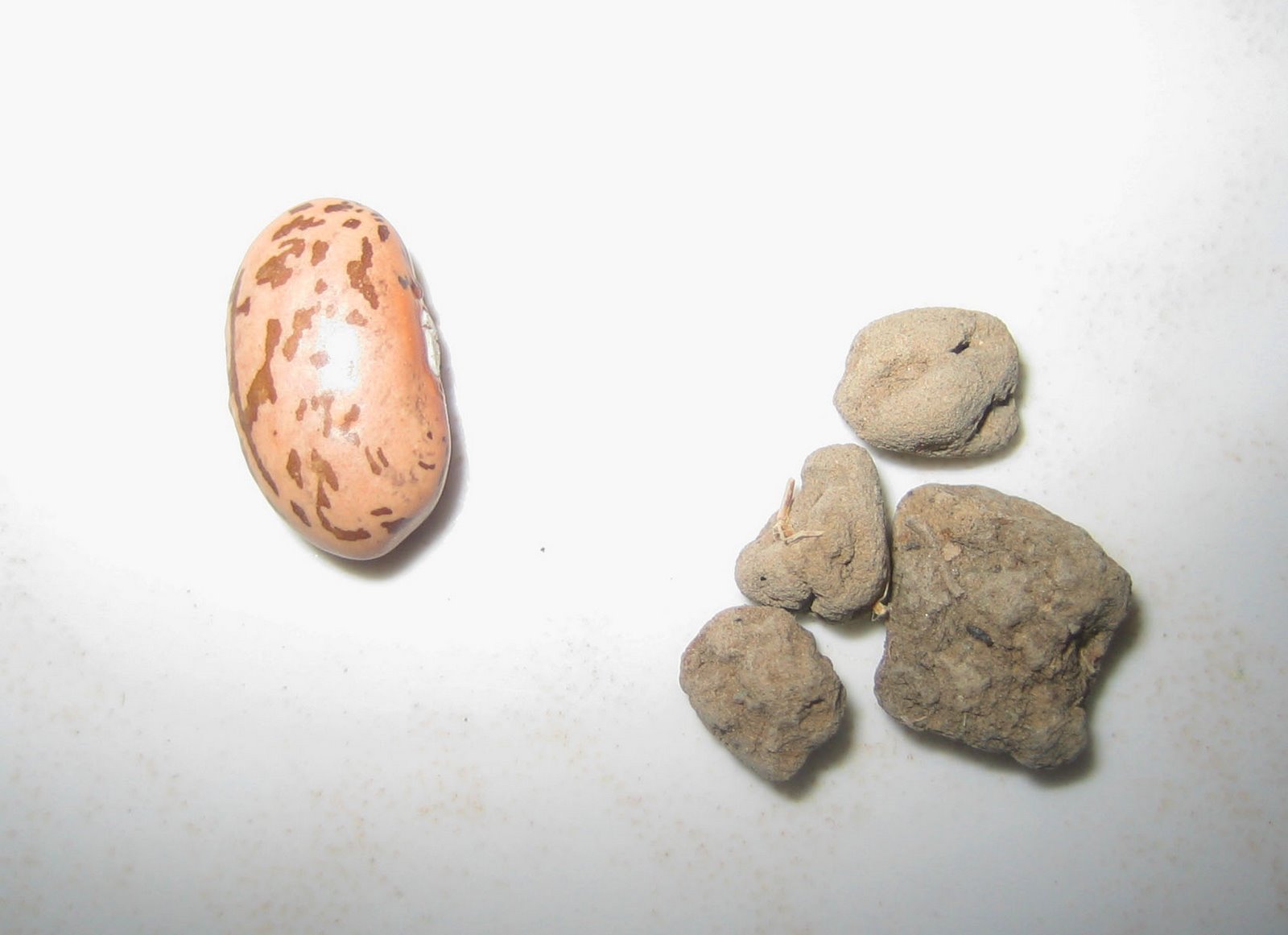
Yesterday I mentioned that if you are going to use dried beans for cooking you should pick them over for pebbles before using them. Today I want to show you that I’m not kidding.

For my apartment’s last Soup Night I decided to make a recipe I found in the New York Times. The recipe was for Andean Bean Stew With Winter Squash and Quinoa, and it called for a pound of dried pinto beans. Since I was cooking for 20 people I doubled the recipe and bought a full 2 lbs of dried beans.

That’s a lot of beans, folks.

Because of the huge volume I had to be extra careful when looking for pebbles. To pick through beans I like to lay them out on a large cookie sheet, as shown. You can sort through a smaller amount of beans on a solid-colored plate or even in a clear bag on the counter.

As you can see from the top picture, 2 lbs of beans from the bulk bin at Whole Foods yielded 4 not-so-small pebbles.

Finding these little guys didn’t take more than a minute or two, and I guarantee you my guests appreciated the extra effort.

Let this be your warning. I do not wish to send you into shark-filled waters if you happened to be inclined to go buy dried beans this weekend. The last thing I need is a bunch of angry emails from your dentists!

Lentils are known to harbor pebbles as well, so searching for small rocks is a good habit to cultivate with all dried legumes.

The Soup
On the food front, the recipe turned out absolutely amazing! Since doubling the recipe required two whole winter squash anyway, I chose one large butternut squash and one kabocha squash. Both were delicious, but I was particularly fond of the kabocha (just look at that color!). It was denser, but the texture was creamier and the flavor more sweet and nutty than the butternut.

Peeling the kabocha was no easy task, however. I always just use a vegetable peeler for butternut, but on the kabocha the skin was so tough this was not an option. Instead I boiled it whole for 3 minutes on each side (it floats) and took the skin off with a pairing knife. Alright, I admit I had a boy do the peeling.

Does anyone have an easier way to peel a kabocha?

The Andean stew was very hearty, but our guests were not shy about finishing every last drop. I highly recommend it, particularly for a cold winter weekend.

This picture was taken after the quinoa was added but before it finished cooking.

Don’t forget to bean careful!

UPDATE: I have since learned that a kabocha does not need peeling. If it is cooked through the skin is soft and edible. My new favorite trick is to cut one in half, scoop out the seeds and roast it face down for 40 minutes. Mmmm.

Tags: , , , , , , , , , ,

How To Cook Dried Beans Using A Pressure Cooker

by | Dec 2, 2008
Squash, Peppers and Beans

Squash, Peppers and Beans Recipe

I am not a vegetarian, but for convenience, financial and health reasons I do not cook a lot of meat. Consequently my dietary protein comes from many different sources, not the least of which is beans.

I realize that many of you have preconceived notions of beans and what goes along with eating them, but I am going to ask you to keep your mind open until I finish my explanation. If you read all the way to the bottom, you are more than welcome to unleash your fury in my comments section.

Let me begin by stating that I am not talking about canned kidney beans. I do not eat beans from a can unless I am desperately short on time. Not that there is anything wrong with canned beans: they are quick, healthy and relatively inexpensive. However, I have found canned beans to be very one dimensional in flavor and even less appealing in texture. They are also more prone to cause the digestive problems many people associate with “the musical fruit.”

Dried Beans

A little over a year ago my apartment acquired a pressure cooker that opened my eyes to the potential of dried beans. Dried beans, which are even less expensive than canned beans, can take hours to cook under normal circumstances. But a pressure cooker can cut this time to under half an hour and allows you to prepare large batches that can be stored frozen for months.

In my estimation, however, the best reasons to cook your own beans are taste, texture and variety. Home cooked beans taste worlds better than canned. First off, they do not have the characteristic slimy ooze of canned beans. (Definitely rinse your beans if you do buy canned). Dried beans also have a richer, more complex flavor without the metallic tinge you get with S&W. (Hint: Your beans will taste even more delicious when cooked in bouillon or broth.)

The mouthfeel of home cooked beans is also superior to canned. Different varietals have unique tastes and textures, so with each bean you try you embark on a new adventure. Some are silky and delicate, others rich and creamy. Larger beans tend to be heartier than smaller beans, but there is really no telling how they will taste until after you cook them.

While there are only five or six kinds of canned beans commonly available, the number of dried beans is innumerable. Rancho Gordo is an heirloom bean vendor I visit regularly at the San Francisco Ferry Plaza Farmers Market that has a fantastic variety of dried beans. Ever had a Black Calypso bean? Me neither, but I cannot wait to try them! Visit the Rancho Gordo website if you want to order online.

There are also fantastic bean selections at most health food stores, including Whole Foods. Check the bulk bins for the best deals.

Soaking Beans

One caveat of cooking your own beans is that they require a significant amount of soaking time. I recommended that you rinse them well and soak them overnight. All this requires is 5 minutes of planning the day before, and if you prepare large batches you do not have to soak beans very often. Be sure to pick over your beans for pebbles before cooking them.

Another bonus of rinsing and soaking beans is that it eliminates many of the sugars that your body cannot digest, thereby reducing (in my experience eliminating) unpleasant bodily byproducts. Toss out your soaking water when you are finished and add fresh water or broth for cooking.

Pressure Cooker Precautions

Pressure cookers can be dangerous if used improperly, so it is imperative that you follow the instructions carefully. In general, it is important to get a tight seal on the lid and be sure the pot is not over-filled (total volume should be less than half the volume of the pot). However, it is necessary to add sufficient liquid to the beans to prevent burning and dehydration. You also want to avoid adding salt until after your beans have cooked.

Follow the instructions on your pressure cooker to determine the appropriate amount of cooking time, usually 10-20 minutes. The contents of the pot are under a tremendous amount of pressure while cooking, so be sure to allow the pot to depressurize completely before attempting to remove the lid. This takes an additional 10-15 minutes.

Here is the pressure cooker I use.

I imagine that a slow cooker would be equally advantageous in cooking beans, but I have never tried it.

What are your favorite tricks to make beans more user friendly?

Tags: , , , , , , , , , , , , , , ,

Farmers Market Update: Santa Monica (Sorta)

by | Dec 1, 2008

carrots

This past weekend I left my beloved San Francisco Ferry Plaza Farmers Market to visit my family in Southern California. I was really excited to feel the sun again and finally see the famous Santa Monica Farmers Market near the Santa Monica Pier and 3rd Street Promenade.

Their website said they were closed November 24, but since it was November 29 I thought I was good to go.

No such luck.

I guess they forgot to update their website from last year when November 24 was on a Saturday, because apparently the market is always closed the Saturday after Thanksgiving (something I learned from the visitors information booth once I got there).

But despite this brief let down, I was able to find another farmers market in Santa Monica at Virginia Park.

To my delight, the Virginia Park Farmers Market had a fantastic selection and was a pleasure to shop at. All the expected autumn delicacies were there–the parsnips and sunchokes were even sitting right next to each other at Weiser Family Farms. We also found vendors selling fresh eggs, cheese, chicken, duck and grass-fed beef.

Many of these items are not common to your typical grocery store, so Santa Monica residents should feel very lucky to have these offerings available to them.

One notable difference between the San Francisco market and the Santa Monica market is that tomatoes, summer squash and berries (summer produce) are still available down south. If you have been following this blog you know that these items have been missing from San Francisco for many weeks.

There were also some exotic ingredients at the Santa Monica market, like lemongrass and assorted guava fruit.

Here is what we purchased from the Virginia Park market:

  • Persimmons
  • Fresh walnuts
  • Brussels sprouts
  • Kohlrabe
  • Sunchokes
  • Various potatoes
  • blue and gold potatoes

  • Thyme
  • Oregano
  • Savory
  • Lily’s eggs
  • Heirloom tomatoes
  • Leeks
  • Candy-stripe and golden beets
Tags: , , , ,