How To Make Eggs Taste As Good As Bacon

by | May 30, 2012
Fried Eggs

Fried Eggs

Something magical happened a few weeks ago. While trying to figure out what to do with the first fresh eggs I’d found at the farmers market this season, I discovered the greatest egg ingredient in the history of mankind.

Okay, maybe I’m exaggerating a little (truffles are pretty darn good on eggs), but not much.

Generally I am a big fan of adding some kind of ground red pepper (usually chipotle or ancho) to fried or scrambled eggs. But this day I tried something a bit different.

Digging through my pantry I remembered that I had a ton of smoked paprika left over from the hummus I made. I decided to do an experiment and sprinkle the smoked paprika onto my eggs.

I can’t believe I went all my life without knowing about this.

But before I explain why exactly the smoked paprika made my eggs so amazing, I want to address what I’m sure many of you are wondering:

How healthy are fried eggs?

Answer: Eggs are perfectly healthy, and frying doesn’t make them any less so.

Personally I cook my eggs in olive oil (it’s just easier), but even if you use butter it isn’t a problem since the amount you need to cook is so small.

What scares people about frying eggs is an irrational fear of dietary fat. But theoretically the amount of oil you use to fry an egg should be about the same as you need to scramble eggs, so it isn’t clear why fried eggs would pose any more of a problem. I use olive oil to scramble eggs as well.

The other issue people have with eggs is the yolk. It amazes me how often people proudly inform me that they eat eggs but “only the whites,” as if this were some unique virtue.

I understand that the public health message we’ve heard about eggs for the past few decades has been extremely negative, but eggs have since been completely exonerated from heart disease accusations. There was a time when it was assumed that dietary cholesterol (which is definitely higher than normal in eggs compared to other foods) would raise blood cholesterol, but it doesn’t for most people. In fact, the healthy fats in egg yolks are likely to positively impact your good HDL cholesterol.

Moreover, dietary fats in general have been shown to be excellent at satiating hunger, and are thus a terrific replacement for calories from refined carbohydrates. That makes egg yolks your ally in fighting heart disease and burning fat, not your enemy.

Then there’s the fact that egg yolks are incredibly rich in vitamins and minerals, since they are meant to be nourishment for a developing life.

And finally there’s the most important part, that farm fresh egg yolks are out-of-this-world delicious.

Which brings me back to how to make the best eggs in the universe.

First you must start with high-quality eggs. Two factors have the biggest impact on egg flavor. The first is the diet of the hen who laid the egg, and the second is the egg’s freshness. Thus for best results you want to find the freshest pastured eggs you can get your hands on. Pastured means the hens that lay the eggs are allowed to peck around on grass eating bugs and whatever else they find.

Your best shot at finding pastured fresh eggs is at a farmers market or direct from a farm, since if they are already on a grocery shelf they probably aren’t very fresh. Try to find eggs less than 1 week old. Their day of boxing should be clearly marked on the carton. It requires a little math, but I’m not the one who made up these rules.

Chances are good that if your eggs are very fresh then they are from pastured hens, but this is not guaranteed. Ask the farmer and try to hold out for hens that are allowed to roam free in grass during the day. If you cannot get fresh pastured eggs, “cage-free” is your next best bet for flavor (though these may still be fed a limited diet).

Without asking the farmer it is hard to tell the difference between real pastured eggs and industrial eggs labeled “cage-free” that are still fed standard or organic chicken feed. One good indication will be the price, since pastured eggs tend to run $6-10/dozen here in SF. Trust me, it’s worth it.

I do not endorse the taste or healthfulness of industrially produced eggs (even the fancy kinds), and if you do eat them you should be careful to cook them completely.

(Aside: I never worry about the safety of eggs from farms I trust, so I always eat them runny. If you think runny eggs are gross, I don’t blame you. Runny industrial eggs are gross, and before I had fresh eggs I would have completely agreed with you. But fresh egg yolk is incredible, and it is something you have to taste to really appreciate. I definitely recommend stepping out of your comfort zone on this one.)

Once you have great eggs, fry them one at a time in 1 tbsp olive oil or butter on medium low heat and sprinkle with sea salt, course ground black pepper and a pinch of smoked paprika. The paprika adds a depth and complexity above what even chipotle peppers can offer, and the smokiness is reminiscent of—I kid you not—bacon. Needless to say, it is the perfect compliment to eggs.

Fry your eggs for just two minutes or so on each side, being careful to keep the yolk intact while turning. You really don’t want to overcook eggs, which will turn them rubbery and ruin the effect.

I haven’t actually tried these eggs with bacon yet, though I certainly plan to. But bacon is no longer a requirement for making a show stopping breakfast of champions. Here I served them with some ruby chard sautéed with pistachios and garlic.

Did you guys know about smoked paprika on eggs and if so, why was I not informed?

Originally published March 3, 2010.StumbleUpon.com

Tags: , , , , , , , , , , , , ,

Farmers Market Update: Poway (San Diego)

by | May 27, 2012

Maui Onions

Kristine Valenzuela is a corporate woman by day but spends most of her free time trying to adjust to having three daughters while attempting to enjoy all the goodness life has to offer. Food, wine, spending time with friends and maintaining her blog, Is Everybody Listening?, are just a few things that help keep her balanced. For a glimpse into her life, follow her on Twitter @specialksd.

Farmers Market Update: Poway

by Kristine Valenzuela

Greetings from Poway, California, also known as “The City in the Country”. Anyone who doesn’t live here would probably consider Poway a suburb of San Diego but our proof of being a stand-alone city is we have our own farmers market.

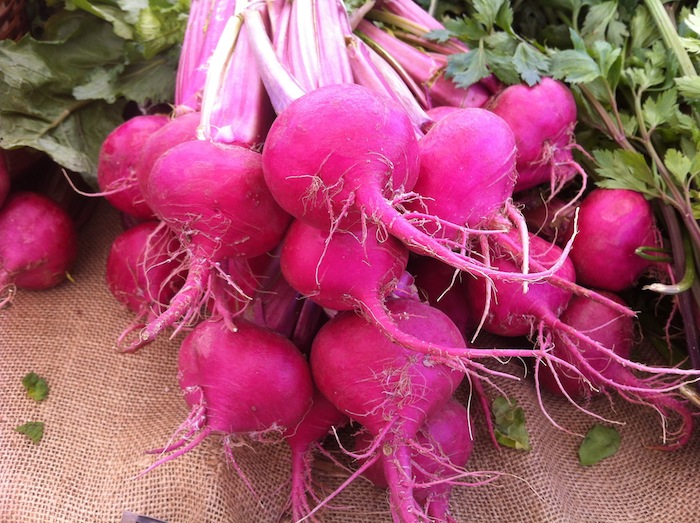
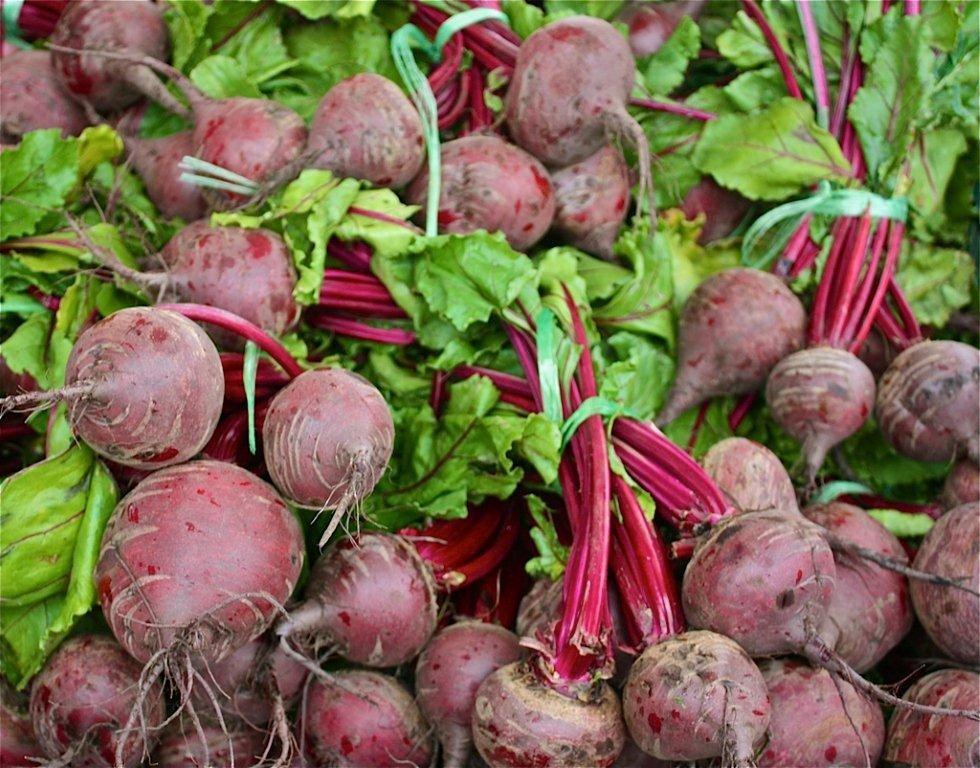
Cioggia Beets

Ok, that’s not really proof but it makes for a great intro.

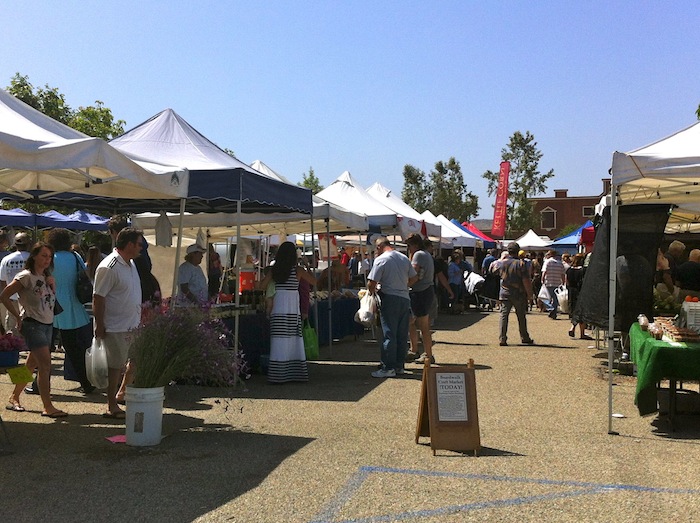
It really is a piece of country living here. While Poway has all the modern conveniences, there are glimpses of a lost era as seen in the turn-of-the-century charm of Old Poway Park. Next to this park is where you’ll find Poway’s farmers market, held every Saturday morning and twice a week each summer.


Poway, CA

It’s relatively new as far as outdoor markets are concerned. Translation: it’s very small but growing rapidly. Another downside is that not too many of the vendors post the name of their farm so it’s hard to give credit for the beautiful produce. In general, it’s one of my favorites and not just because I can walk to it.


Poway Market

I’m a bit of a purist when it comes to farmers markets which means I don’t need a lot of the extras found in other spots throughout the county like prepared foods, jewelry makers, ceramics and imported linens. Our market has just the basics and I love it for that reason.

You won’t find too much in the way of exotic fruits and vegetables either although you’ll see a few once in a while. Let’s get real. That stuff is great to look at and experiment with from time to time but on a daily or weekly basis, the basics end up on our plates most of the time. As a working mom to three girls with different tastes, it’s victory enough to get them to eat broccoli.


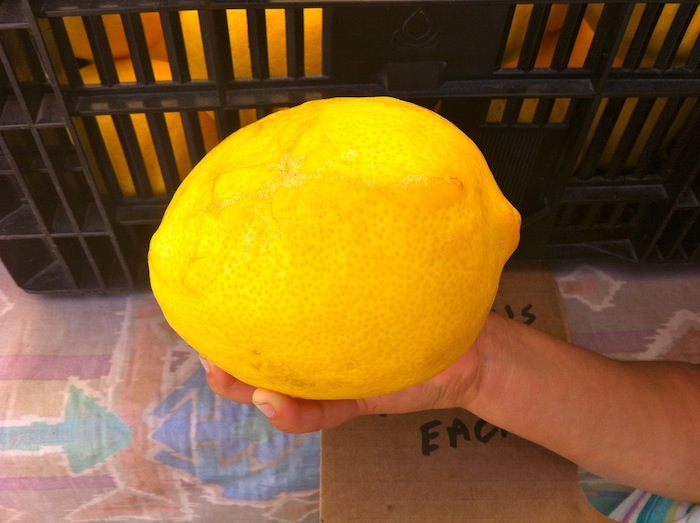
Ginormous Lemon

A huge thrill about living in the San Diego area is our weather affords us fruit throughout the year and there’s no shortage of it in Poway right now as we approach summer. From giant lemons (as held by my 5 year old) to amazing Valencia oranges, we’re fortunate in the citrus category. I’m happy to say, my kids really only know orange juice as being hand-expressed from oranges (thanks to Summer Tomato for the education on store-bought OJ).

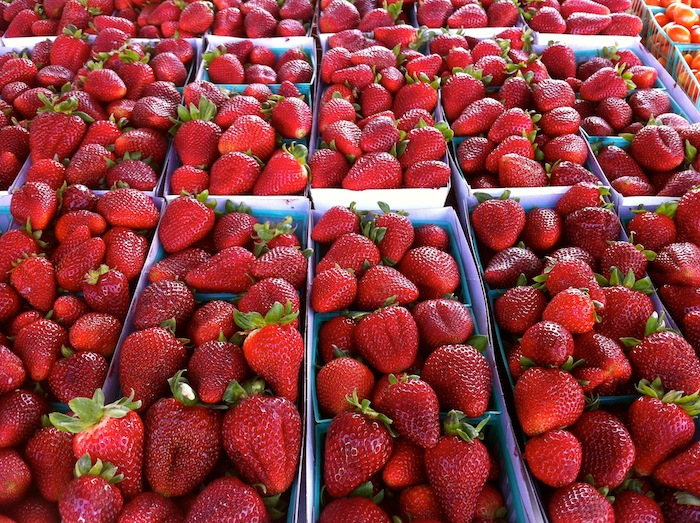
The strawberries have just hit their peak. They’re so sweet, you would swear they were dipped in sugar! I was happy to see blueberries, cherries and loquats this week as well.

Strawberries

The veggies are what I buy the most of so that I have everything I need to make dinner. I love buying Maui onions with the stalks because I can use both the onion and the stalk.

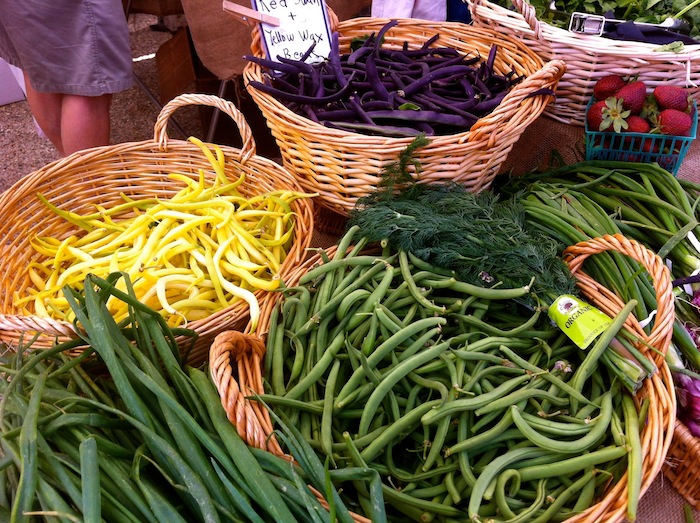
Greens are a huge deal now that I’ve figured out different ways to incorporate them into meals. I wish I was as accomplished with beans because they sure are pretty.

Spring Beans

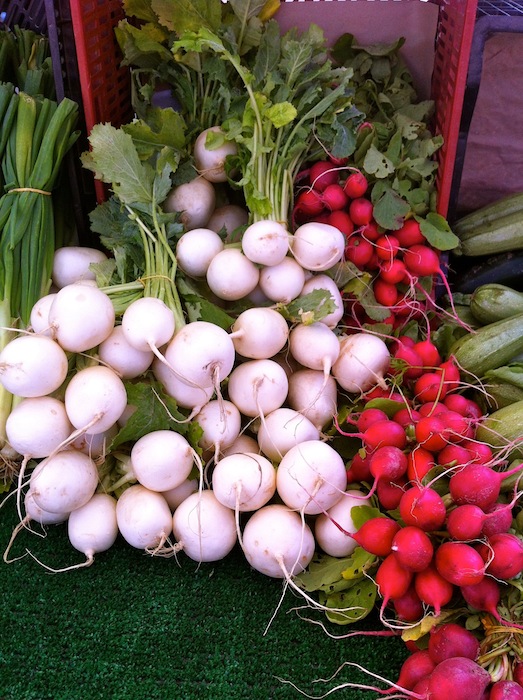
If root vegetables are your thing, it seems to be a good time for white and red turnips, kohlrabi, radishes, carrots and different potato varieties.


Tokyo Turnips

My favorite sighting of the week was seeing bunches of chamomile flowers. It made me want tea on the spot.

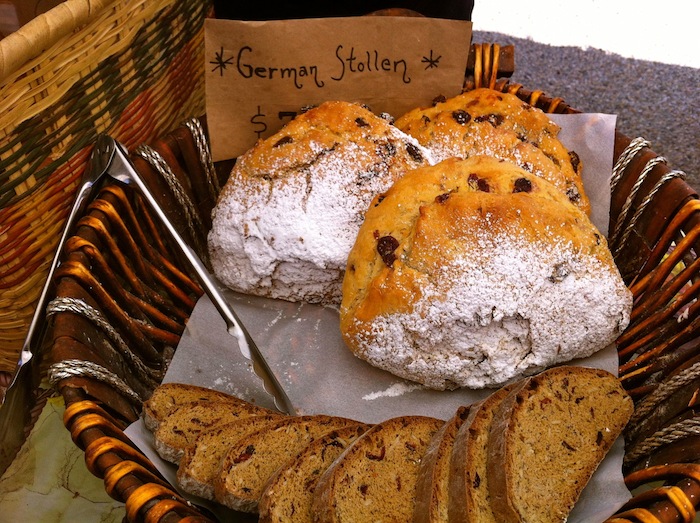
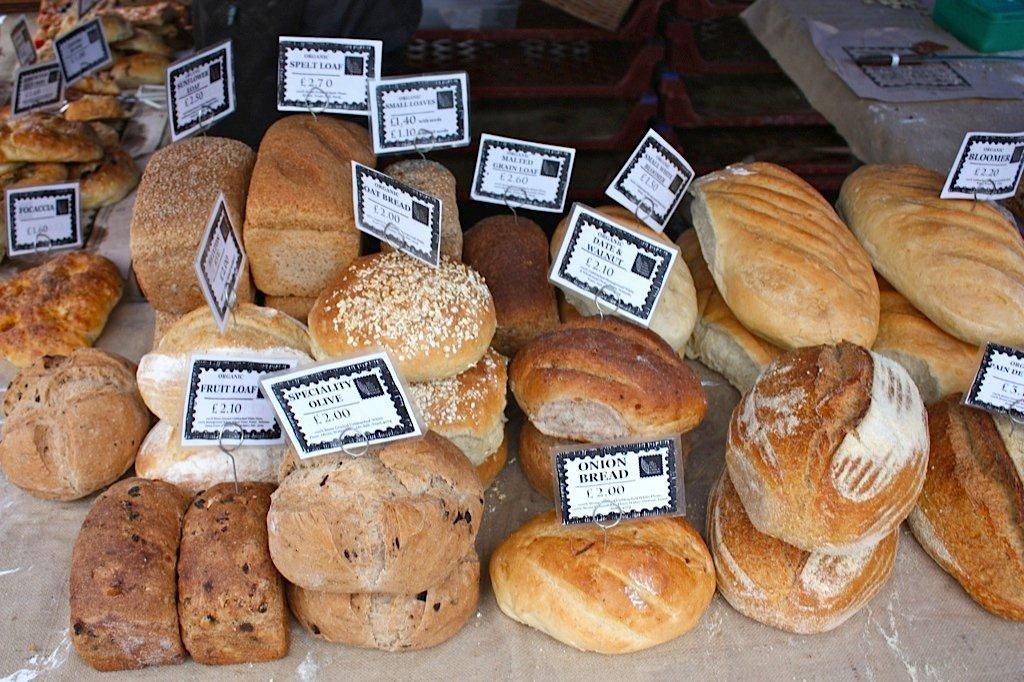
Artisan Bread

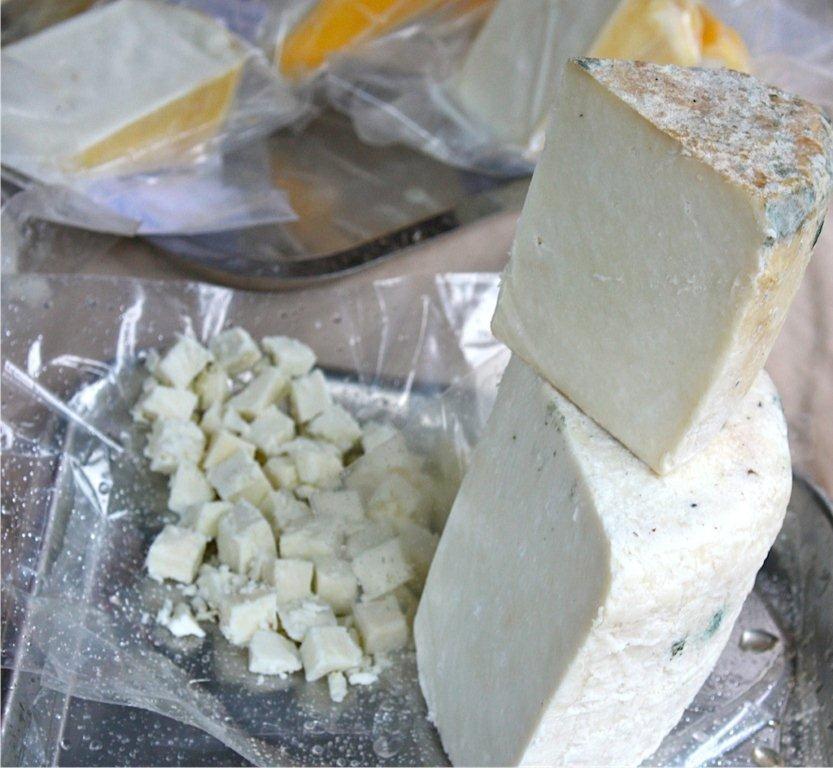
Aside from our many fruit and vegetable farmers we also have fresh eggs, free-range poultry, wild seafood, artisan bread, organic cheese, olive oils and lots of pretty flowers.

Pin Cushion Flowers

The day I visited the farmers market also happened to be the same day the Boardwalk Craft Market was happening at the adjacent Old Poway Park. If you’re really into crafty stuff, this was the best day to get food as well as a variety of handmade items. Plus, there’s a really cool vintage steam train that provides rides in the park.


Boardwalk Craft Market

There’s nothing to hate about a place that offers something to keep the adults and kids happy. Until next time – adios from So Cal!

Steam Train


My purchases for the day:

  • Strawberries
  • Chioggia beets
  • Valencia oranges
  • Kale
  • Potatoes
  • European style butter
  • Ceviche


Tags: , , , , ,

For The Love Of Food

by | May 25, 2012

For The Love of Food

Welcome to Friday’s For The Love of Food, Summer Tomato’s weekly link roundup.

Why eating organic food doesn’t make you a jerk, how a pastry chef in Paris keeps his man-ish figure, and how NOT to get your husband to eat better.

Want to see all my favorite links? Be sure to follow me on on Delicious. I also share links on Twitter @summertomatoGoogle+ and the Summer Tomato Facebook page. I’m very active on all these sites and would love to connect with you. (And yes, I took that pepper heart pic myself).

Links of the week

What inspired you this week?

Tags: , , , , , , , , , , , ,

Why Turning Great Wine Into Vinegar Isn’t A Bad Idea

by | May 23, 2012

Tom Alexander, Kimberley Owner and Vinegar Artisan

I get a lot of emails from people pitching various food and weight loss products. It’s annoying to say the least, and if I even bother to respond to the inquiries my answer is almost always “no.” Summer Tomato is supposed to be an information resource, not a shopping mall.

That’s why my first reaction to getting some samples from a local vinegar company was negative. I liked my vinegar just fine and I didn’t want to get roped into doing a promotion or sales pitch. But my friend Allison Boomer (who actually has introduced me to awesome products in the past) was so insistent that Kimberley Wine Vinegars were amazing that I broke down and let them send me some. Turns out Allison was right.

Once I got a taste of the three amazing wine-based vinegars from Kimberley I became curious about why they were so much more complex and less harsh than most of vinegars I’ve tried. After she answered a few of my questions I realized that Allison is a huge vinegar geek, and I asked her if she’d be willing to enlighten us all on the differences between artisan and industrial vinegars so that we can be more informed shoppers and better cooks.

Allison Boomer, Founder of Eco-Conscious Food Marketing, specializes in promoting the artisanal food business community. She partners with people who share her passion for handcrafted food and is committed to educating consumers about the value of authentic, traditional edibles.

Orleans-Process Vinegar: Why Turning Great Wine Into Vinegar Isn’t A Bad Idea

by Allison Boomer

Having owned a specialty food store for ten years, I’ve tasted dozens of vinegars from around the world. I also developed new vinegar blends for a venerable French vinegar company, and currently work for Kimberley Wine Vinegars in California. With abundant fresh salad greens and garden vegetables appearing at markets, it’s an ideal time to discover why handcrafted vinegar is light years better than the newer industrially produced kinds.

In ancient times vinegar occurred naturally, especially in mild climates, when sugar-laden fluids like wine began to ferment. Yeast transforms the sugars in the liquid into alcohol and as it sits, acetates in the air start to work. Ultimately, bacteria consume the alcohol and leave acetic acid (vinegar) behind.

In its early days vinegar was used to not only season food, but also to quench thirst (diluted with water), preserve meat, vegetables and fruit, treat wounds and inflammation, and for chest and stomach complaints. In the Middle Ages vinegar was an important trading commodity.

Vinegar making during this time, however, wasn’t exactly predictable or foolproof, and was quite difficult to make. Often times unpleasant smells were produced or the liquid would become moldy.

What saved the day for the vinegar “industry” was the discovery that vinegar could be made in wooden barrels. This led to the development of the Orleans process of vinegar making, named after the French town of Orleans. It was at Orleans on the Loire River, an important inland shipping route, that wines becoming “piques” (beginning to bite or sour) were unloaded from boats to be delivered to local vinegar producers.

In the Orleans process wine is slowly and naturally aged in oak barrels for one to three months without heat, until a mass of bacteria known as the “mother” forms on the surface. The fermentation process is then allowed to continue (six months to one year) until all the alcohol has been converted to acetic acid. Old-fashioned wood barrels contain natural oxidants that improve the bouquet and flavor of the vinegar. The Orleans process preserves the vinegar’s distinct wine aroma and flavor because it involves no heat, which destroys the delicate perfumes and minerals of the wine.

In contrast, industrially processed vinegar is heat pasteurized and made in large-capacity stainless-steel tanks in which a giant spindle agitates the liquid, aerating it for a speedy fermentation period of around 24 hours. The resulting vinegar may be aged for an additional few months, but in tanks holding several thousand gallons, rather than in wood barrels holding fifty gallons in the traditional way.

Orleans vinegar artisans received official recognition for the quality of their work through royal patents. These patents clearly defined the production conditions required to use the name “Orleans process,” thereby suppressing poor quality vinegars from using the designation.

The Orleans process requires the following three criteria:

1. Selection of excellent wines based on grapes that have a delicate and subtle bouquet. The quality of the vinegar depends on the quality of the wine—the best tasting vinegars come from great wines.

2. A natural transformation of the wine into vinegar. Barrels are partially filled with wine and their appropriate bacteria, kept at a constant temperature in complete darkness, and provided with proper air flow for fermentation to take place (thus avoiding the bitterness found in some vinegar).

3. Traditional aging. Vinegar is left to mature or age for a minimum of six months to one year in cellars before it is put on the market.

Kimberley Wine Vinegars was the first American company to handcraft Orleans process vinegar using California wines. Established in San Francisco in 1975, Kimberley does not add preservatives to the vinegar, nor is it pasteurized—a common practice that increases shelf life but degrades subtle taste characteristics.

Like old-world olive oil artisans, today’s artisanal vinegar makers know the best vinegar depends on the quality of the raw ingredients and the processing methods. Achieving the ideal balance of fruit taste, oak flavor and pleasant acidity is the craft of fine vinegar making.

You can learn more about Kimberley Wine Vinegars on their website.

Tags: , , ,

For The Love Of Food

by | May 18, 2012

For The Love of Food

Welcome to Friday’s For The Love of Food, Summer Tomato’s weekly link roundup.

This week superweeds threaten the US food supply, McDonald’s says soda is a fruit and vitamins that cause cancer.

Want to see all my favorite links? Be sure to follow me on on Delicious. I also share links on Twitter @summertomatoGoogle+ and the Summer Tomato Facebook page. I’m very active on all these sites and would love to connect with you. (And yes, I took that pepper heart pic myself).

Links of the week

What inspired you this week?

Tags: , , , , , , , , , , , ,