Sign up

You deserve to feel great, look great & LOVE your body

Enter your email for your FREE starter kit to get healthy & lose weight without dieting:

  • This field is for validation purposes and should be left unchanged.

For The Love Of Food

by | Sep 16, 2011

For The Love of Food

Welcome to Friday’s For The Love of Food, Summer Tomato’s weekly link roundup.

Great reading this week, including an excellent piece by Michael Pollan about an unlikely ally in the political food fight, as well as Harvard’s answer to the USDA My Plate and a new website to help you find farm fresh produce in your area.

Want to see all my favorite links? Be sure to follow me on on Digg. I also share links on Twitter (@summertomato) and the Summer Tomato Facebook fan page. I’m very active on all these sites and would love to connect with you.

Links of the week

Tags: , , , , , , , , ,

For The Love Of Food

by | Aug 19, 2011

For The Love of Food

Welcome to Friday’s For The Love of Food, Summer Tomato’s weekly link roundup.

It was a very difficult week for my family as well as the food blog community. Heart disease is still the #1 cause of death in this country, and I hope that what I’m doing here at Summer Tomato can make a small (or, hopefully, large) dent in that in the years to come.

The good news is I found a ton of fantastic articles this week, with my top 10 including why carbs aren’t the obvious enemy in obesity, why sitting too much is not the same as working out too little and why being a nudist may extend your life.

Want to see all my favorite links? Be sure to follow me on on Digg. I also share links on Twitter (@summertomato) and the Summer Tomato Facebook fan page. I’m very active on all these sites and would love to connect with you.

Links of the week


Life is short, fill it with love.

Tags: , , , , , , , , , , , , , , ,

Gateway Vegetables: My Story As A Born Again Foodie

by | Jun 20, 2011

Photo by woodleywonderworks

Cheryl-Ann Roberge lives in Seattle and enjoys dining with strangers at restaurant bars, yoga and sea salt caramels. Follow her on Twitter @Pigeon_Feather.

Gateway Vegetables: My Story As A Born Again Foodie

by Cheryl-Ann Roberge

If you had told teenage me that she would one day be a vegetable lover, spice fanatic and adventurous eater, she would have sent her canned ravioli flying towards your face.

My name is Cheryl-Ann Roberge, I reside in Seattle and I am a born again foodie. This is my story.

The nineties were an underwhelming time in my food life. Eggs were one of the few things I enjoyed eating that didn’t come from a box or can. Even at a young age I tried to pick all of the oregano out of my spaghetti. I hated fruit and veggies. I tolerated apples and canned vegetables when required.

At age seventeen, I proudly declared that I would never learn how to cook and that I would live solely on canned ravioli.

It was simple: I didn’t like anything that had real flavor.

Epiphany

Two years into my “adult life” I was existing on of a steady diet of Easy Mac and cafeteria food.

Vegetables were the most difficult for me. But ironically, veggies were also the key that would open the doors to foods I would never have been interested in otherwise.

I went on about my business of eating meat with noodles or meat with rice or meat with bread and I was pretty happy with the rotation. I worked in the dorm cafeteria circuit at the university I attended in Milwaukee, WI and I liked telling people I was a lunch lady.

On a hot July day, my world was changed. A special picnic for new student prospects was being served outdoors and I was staffed to work. The picnic served food much different from the typical cafeteria fare. After the new students had been served, the cafeteria workers breaked for a meal together. I loaded my plate with a burger and whichever pasta salad I knew I wouldn’t eat much of.

I made my way to the grill and found it covered with a vegetable medley that I’d never seen served before. I kept walking. Mike the chef called me back and stuck veggie-filled tongs towards me. “I don’t do veggies, Mike.”

“These are different,” he explained. He was excited that he’d been allowed to make food he thought tasted good. Mike had once opened his own restaurant, but failed and ended up as a chef at the cafeteria where creativity was always superseded by budget. This was his banner day.

I declined once more before he gave the overhaul speech that broke me down. He lowered juicy, grill-marked asparagus, onion, zucchini and squash onto my plate as I shot him a look of disinterest. The veggies were cooked very simply: tossed with oil, salt and pepper and flung onto the grill. I’d never had something like this before.

I didn’t come away with a huge affinity for onions that time, but I had my first ever delightful experience with something I’d always found disgusting. I suddenly loved squash and zucchini, and thought asparagus was okay too.

Mike told me that I’d made his day. I raved for a week. My whole idea of food turned upside down, and it was just the beginning of a ten year revolution.

I’ve since learned to like onions, spinach, fish, shellfish, beets and strawberries. After discovering sushi, wasabi became my gateway into loving spicy food, which I’d never been able to tolerate.

My journey hasn’t ended. Last fall I took my first trip to Italy where I discovered cantaloupe served alongside dinner entrees. I had always been lukewarm about the fruit, but something about having light, juicy melon after a slice of delicious lasagna made me appreciate its sweetness in a way I never had. Now my least favorite fruit salad element has become a favorite.

It is difficult to express to you just how surprising and lovely these realizations can be. I live for them, and I try every new food I can. I plea bargain with other picky eaters I meet. I pester them to try new things. I invite them over for dinner and try to introduce them to something they’d never try.

Why should you try and try again?

As children, most of us are naturally adverse to beer, coffee and wine. A sip might be granted by a grandpa wearing a grin, which of course is followed by a grimace from the grandchild.

So how do most of us end up liking all three beverages despite the horrible trials we go through?

Practice, exposure and repetition are the keys to comfort. I expanded my taste in music the same way. I started listening to any music I could get my hands on and, as with food, I started having mini music epiphanies too.

Consider this: Why did most of us enjoy listening to the radio when we were children? We knew the songs and they were comforting, like canned ravioli.

How do country music haters end up enjoying Neko Case or Ryan Adams? It’s fresh and it didn’t come out of a can. You get the point.

A Simple Request

As a born again foodie I sit here in Seattle writing to you, Picky Eater. I’m late to work, because I care that much about your palate. I want you too to discover the pleasure of new foods. It has changed my life and given me unforgettable experiences with old friends and new.

As a bonus, it’s easier to get out and exercise because I’m not so weighed down by the processed junk food that I used to love. And my waistline is trim now.

Change your ways for those last two reasons if you must, but try new foods because they will eventually taste good and the rest will follow. Just don’t expect it all to happen over night.

What’s your gateway veggie?

Tags: , , , , , ,

Picky Eaters vs Food Snobs

by | Oct 6, 2009
By _Max-B

By _Max-B

Hopefully I sold you on why it’s better to be an adventurous eater than a picky eater, but that doesn’t mean you should eat everything that’s put in front of you.

In fact, you should always question what you eat and never accept food blindly. Learning how to choose good food is one of the most important skills you need to successfully navigate the nutritional minefield we live in.

But how do you learn to be judiciously discriminating without being annoyingly picky? And how do you avoid stepping over the boundary into food snob territory?

Ultimately you need to determine your personal values and define your own healthstyle. Here I’ve outlined a few guiding principles I use to make these decisions every day.

Food Origins

The first step is developing an appreciation for where your food comes from.

Whole foods vs Processed foods

The first great divide in the modern food world is between whole foods and processed foods. Whole foods are those that have not been substantially changed by industrial processes and still look fairly similar to how they are found in nature. Processed foods are those that have been broken down by commercial methods then reassembled into “edible food-like products,” to quote Michael Pollan from In Defense of Food.

For unknown reasons the act of processing foods strips them of their magical powers (pretty scientific, eh?). We’ve learned from dozens of clinical trials on nutrient supplements that removing molecules from the context of whole foods almost always prevents them from doing their job properly.

Thus it seems that natural foods–as far as our bodies are concerned–are equal to more than the sum of their parts, and it is unlikely we will understand all the science behind this for at least several decades.

Luckily we do not need to know the mechanisms of nutrition to make healthy food choices.

The single most consistent finding in the field of nutrition is that whole foods are better for you than processed foods.

Independent food vs Industrial food

The second great divide is between independent food producers and industrial farming and agriculture. A huge misconception among eaters is that all produce and farm products are created equal. But anyone who has shopped at a farmers market knows this is not true for produce, meat or any other farm product.

Not only does produce grown in (or animals raised on) healthy, fertile soil taste orders of magnitude better than anything grown in depleted industrial soil, but it will also have more nutrients, be better for the environment and create a more healthy food culture.

No matter how you slice it, farm fresh food is better.

I will even  make the case that the distinction between independent and industrial food is more important than the difference between organic and conventional. While I support organics in general (especially compared to conventional industrial ag), some of my favorite farms are not certified organic, yet their growing practices far exceed certification requirements.

I know these farmers personally, and their food speaks for itself.

There is a world of difference between rejecting food for what it is and rejecting food because of its quality. My personal opinion is that any whole food that isn’t grown industrially is probably worth trying and liking.

Culinary Talent

Also important in appreciating valuable food is recognizing culinary talent.

The prospect of experiencing an artist’s work is usually enough to get me to try a food, even if it is not the healthiest thing on earth.

As I explained above I rarely find reason to eat processed foods, and that means pretty much anything made with sugar or flour. Most of the time it just isn’t worth it.

But sometimes it is.

Sometimes pastry chefs, bakers and pizza makers can transform simple ingredients into such amazing creations that you’d be foolish to turn them down. I watch my portions when I eat these foods, but generally think life is too short to miss such opportunities.

But proceed with caution. The quest for superior culinary talent is a slippery slope to food snobbery. You don’t want to be that guy who turns down birthday cake unless it is make by Elizabeth Prueitt. Nobody likes that guy.

But of course, where you draw the line is up to you.

Finding Value

For me the value of food is defined by the quality of the ingredients, the talent of the chef and the nature of the occasion.

The purpose of eating should always be to make your life better in some way: may it bring you good health, sensual pleasure or stronger personal relationships.

I think it’s best when it does all of the above.

What kind of eater are you?

Tags: , , , , , , , , , , ,

Simple Gourmet: Roasted Beets With Fresh Mint and Chèvre

by | May 27, 2009
Roasted Beets With Fresh Mint and Chevre

Roasted Beets With Fresh Mint and Chèvre

I am very proud to share this recipe with you since it came by special request from my dad–a self-professed beet hater. I won him over with these beets several years ago and he is still talking about them! The same recipe stole my heart back when I thought I hated beets too.

Are you convinced?

Roasted Beets with fresh mint and chèvre is an elegant, impressive dish that hardly requires any cooking skills. If you are still worried you will not like the flavor of beets, you can look for the milder and less messy golden or candy-striped beets. Whenever possible I like to use a few different beet varieties to mix up the colors and flavors, but today I’m sticking with the common red garden beet.

Mint Leaves

Mint Leaves

To begin you must eliminate all thoughts of substituting canned beets for the fresh ones in this recipe. Fresh roasted beets have a rich, sweet and earthy flavor that is completely unlike the flaccid purple slivers that come in a can.

You will also need fresh mint leaves. Most grocery stores and farmers markets will have fresh mint this time of year. Dried leaves really don’t cut it in this recipe.

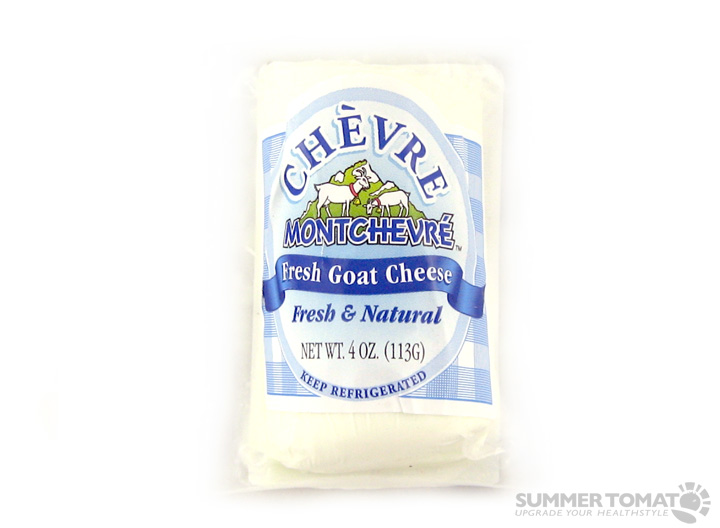
Chèvre is a soft goat cheese that a close friend of mine describes as “like cream cheese only better.” A little bit goes a very long way, so I always buy the smallest amount possible (this time it cost me $2.89).

Chevre

Chèvre

Be careful not to add the cheese directly to hot beets or it will melt and form an unattractive pink slime. It still tastes good, but it’s better to avoid this problem by cooling the beets beforehand. An hour in the refrigerator works well, but if you are in a hurry you can get away with 10-15 minutes in the freezer.

This dish is very easy to scale for large batches, making it ideal for parties and potlucks.

Roasted Beets With Fresh Mint and Chèvre

Ingredients:

  • 1 bunch of beets (3 large), any garden variety
  • 1/2 cup fresh mint leaves, loosely packed
  • 1/4 oz. chèvre, crumbled
  • Olive oil
  • Sea salt or kosher salt

Preheat oven to 375.

If the leaves are still on your beets, twist them off leaving enough stem to use as a handle for peeling. If your beet greens are still fresh and springy I recommend cleaning them and cooking them up with some onions and garlic (cook them like spinach). Beet greens are so full of potassium that they are salty to the taste, so be careful with your seasonings because they are easy to over-salt. Both beets and beet greens are extremely good for people with high blood pressure.

Peel your beets using a vegetable peeler (I recommend this one) and chop evenly into bite-sized cubes. Discard stems. Cubes should be approximately 3/4 to 1 inch on each side. Keep in mind that the larger your pieces the longer they will take to cook.

Add 1-2 tbsp olive oil to beets and toss to coat. Sprinkle beets with salt and place in a single layer in a large Pyrex baking pan. Place in oven on middle rack and roast until beets are tender and have a glazed-like appearance, stirring every 8-10 minutes. Roasting takes approximately 35 minutes.

When beets are finished roasting, transfer them to a large bowl, cover with plastic wrap and place in the refrigerator. Chill for at least 30 min, but 45 min to 1 hr is preferable.

5 minutes before the beets are done chilling, stack mint leaves on top of each other and chiffonade them by rolling lengthwise like a cigarette and slicing into thin ribbons. I like to cut the ribbons in half once by making a single cut through the middle of the pile along the vein of the leaves. Discard the stems.

Using a fork, crumble a small amount of chèvre into a small bowl or plate and set aside.

Sprinkle mint onto the beets and stir, leaving a few ribbons for garnish. Adjust salt to taste. Transfer beets and mint to a serving bowl and sprinkle with chèvre and remaining mint. Serve immediately.

Do you love beets? Hate beets? Interested in having pink urine?

Tags: , , , , , , , , , , , , , ,

Hate Brussels Sprouts? So Did I

by | Oct 27, 2008

Kids and adults alike are often united in their hatred of Brussels sprouts. When I was young, Brussels sprouts were at the very top of my gross foods list, just barely inching out slimy spinach and chalky lima beans. Yuck!

It was not until I got to college that I learned spinach is not really slimy. Turns out it is actually a leaf and surprisingly delicious! I didn’t realize I had been eating frozen spinach my entire life. What a relief!

Over time I learned that many foods I never liked were not as bad as I thought. I grew to appreciate fennel, avocado, cilantro and even beets, but I never could develop a taste for Brussels sprouts.

A few years ago when I started getting serious about vegetables and health, I made a decision to conquer my last few food aversions. Eggplant was something I always struggled with, but I learned that a few kitchen tricks could turn it into a delicious meal. This past summer I was finally able to embrace cucumbers.

After all this, overcoming my aversion to Brussels sprouts is my proudest accomplishment.

I have found that for most foods I do not enjoy, ordering them at an expensive San Francisco restaurant is a great place to start. These people can seriously cook. And if anyone can make something taste good, it is the brilliant chefs of San Francisco.

Absinthe Brasserie was where I first tried Brussels sprouts that I didn’t just like, I loved. So warm, savory and delicious, I finally knew what Brussels sprouts could be.

It was this experience that convinced me it was possible to find a way to cook Brussels sprouts so that I like them. I spent all last winter trying different cooking techniques until I finally got it right.

The secrets?

  1. Bacon – Is there anything bacon doesn’t make better?
  2. Nuts – Walnuts or hazelnuts add a crunchy texture and earthy flavor.
  3. Butter – I don’t cook with butter often, but sometimes it is just worth it.
  4. Blanching – Cutting the sprouts in half and boiling them for 5 minutes removes their bitter flavor.
  5. Fresh herbs – I prefer oregano or marjoram on this dish.
  6. Red wine vinegar – Acid is a great counter to bitterness; it serves Brussels sprouts well.

These tricks and variations of them have convinced me and nearly all of my friends that Brussels sprouts are truly an autumn delicacy.

For those of you questioning the health value of bacon and butter, my answer is this: get over it.

Small amounts of saturated fat will not kill you or even make you fat. Besides, if it gets you to eat your Brussels sprouts it is worth it. I feel confident in saying this dish is infinitely more healthy than anything you can get at Subway.

Don’t be scared, give it a try!

Brussels Sprouts with Bacon

Do you hate Brussels sprouts? Why?

Tags: , , , , , , , , , ,