Sign up

You deserve to feel great, look great & LOVE your body

Enter your email for your FREE starter kit to get healthy & lose weight without dieting:

  • This field is for validation purposes and should be left unchanged.

For The Love of Food

by | Apr 2, 2010

For The Love of Food

Welcome to Friday’s For The Love of Food, Summer Tomato’s weekly link roundup.

This week I learned that cheese is associated with lower cancer rates, and it wasn’t even an April Fools’ joke. I’m also cautiously optimistic about Kroger’s new food scoring system that actually calls out junk food for what it is. Oh oh oh! And I can’t wait to try the canned unicorn meat I’ve heard so much about.

I read many more wonderful articles than I post here each week. If you’d like to see more or just don’t want to wait until Friday, be sure to follow me on Twitter (@summertomato) or the Summer Tomato Facebook fan page. For complete reading lists join me on the social bookmarking sites StumbleUpon and Delicious. I’m very active on all these sites and would love to connect with you there. (Note: If you want a follow back on Twitter introduce yourself with an @ message).

Links of the week

What’s your good news?

Tags: , , , , , , , ,

For The Love of Food

by | Jan 22, 2010
For The Love of Food

For The Love of Food

Welcome to Friday’s For The Love of Food, Summer Tomato’s weekly link roundup.

This week I was interviewed by the Bay Area Women’s Journal about my favorite healthy eating tips for the new year. Also be sure to read Dr. Steve Parker’s analysis of a new study that proves conclusively saturated fat is not associated with heart disease.

There are also great stories about the dangers of salt and snacking, and a hilarious flow chart describing exactly how to handle it if you drop your food on the floor.

I read many more wonderful articles than I post here each week. If you’d like to see more or just don’t want to wait until Friday, be sure to follow me on Twitter (@summertomato) or the Summer Tomato Facebook fan page. For complete reading lists join me on the social bookmarking sites StumbleUpon and Delicious. I’m very active on all these sites and would love to connect with you there. (Note: If you want a follow back on Twitter introduce yourself with an @ message).

Links of the Week

What inspired you this week?

Tags: , , , , , , , , , ,

For The Love of Food

by | Sep 25, 2009
For The Love of Food

For The Love of Food

Welcome to Friday’s For The Love of Food, Summer Tomato’s weekly link roundup.

I’m pleased to inform you that I became an official blogger at The Huffington Post this week. My first article there was my interview with David Kessler, Learning to Eat Less: How Understanding Your Brain Can Make You Healthier. I hope to post many of my best articles there in the coming months, usually in the Living section.

Publication at Synapse has also resumed, though I have stepped down as the official science editor to focus on Summer Tomato and (ah hem) finish my lab work.

I’m also excited to announce the creation of the Summer Tomato monthly newsletter! The newsletter will include new content that is not posted here on the blog, and will feature Summer Tomato news, healthy eating tips and recipes. Newsletter subscribers will also have access to exclusive offers and discounts on future Summer Tomato material. Exciting, right?!

newsletter-formhttp://forms.aweber.com/form/16/1808371216.js

Don’t forget to confirm your subscription by clicking the link in the confirmation email.

If you are wary of entering your email address, rest assured I will never sell or exchange your information and you can unsubscribe anytime. Consider this my personal spam-free guarantee. The main purpose of the newsletter is to reward loyal readers with great tips to upgrade your healthstyle. Feel free to email me any time if you are unhappy with Summer Tomato material.

This week around the web there were some interesting articles about the cholesterol-heart disease hypothesis, which you may be surprised to hear is not particularly strong. These stories may renew your interest in my post last week on How to raise your HDL cholesterol. There are also a few pieces on the role of the brain in eating behavior, which I am becoming more and more interested in (shocking, I know).

I read many more wonderful articles than I post here each week. If you’d like to see more or just don’t want to wait until Friday, be sure to follow me on Twitter (@summertomato) or the Summer Tomato Facebook fan page. For complete reading lists join me on the social bookmarking sites StumbleUpon and Delicious. I’m very active on all these sites and would love to connect with you there. (Note: If you want a follow back on Twitter introduce yourself with an @ message).

I also invite you to submit your own best food and health articles for next week’s For The Love of Food, just drop me an email using the contact form. I am also accepting guest posts at Summer Tomato for any awesome healthstyle tips and recipes you’d like to share.

This post is an open thread. Share your thoughts, writing (links welcome!) and delicious healthy meals of the week in the comments below.

For The Love of Food

What great stuff did you read and write this week?

Tags: , , , , , , , , , , ,

For The Love of Food

by | Sep 18, 2009
For The Love of Food

For The Love of Food

Welcome to Friday’s For The Love of Food, Summer Tomato’s weekly link roundup.

Thanks to all of you who humored me participated in last weekend’s completely childish melon caption contest!

The awesome commentor of the week award goes to Foodie Adventures!, because it really would take a jumbo melon to hit a head that big!

Impressive Melons

"Who wants to throw JUMBO produce at Kanye West?"

As usual there were a ton of great articles this week around the web. I can’t say enough good things about what Monica Reinagel is doing over at her Nutrition Data blog and podcast. Luckily I also learned this week that health podcasts can help you lose weight!

Check the links below to find some great ideas on how to preserve summer herbs, what to do with fresh shelling beans and some tricks to keeping your brain sharp.

Oh, and did you hear that a new study found organic produce is actually more nutritious? Share your thoughts in the comments.

I also encourage all of you to sign this petition against the Smart Choices food labeling program, which has been widely criticized as a slap in the face to both consumers and health experts. It’s easy and I had no trouble unsubscribing to their mailings after I got the first one.

I read many more wonderful articles than I post here each week. If you’d like to see more or just don’t want to wait until Friday, be sure to follow me on Twitter (@summertomato) or the Summer Tomato Facebook fan page. For complete reading lists join me on the social bookmarking sites StumbleUpon and Delicious. I’m very active on all these sites and would love to connect with you there. (Note: If you want a follow back on Twitter introduce yourself with an @ message).

I also invite you to submit your own best food and health articles for next week’s For The Love of Food, just drop me an email using the contact form. I am also accepting guest posts at Summer Tomato for any awesome healthstyle tips and recipes you’d like to share.

This post is an open thread. Share your thoughts, writing (links welcome!) and delicious healthy meals of the week in the comments below.

For The Love of Food

What stories moved you this week?

Tags: , , , , , , , , , , ,

Summer Tomato Book Review: The China Study

by | May 6, 2009

the-china-studyIn the first official book review at Summer Tomato I examine Dr. Colin Campbell’s The China Study. Several readers have asked about this book since I wrote last week about who you can trust for diet advice, so I think it is a perfect subject for my first review.

The China Study was published in 2006 and branded itself as “The most comprehensive study of nutrition ever conducted.” It is written by Colin Campbell, PhD, a highly accomplished scientist that has worked for decades in the fields of nutrition and disease research. It was co-authored by his own son, Thomas Campbell.

Clearly both these men care deeply about health and nutrition and believe the information they provide can relieve a huge proportion of the world’s suffering. Their sincerity is apparent and, given the current dietary trends in Western culture, I am sure their recommendations would help the vast majority of people become healthier. Yet there are several logical flaws in The China Study that prevent me from giving it an A grade. Overall, however, The China Study offers a compelling view of nutrition and health from one of the leaders in the field and is worth reading.

gradebMy biggest disappointment with The China Study is how little of the book is devoted to the study itself–a large ecological-style research project, conducted by Dr. Campbell and his colleagues, examining the relationship between diet and health in rural China. As a scientist, I am a bit of a data junkie and always most impressed by strong statistics and rigorous logic.

UPDATE: [Denis Minger has taken it upon herself to re-analyzed the data from The China Study, and makes it pretty clear that Campbell vastly overstates his case. I agree with everything Denise writes, and every educated person who cares about these findings should read her analysis.]

Only a single chapter in the book is specifically dedicated to the work done in China (Chapter 4), and it conveys little new information. Most of Chapter 4 is spent reiterating the links between diet and chronic diseases such as cancer, heart disease and diabetes, discoveries that did not surprise me in the least. The two most important novel findings reported in the China study are discussed below.

The China Study is divided into four major sections. The first section describes Dr. Campbell’s original research and is the part I enjoyed most. It begins by discussing his work in the Philippines where he discovered a tight link between animal protein consumption and a specific kind of liver cancer induced by aflatoxin, a dangerous poison that is sometimes found in contaminated peanuts. He follows up this work with extensive studies in his U.S. laboratory elucidating the mechanisms of cancer promotion by the main protein found in cow’s milk, casein. Dr. Campbell makes a compelling case that this protein can influence cancer development in the presence of an extremely potent carcinogen, and his work should be taken very seriously in this regard. However,  he goes on to argue that this finding can be generalized to support the view that all animal proteins promote cancer and he recommends they be completely eliminated from your diet.

This was a logical leap I was not able to make after reading through his evidence. What about the benefits of fish for the heart and brain?

As mentioned above, the final chapter of the first section describes the China study. According to the book, the Chinese consume much less fat and protein than Americans, but more fiber and iron. Nothing too surprising there. It also reports that rural Chinese have substantially less heart disease, cancer and diabetes than Americans, but in more urban areas where diets follow more Western patterns the incidences of these diseases are higher. Again, not surprising.

Two pieces of information out of the China study did pique my interest. The first is that participants in the China study reportedly consume more, not fewer calories than Westerners. This was true even for Chinese office workers who consume 30% more calories but weigh 20% less than average Americans.

Part of this difference was accounted for by differences in physical activity (even office workers in China get more exercise than we do), but not all of it. Data in the China study suggests that Chinese have a more active metabolism and burn more calories than typical Americans. Dr. Campbell argues that this is because they eat less animal protein and fat, but the China study is observational (non-intervention) and cannot prove cause and effect.

Isn’t it possible that the Chinese metabolize their food differently because it is less processed than Western food (no matter the source)? From the literature I have read, this seems like a more plausible explanation. But regardless of the reason, the data from China suggests that all calories are not created equal in terms of both health and metabolism. This argues against the dogma offered by most nutrition experts that a calorie is a calorie.

The other surprising finding from the China study is the degree to which blood cholesterol levels predict heart disease. Although most Americans assume there is some connection between blood cholesterol and heart disease, there is still debate regarding how strong this connection is. Data from the China study suggests lower total cholesterol levels decrease risk of heart disease and death. Moreover, the data suggests that optimal cholesterol levels are far below what are recommended by Western medicine (150 mg/dL to 180 mg/dL). The healthiest Chinese had total cholesterol levels from 170 mg/dL to as low as 90 mg/dL. In the China study, lower cholesterol levels were also linked to decreased rates of several cancers. However, some scientists question the validity of this data.

The second section of the book is titled “Diseases of Affluence” and discusses the role of nutrition in the various chronic diseases that plague Western culture. In the third section Dr. Campbell offers his ideal (i.e. vegan) diet. If you are not familiar with the literature on diet and nutrition Dr. Campbell does a decent job going over it, particularly with respect to the role of dairy in prostate cancer, type 1 diabetes and multiple sclerosis. However, most of this information is available in other books that are easier to follow and less dogmatic about the need to eliminate all animal protein from the diet, which even Dr. Campbell admits “has not been absolutely proven” (p. 242).

In my opinion the most incongruous part of The China Study is the fourth section titled, “Why Haven’t You Heard This Before?” Here Dr. Campbell goes into great detail explaining the ties between food industries, drug companies, our government and, sadly, our education system from K1 through post graduate medical residency. While this section of The China Study is fascinating, it dilutes the primary nutrition message of the book with a disconcerting illustration of the roles money and politics play in our education system. But despite the jumbled message, the facts provided in this final section of The China Study are eye-opening and may be the best reason to read the book. It is shocking to learn how deeply opposed to and uneducated most of the medical community is about the life-saving benefits of dietary intervention for chronic diseases. Personally I would have liked this section to be an entirely separate book, as I would recommend it more often.

To summarize, The China Study provides an interesting but not entirely compelling argument for adopting a vegan diet. It also offers a hefty dose of skepticism about who you can trust for nutrition advice, particularly when it comes to the medical community. Overall I enjoyed reading the book and, despite my criticisms, agree with most of it. I have no doubt that for the vast majority of Americans Dr. Campbell’s advice and recommendations would be immensely beneficial.

Final Grade: B

Please add your thoughts on The China Study in the comments below.

Tags: , , , , , , , , ,

Vegetables, Nuts and Overall Healthy Diet Protect Against Heart Disease

by | Apr 20, 2009
Vegetables

Vegetables

Most scientists agree that diet plays an important role in heart disease, but until now there has been no comprehensive analysis of which dietary factors most strongly affect disease outcome. A new meta-analysis published in the Archives of Internal Medicine reviews six decades of research (1950-2007) to assess how different dietary factors affect heart disease. Vegetables, nuts, “Mediterranean” and high-quality dietary patterns are strongly protective, while trans-fat, foods with high glycemic index or load and a “Western” dietary pattern were shown to be harmful.

The Study

This new study is unique for several reasons. First, the authors were only interested in factors that influenced heart disease directly, not simply heart disease risk factors such as cholesterol levels. Also, emphasis was placed on high-quality studies designed to identify strong dietary associations (cohort studies and randomized controlled trials) with long periods of follow up (at least one year). They asked whether the studies they reviewed were consistent with other data such as epidemiological reports, and sought to establish a causal link between diet and heart disease outcomes. Another important goal of the analysis was to identify factors that lack sufficient evidence to be conclusive and require further research.

Results

In addition to identifying vegetables, nuts, high-quality and Mediterranean dietary patterns as being strongly protective against heart disease, they also found monounsaturated fats (e.g. olive oil), dietary folate (e.g. whole grains, not supplements), dietary vitamins C and E (not supplements), alcohol consumption (in any form) and omega-3 fatty acids from fish (not plants, e.g. flax) to be moderately protective.

Factors that were not associated with heart disease in this study were dietary supplements (e.g. vitamins C and E), total fat, saturated fats, polyunsaturated fats (from plants), meat, eggs and milk. It is important to note, however, that negative findings in this analysis are not necessarily indicative of a lack of causality. Rather, it may indicate insufficient data to observe a significant positive association.

Dietary Patterns

The authors point out that “only overall healthy dietary patterns are significantly associated with coronary heart disease” in the controlled trials, while “evidence for most individual nutrients or foods is too modest to be conclusive.” They suggest that the reason an association exists for dietary patterns and not individual nutrients is that patterns “have the advantage of taking into account the complex interactions and cumulative effects of multiple nutrients within the entire diet.” The authors recommend future trials test various dietary patterns for disease outcome, including cardiovascular disease and cancer.

Taking this further, most dietary factors that were shown to be protective when consumed as part of a healthy diet were not protective when taken in supplement form. This finding bolsters the argument that overall diet rather than individual foods or nutrients are the best strategy for protecting against heart disease. The authors conclude that their findings suggest “investigating dietary patterns in cohort studies and randomized controlled trials for common and complex chronic diseases such as coronary heart disease.”

Based on their analysis, the dietary pattern that best protects against heart disease is rich in vegetables, nuts, fish, healthy fats, whole grains, and fruit. Likewise, the worst dietary pattern consists of refined carbohydrates and artificial trans-fats. The lesson: the best diet consists of plants, fish and whole foods, while processed foods contribute to heart disease.

What about red meat and saturated fats?

Interestingly, there was insufficient data to conclude that red meat or saturated fats are harmful for the heart. This is not terribly surprising, since the data has always been inconsistent. However, I would point out that many studies have looked at the role of red meat and saturated fat in coronary risk and the outcome always shows either harm or no result. And as explained above, no result can be indicative of a lack of statistical power rather than lack of causation. Importantly however, I cannot recall a single study suggesting that red meat and saturated fat is actually good for you.

From this the best we can conclude is that red meat or saturated fat may be involved in promoting heart disease, but if they are the effect is likely to be less harmful than a diet of processed foods. Practically this means small doses of saturated fat may not do much harm when eaten as a part of an overall healthy diet. This is a fairly compelling argument for exercising moderation.

Conclusions

Before you run out and order a ribeye, keep in mind that heart disease is not the only debilitating chronic disease that plagues our culture. Red meat is also associated with several kinds of cancer. Likewise, refined carbohydrates are highly correlated with type 2 diabetes. Vegetables and whole grains are protective against these other diseases as well, and fish may play a role in protecting against neurodegenerative diseases.

The take home lesson is that both diet and disease are complex systems that involve innumerable factors in several different regions of the body. When choosing what to eat it is important that you consider the context of your overall diet and do not get caught up is single foods or a single disease threat.

Tags: , , , , , , , , , , , , , , , , , , , , , , , , ,

How To Get Started Eating Healthy: Balanced Meals

by | Apr 17, 2009
Collards, Carrots and Lentils

Collards, Carrots and Lentils

Once you have everything you need to cook healthy meals, you are well on your way to a better healthstyle. But first let’s stop and make sure we know what a healthy meal looks like.

(This post is part five of the series How To Get Started Eating Healthy. Part one is Stock Your Pantry, part two is Essential Groceries, part three is Seasonal Shopping and part four is Stock Your Freezer. The recipe pictured is posted here.)

My goal here at Summer Tomato is to help you permanently adopt healthy eating patterns. Why? Because short-term weight loss diets, “cleansing” diets and ignoring your health completely will never do you any good. In contrast, healthy eating habits can add years and in some cases decades of high-quality time to your life.

I am not being sensationalist. The data is very convincing that your eating habits are the most important factor in your long-term health.

For many people the first big step in getting healthy is losing weight, and this means eating better and eating less. But my advice is generally the same (with a few exceptions) if you are not overweight. Healthy eating is the same for everyone–eating for fat loss and eating for health and longevity are the same thing.

How can you permanently eat better?

You cannot expect to let yourself go hungry and stick to that eating plan forever. It is therefore critical that you get the most out of your meals by making sure they have enough nutrients and flavor to keep you satisfied. I would go so far as to say you should love the food you eat and should walk away from it not wanting another bite. With balanced meals and wonderful ingredients, you can feel this way about what you eat.

Your body needs many things to function properly. It runs on complex carbohydrates, vitamins, fats, fibers, minerals, proteins and probably many more things we have not yet discovered. If you follow some trendy diet that encourages you to eliminate one or more of these, your body will feel deprived and ultimately find a way to get what it wants (usually in binge form). So let’s forget the starvation option and instead choose foods that give us all the nutrients we need. What we will reduce (not eliminate) are foods with fewer nutrients, the ones your body can be happy without. These foods will be addressed in a future post.

The best strategy is to give yourself a steady supply of what your body needs throughout the day. Every day. And because scientists have been unable to replicate a healthy diet with a pill, we need to focus on eating food. Real food. The kind that comes from the earth, not from a drive-thru.

The following is a guide to creating a perfect, healthy meal from food. It is only meant to be a blueprint, not a rigid plan. But I feel it is important to spell this out at the beginning because it is so different from how most people eat. I can assure you that it is very doable and more than satisfying. I eat this way, and I can say without hesitation that food is my favorite part of my day.

Eat Your Vegetables

Size Matters

As I alluded to in my post on seasonal shopping, the bulk of your diet must be vegetables if you hope to permanently lose weight and avoid heart disease, diabetes, cancer and dementia. The science is very clear on this point. If you do not like vegetables, I suggest you try and learn to like them. Chances are you have not eaten many high-quality vegetables from your local farmers market or that the ones you have tried were not prepared very well. Keep trying! Explore different recipes. Try different vegetables at high-end restaurants. Go out of your way to find vegetables cooked a way you like.

Here are some tips on learning to love foods you don’t like.

I recommend finding a friend who loves to cook and inviting him or her to explore your local market together–the enthusiasm of a chef at a farmers market can be contagious! You could even volunteer to help make a meal afterward with the fresh ingredients you found. It is amazing how quickly a kitchen becomes demystified when you spend a little time in one. Start with simple recipes. Delicious food does not have to be complicated if you cook with wonderful ingredients.

To reiterate, your first task is to increase your vegetable intake. Aim for about half of your (medium-sized) plate to be covered in vegetables. Make this happen for both lunch and dinner. If for whatever reason your choice of meal makes this difficult, try to get at least some green on your plate. Adding kale or spinach to whatever you’re making is usually pretty easy.

Diversify

You also want to try to get as much diversity as you can in the types of vegetables you eat. If you have seen those obnoxious lists of “superfoods,” you may have started to realize that any fruit or vegetable can be considered super. The fact is that all vegetables have some unique benefit and you maximize your health by eating many kinds of them, not by eating a lot of one kind. I try to mix up my weekly shopping cart to reflect the diversity of the farmers market, and I usually try to buy something I have never eaten before.

One wonderful thing about seasonal shopping at your local farmers market is that vegetables and fruits come and go pretty quickly, so diversity comes with the territory.

Smart Protein

I mentioned above that it is important to feel satisfied by your meals, and protein can go a long way in helping you achieve this. However, there are many misconceptions about protein, particularly regarding how much and what kinds you should eat.

I’ll start by saying that virtually no one in the Western world is protein deficient. It is relatively easy to get the protein your body needs to maintain its muscle mass. I do not recommend counting protein grams unless you are a professional body builder, in which case this probably isn’t the best website for you.

Despite what some people may say, many vegetables and grains contain protein. For instance, a cup of brown rice has 5 grams of protein. A cup of black beans has 15 grams of protein (and 20% of your daily iron). Some will argue that these are not “quality” sources of protein because they are not “complete proteins,” meaning that they are lacking in some essential amino acid. However, this argument is irrelevant if you follow my advice above and enjoy diversity in your diet. Yes, if all your protein comes from brown rice then you may be deficient in lysine, but presumably you are eating more than just brown rice and the rest of your food will easily make up the difference.

Getting all your protein is important, but since it is relatively easy to get I find the biggest value of protein is helping you feel satisfied after a meal. Protein digests more slowly than carbohydrates and can help you feel full longer. From this perspective, it matters very little where your protein comes from.

Personally I try to get my protein from beans, eggs or fish, because they offer more than just protein. Beans are a great source of fiber and iron. Eggs are a perfect size and are rich in vitamins. Fish has wonderful oils that have been shown to protect your heart and brain.

I’m fairly neutral on poultry and red meat in reasonable quantities.

Intact Grains

Despite what disciples of Dr. Atkins may say about carbohydrates (a lot of which I agree with), intact whole grains are essential to a healthy diet. Unfortunately, real whole grains are not very easy to come by in our culture. I have explained before, there is a tremendous difference between an intact whole grain that still looks like a grain and the “whole grains” in Lucky Charms that have been mutilated then reassembled. Real, intact grains digest slowly and are an essential source of fiber, vitamins, minerals and other wonderful things.

Like protein, whole grains should comprise about a quarter of your plate. However, since whole grains are rather difficult to get, I usually choose to make intact grains the bulk of my breakfast, and usually incorporate other grains such as brown rice or quinoa into either lunch or dinner. These will also go a long way to increase the satisfaction you feel from a meal.

Healthy Fats

One of the reasons the low fat diet from the 20th century failed so miserably is that it did not account for the necessity of healthy fats. Oils from plants and fish are critical for protecting against disease. And, like protein and grains, they contribute greatly to how satisfying your meal is.

Because fats have a high caloric density, a little really goes a long way and there is no definitive space on your plate that I allot to them. However, generally I recommend dressing or cooking all your vegetables in minimally processed oil, such as cold-pressed olive oil. I also recommend cooking with nuts (many different kinds, of course) regularly and enjoying avocado and other oily plants frequently.

Fish provide a different kind of oil than plants, and both are important. But if you are eating substantial amounts of fish you should be aware of the dangers of mercury contamination.

Conclusion

Strive to eat a diverse array of fresh vegetables, healthy proteins, intact grains and plant and fish oils as a part of your daily healthstyle, particularly in the meals you have control over. However, this is not something you should approach as all-or-none. Any meal can be made more healthy by adding these ingredients, and it is worth it to work them in if possible.

But most important, be sure that whatever you eat you enjoy. None of this is “diet food” and all of it should make you happy.

Subscribe now to get free healthy eating tips delivered to your inbox.

My goal here at Summer Tomato is to help you permanently adopt healthy eating patterns.
Why? Because short‐term weight loss diets, “cleansing” diets and ignoring your health
completely will never do you any good. In contrast, healthy eating habits can add years and
in some cases decades of high‐quality time to your life.
I am not being sensationalist. The data is very convincing that your eating habits are the
most important factor in your long‐term health.
For many people the first big step in getting healthy is losing weight, and this means eating
better and eating less. But my advice is generally the same (with a few exceptions) if you are
not overweight. Healthy eating is the same for everyone–eating for fat loss and eating for
health and longevity are the same thing.
Tags: , , , , , , , , , , , , , , , , , ,

The Curious Case of HDL Cholesterol

by | Mar 9, 2009

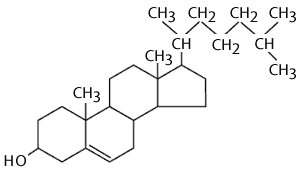
cholesterol chemical structureDrug treatments that raise the “good” high density lipoprotein (HDL) cholesterol do not improve health outcomes, according to a new analysis. But some researchers suspect raising HDL through lifestyle changes may still be effective in treating heart disease.

HDL is the form of cholesterol that actively removes dangerous lipids from the blood, and has long been thought to be protective against heart disease. This form of cholesterol is believed to work in opposition to low density lipoprotein (LDL) cholesterol, which is strongly correlated with heart disease and cardiovascular mortality. Thus the ratio of HDL to LDL cholesterols is often considered the most important indicator of heart disease risk.

Strong clinical evidence shows that LDL lowering drugs like statins can protect against heart disease and cardiovascular mortality. However there is still no effective way of improving cardiovascular outcomes by directly targeting HDL cholesterol.

Pharmacological treatments that raise HDL cholesterol levels include fibrates, niacin and a Pfizer drug called Torcetrapib. However, trials that tested these drugs for improved cardiovascular outcome have yielded mixed results. Rather than lowering mortality risk, evidence suggests that fibrates and Torcetrapib actually increase mortality in patients. Some trials have shown niacin to be effective at reducing cardiovascular events, but the data are inconsistent.

A new meta-analysis published in the British Medical Journal asked whether pharmacological treatments that are known to raise HDL can improve cardiovascular outcomes. After adjusting for several known confounders (including the effect of LDL cholesterol) pharmacological treatments that raise HDL were not effective at protecting against heart disease.

Does this mean that HDL is not important for heart disease? Not necessarily.

The original studies that implicated HDL in heart protection were observational. For example, it was shown in the Framington Heart Study that people with HDL levels greater than 60 mg/dL have a reduced risk of heart disease compared to individuals with lower HDL. Likewise, individuals with less than 40 mg/dL of blood HDL are considered at risk for coronary heart disease, even when LDL cholesterol is relatively low.

Additionally, lifestyle choices that contribute to raising HDL are associated with a lower risk of heart disease. Examples of these are physical activity, weight loss, not smoking, increased omega-3 fatty acid consumption, decreased trans fat consumption, alcohol consumption and dietary soluble fiber. Also, diets low in saturated fat but relatively high in unsaturated fats have been shown to raise HDL and decrease heart disease risk.

All these HDL raising activities can improve cardiovascular outcome. However, this does not mean that HDL itself prevents heart disease. Rather, it seems to be a good biomarker (observational correlate) of heart disease.

Why are pharmacological methods of raising HDL not helpful (and possibly even harmful) at treating heart disease?

One possible explanation for this discrepancy is the observation that HDL has different forms, some that are protective and others that are harmful. For instance, some interventions may raise HDL cholesterol by limiting its breakdown (harmful), while others raise it by increasing HDL production (more beneficial). Also, some methods that increase HDL do so in a way that creates new problems, such as increased blood pressure.

The complex interaction between pharmacological interventions, HDL metabolism and cardiovascular outcome may have made it difficult to detect any benefit of raising HDL cholesterol in this meta-analysis. Since pharmacological intervention for raising HDL does not consistently help (and sometimes harms) cardiovascular outcome, lifestyle changes remain the most promising target for raising HDL to protect against heart disease.

Anyone want to guess how high my HDL cholesterol is??

Tags: , , , , , , , , , , , , , ,

Top 10 Food Facts Everyone Should Know

by | Feb 23, 2009

winter vegetablesIn honor of the food issue this week at Synapse, I compiled a list of ten essential diet and nutrition facts you might not know:

  1. “Vitamins” are not the same as whole foods. Instant ramen and a multivitamin is not a healthy meal. There is no substitute for a diet of whole foods rich in vegetables, beans, grains and fish.
  2. A healthy diet can prevent or even reverse four out of the six leading causes of death in the US. Evidence indicates that diet is more important than genetics in the vast majority of heart disease, stroke, cancer and type 2 diabetes cases.
  3. The thinnest, healthiest people in the world eat “high carb” diets. But they definitely do not eat the processed, refined carbohydrates that flood Western culture. If you want to lose weight and live longer without disease, eat more vegetables and whole grains.
  4. You get plenty of calcium. Americans consume more calcium than most countries on earth, yet still sport some of the highest rates of osteoporosis. This debilitating disease is more likely caused by insufficient vitamin D, not enough exercise and/or too much protein. Also, excess calcium is linked to prostate cancer and milk to ovarian cancer. Calcium does not support weight loss either.
  5. “Fiber” is not the same as vegetables and grains. Fiber supplements do not offer the same benefits as fiber-filled foods, and do not help with weight loss or protect against disease.
  6. The best sources of protein are plants and fish. It is relatively easy to get complete protein (i.e., all the essential amino acids) from a diverse diet. Protein from red meat offers more risk than reward. (Yes, pork is red meat.)
  7. Fruits and vegetables protect your vision. Both cataracts and macular degeneration are strongly tied to diet.
  8. Fats from factories are dangerous. Processed oils and trans fats (not total dietary fat) are associated with heart disease, type 2 diabetes, cancer and obesity. Replacing them with natural oils could save your life.
  9. Fats from plants and fish are essential. Mono- and polyunsaturated fats protect against heart disease, type 2 diabetes and memory loss. In moderation they can also aid in weight loss, since they increase the satiety you feel after a meal.
  10. You can lose weight on any short-term diet, but you will probably gain back more than you ultimately lose. This is often true even if you stay on the diet. Focusing on long-term health is the best strategy for sustained weight loss, but it requires patience.

What are other common myths about diet and nutrition?

UPDATE: For more information on the health value of oils from fish, please read my answer in the comments section.
http://forms.aweber.com/form/30/split_210533730.htm

Tags: , , , , , , , , , , , , , , , , , , , , , , , , , , ,

Should Doctors Recommend Wine To Patients?

by | Jan 15, 2009

Today I have an article out in Synapse called “Wine May Increase Heart Healthy Fats in the Blood.” I am making an executive decision that it is too science-y for this blog, so instead I would like to open a discussion about how doctors should treat information like this.

For you uber-nerds (like me), here is the PubMed link to the original paper.

Let’s start with some excerpts from my article:

  • Moderate alcohol consumption has long been known to be protective against mortality from coronary heart disease, but the biological mechanism of this effect is unknown. A new analysis suggests that drinking wine may alter the composition of healthy fats in the blood, mimicking the beneficial effects of seafood consumption and conferring protection against heart disease.”
  • “The beauty of this finding is that the improvement in fatty acid profile from wine consumption seems to be clinically relevant. Based on the current consensus, small dietary changes in fatty acid consumption have a large clinical effect, so a 38% to 50% increase in EPA levels among moderate wine drinkers is noteworthy. Similar levels of improvement in lipid profiles from studies of fish consumption have shown considerable benefit for cardiovascular outcome.”
  • “Thus, the present finding may offer dietary intervention as a possible method of cardiovascular protection, particularly when combined with increased omega-3 consumption.”
  • “In the present study, the difference between participants in the low fatty acid group who did not drink and those in the high fatty acid group who drank the most was an 83% increase in blood EPA, a change associated with a 50% to 75% reduced risk of heart attack. Such a dramatic difference represents a useful alternative to fish consumption for those who may not have access to seafood for whatever reason.”
  • “Thus, increasing both dietary omega-3 fatty acids and wine consumption may be helpful to protect against cardiovascular events. Plant-derived omega-3 fatty acids are abundant in walnuts, soy, flax and canola oils, and one gram per day is the current recommendation for heart protection. “Moderate” alcohol intake is one glass per day for women and two for men.”

From a clinical perspective, the evidence that alcohol provides a tremendous protection against mortality from heart disease is undeniable. It is thought to work by both raising good HDL cholesterol and reducing blood clotting.

This effect is not limited to red wine, all spirits elicit substantial protection.

Despite these benefits, there are also a number of obvious reasons to avoid alcohol, particularly excessive consumption. Excessive alcohol consumption is associated with addiction, liver disease, stroke and can cause accidents and other behavioral problems.

Notably, benefits similar to those seen with alcohol can be conferred by increasing exercise amount or intensity.

If you want to experience the benefits of alcohol you need to use it in moderation, which is 1 drink per day for women and 2 for men, or possibly slightly more. More than one drink per day for women is associated with an increased risk of breast cancer, however this effect is attenuated by sufficient folate intake.

Doctors have been recommending increasing exercise for decades, but only a small percentage of the population makes an effort to get enough to make it as valuable against heart disease as alcohol. Also, there is a large population of individuals that have physical ailments that prevent them from performing vigorous cardiovascular exercise.

But to this day the American Heart Association–the same agency that recommended the low-fat, high-carb diet that many argue actually promotes heart disease–refuses to recommend moderate alcohol consumption. The basic tenet of their argument is that alcohol is not necessary because heart protection can be achieved in other ways, and the risks outweigh the benefits.

Is this right? I’m not so convinced.

Do you think doctors should discuss the potential benefits of alcohol with their patients? Should the AHA change their recommendation?

Tags: , , , , , , , , , , , , ,