Sign up

You deserve to feel great, look great & LOVE your body

Enter your email for your FREE starter kit to get healthy & lose weight without dieting:

  • This field is for validation purposes and should be left unchanged.

Quick Fix: Baby Bok Choy and Tofu

by | Dec 15, 2008

Bok choy with tofu is one of my favorite quick meals of the winter, and few seasoning combinations pack as powerful a punch as soy sauce and garlic.

Bok choy is also known as Chinese cabbage. This succulent cruciferous vegetable thrives during the winter months and is cheap and readily available at almost any market. I like the baby variety because it is easier to adjust the serving size and is simple to cook. If you can’t find baby bok choy you can subsitute regular bok choy and cut it up accordingly.

If you think you do not like tofu, my guess is that you just haven’t had it cooked like it is supposed to be and I urge you to give it another try. Most perceived taste aversions can be overcome with a little effort.

Tofu is not just for vegetarians. I have grown to like it so much that sometimes I get cravings for it. Strange, I know.

One of the wonders of tofu is that it absorbs flavors beautifully, particularly garlic. Moreover, adding garlic to soy sauce is one of the easiest ways to get everyone in the house out of their rooms sniffing the air and asking what heavenly dish you are creating. It smells amazing and tastes even better.

Baby Bok Choy and Tofu

Ingredients:

  • 2-4 stalks baby bok choy
  • tofu
  • 1 clove of garlic, minced
  • Dark soy sauce to taste

Carefully rinse baby bok choy and cut into quarters, longwise. Once it is cut check between the leaves to be sure no remaining dirt is hiding in the stem. If there is rinse again.

Cut tofu into bite-sized cubes. Heat olive oil in a pan and add bok choy cut sides down. Cook for several minutes, then make room for tofu on the bottom of the pan and add tofu. Cook 2 minutes then stir, making sure to cook both faces of the bok choy and tofu.

Once bok choy begins to wilt and become a little translucent, add garlic to the pan in a single layer. Leave for about 30 seconds, then splash soy sauce liberally into the pan. I like to use a good quality dark tamari soy sauce for this dish. Stir and continue to cook.

Allow soy sauce to reduce until it begins to form a glaze on the bok choy and tofu. Turn ingredients once or twice so all sides get coated. Add more soy sauce if necessary.

Remove from heat when bok choy reaches desired tenderness, about 8-10 minutes. Serve on a bed of brown rice.

Tags: , , , , ,

Are You Bean Careful?

by | Dec 3, 2008

Yesterday I mentioned that if you are going to use dried beans for cooking you should pick them over for pebbles before using them. Today I want to show you that I’m not kidding.

For my apartment’s last Soup Night I decided to make a recipe I found in the New York Times. The recipe was for Andean Bean Stew With Winter Squash and Quinoa, and it called for a pound of dried pinto beans. Since I was cooking for 20 people I doubled the recipe and bought a full 2 lbs of dried beans.

That’s a lot of beans, folks.

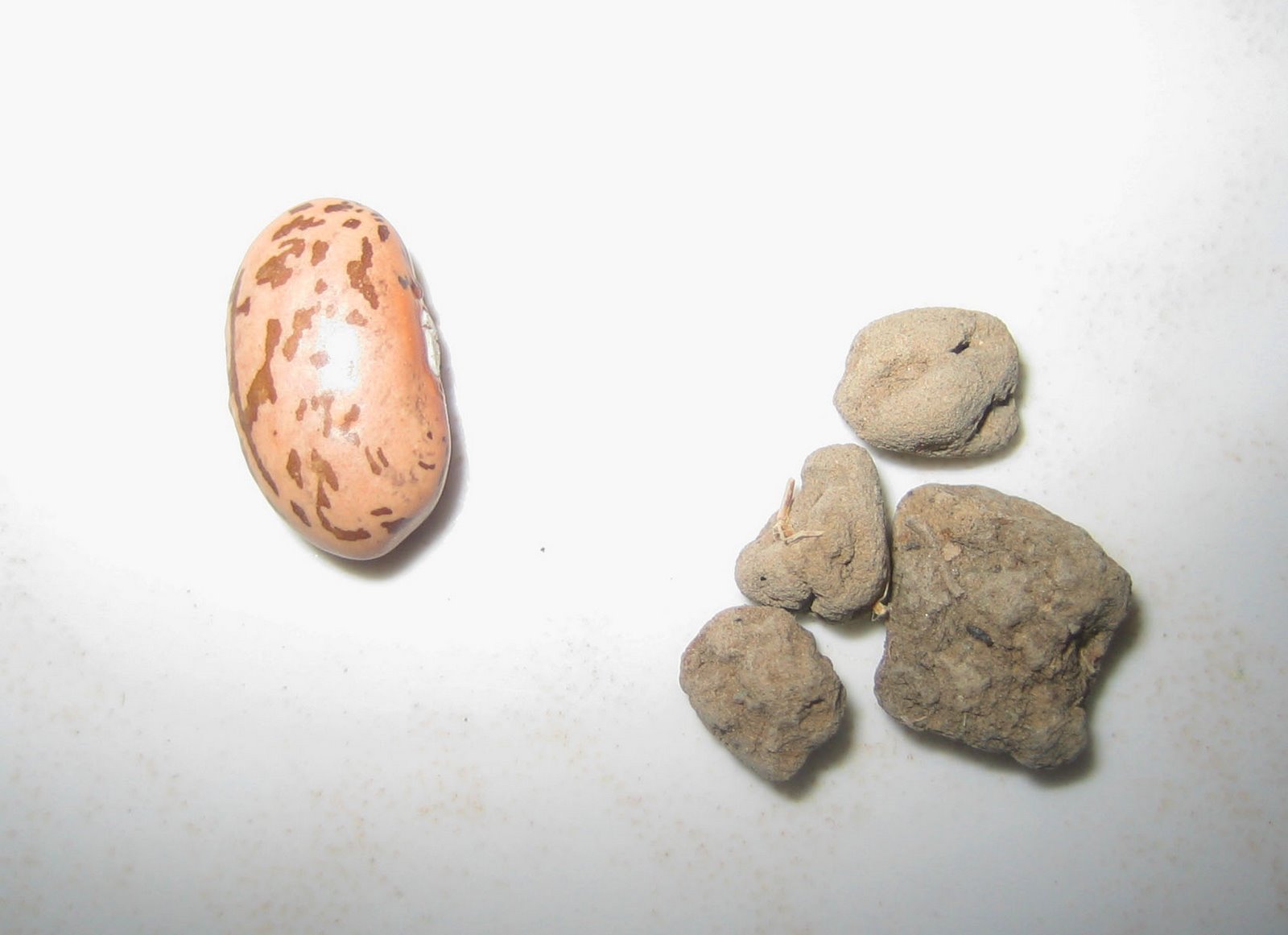
Because of the huge volume I had to be extra careful when looking for pebbles. To pick through beans I like to lay them out on a large cookie sheet, as shown. You can sort through a smaller amount of beans on a solid-colored plate or even in a clear bag on the counter.

As you can see from the top picture, 2 lbs of beans from the bulk bin at Whole Foods yielded 4 not-so-small pebbles.

Finding these little guys didn’t take more than a minute or two, and I guarantee you my guests appreciated the extra effort.

Let this be your warning. I do not wish to send you into shark-filled waters if you happened to be inclined to go buy dried beans this weekend. The last thing I need is a bunch of angry emails from your dentists!

Lentils are known to harbor pebbles as well, so searching for small rocks is a good habit to cultivate with all dried legumes.

The Soup
On the food front, the recipe turned out absolutely amazing! Since doubling the recipe required two whole winter squash anyway, I chose one large butternut squash and one kabocha squash. Both were delicious, but I was particularly fond of the kabocha (just look at that color!). It was denser, but the texture was creamier and the flavor more sweet and nutty than the butternut.

Peeling the kabocha was no easy task, however. I always just use a vegetable peeler for butternut, but on the kabocha the skin was so tough this was not an option. Instead I boiled it whole for 3 minutes on each side (it floats) and took the skin off with a pairing knife. Alright, I admit I had a boy do the peeling.

Does anyone have an easier way to peel a kabocha?

The Andean stew was very hearty, but our guests were not shy about finishing every last drop. I highly recommend it, particularly for a cold winter weekend.

This picture was taken after the quinoa was added but before it finished cooking.

Don’t forget to bean careful!

UPDATE: I have since learned that a kabocha does not need peeling. If it is cooked through the skin is soft and edible. My new favorite trick is to cut one in half, scoop out the seeds and roast it face down for 40 minutes. Mmmm.

Tags: , , , , , , , , , ,

Turkish Quinoa Pilaf With Chickpeas, Kale and Pomegranate

by | Nov 16, 2008

A couple weeks ago the New York Times health section featured several recipes using quinoa (keen-wah), a small, round ancient seed from Peru that can be used much like a cereal grain.

Because I had all the ingredients on hand, I decided to make this recipe for Quinoa Pilaf With Chickpeas, Pomegranate and Spices. I must admit, while it sounded good I did not expect to like it as much as I did.
I did not have an onion, but I had leeks so I used them instead. This made the recipe faster since leeks only require 1-2 minutes of cooking before additional ingredients are added.
Also, I do not have a spice grinder so I added slightly smaller amounts of already ground spices instead of toasting and grinding them myself. I just eye-balled the amounts using a teaspoon measure.
The recipe says that canned chickpeas (aka garbanzo beans) are fine, but I prefer to make my own. In my opinion, homemade beans are much better than canned. However, I have the luxury of having a pressure cooker in the house, which reduces cooking time for beans to about 25 minutes (including depressurization). Otherwise beans require at least an hour to cook. They also require several hours of soaking. Since beans are one of my most reliable and affordable protein sources, this process is worth it for me. If you would rather just crack open a can, that is your call.
Finally, I wanted a little more green in my meal so I steamed half a bunch of dinosaur kale. To prepare, I cut it up into bite sized pieces and steamed it for 8-10 minutes. I salted it then added it to the quinoa after I added the chickpeas. I strongly recommend adding kale if you plan to use this recipe as a main course. It was delicious!
Adaptation of New York Times Quinoa with Chickpeas, Pomegranate and Spices (with kale):
  • 1 teaspoon(ish) cumin
  • 3/4 teaspoon(ish) coriander
  • 2 tablespoons extra virgin olive oil
  • 1 medium leek, chopped
  • 1/2 teaspoon salt
  • 2 garlic cloves, minced
  • 4 cups cooked quinoa, (1 c. dry)
  • 1 cup cooked chick peas (canned are fine), rinsed
  • 1/4 cup pomegranate seeds

Rinse and chop kale and place in steam basket over shallow water. Cover and steam 8-10 minutes. This step is particularly important for dinosaur kale, which can be very tough. If you are using traditional kale, reduce cooking time accordingly. Cook until tender then sprinkle with sea salt.

Adjust a frying pan to medium heat and add 1 tablespoon of the olive oil. Add the leek and cook, stirring often, until tender, about 2 minutes. Add the garlic and salt, stir together for about half a minute, and stir in the cumin and coriander. Add the remaining olive oil and stir in the quinoa, chick peas, kale and 3 tablespoons of the pomegranate seeds. Stir over medium heat to heat through, several minutes. Taste and adjust salt.
Transfer to a platter or wide bowl and decorate with the remaining pomegranate seeds. You can also mold the pilaf into 1/2-cup ramekins or timbales and unmold onto the plate, then decorate with pomegranate seeds.
Leftover pilaf can be stored in the refrigerator for several days. Picture above was after 3 days, and it was still beautiful. Only the pomegranate seeds started losing color after awhile, but they were still tasty. Reheat 1-2 minutes in the microwave.
Tags: , , , , , , , , , , ,

Oven Roasted Vegetables, At Work!

by | Nov 11, 2008

As I mentioned, salad season is pretty much over and I have embarked on a new era of work lunches. This week I am experimenting with roasted vegetables because they can be cooked in large batches and store very well in the refrigerator. They also reheat nicely in the microwave.

It cracks me up to say this, but my vegetable choices this week were cauliflower, golden beets and Brussels sprouts. If you would have told 8-year old me that this is what I would be having for lunch every day this week I probably would have vomited in horror. By some strange evolution that can probably be blamed on San Francisco elitism, last Saturday this unthinkable combination of vegetables just sounded brilliant.
Luckily for me, it actually worked. To make sure the Brussels sprouts were not gross, I first halved and par boiled them as usual. In retrospect, I wish I would have also steamed the cauliflower for a few minutes too; it ended up taking longer to cook than everything else.

The vegetables were delicious immediately after cooking and even when reheated at work. My only complaint is that Brussels sprouts got a little too soft because of the extra time it took the cauliflower to cook. But the texture was not too bad and the flavor was fantastic.

Oven Roasted Vegetables

  • 1 whole cauliflower
  • Brussels sprouts (3/4 lb or so)
  • 3-4 medium golden beets
  • fresh herbs (I finished off my oregano)

Preheat oven to 400 (I sometimes do 375). Bring 1 qt water to boil with a few pinches of salt. Set up steamer for cauliflower. Halve the Brussels sprouts and boil exactly 5 minutes. Cut up cauliflower into florets and steam 3-5 minutes. Peel beets and chop into bite-sized 1/2″ cubes.

Spread equal portions of vegetables into two large baking pans. Alternatively you can add all vegetables into one large bowl to make seasoning easier, then distribute them into pans. Coat vegetables liberally with olive oil, sea salt and freshly ground pepper. Finely chop herbs and sprinkle into mixture, about 2-3 tbsp final volume.

Place vegetables in oven and roast for 40-50 minutes, or until they reach desired tenderness. Be sure to stir them every 10 minutes or so, and monitor them to avoid burning. When they are finished cooking, allow them to cool 10 minutes and then immediately transfer to tupper and place in the refrigerator.

To reheat, microwave on high for 2 minutes, stirring half way through.

This recipe works for almost any durable vegetable. Simply adjust cooking time to reach appropriate tenderness. Serve with brown or wild rice.

What are your favorite roasting vegetables? I will be trying different combinations each week and would love to hear your suggestions.

Tags: , , , , , , , , , , , , , , , ,

Hate Brussels Sprouts? So Did I

by | Oct 27, 2008

Kids and adults alike are often united in their hatred of Brussels sprouts. When I was young, Brussels sprouts were at the very top of my gross foods list, just barely inching out slimy spinach and chalky lima beans. Yuck!

It was not until I got to college that I learned spinach is not really slimy. Turns out it is actually a leaf and surprisingly delicious! I didn’t realize I had been eating frozen spinach my entire life. What a relief!

Over time I learned that many foods I never liked were not as bad as I thought. I grew to appreciate fennel, avocado, cilantro and even beets, but I never could develop a taste for Brussels sprouts.

A few years ago when I started getting serious about vegetables and health, I made a decision to conquer my last few food aversions. Eggplant was something I always struggled with, but I learned that a few kitchen tricks could turn it into a delicious meal. This past summer I was finally able to embrace cucumbers.

After all this, overcoming my aversion to Brussels sprouts is my proudest accomplishment.

I have found that for most foods I do not enjoy, ordering them at an expensive San Francisco restaurant is a great place to start. These people can seriously cook. And if anyone can make something taste good, it is the brilliant chefs of San Francisco.

Absinthe Brasserie was where I first tried Brussels sprouts that I didn’t just like, I loved. So warm, savory and delicious, I finally knew what Brussels sprouts could be.

It was this experience that convinced me it was possible to find a way to cook Brussels sprouts so that I like them. I spent all last winter trying different cooking techniques until I finally got it right.

The secrets?

  1. Bacon – Is there anything bacon doesn’t make better?
  2. Nuts – Walnuts or hazelnuts add a crunchy texture and earthy flavor.
  3. Butter – I don’t cook with butter often, but sometimes it is just worth it.
  4. Blanching – Cutting the sprouts in half and boiling them for 5 minutes removes their bitter flavor.
  5. Fresh herbs – I prefer oregano or marjoram on this dish.
  6. Red wine vinegar – Acid is a great counter to bitterness; it serves Brussels sprouts well.

These tricks and variations of them have convinced me and nearly all of my friends that Brussels sprouts are truly an autumn delicacy.

For those of you questioning the health value of bacon and butter, my answer is this: get over it.

Small amounts of saturated fat will not kill you or even make you fat. Besides, if it gets you to eat your Brussels sprouts it is worth it. I feel confident in saying this dish is infinitely more healthy than anything you can get at Subway.

Don’t be scared, give it a try!

Brussels Sprouts with Bacon

Do you hate Brussels sprouts? Why?

Tags: , , , , , , , , , ,

Quick Fix: Edamame and Peas

by | Aug 6, 2008

We are all in a hurry sometimes. I happened to be in a hurry tonight. I won’t bore you with the details, but I got held up at work today and had more things to do when I got home than I could really fathom (including writing this post). I needed dinner, I needed it to be healthy (I’m going out twice tomorrow and for dinner Friday–wish me luck) and, most important, I needed it to be quick.

What to do?
I can’t stress this enough: stock frozen vegetables.
One of my most reliable dinners is sauteed soy beans (edamame), petite peas, pistachios and basil. To prepare, heat some olive oil in a pan, toss in half a chopped shallot or any mild onion like leeks or Maui (you should always have onion, garlic and some kind of fresh herb in the house–this is what weekends are for) and some kind of nut (these also have a long shelf-life). I prefer the roasted, unsalted pistachio “nut meats” from Trader Joe’s, but you can choose whatever you like or have available (walnuts, cashews and almonds are all delicious).
Let the onion and nuts cook for a few minutes until just starting to brown, add sea or kosher salt, then dump in about 1/2 cup of frozen, shelled soy beans (per person). If you are unfamiliar with soy beans, they look like lima beans only a little smaller (and they taste better). Stir them to cover in oil. Once shimmering, add an appropriate volume of frozen petite peas (petite peas are far sweeter and more delicate than regular peas) and mix. While cooking, crush and chop a clove of garlic. Clear space in the center of the pan and add garlic in a single layer. When garlic becomes fragrant (about 30 seconds), stir contents of pan. Add a handful of whole or chopped basil leaves (or any other herb you have in the house), salt and pepper to taste, and mix another few seconds. Remove from heat when beans and peas are bright green and the herbs have wilted. Do not let brown.
Usually I eat this dish on a bed of (1/4 cup) brown rice. Today I threw in some chopped raddichio (with the basil) and served it on a bed of brown rice and purslane, because I had it. This added depth (and nutrients) to the dish, but is not necessary. Spinach is another nice accompaniment that can be added with the herbs. Please do not over-cook, this shouldn’t take very long.
Whole grains should be prepared in large batches and frozen in individual servings in plastic wrap. To thaw, run under warm (not hot) water for a minute or two until you can remove the plastic, then microwave (covered) for approximately 1 minute.
What is your favorite quick, healthy dinner?
Tags: , , , , , , , , , , , ,