Sign up

You deserve to feel great, look great & LOVE your body

Enter your email for your FREE starter kit to get healthy & lose weight without dieting:

  • This field is for validation purposes and should be left unchanged.

‘Diet’ Is A Four Letter Word

by | Mar 20, 2009

fresh vegetablesHave you ever wondered why we use the same word for both normal and extreme eating behaviors?

Diet vs. Dieting

We all know what it means to “go on a diet.” When you are dieting (the verb) you temporarily change how you eat–sometimes in ways that are very extreme–for the purpose of losing weight or achieving another immediate goal, like “detox.”

But we also use the word diet to describe normal, everyday eating patterns such as a “healthy diet” or “vegetarian diet.”

Failing to distinguish short-term and long-term eating behaviors is a serious problem though, because in reality most of us confuse these methods and try using short-term strategies to achieve goals that can only be met with a long-term approach. And describing and correcting this fallacy is almost impossible when the terminology we use is the same for both.

Dieting Is Temporary

To be clear, there are a few cases where dieting (short-term) can be beneficial. Sometimes an athletic event or other performance requires temporary weight loss or a special training program. But if your goal is long-term health or permanent weight loss, you won’t find much success with this approach.

Sure you can lose weight if you go on a diet. In fact, you can lose weight on almost any diet (I’m still skeptical of the cookie diet, but I would not be surprised if someone has lost weight on it). What you must remember is if your changes are temporary, so will be your success.

Worse, most temporary weight loss plans encourage rapid weight loss that ultimately destroys muscle and lowers your metabolism. This makes future attempts at weight loss even more difficult and may result in a net weight gain, once you have fallen off the bandwagon. In other words, you achieve the opposite of your goal.

The Maintenance Illusion

Deep down you probably know all this. Yet still we love to rationalize this behavior by telling ourselves that once we lose the weight, then we will switch to a healthier diet. We tend to associate “healthy diets” with weight maintenance, and we keep this idea in the back of our brains for the mythical time when we finally achieve our perfect, ideal bodies.

But this strategy is backwards.

Habit

To lose weight and keep it off, to prevent chronic diseases and stay fit and active into old age, we need to permanently change our daily eating habits. We must learn to make healthier choices and gradually shift our behaviors to those of a healthy, thin person.

“We are what we repeatedly do. Excellence, then, is not an act, but a habit.”

-Aristotle

Aristotle’s wisdom holds true for weight loss as well. To change our bodies we must change our habits. And habits are created in our minds. We need to stop thinking of dieting as a way to achieve permanent weight loss. Instead we need a term that emphasizes our set of personal habits we adopt for long-term good health.

Healthstyle

Healthstyle is the word I am choosing to describe the healthy habits that fit our own individual styles.

One of the wonderful things about health and weight loss is that there are countless ways to get there. And what works for someone may not work for you. Healthstyle is your customized path to health that suits your personal tastes and lifestyle.

Most importantly, Healthstyle emphasizes habits and long-term health, not painful diets and temporary weight loss.

Please join me in removing the word diet from the discussion of healthy eating. If you use Twitter, share your healthy habits with the tag #healthstyle.

What is your Healthstyle?
Tags: , , , , , , , , , ,

The Curious Case of HDL Cholesterol

by | Mar 9, 2009

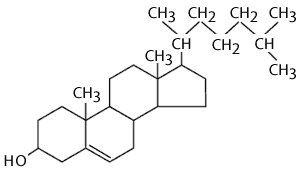
cholesterol chemical structureDrug treatments that raise the “good” high density lipoprotein (HDL) cholesterol do not improve health outcomes, according to a new analysis. But some researchers suspect raising HDL through lifestyle changes may still be effective in treating heart disease.

HDL is the form of cholesterol that actively removes dangerous lipids from the blood, and has long been thought to be protective against heart disease. This form of cholesterol is believed to work in opposition to low density lipoprotein (LDL) cholesterol, which is strongly correlated with heart disease and cardiovascular mortality. Thus the ratio of HDL to LDL cholesterols is often considered the most important indicator of heart disease risk.

Strong clinical evidence shows that LDL lowering drugs like statins can protect against heart disease and cardiovascular mortality. However there is still no effective way of improving cardiovascular outcomes by directly targeting HDL cholesterol.

Pharmacological treatments that raise HDL cholesterol levels include fibrates, niacin and a Pfizer drug called Torcetrapib. However, trials that tested these drugs for improved cardiovascular outcome have yielded mixed results. Rather than lowering mortality risk, evidence suggests that fibrates and Torcetrapib actually increase mortality in patients. Some trials have shown niacin to be effective at reducing cardiovascular events, but the data are inconsistent.

A new meta-analysis published in the British Medical Journal asked whether pharmacological treatments that are known to raise HDL can improve cardiovascular outcomes. After adjusting for several known confounders (including the effect of LDL cholesterol) pharmacological treatments that raise HDL were not effective at protecting against heart disease.

Does this mean that HDL is not important for heart disease? Not necessarily.

The original studies that implicated HDL in heart protection were observational. For example, it was shown in the Framington Heart Study that people with HDL levels greater than 60 mg/dL have a reduced risk of heart disease compared to individuals with lower HDL. Likewise, individuals with less than 40 mg/dL of blood HDL are considered at risk for coronary heart disease, even when LDL cholesterol is relatively low.

Additionally, lifestyle choices that contribute to raising HDL are associated with a lower risk of heart disease. Examples of these are physical activity, weight loss, not smoking, increased omega-3 fatty acid consumption, decreased trans fat consumption, alcohol consumption and dietary soluble fiber. Also, diets low in saturated fat but relatively high in unsaturated fats have been shown to raise HDL and decrease heart disease risk.

All these HDL raising activities can improve cardiovascular outcome. However, this does not mean that HDL itself prevents heart disease. Rather, it seems to be a good biomarker (observational correlate) of heart disease.

Why are pharmacological methods of raising HDL not helpful (and possibly even harmful) at treating heart disease?

One possible explanation for this discrepancy is the observation that HDL has different forms, some that are protective and others that are harmful. For instance, some interventions may raise HDL cholesterol by limiting its breakdown (harmful), while others raise it by increasing HDL production (more beneficial). Also, some methods that increase HDL do so in a way that creates new problems, such as increased blood pressure.

The complex interaction between pharmacological interventions, HDL metabolism and cardiovascular outcome may have made it difficult to detect any benefit of raising HDL cholesterol in this meta-analysis. Since pharmacological intervention for raising HDL does not consistently help (and sometimes harms) cardiovascular outcome, lifestyle changes remain the most promising target for raising HDL to protect against heart disease.

Anyone want to guess how high my HDL cholesterol is??

Tags: , , , , , , , , , , , , , ,

Low-Carb, Low-Fat and High-Protein Diets Equally Useless

by | Feb 27, 2009

A widely publicized study out this week in the New England Journal of Medicine shows that there is virtually no difference between low-carb, low-fat, high-carb or high-protein diets when it comes to weight loss. I don’t often like to toot my own horn, but if you read my post on Monday about the Top 10 Food Facts Everyone Should Know (see point #10), then this was not news to you.

For several years now data has been accumulating that the relative composition of different macronutrients (fat, carbs, protein) in your diet has little to no effect on long-term weight loss. What makes this study stand out from the pack is how well it was designed.

The Study

This was the largest, longest run study of this kind ever conducted, including nearly 650 over weight individuals of diverse racial, socioeconomic, geographic and education backgrounds. The participants were highly motivated to lose weight and were given detailed instructions on why their assigned diet was considered an effective weight loss strategy (this was to remove bias caused by the media about popular diets).

For you carbophobes out there, the importance of dietary carbohydrates was addressed directly. The amount of carbohydrates in the different diets varied from 35% (very low) to 65% (very high). All participants, including those on the high-carb diet, were instructed to choose foods that had lower glycemic index. Carbohydrate composition had no significant effect on long-term weight loss.

All subjects received substantial behavioral therapy to help them meet their goals, and detailed measurements of health and weight loss were collected from each individual throughout the study. The participants were told to keep food journals and use online support provided, as well as weekly dietary counseling.

Importantly, all the diets resulted in similar calorie deficiencies to promote weight loss. Not surprisingly, after 6 months all the participants had lost a substantial amount of weight, but after 1 year had gained about half of it back. During the final year the subjects had more difficulty sticking to their assigned diets, particularly those assigned the most extreme regimens (very low-fat or high-protein).

Conclusions

Regardless of diet, all participants experienced similar, modest (5% body weight reduction), but clinically relevant weight loss that is mainly attributed to a reduction in calories.

Interestingly, the measure that best correlated with weight loss success was attendance at the dietary counseling sessions.

Since the study is over can we now assume that many of these participants have gone back to their old eating habits? I would bet yes.

What can we take away from this study?

You can lose weight on any diet, but for most people it is very difficult and not sustained. This is because cutting calories is very tough for most people.

This study also suggests that losing weight with standard diets is very difficult and, in most cases, only moderately helpful. It seems future research should focus on how to increase adherence to a lower calorie diet. Gaming the system by manipulating macronutrient composition doesn’t seem to be working.

Why you should focus on whole foods, not nutrients

Another thing we can take from this study is that if weight loss is your goal, calories are what count. (Some of my friends responded to this finding brilliantly: “DUH.”) The nice thing about a diet based primarily on vegetables is that lowering caloric intake is relatively easy. As long as some effort is made to achieve a balanced diet (enough plant protein and fats), satisfaction after a meal can be attained with far fewer calories.

Vegetables are very bulky, highly nutritious and have very few calories. It’s not easy to gain weight when you eat kale, beans and brown rice for dinner.

Like I explained a few weeks ago, since I have focused on health (rather than weight) and a vegetable-based (rather than macronutrient-based) diet, I have lost weight effortlessly. I am also less stressed about food in general, and have completely lost my old cravings for sugar and fat.

Best of all, I do not feel like I have given up anything whatsoever. In fact I would argue I have gained the freedom to eat what I want, whenever I want it. And the food I eat is much more satisfying and delicious. I guarantee you this tagine tasted better than any Atkins bar, rice cake or BigMac.

My life now is much more delicious.

Are you ready to give up diets and focus on health?

Tags: , , , , , , , , , , , , , ,

Cancer and Diet

by | Feb 16, 2009

The Centers for Disease Control and Prevention (CDC) just released their 2005 report on cancer statistics. The web-based report contains official federal government statistics for cancer incidence in 96% of the United States population and mortality statistics for 100%. This is the seventh time the CDC’s National Program of Cancer Registries and the National Cancer Institute’s Surveillance, Epidemiology and End Results Program have combined registries to offer official federal statistics on cancer incidence and mortality for a single year.

Rates of cancer incidence are reported as the number of newly reported cases per 100,000 people. In 2005, the top four most common cancer diagnoses have not changed since 2000 and represent diseases strongly associated with lifestyle factors.

The number one diagnosed cancer in the US is prostate cancer (142.4), followed by breast (117.7), lung (67.7) and colorectal (48.3) cancers. The deadliest cancer is of the lung (52.8), while the mortality rates from prostate (24.7) and breast (24.0) cancer are nearly identical. Colorectal cancer is the fourth deadliest cancer (17.4).

Cancer is the second leading cause of death in the US, with heart disease being the first. Though most of us associate heart disease with lifestyle factors, cancer is usually regarded more fatalistically as being random or due primarily to genetics. While genetics does play a factor in some cancer cases, vast amounts of epidemiological data indicate that lifestyle factors, particularly diet and smoking, can largely account for high cancer rates in affluent countries such as the US.

There is abundant evidence that diets high in animal products and refined carbohydrates, and low in vegetables contribute to cancers of the prostate, breast and colon. A similar dietary pattern is responsible for cardiovascular disease, diabetes and neurodegenerative diseases. What is striking about cancer, however, is that there are no known drugs that stymie its development. Statins do not protect against cancer, nor do multivitamins.

The best diet to prevent all these diseases of affluence is a plant-based, whole foods diet.

Does fear of cancer impact your eating habits?

Tags: , , , , , , , , , , ,

The Latest on Carbs, Fat and Weight Loss

by | Jan 29, 2009

A study published last week in the journal Obesity may make you question whether you really want to rely on the Atkins or South Beach diets to reach your New Year’s Resolution goals.

It is widely believed that low-carbohydrate, high-fat diets support weight loss in most individuals and indeed, there is a good amount of research to back this claim. Despite this, few studies have examined the after effects of a low-carb diet, particularly once normal eating is resumed.

In a new study, scientists had rats consume either a regular high-carb diet or a low-carb, high-fat diet for sixteen days. After this period the diets were switched and rats were maintained on the opposite diet for another sixteen days. Both diets included the same number of calories, so the only difference between the groups was the relative percentage of macronutrients.

As you might expect, while the rats were fed a low-carb, high-fat diet they lost weight compared to rats on a regular diet. Interestingly, however, despite this loss of body weight there was little to no loss of fat, and therefore the rats that lost weight had a relatively higher body fat percentage than the rats fed a normal diet.

The low-carb rats also had lower energy expenditure (exercise and calorie burning) than rats on a normal diet, and the decrease persisted even when the animals were returned to a normal diet. This is consistent with reports of exhaustion in humans undergoing very low-carb diet regimens.

Furthermore, animals that were temporarily put on a low-carb diet regained more weight than animals that were never fed a low-carb diet. This suggests that short term exposure to a low-carb diet increases risk of weight gain compared to no dieting.

Uh oh.

According to this research it is possible that a low-carb diet may actually cause you to gain weight in the long run. How very unfortunate.

But while these results are compelling, do not go stocking up on pasta just yet. First remember that these are rats, not humans. The way scientists change the composition of a rat’s diet is by giving them different pellets of bizarre lab food with various proportions of “nutrients.” This is not the way humans eat (assuming you don’t spend too much time in GNC), nor can it ever reflect a healthy human diet. It would be great if they could put the rats on a diet of seasonal fruits and vegetables, whole grains, legumes and fatty fish, but that is not the way animal research works. This is something to keep in mind whenever you hear about nutrition studies.

Also, nutrition research using rodents rarely distinguishes between the qualities of different macronutrients. For example, did the “high-fat” diet contain mostly saturated fat, trans fat, monounsaturated fats, polyunsaturated fats or all of the above? A similar question can be asked about the quality of carbohydrates, but it is difficult to imagine high-quality carbohydrates coming in pellet form. A huge body of scientific literature suggests that the quality of different macronutrients is far more important to health and weight than relative proportions of refined macronutrients.

Protein is another question mark in this study, which the authors acknowledge. The low-carb diet they used was not high in protein like a typical Atkins style diet. However, their findings were similar to studies that did use higher protein content and their animals were fed sufficient protein to maintain normal body growth, so the effect of protein on their findings is likely to be small. Their goal was to examine the effect of extreme carbohydrate restriction, and this was accomplished.

Regardless of this study’s imperfections, the results shine an interesting light on our current understanding of how relative proportions of dietary macronutrients effect body composition, long-term body weight and metabolism.

Have you experienced weight gain after going off a low-carb diet?

UPDATE: This article is also available at Synapse.

Tags: , , , , , , , , , , , , , , ,

Some More Susceptible To Images Of Delicious Food

by | Jan 7, 2009

A study published today in the Journal of Neuroscience indicates that certain individuals are more susceptible to images of appetizing food, making them hungrier and raising their risk of overeating.

The study

Scientists at the University of Cambridge in the United Kingdom used functional magnetic resonance imaging (fMRI) to examine the neural network connections of people either more or less sensitive to images of delicious looking desserts. The most sensitive individuals had stronger brain connections between regions known to be involved in impulse and reward circuitry.

Also, the degree of a person’s sensitivity predicted how much he or she wants to eat after seeing appetizing food, and can affect overeating even in the absence of hunger.

This study is the first to examine the neural networks involved in food suggestibility in humans, but it supports similar findings reported in rodents.

The implication is that some people may be much more strongly influenced by food advertising than others, a phenomenon that can trigger overeating and ultimately weight gain.

What does this mean for you?

My guess is that you know whether or not you are someone who is deeply affected by images of food. This might suggest it is in your best interest to actively avoid watching commercials and flipping through glossy food magazines (and blogs) with images of decadent foods.

If you really enjoy food publications (I hope you do!) you could try switching to something like Cook’s Illustrated, where the images are technical rather than appetizing. The best alternative, however, may be to only tune in to those media sources that make healthy food look delicious, like this blog!

I definitely won’t be offering up pictures of chocolate cake and cookies in the near future.

What do you think, are you deeply affected by images of food and does it make it difficult for you to control what you eat?

Tags: , , , , ,

Controlling Blood Sugar May Help Preserve Your Memory

by | Jan 5, 2009

High blood sugar levels are known to accelerate aging and decrease longevity in many different species. Now it seems blood sugar may also be tied to how well you keep your memory as you age.

Aren’t you glad you have cut back on refined carbohydrates and sugars since you started reading this blog? I thought so!

A new study published in the December issue of the Annals of Neurology examined the effect of high blood sugar on the region of the brain responsible for memory formation, the hippocampus. Researchers examined patients with either diabetes or stroke (in other, non-hippocampus, parts of the brain) and determined that both groups had defects in the hippocampus compared to normal patients, but the problems were in different hippocampal subregions.

Patients with diabetes had defects in a part of the hippocampus called the dentate gyrus, which has been shown to be especially sensitive to aging and memory loss. Stroke patients had problems with a region of the hippocampus called CA1.

Diabetes is a disease that involves misregulation of blood sugar, so the scientists examined if blood sugar levels alone correlated with problems in the dentate. This is important because some patients that have not been diagnosed with diabetes may still have high blood sugar levels. The scientists did indeed find a correlation between high blood sugar and hippocampal deficits in the dentate gyrus. Interestingly, blood sugar levels were also linked to memory performance.

Correlational findings are very interesting, but it is easy to imagine situations that would give this result without there being a causative role for blood sugar in memory function. One reason this study is particularly compelling is because they repeated the analysis on rhesus monkeys and found the same relationship between blood sugar and hippocampal defects.
Even better, they were able to show a causative relationship between blood sugar regulation and dentate gyrus deficits in mice. In this experiment the scientists induced type 2 diabetes in the animals, then measured hippocampal function. Mice that could not regulate blood sugar had hippocampal deficits in the dentate compared to control mice.
Taken together, this study provides strong evidence that high blood sugar levels are related to hippocampal and memory dysfunction.

What does this mean for you?

This is actually great news for the rest of us because blood sugar is something we can self-regulate fairly easily.
The study’s principal investigator and professor of neurology at Columbia University, Dr. Scott Small says,”This would suggest that anything to improve regulation of blood glucose would potentially be a way to ameliorate age-related memory decline.”

That means both diet and exercise may work together to preserve memory function into old-age by controlling blood sugar.

“We had previously shown that physical exercise strengthens a part of the brain involved with aging but, at the time, we didn’t know why physical exercise would have this selective benefit,” Small affirmed. “Now we have a proposed mechanism. We think it’s because subjects who exercised had better glucose handling.”

Though the role of diet in hippocampal function has not been directly tested in humans, evidence is mounting that it is important for maintaining cognitive function and protecting against Alzheimer’s disease.

——————–

The best way to control your own blood sugar levels is to eat and live in a manner that improves insulin sensitivity. An added bonus is that you will probably lose weight, live longer and reduce your risk of a bunch of other diseases too, including cancer.

Sensitivity to insulin is affected by two dietary factors: 1) How much glucose is in your blood at any one time and 2), the composition of fat in your diet. It is also improved by exercise.

Keep these things in mind when you eat if you want to control and improve your insulin sensitivity:

  • Limit sugars and refined carbohydrates, including all white bread, white rice and pasta.
  • Choose whole, intact grain carbohydrates such as brown rice and oats.
  • Make vegetables the bulk of your diet.
  • Consider substituting legumes for carbs.
  • Reduce saturated fats from red meat and dairy
  • Eat more healthy fats from fish, olive oil and nuts.
  • Avoid processed foods with hidden sugars, yogurts and salad dressings come to mind.

Basically just eat real food and you’re on your way. And don’t forget to keep reading this blog to learn how to make healthy eating both easy and delicious.

Let me know which of the above suggestions you find the most difficult to follow and I may be able to give you a few pointers….

Tags: , , , , , , , , , , ,

New Year’s Solution?

by | Jan 2, 2009

To be honest, I don’t really believe in the New Year’s Resolution. By nature I am a person of action and do not need an excuse to make my own life better.

If there is something important in my daily routine that I feel needs improvement I don’t wait for January to make the change. Instead I live by the Nike slogan and Just Do It.

Thus the first question I pose to readers today is:

Does a new digit at the end of the calendar really make it easier to go to the gym or eat a salad?

————————

Next there is the issue of sticking to your Resolution. From what I understand, most people abandon their New Year’s ambitions after a couple months (or even weeks) of half-hearted effort.

To me this proves that resolving to do something is relatively meaningless. In my opinion, if there is any point to this year-end exercise at all, things must actually get done.

Maybe we should change the name to New Year’s Solution?

————————

But perhaps I am too harsh.

Rather than hoping for change, for many people the New Year may simply be a time for reflection and evaluation:

What has and hasn’t worked in 2008? Should I approach anything differently in 2009?

This kind of personal reflection I applaud, but what still troubles me is that so many people make the same Resolutions year after year without ever achieving their goals.

This year I will lose weight! This year I will get in shape! This year I will use my gym membership!

If you don’t believe me take a stroll through your local Borders or Barnes & Noble bookstore and check out the number of diet books on display at the front. Notice their bright pinks and yellows designed to get your attention.

Never is the promotion of weight loss books as shameless as it is in January.

We are all supposed to try our failed resolutions again this year, keeping the hope alive that one of those neon programs will become our salvation and finally we will achieve our lifelong dream of being thin and happy.

*yawn*

I am not interested in this phony brand of Resolution.

Over and over diets have been shown not to work and even promote weight gain, so they are not your answer.

Health problems and body fat do not appear in a single splurge, but rather accumulate bit at a time as a result of poor lifestyle decisions. So it is not logical to believe that a quick, short-term weight loss will correct them.

This year (as in every year) I recommend moderation as the best solution for health. And I propose that the most effective way to build good habits and reduce bad ones is to make small, gradual changes to your daily routine.

Moderate changes that you can easily manage are the ones that can be maintained and built upon.

————————

If you do intend to make changes to your habits this year, I wish you the best of luck. I designed this blog to provide tips, advice and information to help cultivate a practical, healthy lifestyle.

My approach begins with establishing the mentality that diets don’t work and health is achieved through habits, not single actions. With a handful of tools and simple tricks, even the busiest among us can streamline health to be an automatic part of our lives.

To get the most out of Thought for Food, subscribe via email or RSS feed.

————————

On a final note, the road to health begins with inspiration.

This year I would love to learn your personal New Year’s Resolution success stories. Were you ever able to quit smoking? Maintain your workout routine? Lose weight? Adopt a new hobby?

I invite you to share with us your New Year’s Solution and tell us what obstacles you overcame and why you think you were able to achieve your goal.

Your success could inspire the rest of us to find New Year’s Solutions of our own!

————————

Discuss Thought for Food:

  1. Does the New Year help you make improvements in your life?
  2. Do you think there is a difference between a Resolution and a Solution?
  3. Is moderation a reasonable alternative to dieting?
  4. Do you have a New Year’s Solution to share?
Tags: , , , , , , , , , ,

Soda Tax Is A Great Start

by | Dec 19, 2008

New York Governor David Paterson recently proposed a state tax on soft drinks, defending his argument to readers on the CNN website.

After reading his proposal, I agree with him completely. I just wish Starbucks would be forced to carry some of the responsibility as well.

Taxing products known to be deleterious to public health is a proven way to reduce consumption, increase state revenue and raise awareness of the dangers of high-risk commodities (such as cigarettes). There is no reason to suspect New York wouldn’t see similar benefits in the case of soda. Junk foods and soft drinks are currently placing a tremendous burden on our society in both health care costs and lost working hours.

Moreover, high-fructose corn syrup (the primary sweetener in soda) is derived from corn crops that are heavily subsidized by the federal government. These subsidies artificially reduce prices of soda below the true cost of production. It is therefore hard to argue that the proposed tax is putting an unfair financial burden on consumers who wish to drink full-calorie beverages: currently it is the taxpayers who are footing the bill for the bad habits of others.

So although I still favor completely revising the farm bill, taxing consumption is a reasonable alternative.

Another thing to consider is that these products are essentially to candy what crack is to cocaine (quickly ingested poison), so they do indeed pose a unique hazard to American health and are thus an ideal target for the first junk food tax. The current proposal adds a 15% tax to non-diet sodas as well as fruit drinks that are less than 70% real juice, adding only a few cents to each individual purchase–$0.15 to the dollar.

Paterson estimates the tax will raise $404 million dollars in revenue for the state of New York, that would go toward public health programs, including obesity prevention.

Whatever happens, expect a ferocious battle from industry giants (and FOXNews). They will argue for consumer freedom and against the benefits of switching to diet soda (I agree with this one, no kind of soda is healthy), but will conveniently overlook the data linking junk food and soda to obesity, heart disease, diabetes, stroke and cancer, as well as the costs to the American public.

The good news for the rest of us is that if New York does manage to pass this tax it is reasonable to expect California and many other states to follow suit (see trans fat and tobacco), resulting in a tremendous sea change in our nation’s policy toward junk food in general.

This is exactly the change we need.

Currently all Americans are paying for the poor nutritional culture our nation has embraced. The top 3 causes of death in the U.S. (arguably 5 of the top 7) are diet-related. It only makes sense to tackle obesity both as a nation and as individuals to protect our citizens and our economy.


Why Not Starbucks?

Unfortunately, right now it does not seem this tax will extend to the sugary cesspool which is Starbucks.

Did you know that a medium cafe mocha from Starbucks has more calories, sugar, cholesterol and saturated fat than a Krisy Kreme original glazed doughnut? Seriously, don’t go near that stuff.

It seems to me that Starbucks and other mega-chains (Jamba Juice?) selling sugar-blended drinks are just as liable as soda companies for promoting obesity with liquid candy, thus warranting the same burden of taxation.

I am not recommending traditional coffee drinks (espresso, cappuccino, etc.) be taxed–they do not contain sugar–but it is heartbreaking to see Frappuccinos being passed off as a morning pick-me-up when in fact they are no different from a milk shake with caffeine.

In short, I think this tax is a fabulous idea that finally begins to address the true costs of junk food and obesity, and I hope the trend continues.

How do you feel about sugar, taxes and Starbucks?

Tags: , , , , , , , , , , , ,

Sunchokes: Did You Know?

by | Nov 25, 2008

Sunchokes, or Jerusalem artichokes, are one of the few tubers native to North America. Despite the name, these plants are not from Jerusalem nor are they artichokes. They are in fact a type of sunflower, though their flavor is similar to that of an artichoke. For this reason Italian cultivators called them girasole, the Italian translation of sunflower. When pronounced in Italian, girasole sounds similar to Jerusalem. Hence the name Jerusalem artichoke.

Their unique taste and texture make sunchokes a fantastic addition to many foods, however they are particularly useful as a potato substitute for diabetics. Unlike most tubers, sunchokes store their carbohydrates in the form of inulin instead of starch. Our digestive enzymes do not breakdown inulin, so it has a minimal impact on blood sugar and does not raise triglycerides.

The down side of inulin is that since it is not easily digested it can produce gas and bloating in sensitive people. Cooking sunchokes well can minimize this effect. It is also a good idea to eat a small amount the first time you try them and build up your tolerance.

Sunchokes are a good source of potassium, thiamin and phosphorus, and a fantastic source of iron and soluble fiber.

They make a delicious soup, but can also be roasted, sauteed or eaten raw.

What is your favorite way to eat and prepare sunchokes?

Tags: , , , , , , , , , , , , ,