Sign up

You deserve to feel great, look great & LOVE your body

Enter your email for your FREE starter kit to get healthy & lose weight without dieting:

  • This field is for validation purposes and should be left unchanged.

Farmers Market Update: Summertime

by | Aug 23, 2009
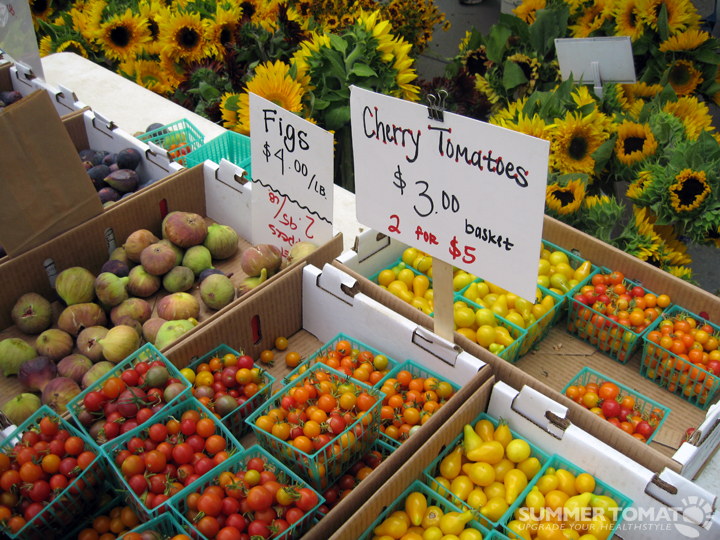
Cherry Tomatoes

Cherry Tomatoes

Despite the San Francisco weather–more gloomy than sunny–it is actually summer. That means pluots, peaches, nectarines, figs, melons, eggplant, corn, peppers and, of course, tomatoes.

Could anything be more perfect?

Sugar Snap Peas

Sugar Snap Peas

Pluots

Pluots

The tomatoes are especially amazing right now (don’t miss the early girls!), and I’m finally ready to make my favorite summer tomato recipe, bruschetta! Tune in tomorrow for my easy recipe.

Something else I’ve noticed lately at the market are the over-sized carrots, which look perfect for turning into soup or other mashed concoction. Likewise, big heads of cauliflower are starting to reappear, which are fantastic for vegetable stews. Last week I turned mine into Moroccan soup.

Cauliflower and Cucumber

Cauliflower and Cucumber

Carrots

Carrots

I’ve also noticed apples, grapes, mature onions, mature garlic, and other foods that are decidedly post-summer fare. Take this as a sign that you should eat as many plums, peaches and melons while you can. Fall is right around the corner.

Organic Shallots

Organic Shallots

Organic Garlic

Organic Garlic

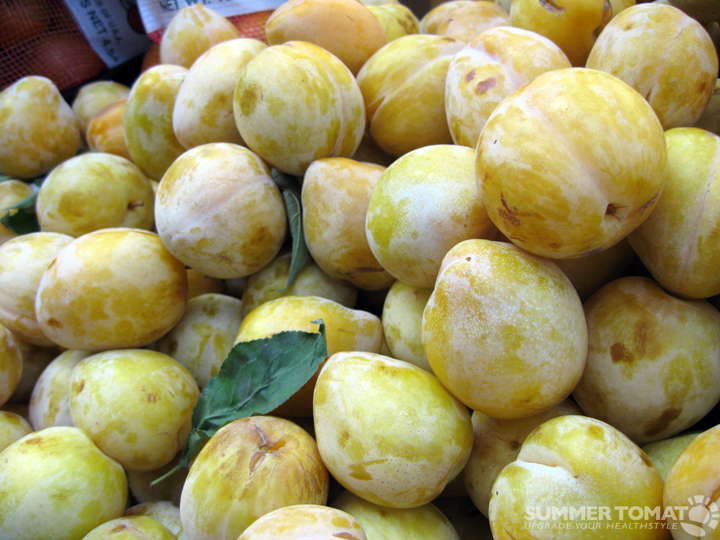
Speaking of plums, the very short 3-4 week season of French plums (fresh “prunes”) is peaking and they are spectacular. I bought a full bag to have with breakfast this week.

Early McIntosh Apples

Early McIntosh Apples

French Prunes

French Prunes

What did you find at the farmers market this weekend?

Today’s Purchases:

Tags: , , , , , , , , , , , , ,

Farmers Market Update: San Francisco’s Finest

by | Aug 16, 2009
Perfect Squash Blossoms

Perfect Squash Blossoms

Today I am going to let my pictures do most of the speaking for me. In case you haven’t noticed, we are in the height of summer and in my opinion this is about as good as the farmers market gets.

At times like these I wonder why anyone bothers to eat unhealthy.

The squash blossoms from Star Route Farms were absolutely breathtaking–little treasures just waiting to be taken home, stuffed with herbs and goat cheese and deep fried. If I had more time this weekend these would have definitely been on my shopping list.

Mango Plums

Mango Plums

Summer Fire Nectarines

Summer Fire Nectarines

Peaches and nectarines are peaking, firm but still sweet and juicy.

Flavor king pluots are the rage at many of the fruit stands, but do not over look the flavor queens, flavor hearts, flavor grenades or any other part of the “flavor monarchy,” as I call it.

The mango plums at Catalán Family Farms were particularly impressive Saturday morning.

Mission Figs

Mission Figs

Flame and Thompson Grapes

Flame and Thompson Grapes

I’m tempted by strawberries, blackberries, raspberries, grapes and currants at every turn.

This time of year I am always sure that each week I try a new variety of melon. Today I bought an ambrosia melon from The Peach Farm–Ed was nice enough to pick me out the best one. A single sniff of the rind and I new I was bringing home something special.

Broccoli and Cauliflower

Broccoli and Cauliflower

Cranberry Beans

Cranberry Beans

Not surprisingly, the second best smelling things in my market bag were my peppers from Happy Quail Farms. This time I am trying the hot banana pepper!

Yes, you read that right. Jealous?

Oh, and have you tried the summer tomatoes? I can’t decide which I like more: the early girls, the cherry tomatoes or the big fat heirlooms? I usually end up buying all of them.

Tomatoes and Figs

Tomatoes and Figs

Hot Banana Peppers

Hot Banana Peppers

I hope you are all having as much fun right now as I am!

Today’s purchases:

What did you get at the market?

Tags: , , , , , , , , , , ,

North African Couscous With Beans and Cauliflower

by | Mar 16, 2009

Moroccan cauliflower stewA little over a month ago I published a recipe for a warming Moroccan vegetable tagine. As would be expected from a tagine, the recipe (modified from Mark Bittman’s blog Bitten) contained dried fruit and was spiced almost like a dessert (with cloves and cinnamon) but with a rich, savory undertone.

Last week I tried a thinner, spicier variety of North African soup. Again from the New York Times, this stew was loaded with beans and vegetables and is served on a bed of spiced couscous. More brothy than the tagine, this recipe packs a unique heat that gives it a completely different feel from its richer, sweeter counterpart.

Since North African cuisine is unfamiliar to most Americans, it is my pleasure to showcase its delicious versatility.

I changed the recipe slightly from the original version, mainly in the interest of time. Personally I have no patience for beans to cook, so I used a pressure cooker then added the beans to the soup later rather than cooking them in the broth itself (which takes hours). To replace the bean soaking water that the recipe calls for, I substitute 1 qt chicken (or vegetable or beef) stock and some of the bean cooking liquid. In my opinion, this change does not have a big impact on the flavor. It may even improve it.

Also, after following the original recipe I thought the soup tasted a little dull. I rescued it with the juice of a Meyer lemon, which really highlighted the depth of spice and flavor in the dish.

I made my harissa from a powdered mix I bought a few weeks ago from Tierra Vegetables at the Ferry Plaza Farmers Market. They told me it is the one used at Chez Panisse (when on the menu). I know, I’m spoiled rotten.

I will provide a recipe here for making your own. If you have a blender or food processor, the recipe is not terribly difficult to follow. You will make more than you need for one soup, but you can freeze the rest indefinitely. It is a wonderful spicy sauce that is great on meats or in stews. I realize that making harissa is a little intimidating, but it is amazingly delicious and is definitely worth the extra work. It really isn’t that hard either.

Alternatively, Whole Foods and other specialty stores often carry pre-made harissa.

North African Couscous With Beans and Cauliflower

Harissa:

  • 6 dried ancho chilies
  • 2 garlic cloves, peeled, crushed and minced
  • 1 tsp salt
  • 2 tbsp cumin seeds
  • 1 tbsp caraway seeds
  • 1 tbsp coriander seeds
  • 1 ripe tomato, peeled, seeded and coarsely chopped
  • 0.25 – 0.5 cup olive oil

Gently rinse chilies or wipe off dust with a damp cloth. Remove and discard the seeds and tops of the chilies and soak them in hot water for half an hour. Discard the soaking water, cut up the chilies and place them in a blender with all other ingredients except the olive oil. Blend into a smooth paste. Remove the paste from the blender and slowly mix olive oil into the mixture. DO NOT overwork the olive oil, it can become very bitter if you are not careful with it.

Stew Ingredients:

  • 1 large cauliflower, cut into bite-sized florets
  • 2 cups dried white beans, soaked in 2 qts water overnight
  • 1 qt chicken or vegetable stock
  • 1 cup frozen petite peas, thawed
  • 1 medium onion, diced
  • 4 large garlic cloves, minced
  • 2 tbsp tomato paste
  • 1 tsp coriander seeds (or 0.5 tsp ground)
  • 1 tsp caraway seeds (or 0.5 tsp ground)
  • 2 tsp cumin seeds (or 1 tsp ground)
  • 2 tbsp harissa (recipe above)
  • Meyer lemon juice to taste (half lemon)
  • 1 cup chopped fresh Italian parsley
  • 2 cups couscous (whole grain is slightly better)
  • 0.5 cube chicken bouillon
  • 1 tbsp olive oil
  • Kosher or sea salt to taste

Put beans in a pressure cooker and follow the instructions for cooking the kind of beans you are using. In the meantime if you are grinding your own spices, toast them lightly for a few minutes on a skillet then grind them into a fine powder in a spice grinder. Set aside. (You can use these same spices to add to the harissa, just double the amount then split it in half.)


In a large soup pot, heat olive oil and add onion. Cook, stirring regularly until the onions are tender and translucent, about 5 minutes. Add garlic, ground spices and 0.5 tsp salt. Cook and stir spices until fragrant, about 1 minute, then add the stock, 1 extra qt of water, the harissa and tomato paste (I recommend the kind in a tube, which keeps indefinitely once you open it). Bring the mixture to a boil then reduce to a simmer. Remove 0.5 cup of broth and set aside.

Add cauliflower florets to the simmering broth and cook, partially covered for 20 minutes. Your beans should be done by the time the cauliflower is tender. While the stew is simmering, follow the instructions on your box of couscous and substitute the broth you reserved for 0.5 cup of water, also adding the half bouillon cube.

There is something of an art to getting couscous to cook right. I usually end up adding slightly more dry couscous than the box calls for using the given amount of water. After boiling the liquid and removing it from heat, if when you add the dry couscous to the pot you cannot see individual grains under the liquid surface, then I would add slightly more couscous until you can just see it, like pebbles in shallow water. I know this is vague, but I always have to eyeball it to get it right. It’s not the end of the world if you’re off a little, since this is going into a soup anyway.

Also be careful while your couscous is steaming. Steam it (covered) exactly 5 minutes then fluff it immediately with a fork (be gentle with the grains). Over-cooking or over-watering your couscous will make it clumpy and gummy–not ideal.

When your simmering cauliflower is tender, add all the beans and 1 qt of their cooking liquid. Return the pot to a simmer and add lemon juice, salt and adjust harissa as desired. You may need to add the juice of the entire lemon. It should be bright and spicy. Stir in peas, parsley and simmer 5 more minutes.

To serve, scoop a large spoonful of couscous into the bottom of a bowl and a generous portion of the stew on top. Garnish with additional parsley and harissa.

I am very interested in your experiences with making or buying harissa. Any suggestions or recommendations are appreciated.

Tags: , , , , , , , , , , ,

Farmers Market Update: Valentine’s Day

by | Feb 14, 2009

purple-cauliflower

Today is Valentine’s Day and the Ferry Plaza Farmers Market was an absolute zoo. The Food from the Heart event was offering $2-$6 tapas plates and wine tastings. The only thing I tried was the Scharffen Berger hot chocolate and fresh whipped cream. Mmmmm.

Despite the chaos, the vegetables were beautiful. I can’t get enough of the leafy greens right now. They smell so good when cooked in olive oil and are very inexpensive and healthy. Perfect food really.

I was excited to see cardoons today at Knoll Farms. Cardoons are a member of the artichoke and thistle family. I have only had them once at a fancy restaurant (I don’t remember which one), and my memory of the experience is vague. When buying them I was told they need to be boiled in an acidic liquid (water with salt and lemon) to preserve their color. They need to be cooked for approximately 45 minutes to make them tender and remove all the bitterness.

From the fruit world I purchased a Malaysian white guava. They looked interesting, so I figured I should try one. It was very fragrant and more mild in flavor than a traditional guava. Really delicious.

I tried a new egg vendor this week too. I didn’t realize I could get eggs from Happy Quail Farms, apparently it is a well kept secret. They were so colorful–like Easter eggs–I just had to buy them.

Today’s Purchases:

  • Cardoons (Knoll Farms)
  • Baby savoy cabbages (Dirty Girl Produce)
  • Shallots (Dirty Girl Produce)
  • Baby leeks (Dirty Girl Produce)
  • Baby artichokes (Iacopi Farms)
  • Mixed eggs (Happy Quail Farms)
  • Bok choy with sprouts (Chue’s Farm)
  • Chinese broccoli (Chue’s Farm)
  • Collard greens (Capay Organics)
  • Clementines (Hamada Farms)
  • Cocktail grapefruit (Hamada Farms)
  • Meyer lemon (Hamada Farms)
  • Navel oranges (Hamada Farms)
  • Sweet limes (Bernard Ranches)
  • White Malaysian guava (Brokaw Nursery)

Happy Valentine’s Day!! What did you eat today?

Tags: , , , , , , , , , ,

Healthy Lunch: Moroccan Vegetable Tagine

by | Feb 6, 2009

If you really want to be healthy, you need to find a way to prepare most of your meals yourself. Eating out is fun and if you are careful you can avoid too much damage, but when you find yourself at restaurants multiple times per week chances are you will have a lot of trouble maintaining a healthy weight.

For many people, lunch on weekdays (at work) is one of the hardest meals to make healthy because bringing your own food requires planning and preparation, which is difficult on a busy schedule. There can also be powerful social pressures at the office to do what everyone else is doing, and that usually means hitting up the local restaurants.

I have combated this lunch issue with delicious food and a little planning. During the summer I make seasonal, fresh salads that are the envy of everyone at the office (aka lab). But since tomatoes and my other favorite salad treats are not available in the winter, I have been on a quest to find the perfect cold weather lunch.

Soup has been the winning ticket so far. The chicken chard soup I posted a few weeks ago was satisfying, delectable and lasted me the entire week. This past week I made red lentil Indian style soup following a recipe from Splendid Soups, my favorite soup cookbook (sorry, no post on this one).

This week I modified Mark Bittman’s Moroccan tagine recipe, skipping the chicken and adding some beautiful romanesco broccoli instead. A tagine is a thick and hearty Moroccan stew made with spices, chickpeas and dried fruit.

Normally a tagine is served with spiced couscous, but I didn’t have any so I used red quinoa I found at my corner market, Valencia Farmers Market (24th Street and Valencia). At first I was really mad at myself for forgetting I was out of couscous, but the red Inca quinoa was amazing and in the future I may actually prefer it for a lunch recipe like this.

Quinoa is substantially healthier than couscous, which is not whole grain.

Bittman’s recipe was quick and easy because I made the chickpeas the day before in my pressure cooker. It was simple and perfect for my lunch this week.

But if you want a tagine that is the real deal (harissa and all), I recommend the recipe from Splendid Soups.

Moroccan Vegetable Tagine

Ingredients:

  • 1 medium head romanesco (or cauliflower)
  • 1 medium onion, halved and thinly sliced
  • 1 28-oz can of diced tomatoes, drained
  • 3 cups chickpeas, cooked (or 2 cans, drained and rinsed)
  • 2 garlic cloves, minced
  • Pinch nutmeg
  • 0.5 tsp ground cinnamon
  • 1 tsp ground ginger
  • 1 tsp ground cumin
  • 1 tsp ground coriander
  • 0.5 tsp ground black pepper
  • Pinch cayenne pepper
  • 0.5 cup diced dried apricots (or golden raisins or dates)
  • 0.25 cup sliced almonds, toasted

Bittman adds half a vanilla bean and cautions not to use extract. I didn’t have a vanilla bean so I just left it out. Also it appears I forgot to add the parsley. Feel free to use it as a garnish, I’m sure it would be a nice addition.

Saute onions in 2 tbsp of olive oil until tender and soft, about 5 minutes. Add garlic and spices and stir until fragrant, 30 seconds. Add romanesco pieces, salt and continue to saute for another 5 minutes.

Add tomatoes, chickpeas and dried fruit and bring to a boil. Turn heat down and simmer. Taste and adjust salt. You can add 0.5 cup of water if necessary, but keep in mind a tagine should not be very fluid. Cover and allow to simmer 30 minutes, or until romanesco is tender. Stir occasionally.

While the tagine is simmering, rinse and cook quinoa according to the instructions on the box (takes 15 minutes). You can also toast your almonds during this time if you haven’t already. I tried to toast mine on a cookie sheet in the oven, but forgot about them (as usual) and they burnt. I toasted a new batch in a non-stick pan on the stove. Toast nuts on medium-low heat without oil, turning occasionally for about 5 minutes. If you prefer to use the oven, set a timer!

To serve scoop half a cup of cooked quinoa into a bowl and cover generously with tagine. Tagine is very hearty, so an additional side dish is probably not necessary. Sprinkle with toasted almonds and serve immediately.

This recipe has fed me 1 delicious meal per day for 4 days.

Tags: , , , , , , , , , , , , , , , ,

Oven Roasted Vegetables, At Work!

by | Nov 11, 2008

As I mentioned, salad season is pretty much over and I have embarked on a new era of work lunches. This week I am experimenting with roasted vegetables because they can be cooked in large batches and store very well in the refrigerator. They also reheat nicely in the microwave.

It cracks me up to say this, but my vegetable choices this week were cauliflower, golden beets and Brussels sprouts. If you would have told 8-year old me that this is what I would be having for lunch every day this week I probably would have vomited in horror. By some strange evolution that can probably be blamed on San Francisco elitism, last Saturday this unthinkable combination of vegetables just sounded brilliant.
Luckily for me, it actually worked. To make sure the Brussels sprouts were not gross, I first halved and par boiled them as usual. In retrospect, I wish I would have also steamed the cauliflower for a few minutes too; it ended up taking longer to cook than everything else.

The vegetables were delicious immediately after cooking and even when reheated at work. My only complaint is that Brussels sprouts got a little too soft because of the extra time it took the cauliflower to cook. But the texture was not too bad and the flavor was fantastic.

Oven Roasted Vegetables

  • 1 whole cauliflower
  • Brussels sprouts (3/4 lb or so)
  • 3-4 medium golden beets
  • fresh herbs (I finished off my oregano)

Preheat oven to 400 (I sometimes do 375). Bring 1 qt water to boil with a few pinches of salt. Set up steamer for cauliflower. Halve the Brussels sprouts and boil exactly 5 minutes. Cut up cauliflower into florets and steam 3-5 minutes. Peel beets and chop into bite-sized 1/2″ cubes.

Spread equal portions of vegetables into two large baking pans. Alternatively you can add all vegetables into one large bowl to make seasoning easier, then distribute them into pans. Coat vegetables liberally with olive oil, sea salt and freshly ground pepper. Finely chop herbs and sprinkle into mixture, about 2-3 tbsp final volume.

Place vegetables in oven and roast for 40-50 minutes, or until they reach desired tenderness. Be sure to stir them every 10 minutes or so, and monitor them to avoid burning. When they are finished cooking, allow them to cool 10 minutes and then immediately transfer to tupper and place in the refrigerator.

To reheat, microwave on high for 2 minutes, stirring half way through.

This recipe works for almost any durable vegetable. Simply adjust cooking time to reach appropriate tenderness. Serve with brown or wild rice.

What are your favorite roasting vegetables? I will be trying different combinations each week and would love to hear your suggestions.

Tags: , , , , , , , , , , , , , , , ,