Archive for November, 2011

Nov 30 2011

How To Cook Perfect Rice Without A Rice Cooker (and store it for months)

Rice Balls

I have been getting a lot of questions about rice lately, and I am not surprised. Though some people swear by rice cookers I have found them to be inconsistent and generally unreliable, especially when it comes to brown rice.

My solution? Stove top.

A few years ago I read about this method of cooking rice that supposedly worked “every time” for every kind of rice. I had trouble believing it because I’ve found that different styles of rice have hugely different requirements in both the amount of water and time needed. However, I have had great success with the method and am extremely happy with it (sorry, I do not remember where I found it).

The reason this trick works so consistently is that it does not rely on a specific amount of time or water. Rather you need to test the grains occasionally for tenderness and decide for yourself when it is done. I have found for brown rice the entire process takes about 30 minutes, which is 10 minutes shorter than it took in my rice cooker.

Because rice does take so long to prepare, I like to make large batches and freeze individual servings so that I do not have to wait half an hour for dinner every single night.

For short grain brown rice, I use about 2 cups of dry grain and a large 2 quart sauce pan. Put the rice in the pot and add cold water until it is almost full. Use your hand to swirl the rice around and loosen any dirt and dust. When the rice settles back to the bottom, dump the water off the top and repeat. Continue to rinse rice until the water is almost perfectly clear, about 4-5 times.

After the last rinse add cold water to your rice until you have at least 3 times the volume of water to rice. Do not worry too much about the amount, and err on the side of excess. This is especially important with brown rice which absorbs much more water than white rice. Place the rice and water on the stove and turn the heat on high.

When the rice begins to boil, reduce heat to medium and continue to simmer, uncovered. This is a good time to start the rest of your dinner.

Check on the rice grains occasionally by grabbing a few out with a fork and testing them for tenderness (squish between your fingernails or taste it). Rice becomes opaque when it cooks, so there is no point in checking it while it is still somewhat translucent. Once the rice does start to turn opaque, check tenderness every 2-5 minutes. If too much water evaporates and the rice starts to look soupy, you need to add more water. You should add enough water at the beginning to avoid this.

Boil rice until it is almost tender enough to eat. In other words, imagine you are an impatient person who wants the rice to be finished as quickly as possible so you decide the rice is done and serve it, but later regret that decision because the rice is ever so slightly al dente. It is at this point you want to stop the boiling and begin the steaming.

Next drain off the remaining water. A mesh strainer or splatter guard works nicely for this (hold it over the pot and simply dump the water into the sink), but you can also carefully pour the water off and use a fork to keep loose kernels from falling out (but seriously be careful!).

Place the pot with rice back on the burner and reduce the heat to as low as it will go. Cover the rice and set a kitchen timer for 5 minutes. After 5 minutes turn off the burner and set the timer for another 5 minutes. Do not lift the lid during this process unless you are concerned that you messed up the boiling time and want to check on the doneness. After the rice has sat for 5 minutes, remove the lid, fluff with a fork and serve. Put the lid back on if you are going to let the rice cool in the pot.

If for some reason you think you overcooked the rice when you were boiling it, you can skip the steaming step and just let the drained rice sit covered with the burner off for 5 minutes. If you undershoot, you can always extend the length of the steaming process, but it will take much longer.

I usually wait until the rice has cooled down substantially before wrapping it in plastic. It is the last thing I do in my after-dinner clean up. To store rice, break off squares of plastic wrap and scoop individual rice servings (1/4-1/2 cup) into the middle. Fold over the plastic, twist the ends and tie them in a half knot so that the rice is in a ball, as shown. Put rice balls in a freezer bag and into the freezer.

To thaw, remove a rice ball from the freezer and allow to sit on counter for a few minutes until you can untie the knot without leaving little pieces of plastic stuck in the folds of rice. If you forgot to do this (I always forget!) you can run the knotted plastic under warm (not hot, heat releases toxins in the plastic that can get into your food) until you can untie it. Place unwrapped frozen rice ball in a small bowl and microwave on high for 1-2 minutes. I like to use our microwave cover for this, but you have to figure out for yourself what works best in your own microwave.

Having individual rice servings is very, very handy. Brown rice is a fabulous option to make light vegetable dishes, soups and salads more substantial.

I just dug this recipe out of the archives because it is so darn useful. Use it wisely.

Originally published October 12, 2008.

36 responses so far

Nov 28 2011

How To Become A Great Cook Without Being A Chef

Photo by Sara Bjork

Photo by Sara Bjork

I have a confession to make: I don’t love to cook.

Sure I like the idea of cooking, and I’m glad that I can cook, but my idea of a perfect day rarely involves spending time in the kitchen.

What I really love is food.

I love to shop for ingredients and envision the delicious dishes I can make with them. I love the taste of fresh, ripe, seasonal produce from the farmers market. I love the way good food makes me feel. I love the knowledge that what I eat helps me thrive.

But cutting stuff up and putting it in a pan isn’t particularly fun for me, though I certainly enjoy the fruits of my labor.

For me cooking is a means to an end. I cook for my own health and happiness, and for whomever I happen to be sharing my time with at the moment.

This is enough for me.

I came to realize my lack of cooking passion over the past several weeks as I’ve watched my fellow food bloggers fret on Twitter over holiday meal plans, perfect cookies and fallen souffles. It became very obvious to me that I had no desire to entertain dozens of people or perfect the quintessential holiday recipe.

I’m proud of the food I make and it’s always important to me to do a good job (I love eating, remember), I just don’t have that extra drive that distinguishes a good cook from a true chef.

For some, cooking is a true passion–they adore being in the kitchen and everything it involves. These are my heroes. They are the brilliant chefs responsible for the exquisite food all over this wonderful city. They construct the fabulous recipes I count on when searching cookbooks and blogs for something new. They photograph the beautiful dishes that inspire me to try a little harder. Without passionate chefs we would not have spectacular food, and I am profoundly thankful for them.

But not all of us can be amazing cooks. Fortunately it isn’t necessary to be a Michelin-rated chef to make delicious food.

Simple, fresh cooking doesn’t require any special talent. It all starts with excellent ingredients and just a few basic techniques that anyone can master with practice.

The moral of the story is that you do not have to be a kitchen ninja (or even particularly enjoy cooking) to be able to feed yourself well on a daily basis. The most important step is getting in the habit of buying good-quality, seasonal food and learning the basic skills you need to whip up something you enjoy.

If you get in the habit of cooking for yourself, it will one day stop feeling like a big ordeal and become second nature. You’ll get faster at chopping, you won’t need to constantly check recipes and measure ingredients, and you’ll intuitively know when and in which order to add things to the pot. But all this takes practice, and if you don’t make a regular habit of cooking for yourself it will continue to be difficult.

The good news is once you are comfortable in the kitchen, more interesting and complex recipes start to sound appealing. This is not necessarily because you learned to love cooking, but simply because it is easier for you.

Once you’ve broken the proficiency barrier you open a world of different dishes and cuisines, unchaining yourself from repetitive stir fries and culinary boredom.

For the non-chef, this is the level of proficiency you want to achieve. You do not have to love cooking to enjoy making dinner. You just have to get beyond the point where you struggle with it. It really isn’t as hard as it sounds.

Why do you cook?

Originally published January 4, 2010.

35 responses so far

Nov 23 2011

Healthy Dessert Recipe: Sautéed Bosc Pears With Toasted Walnuts & Balsamic Reduction

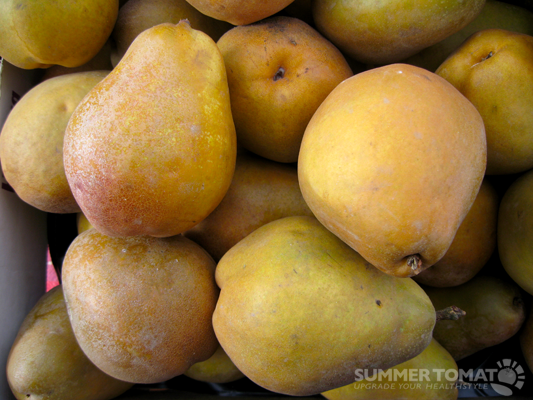
Bosc Pear With Toasted Walnuts and Balsamic Reduction

Bosc Pear With Toasted Walnuts and Balsamic Reduction

“Darya, my biggest problem is…I have a sweet tooth. Are there any recipes or desserts you suggest?”

One of the hardest things about transitioning to a healthy diet is cutting down on sugar. I definitely remember this from my own experience.

Luckily this difficulty is temporary.

The longer you go without sugar, the less you want it. In fact it has taken me awhile to reply to this question because I have not been motivated to make dessert in such a long time.

I eat sweets on occasion, but almost always these situations are circumstantial: a friend’s birthday, a favorite restaurant or other special occasion. And I am only excited about the experience if the dessert in question is profoundly exquisite. (In San Francisco, this is way more common than it is in most places.)

What this all means is I rarely find reason to seek out and/or make dessert.

But after creating this recipe, I may reconsider. This dessert is incredibly delicious, and not unhealthy at all. I thinly sliced some bosc pears and briefly sautéed them in butter with cinnamon. I reduced some balsamic vinegar for a semi-sweet topping, but otherwise did not add any sugar. I garnished the pears with toasted walnuts and shredded basil.

This recipe also works with other firm fruits such as apples, peaches and strawberries, all of which are available this time of year at the farmers market.

Sauteed Bosc Pears With Toasted Walnuts, Balsamic Reduction and Basil

Ingredients:

Bosc Pear

Bosc Pear

  • One bosc pear, cored and sliced into 1/4 inch slices
  • 2 tsp butter
  • Cinnamon to taste
  • 1/4 c. walnuts
  • 1/4 c. balsamic vinegar
  • 5 basil leaves, chiffonade into strips

Preheat oven to 350 degrees, core and cut bosc pear into 1/4 inch slices.

Place balsamic vinegar in small sauce pan and gently heat until simmering. Allow to reduce, swirling occasionally until reduced to 25-30% volume, about 10 minutes. Reduction should be dark and thickened. Test by seeing if it coats the back of a spoon (and tastes good). Do not over reduce.

While vinegar is reducing, place walnuts on a cookie sheet and put in oven. Toast walnuts, turning once or twice for 6-7 minutes. Do yourself a favor and set a timer. It is very easy to burn toasting nuts. I set the time for 3 minutes, toss the nuts, then reset for another 3 minutes. Remove nuts from oven, allow to cool, then coarsely chop.

Heat butter in a pan on medium heat until it begins to foam. Add pear slices and sprinkle with cinnamon. Cook gently until slightly tender, about 3 minutes on each side. Turn with a thin spatula.

Place pears on a plate and drizzle with balsamic reduction. Sprinkle on chopped walnuts and basil. I didn’t try it, but I bet this would be awesome with gorgonzola and port (or other dessert wine).

Try it and let me know what you think!

Do you ever cook fruits for dessert?

Originally published October 12, 2009.

21 responses so far

Nov 21 2011

9 Tips To Eat Healthy When Holiday Traveling

Filed under Tips

Photo by jondoeforty1

Tis the season for holiday travel. For the next couple months airports will be the fateful purgatory for all of us venturing home (or away) for the holidays.

Since calorie rich meals are almost certainly in your future, why waste perfectly good indulgences on crappy airport food?

Unhealthy food should be a treat, never a symptom of laziness. Just a little planning can get you through most flights without the need to eat things you’d prefer not to.

Even in suboptimal situations (75% of my flights back to SF are delayed due to weather), there are a few tricks you can use to minimize the damage.

9 Tips To Eat Healthy When Holiday Travelling

1. Eat before you leave

This might seem obvious, but most of the people I know delay packing, commuting and arrival for so long they show up at the airport hungry, a slave to their uber-processed industrial food surroundings. You can avoid this by simply planning time for a meal beforehand.

Make it happen, it’s worth it.

2. Pack snacks

A decent meal before you leave and a few nuts and maybe a piece of fruit inflight should get you through any flight six hours or under. You can find most of these things in the airport in a pinch.

For longer flights I recommend jerky, charcuterie, cheese, boiled eggs and other protein dense food to stave off hunger until you can get a real meal at your destination. If you’d rather not pack animal foods, bean and/or grain salads with diced veggies, herbs and vinaigrette are delicious and keep well for hours without refrigeration.

Remember, in most cases eating airplane food is a choice, not a necessity.

3. Stay hydrated

Airplane air just might be the driest air in the world. Also, hunger is amplified when you’re even slightly dehydrated. Combat both these afflictions by drinking plenty of water both before and inflight.

Added bonus: this will require you to get up and, errr, stretch your legs at least a couple of times during the ride, which can reduce your sedentary time during the flight.

4. Nourish yourself

Immune systems function best when they are well nourished. To protect yourself from the zillions of germs you’re exposed to in airports be sure to eat a healthy supply of fruits and vegetables for the days surrounding your flights (each way). And don’t forget your multivitamin.

5. Go vegetarian for a few hours

Maybe your flight was delayed so long you were forced to eat in the airport. Maybe your flight is 10+ hours. For whatever reason, sometimes you’re forced to sell your soul and, dare I say it, eat airport/plane food. In these cases I recommend ordering strategically to avoid the worst: refined carbohydrates and industrial meat. Consider going vegetarian for a few hours to avoid CAFO meat. Look for options with extra vegetables—even if they taste bad, it’s not like the worse-for-you food is going to taste much better.

6. Look for Mexican restaurants

If you’re in an airport, Mexican restaurants are a great bet because you can almost always get beans, rice and some kind of vegetable. This is filling and moderately nutritious (plus salsa and guacamole are hard to mess up).

7. Look for high-end salads

Salads with some kind of protein are your second best option, but the taste will be more hit or miss with these compared to Mexican food. If salad is your only choice, I recommend finding the nicest spot in the entire airport to minimize your risk of getting nasty veggies and potential food poisoning.

8. Watch your portions

No matter what you choose, if you’re eating airport food it isn’t going to taste good and is unlikely to be particularly healthy. Eat as little as you need to stop the hunger. Don’t expect to be full or satisfied, in fact it may be better if you aren’t (see tip #9).

9. Don’t fear hunger

Honestly, being hungry for a few hours isn’t going to kill you. In fact, there’s a decent amount of compelling evidence that caloric restriction (even periodically) can be healthy. I’m not advocating starvation, if you’re landing at 3am in a small town with nothing open, you’ve gotta do what you’ve gotta do. But if a few hours of hunger is all you’re facing, consider embracing it as a zen practice in self-restraint and eat a decent meal when you get to your destination instead of the mystery food they offer inflight.

How do you avoid crappy airplane food?

8 responses so far

Nov 20 2011

Farmers Market Update: Reno

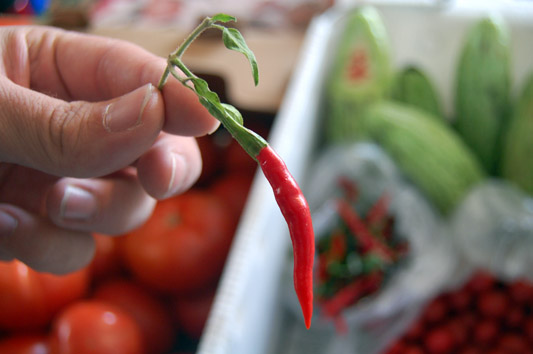
Tiny Chili

Ashley Hennefer is the Green Editor at the Reno News & Review, the editor of Wildflower Magazine, and a graduate student the University of Nevada, Reno. Born and raised in the Bay area, she’s lived in Northern Nevada for ten years and has fallen in love with its agricultural community and environment. Check out her personal blog, follow her on Twitter or add her on Facebook.

Farmers Market Update: Reno, Nevada

By Ashley Hennefer

We Nevadans love our agriculture, and here in Northern Nevada we have a unique and vibrant farmers market culture. While our unpredictable weather has its perks—including our beautiful snow-capped Sierra Nevada mountain range and an abundance of frost-thriving apple trees—it also means that our farmers market season is short. By mid-September, nearly all of our markets are closed. We have a great local food co-op in Reno and several of our farms are open throughout the year, but that’s about it. Luckily, Reno’s Garden Shop Nursery has begun hosting an indoor farmers market on Sundays from 10 a.m.-3 p.m., and last weekend I checked it out.

The Garden Shop Nursery is especially beautiful during the fall and winter months, especially with all of their beautiful flowers.

orchids

Orchids

I’m thankful that it is close to my house so I can still go to the market even when it snows. I was not expecting the market to be very big—and I was right. The little market was tucked away in the back corner of the nursery. However, the vendors and Garden Shop Nursery staff did a great job setting up all of the tables. There was a pleasantly decent selection of items to choose from, and all of the vendors from Nevada and California were enthusiastic and passionate about their products.

I had an idea of what I wanted to purchase: I’ve been on soup-making kick, so I wanted to find a few items to use for that. I also wanted to find some great seasonal items, and maybe a few things I’d never tried before.

Despite the size of the market, everything was nicely displayed in baskets and bins. I got there around half way through the day and there was a crowd, although it may have just seemed that way because of the size of the room. It was warm and cozy and everything smelled great.

I first stopped to check out the onions, garlic, potatoes and squash. We picked three onions and a small spaghetti squash.

Onions and Potatoes

We use garlic often in my household but I passed on it this time since I am growing some of my own. I also passed on potatoes, although they looked tempting displayed in their baskets.
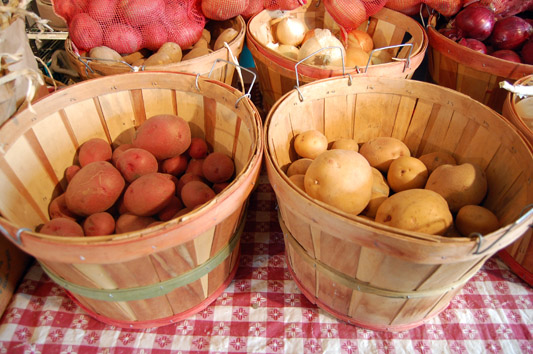
Potatoes

Because we got there after the initial rush, we missed some of the items, like farm fresh eggs (bummer!), which sold almost instantly according to the vendor. The vendor also had other items on display such as locally made pet food, salsa and tortilla chips.

Pet Food

I passed on all of these, although I tried a sample of the salsa and it was delicious. It’s on my list for this week’s shopping!

Another vendor, who had ventured to Reno from Northern California, had an eclectic assortment. His produce was very colorful and unique.

Colorful Produce

I could eat tomatoes 24/7 but they are hard to come by at this time of year since our climate is harsh on these types of plants. I did score a few, which ended up being flavorful but not nearly as much as the ones I had a few weeks earlier (one of the many sacrifices we Nevadans make).
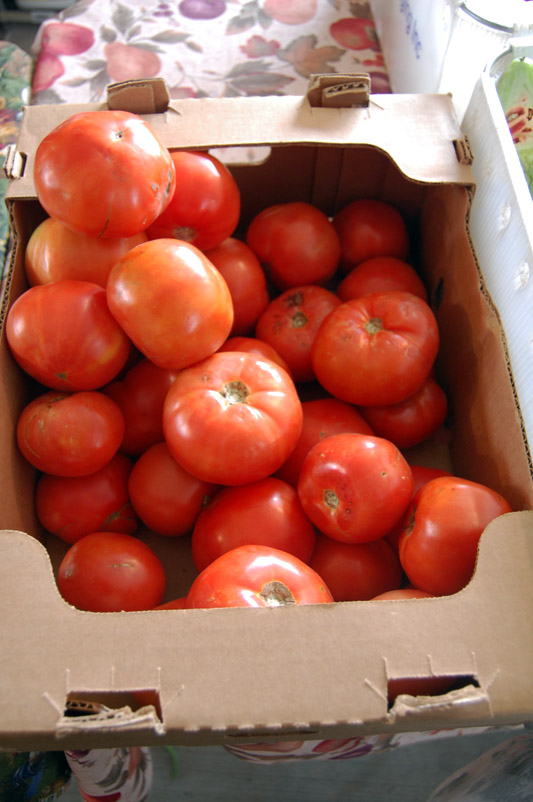
Tomatoes

There were some bitter melons available, which I think are really cool looking, but these ones looked a bit moldy.
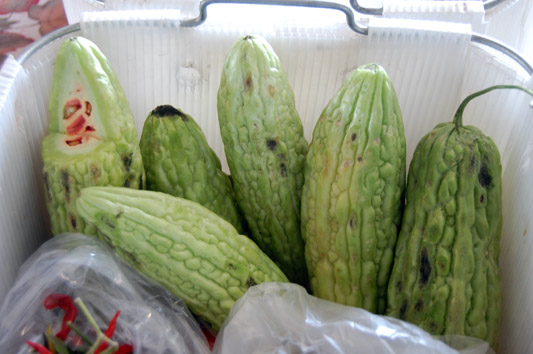
Bitter Melon

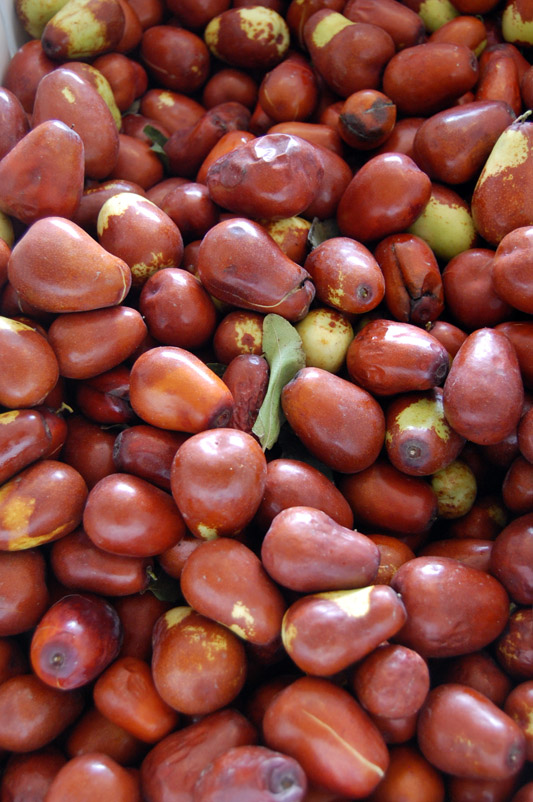
I was surprised at the presence of jujubes—which I’ve actually never had before! I didn’t really know what to do with them so I didn’t get any but if there are some this weekend I might try them out.
Jujubes

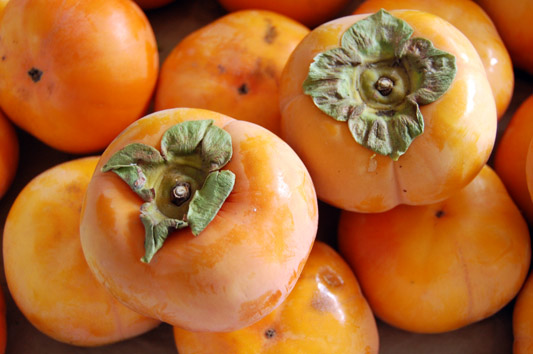
There were also persimmons, which I’ve never had before either. I recently saw an interesting recipe for using them on a pizza and figured I’d give it a try, plus their lovely orange color was too tempting to pass up.
Persimmons

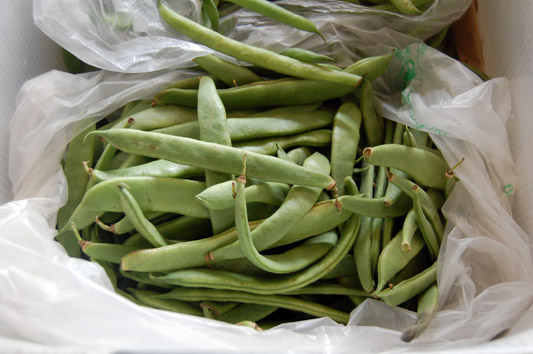
Green beans are a favorite of mine and I snagged some before they were all gone.
Green Beans

Pomegranates are one of my favorite seasonal foods and the vendor had a nice selection, including this giant one! This photo doesn’t do it justice but this is definitely the largest pomegranate I’ve ever had.

Large Pomegranate

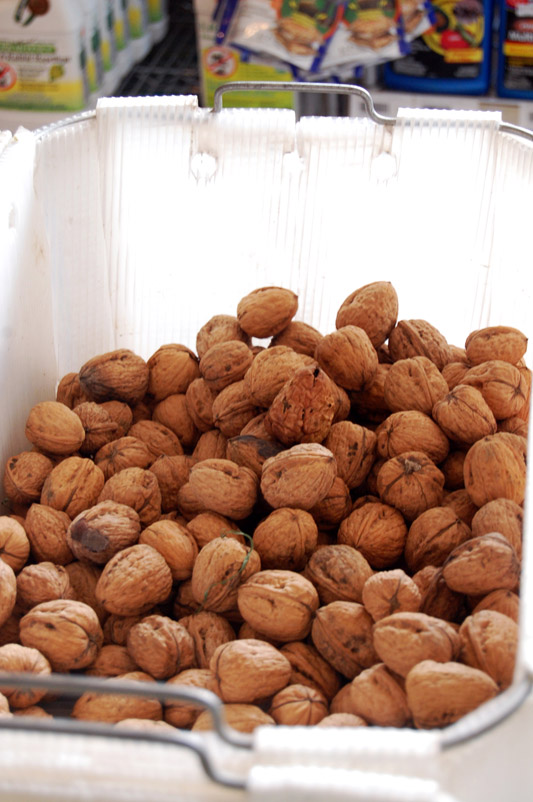
There were also walnuts which I thought would be great on the persimmon pizza I plan to make.
Walnuts

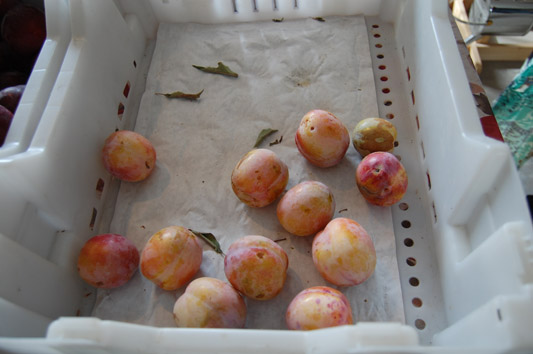
We got some red and black plums but the bin for the white was nearly empty already.
White Plums

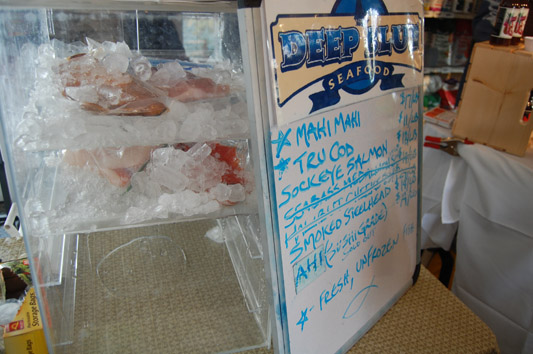
After our bag was heavy with fruits and veggies, we headed to the meat area. We have some amazing farms around here and I really wanted to get some fresh cuts. I was surprised to see a fish vendor, who had also traveled from California, but he had sold most of his inventory. I’m curious to see what he will have available this week.
Fish

I could smell the sausage from Collis Ranch table several feet away. Luckily they were giving out samples (I love free samples).

Sausage

We bought two packages of sausage since we rarely eat it—one spicy and one mild–and both types were delicious.

There were other items at the farmers market like olive oil concoctions, handmade bags and jewelry, but I’m kind of a traditionalist and chose to stick just with food. I was surprised at how many items we were able to get even at a small market. I plan to visit weekly, and as much as I love Nevada winters, I look forward to what the spring brings.
Bounty

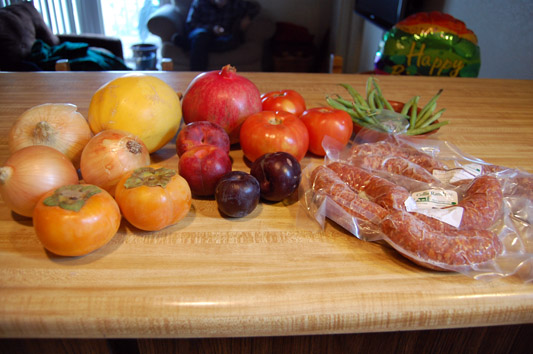
My bounty (pictured above):

  • Tomatoes
  • Onions
  • Black plums
  • Red plums
  • Persimmons
  • Green beans
  • Small spaghetti squash
  • Sausage from Collis Ranch

Want to share your farmers market with Summer Tomato readers? Read the guidelines then drop me an email!

2 responses so far

Older Posts »