Intact Grains vs. Whole Grains

by | Nov 29, 2010

Photo by Venex_jpb

Photo by Venex_jpb

If there is a single subject that befuddles the health-conscious eater, it is undoubtedly carbohydrates.

Most of us have seen the impressive results of at least temporarily restricting carbs, but studies examining the long-term effects of carbohydrate restriction are often ambiguous. Also, while some experts argue fervently for a low-carb lifestyle, some nutritionists still warn about the dangers of eating too much fat or protein.

So how do we know what to believe?

A full examination of the science behind carbohydrate metabolism is beyond the scope of a single blog post, and is in fact not entirely understood by the scientific community (for a thorough review of this topic read Gary Taubes’ book Good Calories, Bad Calories, which I have reviewed here).

However, there are a few things we do know about carbohydrates that are worth pointing out.

Lesson 1: Refined grains contribute to nearly every chronic disease in modern civilization.

It is universally agreed in the nutrition community that refined, processed carbohydrates are the worst things to eat on the entire planet.

And it is impossible to overstate how remarkable this is.

The nutrition community is one of the most disagreeable bunches in all of science. But across the board–from vegans like Colin Campbell to carnivores like Robert Atkins–not a single one of them considers processed carbs to be nutritionally neutral. They all consider them dangerous.

Without question, refined carbohydrates contribute to poor health.

Lesson 2: Vegetables protect against nearly every chronic disease in modern civilization.

Where things start to get more complicated is with unrefined carbohydrates, and the various iterations of this definition. There is ample evidence that the carbohydrates contained in vegetables are not harmful, and possibly beneficial.

To call these vegetable carbohydrates “fiber” is to oversimplify the science, but suffice to say that vegetables are good for you and contribute to your good health.

This is also generally agreed upon.

Lesson 3: Whole grains are different from intact grains.

Few people will argue against my first two points. But bring up whole grains and you will unleash a fury of controversy. Some people believe whole grains to be the cornerstone of any healthy diet, while others consider them superfluous and possibly detrimental to good health. You can find dozens of PhDs and MDs to back up your claims no matter what camp you align with.

So why is there so much disagreement? What does the science say?

The problem is that nutrition science conducted in free-living humans is virtually impossible to interpret. This is largely because the studies are so difficult to control and people’s behavior and self-reporting are so unreliable. Another problem is that the definition of “whole grains” has been watered down to a point where it is virtually meaningless.

One reason whole grains are hard to identify is because the US Food and Drug Administration (FDA) has created a definition that is friendly to food companies, but not to consumers.

The FDA requirements for a manufacturer to use the term “whole grain” on its label (along with the respective health claims) are as follows:

“Cereal grains that consist of the intact, ground, cracked or flaked caryopsis, whose principal anatomical components – the starchy endosperm, germ and bran – are present in the same relative proportions as they exist in the intact caryopsis - should be considered a whole grain food.” (emphasis added by me)

Get it? To be considered “whole,” grains do not actually have to be intact.

Thus food manufacturers create products using this loose definition to their advantage, demolishing grains as normal, then adding back the required ratios of grain parts (germ and bran) to meet the standard.

This is how products like Froot Loops get spiffy health labels claiming they lower heart disease when any unbiased nutrition scientist would agree that, with 41% sugar by weight, Froot Loops almost certainly contribute to heart disease.

On the other hand, there is compelling data that intact whole grains contribute to better health.

Lesson 4: Eating grains is a personal choice, not a nutritional imperative.

The good news is that it is really easy to tell the difference between fake “whole” grains and intact whole grains. If a food actually looks like a grain (i.e., it retains its original form and bran covering), then it is an intact grain. If it looks like a Cheerio, chip, loaf of bread or pasta with a “whole grain” label, then it is a fake whole grain.

People following a primal or paleo diet will argue that this difference is irrelevant and that all grains (and legumes?!) are unnecessary for good health. Personally I disagree, but remain fairly neutral on the personal choice of removing grains from the diet entirely.

Grains do not appear to be necessary for survival (Inuit tribes survive without them), but optimal nutrition may require slightly more effort than would be necessary following a traditional balanced diet.

This is generally how I feel about all healthy, restrictive regimens such as vegetarian, vegan and raw diets. You can make it work for yourself if you are willing to make sacrifices and put in the effort.

However you should be aware that for many people, myself included, cutting whole grains out of your diet completely is extremely difficult and, if you ask me, unnecessarily painful.

Conclusion

When making food choices about grains, the critical question is not whether or not a food is “whole” grain but whether the grain is intact. For this reason, it matters very little if you substitute “whole grain” products for regular refined products such as pasta.

Examples of intact grains are oats, barley, brown rice, whole wheat, quinoa (sort of) and faro. White rice is not a whole grain, and is closer to a refined grain than a whole grain.

For optimal health, processed and refined grains should be eaten very sparingly. Small amounts such as those eaten in traditional cultures can be part of any healthstyle, but including them is a personal choice that will depend on your own goals and preferences.

The irony is that if you are able to remove processed foods from your diet, the way you eat could probably be described as low-carb. But this label really undermines a healthstyle based on real food.

Though I eat relatively few grains compared to most Americans, I cringe when I see the shining example of low-carb living, The Atkins Diet website, with images of fake pancakes and pasta plastered all over it. If that is what low-carb is, I want nothing to do with it.

Processed food is still processed food, whether the carbohydrates have been synthetically removed or not. Stick to eating real food and you’ll never have to worry about carbs.

Do you count your carbohydrates?

Originally published November 25, 2009.

Tags: , , , , , , , , , , , , , , , , , , , , ,

Farmers Market Update: Thanksgiving Leftovers

by | Nov 28, 2010
Romanesco and Sweet Potatoes

Romanesco and Sweet Potatoes

Is Thanksgiving the official end of autumn? Because it sure feels like it.

The farmers market felt very different today than it did just a few weeks ago. Most of lingering summer vendors have finally packed up their wares for the winter. The only autumn fruits left are apples, persimmons, pears, quince and a few grapes. Luckily, citrus is poised to jump right into its place.

Fuyu Persimmons

Fuyu Persimmons

Hachiya Persimmons

Hachiya Persimmons

Naturally the weekend after Thanksgiving few people opted to visit the farmers market in the rain. These are my favorite days at the market, since it’s so quiet it is easy to talk to vendors and discover new things. A calm day at the market is a rare and wonderful treat.

Autumn Citrus

Autumn Citrus

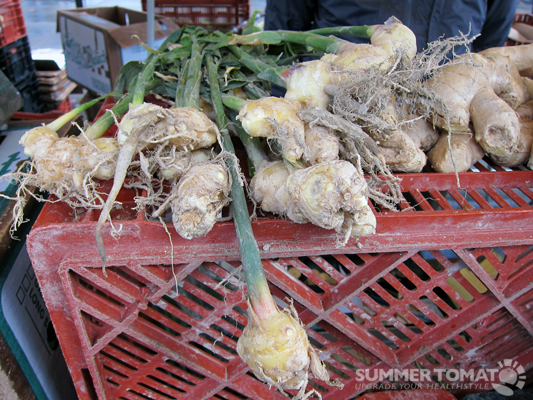
There are a few special items available right now that will only be around for a little while. Feijoa, or pineapple guava, are delicious little green fruits that grow locally this time of year. I also found someone selling fresh ginger roots, stems and all.

Ginger Root

Ginger Root

Pineapple Guava

Pineapple Guava

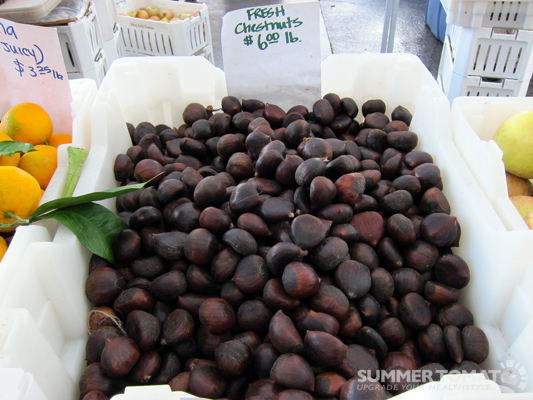
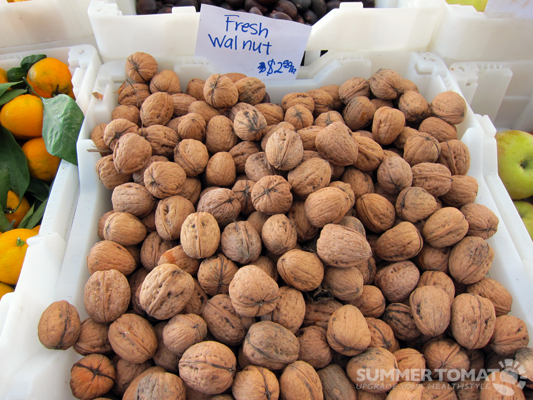
Now is also a great time to get fresh seasonal nuts like walnuts and chestnuts.

Fresh Chestnuts

Fresh Chestnuts

Fresh Walnuts

Fresh Walnuts

One of my favorite things about the approach of winter is all the delicious winter veggies that are on the horizon. Vegetables tend to be overshadowed by the abundance of sweet berries and stone fruits in the summer, but in the winter vegetables are really the stars of the show. The cold stresses the veggies, causing them to condense their flavors and natural sugars.

Pumpkins and Padrons

Pumpkins and Padrons

Cauliflower

Cauliflower

Brassica, also known as cruciferous vegetables, are truly special this time of year. Examples of brassica are broccoli, cauliflower, kale, kohlrabi, Brussels sprouts, etc. Root vegetables (like fennel and potatoes) and winter squash are also awesome right now. I included my favorite cauliflower recipe in this year’s Thanksgiving feast.

Winter Squash

Winter Squash

Fennel

Fennel

In the late fall I’m particularly excited about the Brussels sprouts that you can sometimes find still on the stalk. If you have never liked Brussels sprouts, try giving them another chance this year. Make sure you get very fresh ones (on the stalk if you can find them) from the farmers market, and buy the smallest ones you can find. Then try this recipe for Brussels sprouts with walnuts and bacon and come back and tell me what you think. Even Toaster likes Brussels sprouts.

Toaster With Sprout

Toaster With Sprout

Brussels Sprouts Stalks

Brussels Sprouts Stalks

Last but not least, now is your chance to get Super Mario sized porcini mushrooms. Fresh porcini are a delicacy, and worth experimenting with if you can get your hands on them.

Giant Porcini

Giant Porcini

What are you eating this weekend?

If you would like to share your own local farmers market with Summer Tomato readers please click here.

Today’s purchases:

Tags: , , , , , , , , , , , , , ,

Let’s Make The Perfect Farmers Market Bag

by | Nov 22, 2010

I’ve talked before about how much thought and preparation I put into getting all my farmers market produce home undamaged. Though the tactics I use work decently well, they are by no means perfect and are more than a little bit of a hassel.

To address my farmers market bag problem more directly I’m partnering with Quirky, and we need your help. Call upon your inner super genius to help us design a new farmers market bag that will let me shop at the farmers market without coming home to a bag of crushed tomatoes.

If you aren’t familiar with Quirky, they turns great ideas into amazing products. For this Brief project they have been cool enough to wave the normal submission fee. So if you have an idea for a revolutionary new farmers market bag, submit it at Quirky by next Monday. The winning design will be chosen on Friday, December 10, and will be produced and sold to shoppers.

Submit your ideas here

Learn more about the Quirky process here

The official write up on my project is below. Watch the video for more info about my bag problem.

I can’t wait to see what you come up with!

Brief #9: Let’s Make The Perfect Farmers Market Bag

For this week’s Quirky Brief, we’re partnering with Darya Pino, a San Francisco-based scientist, foodie, and writer. Her popular blog, Summer Tomato, offers tips and advice on healthy eating, especially for foodies in urban areas.

When we first met Darya, she told us all about a food shopping problem that drives her crazy. Whenever she shops at her local farmers market, she inevitably comes home to bruised produce.

She’s taken to bringing two separate bags – a big one for heavy stuff and a smaller one for delicate fruits and veggies — along with a Tupperware set for isolating vulnerable produce and a handful of biodegradable plastic bags for separating purchases.

Four different products, just to go shopping? There’s gotta be a better way to port produce.

Quirky community and Summer Tomato readers, let’s unite to create the perfect farmers market bag.

We flew out to San Francisco to check out the problem firsthand at the Ferry Plaza Farmers Market, and we captured the crux of it in the video. Watch it, and once inspiration strikes, head to the Invent tab on Quirky.com to submit your idea for free!

Submit your ideas at Quirky

Tags: , ,

Farmers Market Update: Switzerland

by | Nov 21, 2010

Lausanne, Switzerland

Liz O’Sullivan is an Irish expat who has been living in Lausanne for the past six years. A full-time foodie, she moonlights in the IT department of a large manufacturing company in the Lausanne area to feed her (food) habit.

Farmers Market Update: Lausanne, Switzerland

by Liz O’Sullivan

This week, the farmers market update comes to you from Lausanne, a wonderful place nestling on the shores of Lake Geneva in Switzerland.

Here we are on Google Maps: Lausanne

This is an outdoors market held year around on Wednesdays and Saturdays – yes, even when it’s snowing!

The market is located near the old town of Lausanne, in close proximity to the cathedral and the town hall. One of the fun things about this market is the vibrant atmosphere – people treat it very much as a social occasion, and it’s usual to see cafés thronged with people taking a coffee and a croissant as a break from their morning shopping.

Unlike in the US, it’s not usual for farms here to have a website – we ‘re lucky if stalls display their name. A phone number is a bonus! Local producers usually operate on a very small scale, and often have a limited assortment of goods on sale.

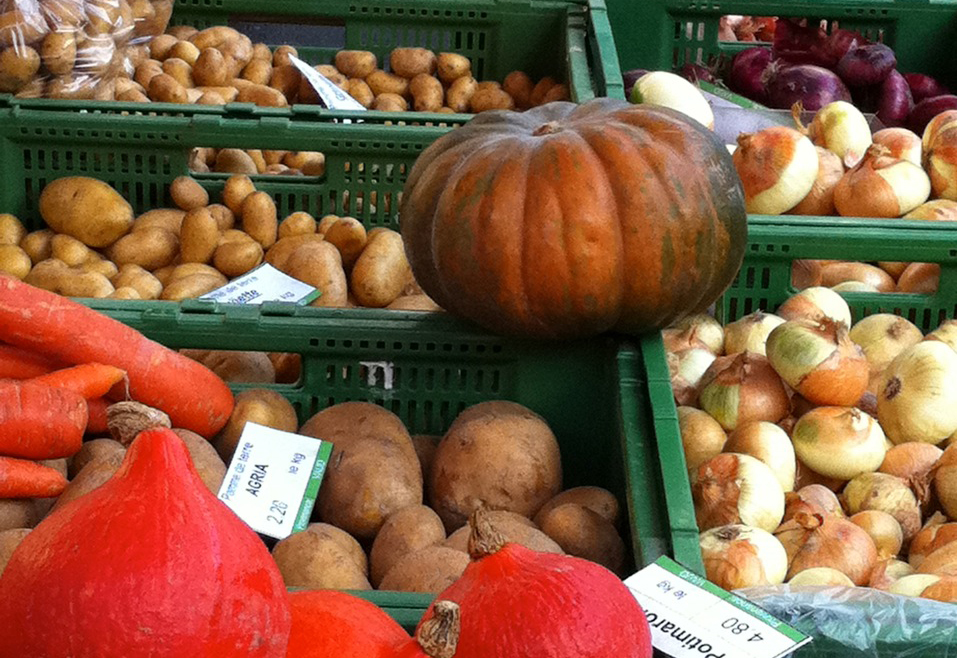
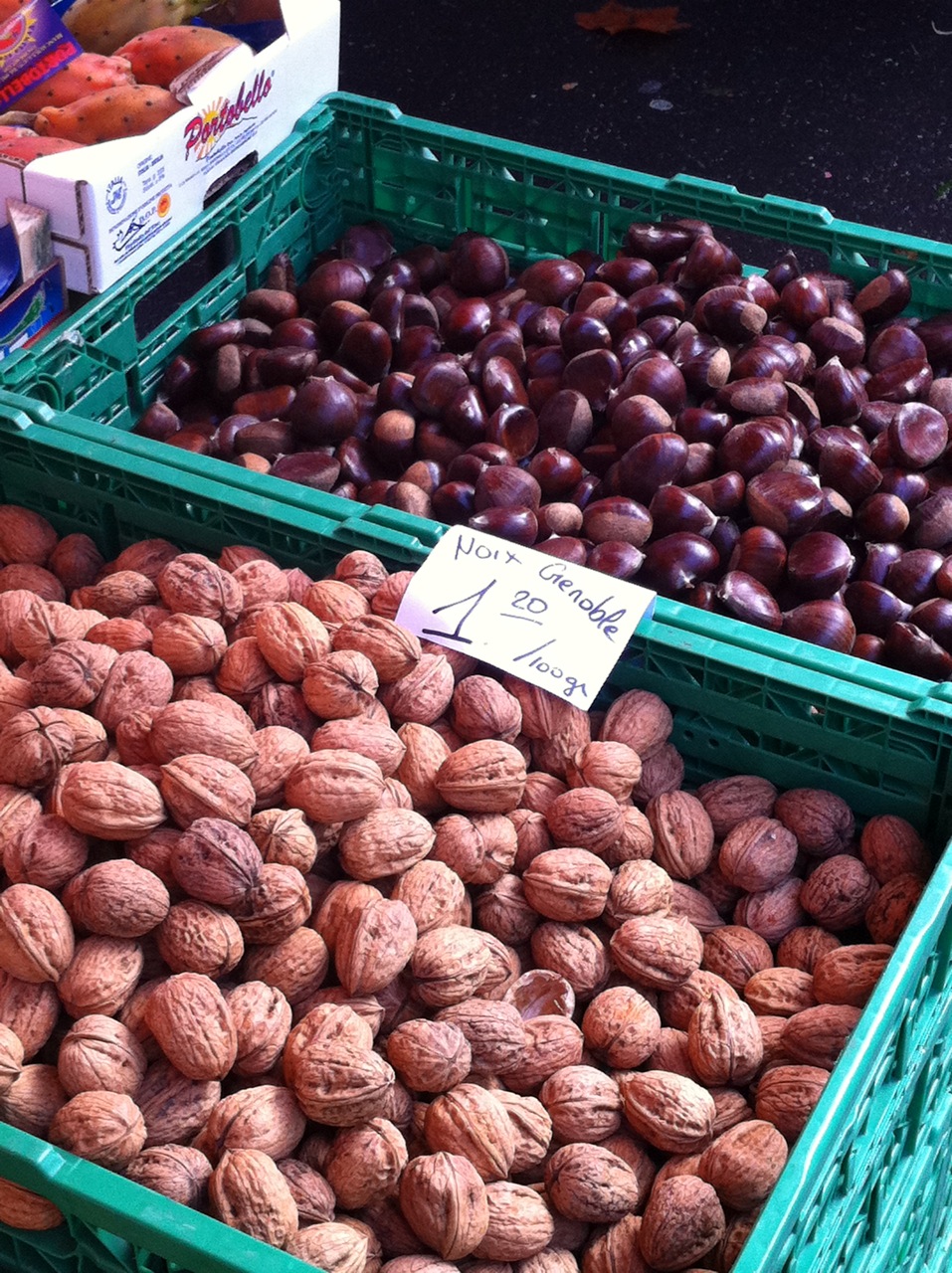
While last weekend brought us beautiful, sunny (and unseasonable) weather, today showed that Autumn has mostly definitely arrived. The delicate, fragrant Summer produce has been replaced by delicious autumn vegetables such as pumpkins, potatoes and onions, and these walnuts and chestnuts, the latter simply waiting to be roasted.

Pumpkin

Nuts

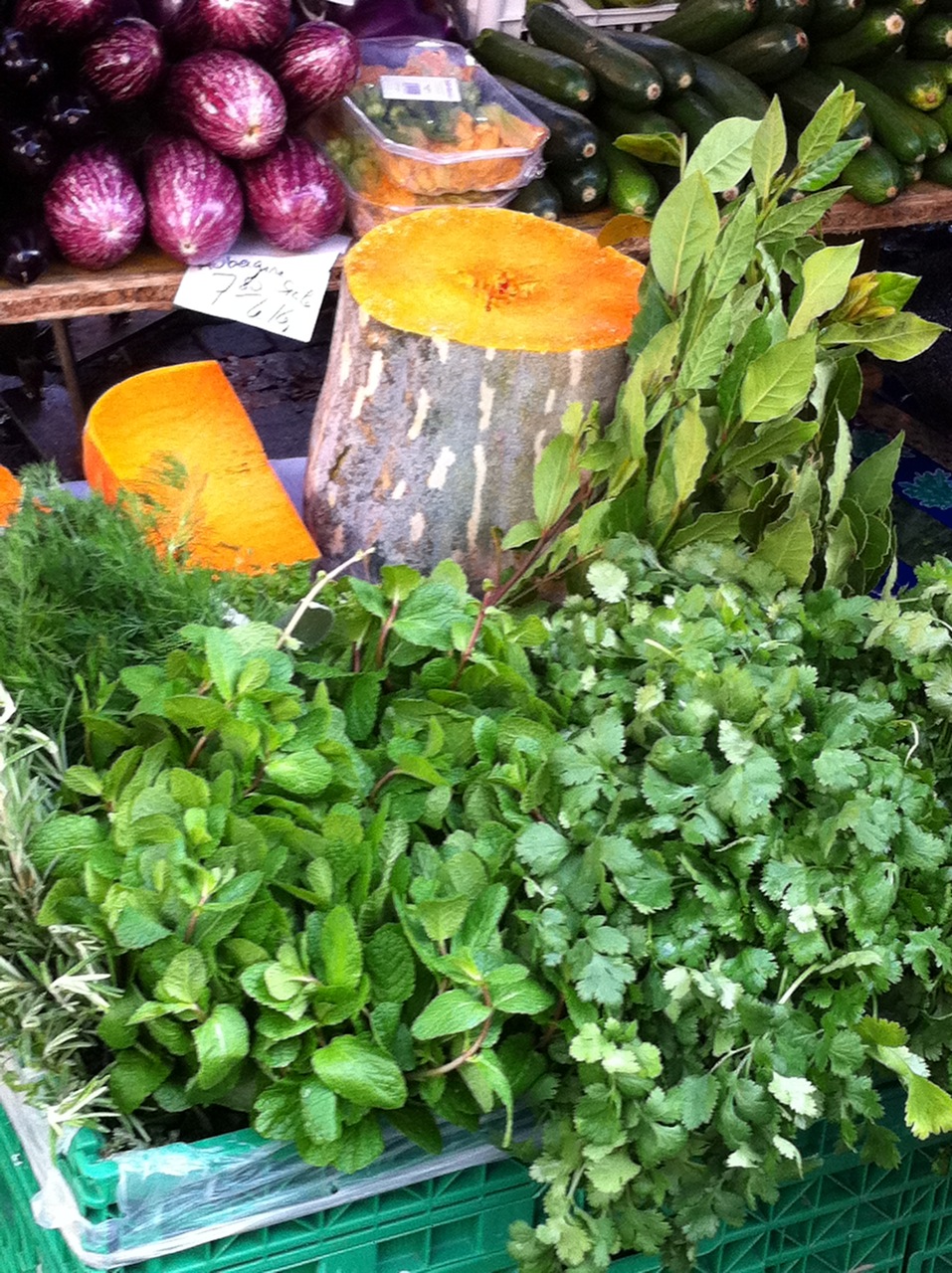
Or how about some leafy green fresh herbs to go with the pumpkin?

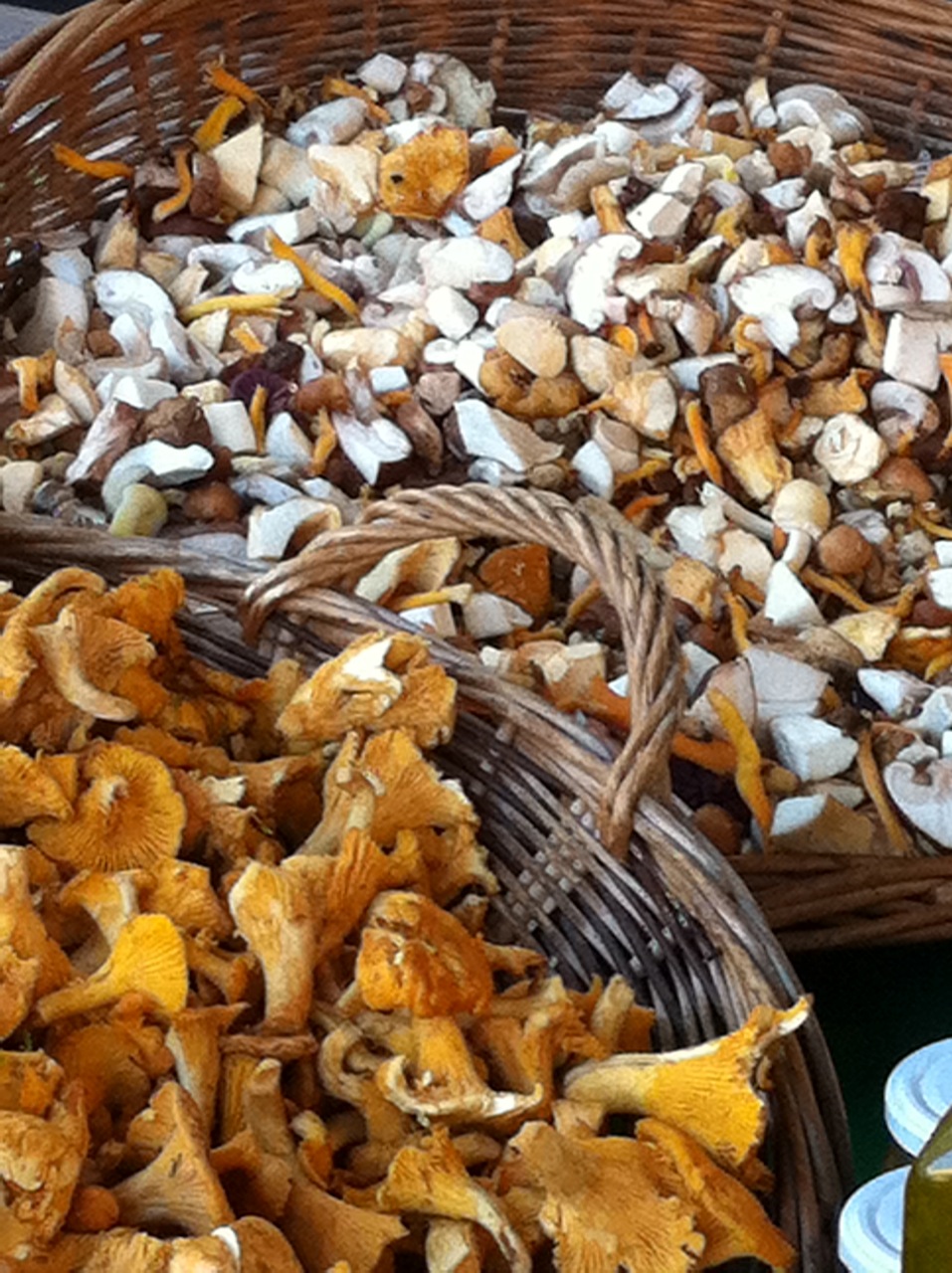
I eat mushrooms every other day, can’t get enough of them. I like to to sauté them in a little olive oil and some ground spices. Right now, the choice is huge, but I have a weakness for the chanterelles (the yellow ones in the foreground). The mixed mushrooms in the background are a composition of Autumn chanterelles, ceps, morels, brown mushrooms and more.

Apples

Mushrooms

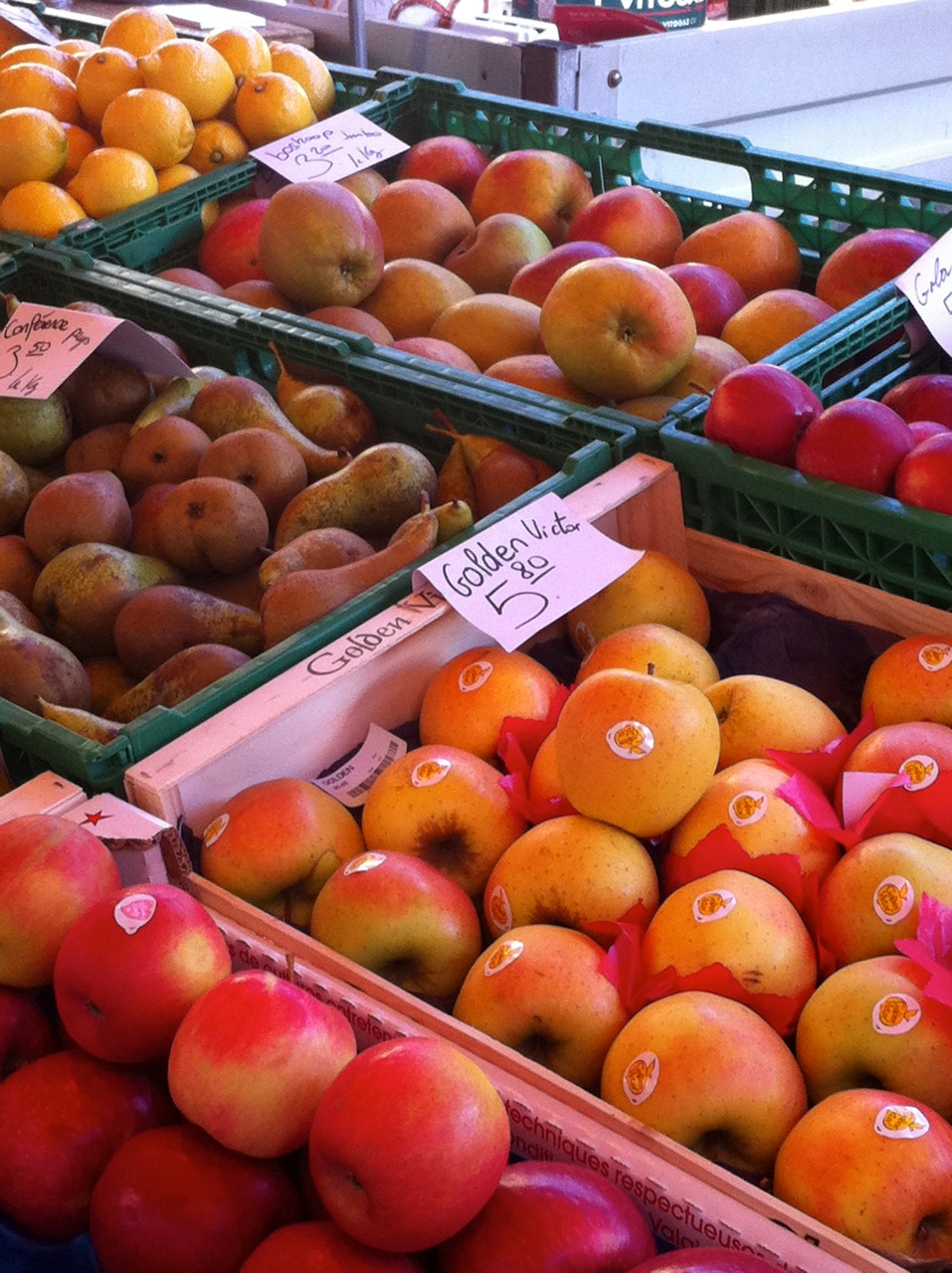
I love apples and this time of year brings its own varieties, such as the almost-forgotten pinova – a sweet-tasting crunchy variety. I also found Golden Victor, Boskoop and Conference pears.

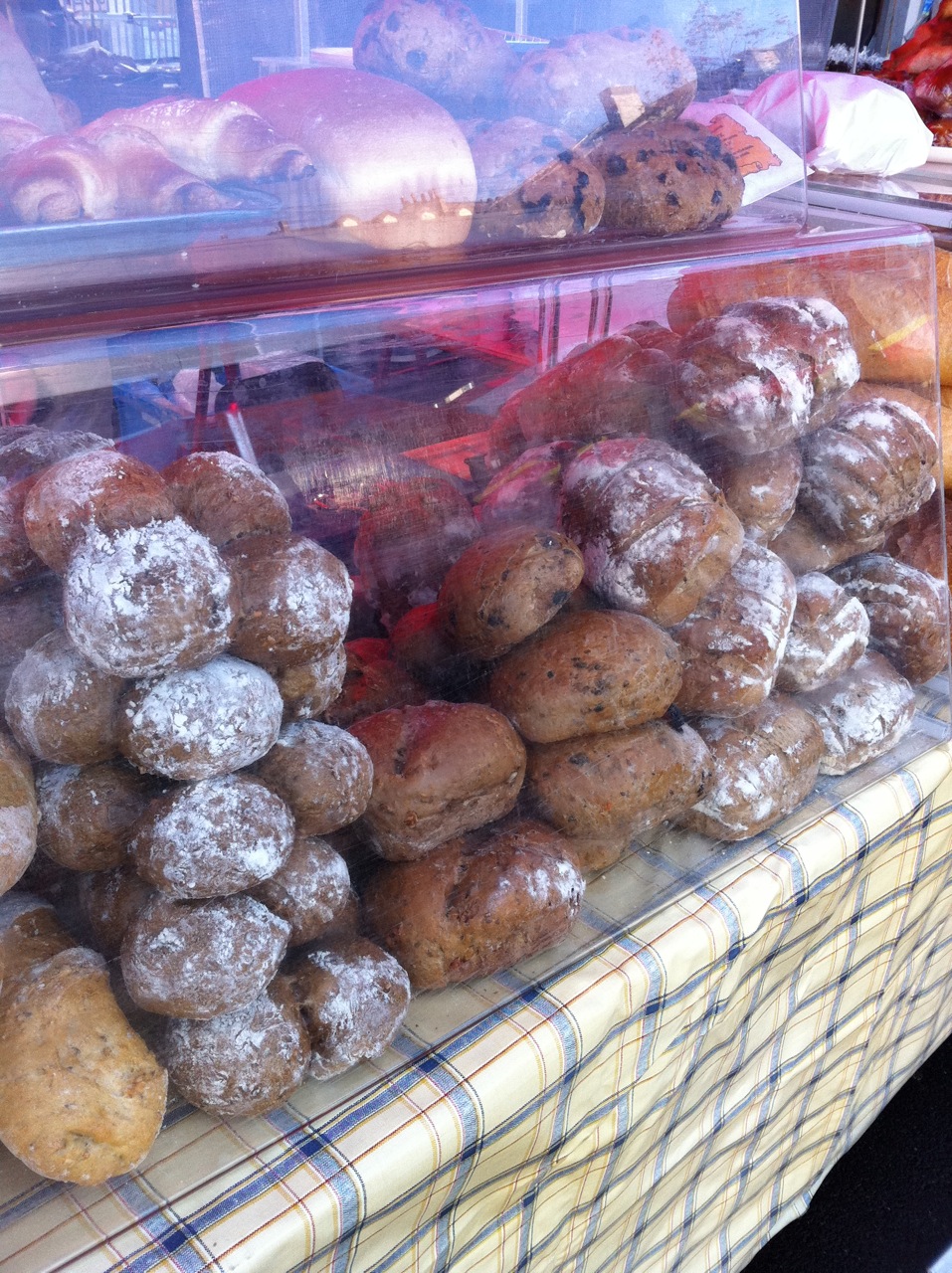
The Lausanne market isn’t just about fruit and vegetables, it’s also a place for bakers (small, non-commercial ones) to display their wares. My favorite baker offers a wonderful choice of artisan breads such as spelt, olive and sun-dried tomato or bread with sunflower seeds, not to mention croissants, brioches and other tempting treats.

Cheese

Bread

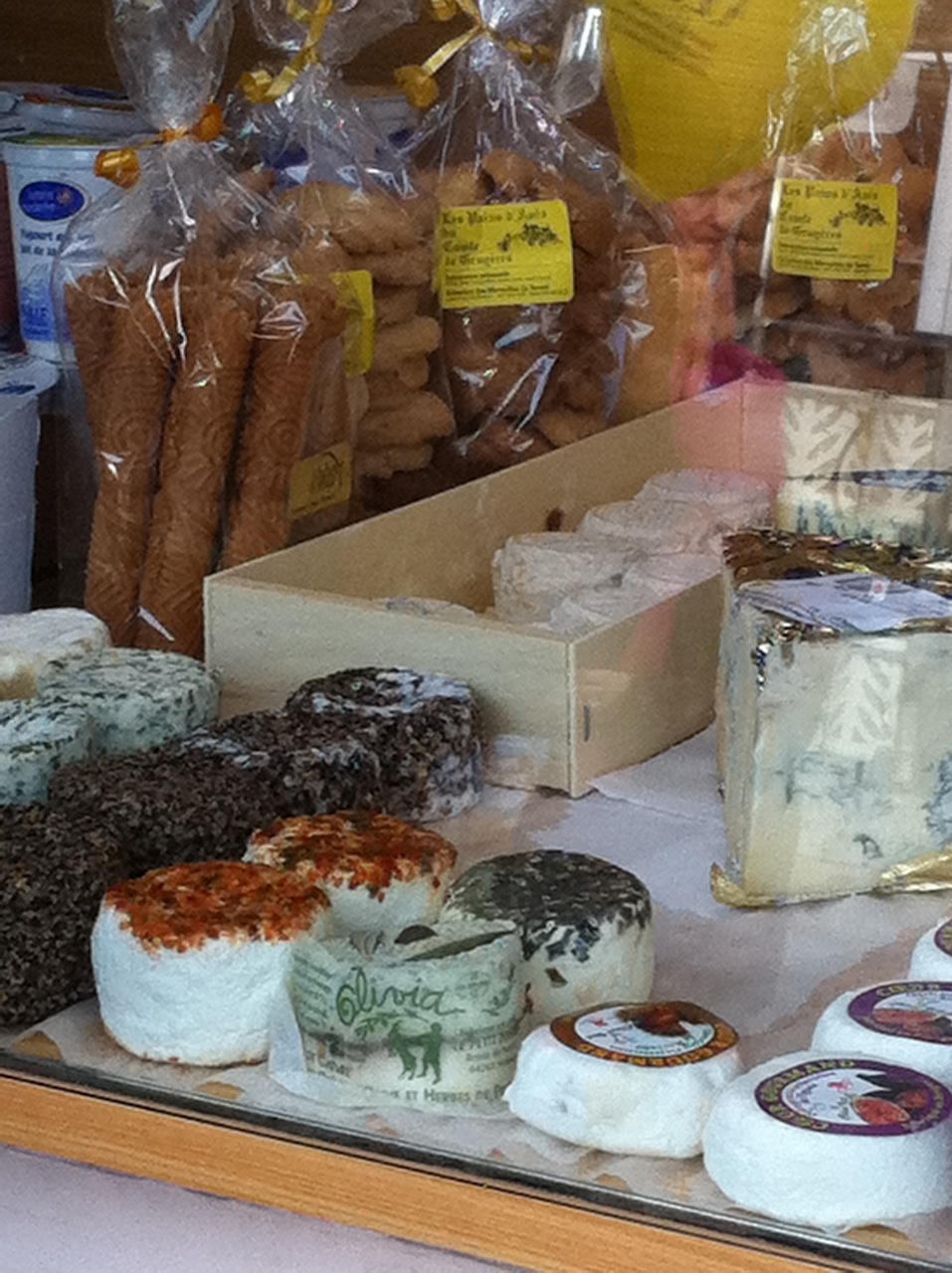
Although Switzerland is a small country with an area of only 15,940 square miles, every canton (a mini-version of the states in the US) boasts its own specialities of cheese, dried meats, biscuits etc., and these are commonly sold at weekly markets. I’m Irish, cheese is part of my heritage and I can never resist trying new varieties. So I was delighted to find goats’ and sheep’s cheese from the canton of Fribourg (Freiburg) on display.

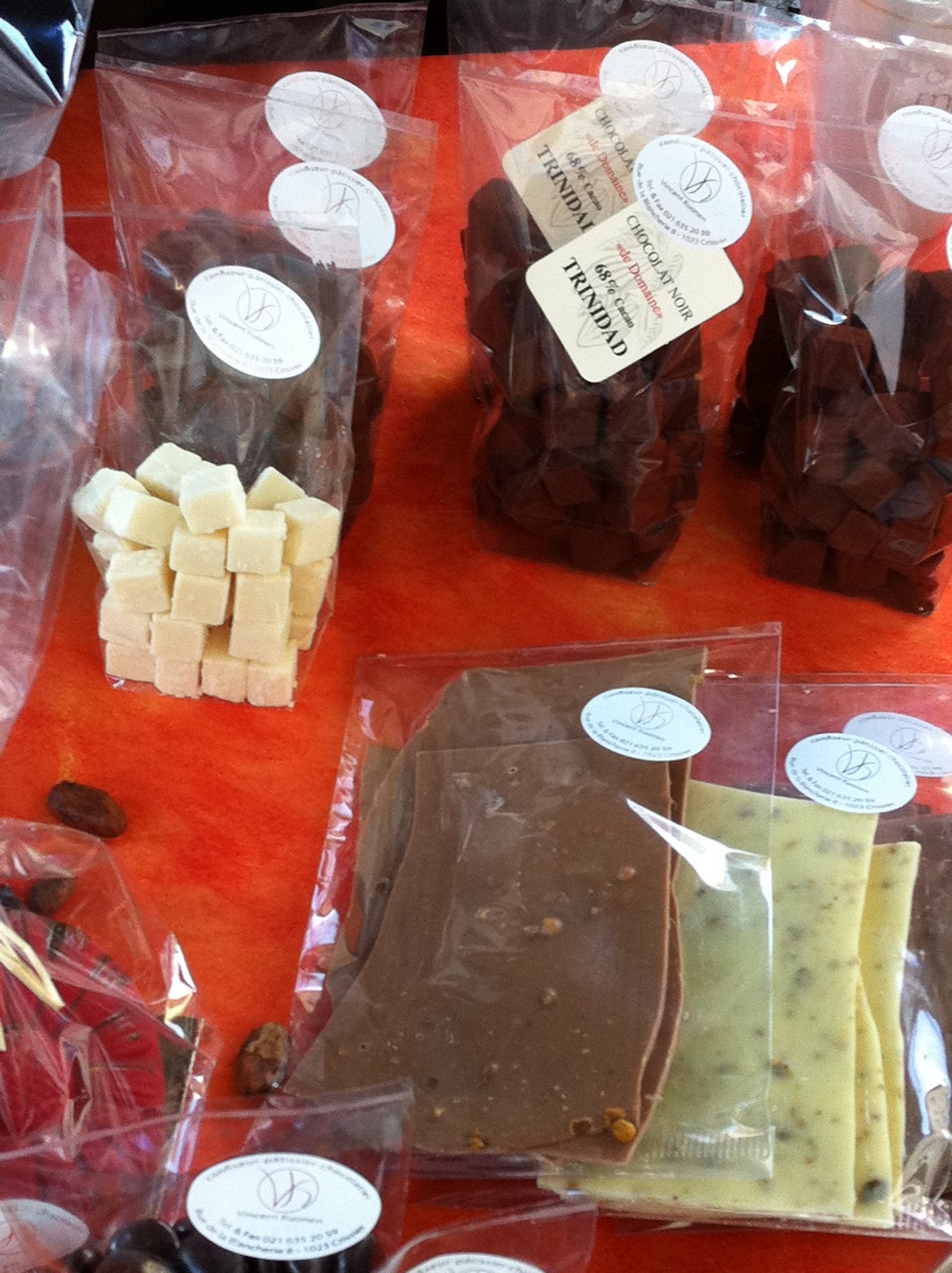
And, last but not least, we would not be in Switzerland if this were not on sale too.

Chocolate

What I bought:

  • Sunflower seed breadrolls (Boulangerie Genoux)
  • Chanterelles (Tschabold mushroom farm)
  • Pumpkin, basil (Domenico Capellano)
  • Gruyère cheese, one round of soft goat’s cheese (Fromagerie Alain Macheret)
  • Potatoes, onions, broccoli (Domenico Capellano)
  • Chocolate (I know, I know ;-)

If you’d like to share your farmers market with Summer Tomato readers, please click here.

Tags: , , ,

For The Love Of Water

by | Nov 19, 2010

Happy Birthday To Me!

Yesterday was my birthday so I didn’t take the usual 3 hours to write up today’s link post. As always, you can find all the stories I love over at Digg.

I turned 31 this year, which feels slightly less significant than turning 30 last year. So in order to make it more meaningful I decided to donate my birthday to Charity Water.

Charity Water builds wells for children and families in Africa that do not have access to clean water. It’s an amazing organization, and if you enjoy this blog and care to give back any donations would be much appreciated.

Donate here

Thanks for another great year here at Summer Tomato and have a lovely weekend.

Tags: