Sign up

You deserve to feel great, look great & LOVE your body

Enter your email for your FREE starter kit to get healthy & lose weight without dieting:

  • This field is for validation purposes and should be left unchanged.

Should I Buy Whole Grain Pasta?

by | Jan 19, 2009
Pasta

Pasta

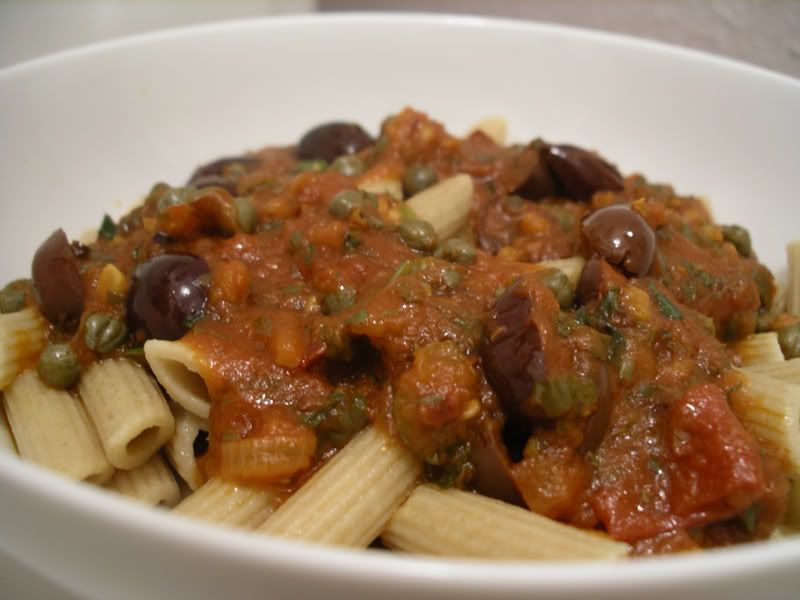
Is whole grain pasta really better for you than regular pasta? Recently I featured pasta puttanesca greened up with a little kale in the sauce. When one reader made this recipe at home, he opted to use whole grain pasta instead (I used a regular rigatoni).

But if I care about health so much why didn’t I use whole grain pasta originally?

You probably already know that I health-heartedly support the regular consumption of whole grains. But I also hold that there is a huge difference between intact grains and processed whole grains. So yes, brown rice is better for you than white rice, but pasta is different.

Noodles are made of dough and are therefore processed no matter what. For this reason they will never be a pinnacle of health food, but that does not mean that there can’t be a place for them in your diet. Italians eat pasta almost every day, and most of them are healthier than us. The important thing to think about when you are eating pasta–any pasta–is quantity.

So to answer the question, is whole grain pasta better than regular pasta? Maybe a little. But because I do not eat pasta very often, and because when I do eat pasta I eat a normal (aka small) portion, I always buy what I think will taste the best with meal. And for me, that is usually handmade fresh pasta (the soft refrigerated kind), not the whole grain stuff.

If you do not mind the taste of whole grain pasta, go ahead and buy it. It might be slightly better for you than the other kind. But the impact of whole grain pasta on your overall health is really small, so this is not a question to get hung up on.

Want a healthier Italian meal? Add more vegetables.

What is your opinion on pasta and health?

Tags: , , , , , , , , , , , ,

Holiday Gift Ideas For the Health Conscious

by | Dec 8, 2008

Know anyone who is trying build healthy habits? Want to give yourself a leg up on your New Year’s resolution? Here are some simple gift ideas for anyone wanting to embrace a healthy lifestyle:

  1. Eat, Drink and Be Healthy, by Walter Willett. This is my favorite nutrition book. Dr. Willett, a physician and Harvard nutrition scientist, presents a comprehensive guide explaining the basics of nutrition science and why few things are as important as what you choose to eat. His recommendations are based on solid science, but everything is explained in clear, simple language and is easy for anyone to understand. This book will change the way you think about food and nutrition.
  2. Subscription to Cooks Illustrated magazine. It is almost impossible to have a healthy diet if you are eating out for most of your meals. Cooking at home can be a pleasure, but to many people it is a source of fear and anxiety. Cooks Illustrated is a resource that demystifies cooking and makes it virtually idiot proof. Their staff tests recipes over and over in “America’s Test Kitchen” so you don’t have to. The result is the easiest, most reliable method for making almost any meal.A bonus of subscribing is that they also offer product and appliance reviews. I often find myself browsing their website with my online subscription, but they also have a beautiful print magazine if you prefer to peruse recipes on the go. Because of Cooks Illustrated I feel like I can cook just about anything I set my mind to, even things I have never tasted before. I couldn’t live without my Cooks!
  3. Braun Hand Blender. This is the magic kitchen appliance. If you or someone you know is not the type to buy every single piece of fancy kitchen equipment, this is the perfect item. Its many attachments make it so you have a blender, food processor and mixer all in the palm of your hand. Everything you need rolled into one tiny device!
  4. CSA membership. Busy people have trouble finding the time to buy fresh fruits and vegetables every week. CSA, or Community Supported Agriculture brings fresh, seasonal produce to you. The idea behind a CSA is that you subscribe to a farm or collection of farms and pay a certain set price (varies by farm) for a box of their goods. For your fee you will be provided with a week or two worth of fruits and vegetables of the season. All CSAs are a little different, so you need to find ones in your area and contact them to work out the details. Most deliver to your house or a nearby pick up point and allow some filtering for your particular food preferences. For the truly dedicated, there are also meat and dairy CSAs.
  5. In Defense of Food, by Michael Pollan. Michael Pollan is a journalist and UC Berkeley professor who has spent the past several years figuring out the best way to eat in the Western world. This book distills everything he found, and his advice is surprisingly simple: Eat food. Mostly plants. Not too much. In Defense of Food is a quick, easy read that is both entertaining and filled with valuable information.
  6. Wii Fit. I’m not sure if a video game can really be exercise, but it sure beats sitting on your butt watching T.V. I cannot deny that on cold evenings when I have worked too long at home to squeeze in a workout I have resorted to my Wii to get the blood pumping. Wiis are not easy to acquire (I have had success with Wii Alerts), but if you can get your hands on one they are easily worth the money.
  7. Pressure cooker. You probably do not eat enough legumes. People have weird ideas about beans and assume they are accompanied by foul smells, but home-cooked beans are an entirely different species. A pressure cooker can make it so you have a week’s supply of your favorite beans in under half an hour. What’s not to love?
  8. Full body massage. The latest research suggests that stress may be as bad for you as red meat. Luckily getting rid of stress can be one of the best experiences of your life. Everyone loves a trip to the day spa. A full body massage is the perfect gift for that person who has everything.
  9. Lunch box. Eating out for lunch every single day is not an option if you want to be healthy. But that does not mean you have to be a nerd. REI makes a great, affordable lunch cooler that is both stylish and functional. Want more of a selection? Browse the offerings at Amazon.com through the link on the sidebar.
  10. Email subscription to Summer Tomato. It’s free and comes with a 25-page healthy eating guide! Get to know what fruits and vegetables are in season, learn about the latest nutrition research and discover simple and delicious recipes for health straight from my brain to yours. This is the ultimate gift for the ultimate connoisseur! (OK, I admit this is kind of a cheap gift. I recommend it, but you should probably get one of those real gifts I mentioned too 😉

Good luck shopping and happy holidays!

Check out my 2009 healthy gift ideas

Tags: , , , , , , , , , , , , , ,

How To Cook Dried Beans Using A Pressure Cooker

by | Dec 2, 2008
Squash, Peppers and Beans

Squash, Peppers and Beans Recipe

I am not a vegetarian, but for convenience, financial and health reasons I do not cook a lot of meat. Consequently my dietary protein comes from many different sources, not the least of which is beans.

I realize that many of you have preconceived notions of beans and what goes along with eating them, but I am going to ask you to keep your mind open until I finish my explanation. If you read all the way to the bottom, you are more than welcome to unleash your fury in my comments section.

Let me begin by stating that I am not talking about canned kidney beans. I do not eat beans from a can unless I am desperately short on time. Not that there is anything wrong with canned beans: they are quick, healthy and relatively inexpensive. However, I have found canned beans to be very one dimensional in flavor and even less appealing in texture. They are also more prone to cause the digestive problems many people associate with “the musical fruit.”

Dried Beans

A little over a year ago my apartment acquired a pressure cooker that opened my eyes to the potential of dried beans. Dried beans, which are even less expensive than canned beans, can take hours to cook under normal circumstances. But a pressure cooker can cut this time to under half an hour and allows you to prepare large batches that can be stored frozen for months.

In my estimation, however, the best reasons to cook your own beans are taste, texture and variety. Home cooked beans taste worlds better than canned. First off, they do not have the characteristic slimy ooze of canned beans. (Definitely rinse your beans if you do buy canned). Dried beans also have a richer, more complex flavor without the metallic tinge you get with S&W. (Hint: Your beans will taste even more delicious when cooked in bouillon or broth.)

The mouthfeel of home cooked beans is also superior to canned. Different varietals have unique tastes and textures, so with each bean you try you embark on a new adventure. Some are silky and delicate, others rich and creamy. Larger beans tend to be heartier than smaller beans, but there is really no telling how they will taste until after you cook them.

While there are only five or six kinds of canned beans commonly available, the number of dried beans is innumerable. Rancho Gordo is an heirloom bean vendor I visit regularly at the San Francisco Ferry Plaza Farmers Market that has a fantastic variety of dried beans. Ever had a Black Calypso bean? Me neither, but I cannot wait to try them! Visit the Rancho Gordo website if you want to order online.

There are also fantastic bean selections at most health food stores, including Whole Foods. Check the bulk bins for the best deals.

Soaking Beans

One caveat of cooking your own beans is that they require a significant amount of soaking time. I recommended that you rinse them well and soak them overnight. All this requires is 5 minutes of planning the day before, and if you prepare large batches you do not have to soak beans very often. Be sure to pick over your beans for pebbles before cooking them.

Another bonus of rinsing and soaking beans is that it eliminates many of the sugars that your body cannot digest, thereby reducing (in my experience eliminating) unpleasant bodily byproducts. Toss out your soaking water when you are finished and add fresh water or broth for cooking.

Pressure Cooker Precautions

Pressure cookers can be dangerous if used improperly, so it is imperative that you follow the instructions carefully. In general, it is important to get a tight seal on the lid and be sure the pot is not over-filled (total volume should be less than half the volume of the pot). However, it is necessary to add sufficient liquid to the beans to prevent burning and dehydration. You also want to avoid adding salt until after your beans have cooked.

Follow the instructions on your pressure cooker to determine the appropriate amount of cooking time, usually 10-20 minutes. The contents of the pot are under a tremendous amount of pressure while cooking, so be sure to allow the pot to depressurize completely before attempting to remove the lid. This takes an additional 10-15 minutes.

Here is the pressure cooker I use.

I imagine that a slow cooker would be equally advantageous in cooking beans, but I have never tried it.

What are your favorite tricks to make beans more user friendly?

Tags: , , , , , , , , , , , , , , ,

Sunchokes: Did You Know?

by | Nov 25, 2008

Sunchokes, or Jerusalem artichokes, are one of the few tubers native to North America. Despite the name, these plants are not from Jerusalem nor are they artichokes. They are in fact a type of sunflower, though their flavor is similar to that of an artichoke. For this reason Italian cultivators called them girasole, the Italian translation of sunflower. When pronounced in Italian, girasole sounds similar to Jerusalem. Hence the name Jerusalem artichoke.

Their unique taste and texture make sunchokes a fantastic addition to many foods, however they are particularly useful as a potato substitute for diabetics. Unlike most tubers, sunchokes store their carbohydrates in the form of inulin instead of starch. Our digestive enzymes do not breakdown inulin, so it has a minimal impact on blood sugar and does not raise triglycerides.

The down side of inulin is that since it is not easily digested it can produce gas and bloating in sensitive people. Cooking sunchokes well can minimize this effect. It is also a good idea to eat a small amount the first time you try them and build up your tolerance.

Sunchokes are a good source of potassium, thiamin and phosphorus, and a fantastic source of iron and soluble fiber.

They make a delicious soup, but can also be roasted, sauteed or eaten raw.

What is your favorite way to eat and prepare sunchokes?

Tags: , , , , , , , , , , , , ,

The Food Industry’s Approach to Public Health

by | Nov 6, 2008

Obesity is quickly becoming America’s number one public health concern, and there is little doubt our changing food landscape is largely responsible. To combat negative press and present an image of public responsibility, food industry giants like McDonalds’s and Coca-Cola have announced policies that seem aimed to help consumers make healthier, informed lifestyle choices. However, leading nutrition and public health experts charge that these policies are disingenuous and are closer to advertising than sincere social responsibility.

In the October 15 issue of the Journal of the American Medical Association (JAMA), David Ludwig, MD, PhD, and Marion Nestle, PhD, MPH, published a commentary on the role of the food industry in public health. The question they seek to answer is, “Should the food industry be welcomed as a constructive partner in the campaign against obesity?”

The answer, they argue, can be found in the analysis of scientific data on food industry practices. One such study published in 2006 investigated United States food corporation practices in school nutrition and concluded that food companies “make public promises of corporate responsibility that sound good, but in reality amount to no more than [public relations].” Another study found that McDonald’s continued to use trans fats in their cooking oil until at least 2005, even though they claimed otherwise. (They were required to pay a settlement for deceptive advertising).

Trans fat! There is no amount of trans fat in the diet that is considered safe.

The food industry also heavily funds an independent firm, the Center for Consumer Freedom (CCF), that aggressively lobbies against “obesity-related public health campaigns, legislation to regulate marketing of junk food to children and scientists who advocate for healthier diets.” It is difficult to understand how these practices meet the proclaimed agenda of these companies to increase the health of society.

These issues then raise an interesting question. Why would a food company care about the health of society? Isn’t a food company’s primary goal to make profits for their shareholders? Of course it is, and that is fine. The problem is that the most healthful foods—unprocessed vegetables, fruits and grains—are not nearly as profitable as highly refined and processed foods. This fact makes the industry’s claims to promote health somewhat dubious.

The obvious answer to why a food company might claim to have concern for public health even if health is at odds with its product is that companies must work to maintain a positive image. Advertisers know very well that image and branding have a tremendous impact on sales. Generally our society does care about health and is willing to pay a premium for products they consider to be healthful. Thus these public health campaigns are indeed a form of advertising because they help shape the public image of a company and its products.

How then do these campaigns manifest in society? One example is the voluntary efforts of beverage companies (in conjunction with the American Heart Association and the William J. Clinton Foundation) in 2006 to curb the sale of sugary drinks in schools, one of the largest sources of excess calories for children. Though at first glance this seems like a noble effort by the companies, after much negotiation the agreement ultimately permitted several caloric drinks to remain on campuses, including sweetened vitamin waters and sports drinks. So much for getting those sugary drinks out of schools.

Also, the food industry invests enormous amounts of money to fund nutrition research. However a study published last year in the Public Library of Science (PLoS) journal found that studies fully funded by industry are 4 to 8-fold more likely to have conclusions favorable to industry compared to those with no industry funding. This raises the possibility of a “systematic bias” in scientific research when industry is involved.

Thus the authors conclude that the interests of the food industry are at odds with public health and should be separated from policy decisions. They go on to argue that while market-driven supply and demand works splendidly for many industries, it must be more carefully regulated when public health and safety are involved. This, they say, is the primary reason there are so many safety requirements on cars, and our food supply should be held to similar rigorous standards.

“Modifiable dietary factors cause substantially more illness and death than automobile crashes. Left unchecked, the economic costs associated with obesity alone will affect the competitiveness of the US economy.”

The authors recommend several courses of action. First, the government must “ensure that nutritional policies are based on solid science, rather than special interests.” Second, congress should provide more funding to nutrition research to “help counter the influence of the industry money.” Third, allow an independent body such as the Institute of Medicine to draft dietary guidelines (this task is currently under the control of the United States Department of Agriculture, which is primarily concerned with the well-being of the food industry and not public health). Fourth, restructure agriculture subsidies to “support public health, not commodity producers.” And finally, “reform campaign finance laws to prevent corporate political donations from leveraging the legislative process.”

These recommendations would be a good start to combating obesity in America, but it is important to remember that ultimately the responsibility for your health is in your own hands. If we as consumers decide we would rather buy healthier, less processed foods and purchase them in larger percentages than processed foods, the food industry will certainly notice.

This article can also be found at Synapse.

What role do you think the food industry should play in public health policy?

Tags: , , , , , , , , , , , , , ,

How To Pick A Persimmon

by | Nov 2, 2008

There is something of an art to picking and eating persimmons. Though the number of varietals are small compared to other fruits in season this time of year (apples and pears come to mind), the few that are available have very different properties of color and ripeness.

Two types of persimmons are common in California. Fuyu persimmons are firm, light to dark orange and more flatly shaped, like a tomato. Fuyus are easier to pick than the other most popular persimmon, hachiya, because they are eaten when firm and are more forgiving if you cut them open a little early.

Hachiya persimmons are trickier to pick out. When ripe, hachiyas are soft and heavy. However, unlike fuyus, unripe hachiyas have very high tannin levels which make them sticky and dry on the tongue. Some people refer to this property as astringency. Others call it bitter.

As someone who generally prefers firm fruit, I learned this lesson the hard way. I strongly advise exercising patience when it comes to hachiyas. When ripe, these persimmons are a deep, red-orange in color and often have black streaks on the skin. Hachiyas also have a more tapered bottom than fuyu persimmons, making them heart-shaped.

Rarely are hachiyas ripe when they are for sale, so I usually leave the fruits on the counter for several days until they become soft. While they are ripening, set them top-down on the corolla so their tender flesh does not get damaged under their weight.

Occasionally I have found other persimmon varietals at my local markets. One of my favorites is the chocolate persimmon, which is similar to a fuyu except the flesh inside is brown. These persimmons have a rich and spicy flavor that is reminiscent of, well, chocolate. Definitely try one if you can find them.

Good, ripe persimmons are sweet and have an almost warm flavor. They taste amazingly like autumn, with notes of cinnamon and brown sugar. Persimmons can be eaten raw or cooked into a dessert, but you should not eat them before they are ripe.

Most people do not consume the skins of persimmons, but I usually do. If the skins are tough, however, I will cut them off. The center usually contains a few dark, hard seeds that should not be eaten.

What are your favorite tips for picking and eating persimmons?

Tags: , , , , , ,

Oops, I Forgot Corn Season!

by | Oct 19, 2008

Everyone knows that we here in San Francisco often get branded as elitist.

My first thought when I heard this was, “Great!” Who doesn’t want to be considered the best of the best? I personally love arugula (the latest symbol of elitism) and happily enjoyed it all summer as it was tossed around with contempt on the presidential campaign trail (I hope they added olive oil and vinegar too!).

But there actually is a problem with elitism. Sometimes we get so caught up in what is excellent that we forget about some simple pleasures in life that are branded less favorably. I sadly and apologetically admit that I have succumbed to this weakness. I am embarrassed to say it, but this summer I forgot about corn.

The problem is that corn is usually a four letter word synonymous with unhealthy foods.
As you are probably aware, government subsidies have resulted in massive corn over-production. Consequently, virtually all of the processed (i.e., really really bad for you) food in America is made from corn.
Corn is an especially bad word to local organic farmers, desperate to grow something different in America. What all of this boils down to is that there is very little corn available at San Francisco’s proudly elitist Ferry Plaza Farmers Market, even during corn season.
I realized the omission only last week when I found a beautiful pile of corn at my neighborhood corner store (Valencia Farmers Market). I bought a few ears, but according to my calendar October is almost over. At best, corn will only have a couple more weeks before it disappears.
To help make amends, I present this simple corn succotash recipe:
Ingredients:
  • 1 cipollini onion
  • 1/2 red bell pepper
  • 1 ear of sweet corn
  • 1/2 cup frozen edamame (soy beans) or lima beans
  • 1/2 cup frozen petite peas
  • 1 clove garlic, minced
  • 2 handfuls of baby spinach leaves
  • 1 handful of cilantro leaves, coarsely chopped

The corn I bought was so sweet that it was delicious even raw. My recipe highlights its natural sweetness by making corn the centerpiece of the dish and keeping the cooking time short.

To remove the kernels from the cob, shuck the corn then hold it top-end down in a large bowl. Keep the corn upright by using the bottom end of the cob (pointing upward) as a handle. Use a sharp knife to cut down the sides of the corn, repeatedly turning the cob and cutting until all the kernels are off. The advantage of using a bowl over a plate or cutting board: I had only one rogue kernel escape onto the counter during this entire process. Preparing corn this way takes less than 2 minutes.

Next dice the onion and bell pepper. Cipollini onions are small and flat, almost donut shaped. They are sweeter than normal yellow onions and are relatively easy to find. Heat olive oil on medium heat until it swirls easily in the pan. Add onions and peppers and cook until they just start to brown, about 5 minutes.

Next add the edamame and stir. When no more ice is visible in the pan, add the peas and mix. (For the record, I don’t measure out any of these ingredient myself. My ingredients list gives ballpark numbers for those of you who prefer detailed instructions, but feel free to ad lib as you see fit.) Continue to cook until no more ice is visible again, then add the fresh corn. Stir and season liberally with sea salt and black pepper.

Continue cooking, stirring occasionally. After about 2 minutes, clear a space in the bottom of the pan and add the garlic. When the garlic becomes fragrant (about 30 seconds), mix it with the other ingredients. After another minute add the spinach and cilantro and stir again. When the spinach has wilted, your meal is ready.

Two Meals

This dish was so delicious I cooked it two nights in a row. The first night (pictured), I made it how I described above then served it on a bed of brown rice and topped it with half an avocado (salt and pepper).


The second night I roasted the red pepper instead of cooking it with the onion, and added it with the corn. Lacking spinach this second time, I used extra peas and cilantro to put more green on my plate. I did not use rice, and instead of avocado I topped it with half a can of salmon.

Canned salmon can be really gross (slimy and full of bones), so be careful if you plan to buy it. That being said, I really enjoy Henry and Lisa’s canned wild Alaskan pink salmon (thanks to Emily for the tip). It comes in a box (pictured) and is available at Whole Foods. Canned salmon is better for you (but more expensive) than canned tuna because of its lower mercury content. Smoked salmon would probably be good on this dish as well.

If I had to pick I would say dinner #2 was better, but both were fantastic. It is hard to beat those roasted peppers though.

Comments and admonishments for my corn neglect are welcomed.

Tags: , , , , , , , , ,

Lunch: Office Envy

by | Oct 7, 2008

Several weeks ago I held a poll asking which meal people found the most difficult to keep healthy: breakfast, lunch, snack or dinner. The overwhelming response was lunch.

To me this implies that the vast majority of you do not bring your lunch to work, but opt to eat out every day instead. Indeed, it is extremely difficult (and boring) to be healthy if you rely on restaurants for your meals. But if you want to eat healthy you must find a way to bring your lunch, and eating out needs to be the exception rather than the rule.

I have heard several reasons why people choose to eat out for lunch, and would love for you to share your own personal reasons in this week’s poll. But so far, the most common reason I hear is peer pressure. People do not want to be the odd man out at the office. No one wants to be left alone at their desk with a salad, even if the alternative is a Big Mac and trans fat-laden fries. And it isn’t any better to try and choke down a soggy McDonald’s salad while everyone else enjoys their delicious salt and cholesterol.

I completely sympathize with these arguments and at first glance I can see how they seem almost impossible to overcome. But in my experience, it does not have to be this way. Believe it or not, most people agree about what food looks really delicious, and bright, colorful and fresh is always appealing. So as you can imagine, the first step to successfully bringing your lunch to work on a regular basis is to make sure you pack food you actually want to eat. An added bonus is that if you sit down with a meal that looks and smells amazing, it is likely your friends at work will not only respect your decision, but may even be a little jealous. Instead of being the poor sucker on a diet, you will be the new lunch trend-setter!

A couple years ago I started a mini revolution at work. Giant café sandwiches and personal pizzas were the norm in the lunch room. Knowing this was not an option for me, I started dropping by my local market on my way in to work on Monday morning. I would pick up a bag of spinach, a basket of cherry tomatoes, an avocado or two, zucchini or cucumber, red bell pepper, a bag of walnuts, some kind of salad dressing and fruit. This adds maybe 5-10 minutes to my commute (shopping can also be done on weekends). My office kitchen is stocked with plates, forks and knives, but clearly it would not be hard to bring these items in if necessary. A large tupperware is particularly nice to have around because it makes your lunch portable.

Chopping the vegetables and fruit onto a bed of spinach or mixed greens takes about 5 minutes, and within that time I am invariably bombarded with compliments and praise from envious people microwaving their Healthy Choice entrees. Since I started this approach fresh, seasonal salads have become a common sight in our lunch room, and a trend has grown toward healthier, homemade lunches in general. Importantly, this new lunch culture started without an ounce of resentment or exclusion from the former pizza crowd.

One obvious barrier to this method would be if your office lacks a refrigerator. But even then all is not lost. Cut up vegetables are perfectly stable in a tupperware for several hours without refrigeration so long as they are not dressed. I keep bottles of California olive oil (Trader Joe’s) and balsamic vinegar (TJ’s again) at my desk, along with walnuts and salt and pepper grinders.

If you feel the need for a more substantial lunch, brown rice, boiled eggs and smoked salmon are fantastic additions to any salad. Adding fruits like figs, berries, pears or grapes help create a gourmet “wow factor” that elevates your lunch from good to exceptional.

Alternatively, one could make a smaller salad and use it as a supplement to a purchased lunch. For example, one of those giant sandwiches can last you two days if you fill up first with seasonal greens.

I admit that I buy my lunch at least once every week or two, but on those days it is a choice that I make and it is never because healthy eating is too difficult or elusive. If you hope to hit your 60th birthday in full stride, healthy eating must become at least a semi-automatic part of your routine.

Consider that you eat lunch at work 5 days a week. I say that makes for a fantastic opportunity to streamline your healthstyle.

What do you think, does that really sound so bad?

Tags: , , , , , , , , , , , , ,

Excuses, Excuses

by | Aug 11, 2008

Thanks to everyone who took part in my first poll: What is your favorite excuse for not eating healthy?

It seems that the vast majority of you are willing but not always able to eat healthfully, with the most common problems being lack of time or unforeseen forces that prevent you from getting the best meal as often as you would like. Hopefully some of you have found ways to eat healthy most of the time, but nearly everyone could benefit from a few tricks that can help streamline healthy eating so that you come up against these kinds of obstacles less frequently.

The way I see it, the impact of both insufficient time and world obstacles can be diminished with better planning. First, for busy people there are parts of your day that you just need to automate and perform without question. Eat breakfast. Shop on weekends. Cook in large batches (plan for leftovers). Subscribe to a CSA. Stock frozen vegetables. Always have onions, garlic, olive oil, salt, pepper and herbs in the house. Carry healthy snacks. Always have cans of soup at home. If you do these things automatically, your ability to quickly prepare a healthy meal will vastly improve.

Likewise, if you are prepared in advance when something unforeseen prevents you from acquiring your usual healthy meal, you can quickly turn to your plan B without worry or hesitation. For example, I always carry almonds with me in my gym bag. Just 5-10 of them and I can survive a few extra hours at work and make it home safe without pouncing on the first taqueria that crosses my path.

But certainly there are other reasons the world could be against you. One reader suggested I should have actually had an alternative answer: “Unhealthy foods taste good!” I replied that this counts as “the world is against me”, but her comment brings up an important difference that should be addressed. Neglecting to eat healthy because you don’t have time is very different from usually eating healthy but sometimes eating “unhealthy” foods because you like them. I never, ever recommend that anyone sacrifice quality of life for the sake of nutritional ideology.

Good health and healthy eating should improve your quality of life. The occasional indulgence is nothing to be ashamed of so long as it is something you partake in knowingly and with purpose. What I discourage is what you could call “wasting” an indulgence on something insignificant and of low quality simply because you did not have time or were too tired to cook dinner. Butter croissants and gelato are sublime foods that should be treated as such. And if they are made of real ingredients from scratch they aren’t even that bad for you on occasion. The same cannot be said for a Big Mac, which is neither exquisite nor even comes close to approximating real, healthy food.

Another reader suggested that two of the answer choices should be lumped together: “Can’t cook” and “Don’t like vegetables.” I absolutely agree that these two items are related. Proper cooking can make entrails taste delicious. But I have certainly encountered soggy, low-quality, over-cooked vegetables that I wouldn’t wish upon my worst enemy (if I had one). I highly recommend working on your cooking skills and learning to cook vegetables the way you like them. Start with good ingredients and you’re half way there. Personally I have nearly conquered all my former food aversions. Please ask if you are interested in specific recipes or cooking recommendations.

Finally, I am happy that not many of you find eating healthy is too expensive (but I know this is a legitimate concern for many people). I admit, the price of food has gone up significantly and healthier food is undoubtedly more expensive than unhealthy food. For this I offer a few philosophical arguments.

My first proposition is to eat better food, but eat less of it. I realize people don’t like to hear this, but it has been shown that people tend to eat more of the cheapest (highly refined, processed) foods because they are much less satisfying. Also, there are very few people (mainly people with wasting diseases or anorexia nervosa) who would not benefit from eating fewer calories. Calorie reduction is the single most effective way to live longer and prevent diseases like cancer. The only caveat is that nutritional needs must be met. Fortunately this can be done with higher quality foods.

Another consideration is that although food is more expensive now, most Americans are spending far less (%) on food today than they did 50 years ago (and way more on health care!). This is certainly because the market has been flooded with cheap, government subsidized, refined calories (corn, soybeans). Why is this? As Michael Pollan writes in his new book In Defense of Food, “For the majority of Americans, spending more for better food is less a matter of ability than priority.” How much did your T.V. or cell phone bill cost last month? Think about this before denouncing fresh fruit as the root of your financial woes.

My argument is that healthy eating is a delicious way to elevate quality of life now and in the future and actually reduce long-term health costs.

Any concluding thoughts on how to make health eating easier?

Tags: , , , , , , , ,

Fresh Berries

by | Jul 30, 2008

UPDATE: Experiment underway (see pic).

UPDATE2: Success!! No mold!

Berries are a bit of an enigma, but I think I’m getting to the bottom of it. I noticed that whenever I buy raspberries, blackberries or boysenberries at a regular grocery store they grow moldy very quickly, sometimes in less than a day. And at $4.00 for half a pint, who can afford that gamble?!

Traditionally blueberries have been a safer bet, they have fewer wet spots where mold likes to grow. But I really only care for the taste of the organic ones (one of the downsides of having an over-developed gustatory sense), so they can still be hard to get.

But I think I made a discovery this morning. It seems that if I buy my berries at the Farmers’ Market, they last much longer. Today for breakfast (a combo of Dorset Cereal’s muesli and Flax Plus by Nature’s Path) I finished off the blackberries and there wasn’t yet even a hint of mold. This is the third time in a row I have come out of the market with mold-free berries. They taste better than the store bought ones as well and are the same price or less.

My theory is that they are fresher. The guy I bought them from said they were “picked yesterday,” which on Saturday meant Friday. All that shipping of the mass-produced berries at Whole Foods must be too much for the delicate little guys.

Anyone else have any tricks for keeping berries fresh and mold-free?

Tags: , , , , , , , ,