Farmers Market Update: Amnesia

by | Jan 31, 2009

collard leaf

First off, I would like to apologize for getting this post up so late. I brought my camera to the market today, but unfortunately it was missing its memory card.

So yeah, both my camera and I were experiencing memory dysfunction.

In a lot of ways being camera-free was liberating; my shopping was easier and less hurried. But I do regret not getting a picture of the cherry blossoms from Hamada Farms.

As an alternative to authentic farmers market pictures, today I opted to bring my purchases home and try out some new photo equipment I am experimenting with. This project took all afternoon, and the rest of the evening I spent editing and writing.

Please let me know what you think about these photos. I am considering using more images like this at Summer Tomato in the future. (Don’t worry, they won’t entirely replace my regular farmers market pictures).
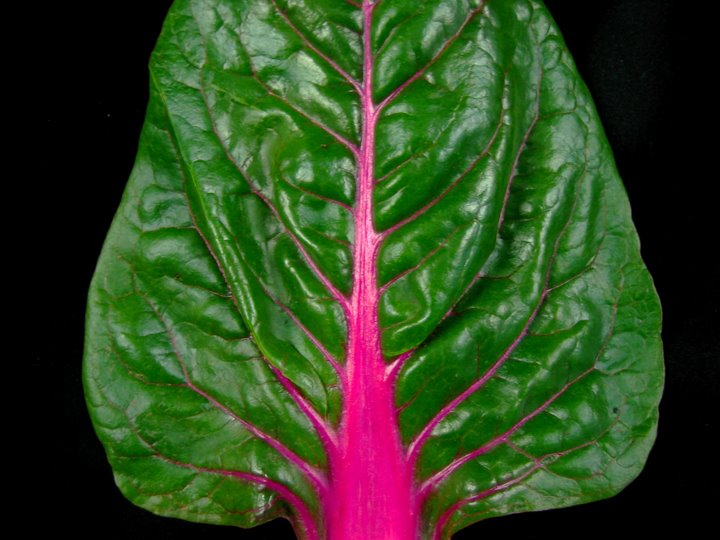
I think the images of leafy greens are particularly cool because they look like dendritic arbors of neurons, which is what I work on in lab every day.

———-

Today the market was beautiful. It was calm and not at all crowded, but I could feel winter winding down. The sun was bright and almost warm.

At the stands there were only a few lingering winter squash and more delicate greens are springing up everywhere. Pomegranates cannot be found at all (new cereal topping ideas anyone?) and even the citrus selection is less diverse than it was a few weeks ago.

Spring is on its way!

Today’s purchases:

  • Trumpet mushrooms (Far West Fungi)
  • Romanesco (Dirty Girl Produce)
  • Ruby chard (Star Route)
  • Pink pomelo (Paredez Farms)
  • Naval oranges (Hamada Farms)
  • Blood oranges (Hamada Farms)
  • Meyer lemon (Hamada Farms)
  • Baby artichokes (Iacopi Farms)
  • Collards (Capay Organics)
  • Gold chard (Capay Organics)
  • Treviso (Capay Organics)
  • Kiwi (Four Sisters Farm)
  • Rosemary (Chue’s)
  • Italian parsley (Chue’s)
  • Garlic (Chue’s)
  • Espresso Temescal (Blue Bottle Coffee)

I would love to know what you think about my photos! And FYI, the scientific glassware is a pet project of mine, I didn’t get it at the farmers market….

Tags: , , , , , , ,

Body Fat Test: One Year Later (part 1)

by | Jan 30, 2009

This week my awesome gym (Bakar Fitness) was once again offering hydrostatic body fat testing courtesy of Fitness Wave.

I had my body fat and metabolic rate tested last year and thought it would be interesting and informative to go in for a one year follow up.

I also want to give you an idea of what to expect if you decide to “get dunked.”

(note: This is part 1 of a 2 part post. The first post focuses on the hydrostatic testing experience rather than my personal story. Come back next week for part 2).

“Hydrostatic” body fat testing is a lot like it sounds: you get weighed under water. The principle behind the method is that virtually all tissues in your body–bones, muscles, organs–weigh more than water. That is, everything sinks except fat. The density of fat is lower than other tissues and consequently, fat weighs less.

Using this knowledge you can calculate how much fat you have by comparing your weight inside and out of the water. The lighter you weigh under water compared to on land, the more fat you have. You can convert this into an exact body fat percentage by doing a little math. (Don’t worry, Fitness Wave does this all for you).

Calculations are even more accurate when you throw in measurements like height. For this test I even had my ankle size measured.

During the test you step into a tank of warm water (pictured to the right) and position yourself on a metal scale. You are instructed to blow out all the air from your lungs and submerge your head while the operator checks your weight. This process is repeated at least three times, and takes about five minutes.

The bottom line is that when packing your bag for your body fat test remember that you will get wet.

A bathing suit and towel are appropriate.

If it is January (or summer in San Francisco), you may also want to bring a change of warm clothes and sandals. When testing, the Fitness Wave trailer is stationed down near the loading docks between the Community Center and Genentech Hall at UCSF Mission Bay. You probably don’t want to walk from the locker room to the trailer in your bikini.

Hydrostatic Testing Checklist:

  1. Bathing suit
  2. Towel
  3. Warm clothes
  4. Convenient shoes
  5. Healthy dose of perspective

Packing your bag is not all the planning you need to do before getting a body fat test. As I explained last year, I also recommend you decide before you go about what you will do with this personal information. Determine beforehand whether or not you want to tell your friends what you are made of to save yourself from stress and awkward conversations later on.

Overall the testing was (once again) a great experience, and I highly recommend getting a hydrostatic test if you get the opportunity. I received a print out of my numbers and an email with more information the next day.

Next time I will reflect upon how my eating and workout habits have affected my body composition over the last year. Check back next week for all the gossip.

Keep up with Summer Tomato by using these links to receive posts via email or RSS feed. Email subscriptions require an activation step once you receive a confirmation in your inbox.

Click here to read Body Fat Test: One Year Later (part 2)

Have you ever had your body fat tested? Are you interested?

Tags: , , , , , , , , , ,

UPDATE: Cheese-filled Bacon Blanket And Meat Cake

by | Jan 29, 2009

UPDATE: New York Times embraces the bacon blanket!

I saw this story a few days ago, but it is now the most emailed story in the New York Times Dining section so I have no choice but to update this post.

Apparently someone decided to take the bacon blanket to new heights by filling it not with cheese, but with more pork. (This pic is their work, not mine).

Is this the most brilliant stroke of genius of 2009?

This writer says yes.

———–

Here’s my original post:


I know I usually post wonderful, healthy recipes for you guys but sometimes it is just as valuable to see the opposite.

They call it a “Bacon and Cheese Roll,” but I think the name sells this creation short by not specifying that they actually weaved bacon slices together to form a bacon blanket.

Impressive.
Part of me believes this could actually kill you on the spot.
I mean, I love bacon and I love cheese, but I look at this and think only one thing:
Why?
And because there is no limit to the perversity of some imaginations, here is a three layer meat cake for your viewing pleasure. (Click the link to fresh99 for the recipe).
Let it be known that the frosting is mashed potatoes and the filling is ketchup and worcestershire sauce.
I can understand a nice steak every now and then, but a slice of meat cake?
Once again I have to ask…. Why?
Tags: , , , ,

The Latest on Carbs, Fat and Weight Loss

by | Jan 29, 2009

A study published last week in the journal Obesity may make you question whether you really want to rely on the Atkins or South Beach diets to reach your New Year’s Resolution goals.
It is widely believed that low-carbohydrate, high-fat diets support weight loss in most individuals and indeed, there is a good amount of research to back this claim. Despite this, few studies have examined the after effects of a low-carb diet, particularly once normal eating is resumed.

In a new study, scientists had rats consume either a regular high-carb diet or a low-carb, high-fat diet for sixteen days. After this period the diets were switched and rats were maintained on the opposite diet for another sixteen days. Both diets included the same number of calories, so the only difference between the groups was the relative percentage of macronutrients.

As you might expect, while the rats were fed a low-carb, high-fat diet they lost weight compared to rats on a regular diet. Interestingly, however, despite this loss of body weight there was little to no loss of fat, and therefore the rats that lost weight had a relatively higher body fat percentage than the rats fed a normal diet.

The low-carb rats also had lower energy expenditure (exercise and calorie burning) than rats on a normal diet, and the decrease persisted even when the animals were returned to a normal diet. This is consistent with reports of exhaustion in humans undergoing very low-carb diet regimens.

Furthermore, animals that were temporarily put on a low-carb diet regained more weight than animals that were never fed a low-carb diet. This suggests that short term exposure to a low-carb diet increases risk of weight gain compared to no dieting.

Uh oh.

According to this research it is possible that a low-carb diet may actually cause you to gain weight in the long run. How very unfortunate.

But while these results are compelling, do not go stocking up on pasta just yet. First remember that these are rats, not humans. The way scientists change the composition of a rat’s diet is by giving them different pellets of bizarre lab food with various proportions of “nutrients.” This is not the way humans eat (assuming you don’t spend too much time in GNC), nor can it ever reflect a healthy human diet. It would be great if they could put the rats on a diet of seasonal fruits and vegetables, whole grains, legumes and fatty fish, but that is not the way animal research works. This is something to keep in mind whenever you hear about nutrition studies.

Also, nutrition research using rodents rarely distinguishes between the qualities of different macronutrients. For example, did the “high-fat” diet contain mostly saturated fat, trans fat, monounsaturated fats, polyunsaturated fats or all of the above? A similar question can be asked about the quality of carbohydrates, but it is difficult to imagine high-quality carbohydrates coming in pellet form. A huge body of scientific literature suggests that the quality of different macronutrients is far more important to health and weight than relative proportions of refined macronutrients.

Protein is another question mark in this study, which the authors acknowledge. The low-carb diet they used was not high in protein like a typical Atkins style diet. However, their findings were similar to studies that did use higher protein content and their animals were fed sufficient protein to maintain normal body growth, so the effect of protein on their findings is likely to be small. Their goal was to examine the effect of extreme carbohydrate restriction, and this was accomplished.

Regardless of this study’s imperfections, the results shine an interesting light on our current understanding of how relative proportions of dietary macronutrients effect body composition, long-term body weight and metabolism.

Have you experienced weight gain after going off a low-carb diet?

UPDATE: This article is also available at Synapse.

Tags: , , , , , , , , , , , , , ,

High-Fructose Corn Syrup Contaminated With Mercury

by | Jan 27, 2009

I swear, it is too early for April Fool’s Day and this headline is not a joke. I wish it were.

The Institute for Agriculture and Trade Policy reports that two new U.S. studies have found detectable levels of mercury in 55 brand name foods made with high-fructose corn syrup (HFCS, from three different manufacturers).

Mercury is a potent toxin that effects the brain and nervous system. It is particularly dangerous for developing children and is associated with learning disabilities and other neurological problems. Because mercury has a particularly long half-life in the human body, women of childbearing age should also avoid mercury.

What upsets me the most about this finding is that these are the kinds of products that are directly marketed toward children.

Maybe you have heard of some of these:

  • Quaker Oatmeal to Go
  • Coca-Cola Classic
  • Yoplait Strawberry Yogurt
  • Minute Maid Berry Punch
  • Hunt’s Tomato Ketchup
  • Smucker’s Strawberry Jelly
  • Nutri‐Grain Strawberry Cereal Bars
  • Hershey’s Chocolate Syrup
  • Pop‐Tarts Frosted Blueberry

For the complete list of contaminated products, click here.

The author of one report is careful to point out that this is “just a snap shot in time,” because they only tested one sample from each product. I hardly find this reassuring, however, since their analysis was also limited to the handful of products they selected and does not tell us about everything else on the grocery store shelves.

At this point we have no way of knowing which products contain mercury and which do not. What we do know is that all of them contain high-fructose corn syrup and are products of our industrialized food system.

I’m starting to wonder, how many outbreaks and contamination scares does it take to screw in a light bulb? That is, the idea light bulb within our federal government that asks,

“Maybe we should take steps to improve the safety and nutritional value of our nation’s food supply?”

Crazy thought, I know.

Keep in mind we are not even talking about the colossal damage these products do to our health and economy without mercury.

Are fresh, natural foods that grow from the ground such a ludicrous alternative?

Please share your thoughts, this topic always baffles me.

Tags: , , , , , , , ,