Sign up

You deserve to feel great, look great & LOVE your body

Enter your email for your FREE starter kit to get healthy & lose weight without dieting:

  • This field is for validation purposes and should be left unchanged.

The Curious Case of HDL Cholesterol

by | Mar 9, 2009

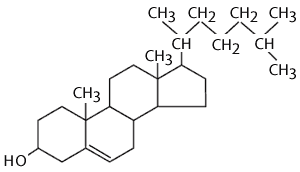
cholesterol chemical structureDrug treatments that raise the “good” high density lipoprotein (HDL) cholesterol do not improve health outcomes, according to a new analysis. But some researchers suspect raising HDL through lifestyle changes may still be effective in treating heart disease.

HDL is the form of cholesterol that actively removes dangerous lipids from the blood, and has long been thought to be protective against heart disease. This form of cholesterol is believed to work in opposition to low density lipoprotein (LDL) cholesterol, which is strongly correlated with heart disease and cardiovascular mortality. Thus the ratio of HDL to LDL cholesterols is often considered the most important indicator of heart disease risk.

Strong clinical evidence shows that LDL lowering drugs like statins can protect against heart disease and cardiovascular mortality. However there is still no effective way of improving cardiovascular outcomes by directly targeting HDL cholesterol.

Pharmacological treatments that raise HDL cholesterol levels include fibrates, niacin and a Pfizer drug called Torcetrapib. However, trials that tested these drugs for improved cardiovascular outcome have yielded mixed results. Rather than lowering mortality risk, evidence suggests that fibrates and Torcetrapib actually increase mortality in patients. Some trials have shown niacin to be effective at reducing cardiovascular events, but the data are inconsistent.

A new meta-analysis published in the British Medical Journal asked whether pharmacological treatments that are known to raise HDL can improve cardiovascular outcomes. After adjusting for several known confounders (including the effect of LDL cholesterol) pharmacological treatments that raise HDL were not effective at protecting against heart disease.

Does this mean that HDL is not important for heart disease? Not necessarily.

The original studies that implicated HDL in heart protection were observational. For example, it was shown in the Framington Heart Study that people with HDL levels greater than 60 mg/dL have a reduced risk of heart disease compared to individuals with lower HDL. Likewise, individuals with less than 40 mg/dL of blood HDL are considered at risk for coronary heart disease, even when LDL cholesterol is relatively low.

Additionally, lifestyle choices that contribute to raising HDL are associated with a lower risk of heart disease. Examples of these are physical activity, weight loss, not smoking, increased omega-3 fatty acid consumption, decreased trans fat consumption, alcohol consumption and dietary soluble fiber. Also, diets low in saturated fat but relatively high in unsaturated fats have been shown to raise HDL and decrease heart disease risk.

All these HDL raising activities can improve cardiovascular outcome. However, this does not mean that HDL itself prevents heart disease. Rather, it seems to be a good biomarker (observational correlate) of heart disease.

Why are pharmacological methods of raising HDL not helpful (and possibly even harmful) at treating heart disease?

One possible explanation for this discrepancy is the observation that HDL has different forms, some that are protective and others that are harmful. For instance, some interventions may raise HDL cholesterol by limiting its breakdown (harmful), while others raise it by increasing HDL production (more beneficial). Also, some methods that increase HDL do so in a way that creates new problems, such as increased blood pressure.

The complex interaction between pharmacological interventions, HDL metabolism and cardiovascular outcome may have made it difficult to detect any benefit of raising HDL cholesterol in this meta-analysis. Since pharmacological intervention for raising HDL does not consistently help (and sometimes harms) cardiovascular outcome, lifestyle changes remain the most promising target for raising HDL to protect against heart disease.

Anyone want to guess how high my HDL cholesterol is??

Tags: , , , , , , , , , , , , , ,

Cancer and Diet

by | Feb 16, 2009

The Centers for Disease Control and Prevention (CDC) just released their 2005 report on cancer statistics. The web-based report contains official federal government statistics for cancer incidence in 96% of the United States population and mortality statistics for 100%. This is the seventh time the CDC’s National Program of Cancer Registries and the National Cancer Institute’s Surveillance, Epidemiology and End Results Program have combined registries to offer official federal statistics on cancer incidence and mortality for a single year.

Rates of cancer incidence are reported as the number of newly reported cases per 100,000 people. In 2005, the top four most common cancer diagnoses have not changed since 2000 and represent diseases strongly associated with lifestyle factors.

The number one diagnosed cancer in the US is prostate cancer (142.4), followed by breast (117.7), lung (67.7) and colorectal (48.3) cancers. The deadliest cancer is of the lung (52.8), while the mortality rates from prostate (24.7) and breast (24.0) cancer are nearly identical. Colorectal cancer is the fourth deadliest cancer (17.4).

Cancer is the second leading cause of death in the US, with heart disease being the first. Though most of us associate heart disease with lifestyle factors, cancer is usually regarded more fatalistically as being random or due primarily to genetics. While genetics does play a factor in some cancer cases, vast amounts of epidemiological data indicate that lifestyle factors, particularly diet and smoking, can largely account for high cancer rates in affluent countries such as the US.

There is abundant evidence that diets high in animal products and refined carbohydrates, and low in vegetables contribute to cancers of the prostate, breast and colon. A similar dietary pattern is responsible for cardiovascular disease, diabetes and neurodegenerative diseases. What is striking about cancer, however, is that there are no known drugs that stymie its development. Statins do not protect against cancer, nor do multivitamins.

The best diet to prevent all these diseases of affluence is a plant-based, whole foods diet.

Does fear of cancer impact your eating habits?

Tags: , , , , , , , , , , ,

New Evidence Ties Vitamin D Deficiency to Multiple Sclerosis

by | Feb 9, 2009
Vitamin D

Vitamin D

Both environmental and genetic factors seem to play a role in the development of multiple sclerosis (MS), but determining an exact cause of the disease has been elusive. Now new evidence suggests that vitamin D may play a direct role in regulating a gene known to be associated with MS. This finding helps bridge the gap between environmental and genetic risk factors, and strengthens the hypothesis that vitamin D could be instrumental in MS prevention.

MS is an autoimmune disease that attacks myelin, a component of the nervous system essential for the conduction of neural impulses. Onset of MS usually occurs between the ages 18 and 35, and is more prevalent in females than males.

One of the most interesting epidemiological findings associated with MS is that it is more common in regions farthest from the equator, with a few notable exceptions. Climate, sunlight and vitamin D are all suspected candidates in the occurrence of MS, as are genetics and diet. Importantly, the relationship between geographical location and MS risk seems to be most significant in early childhood years. After age 15, risk of MS for immigrants is closer to that of their home country than to that of their new country.

Sunshine is the most common source of vitamin D for humans. Vitamin D is created when ultraviolet B (UVB) light contacts skin. Dietary vitamin D is rare, though it can be obtained at significant levels with certain foods, particularly oily fish (e.g. sardines and salmon). Notably, Norway and many Asian countries have relatively low prevalence of MS. It has been suggested that fish consumption is the reason for these regional discrepancies that cannot be explained by sun exposure. This makes vitamin D a particularly strong candidate for MS prevention.

In addition to environmental factors, certain genetic risks are linked to MS. In particular, proteins associated with the body’s immune cells are mutated in many MS cases. Mutations in these proteins disrupt the ability of immune cells to determine which particles in the body are foreign and which are “self.” When this happens, the cells get confused and begin to attack their own body’s tissues.

A new article published last week in PLoS Genetics investigated the relationship between vitamin D and the genetic variants associated with MS. They found that vitamin D directly interacts with these genes at a molecular level, providing insight into the mechanism by which vitamin D may affect the disease. Though it is still not clear what specific role vitamin D plays in its interaction with MS genes, a new avenue of exploration has opened up into MS etiology.

The tie between vitamin D and MS is still vague, but it is a good idea to ensure your vitamin D levels are adequate. People living at latitudes greater than 40 degrees from the equator (San Francisco is on the border) should be taking vitamin D supplements. This is true for many reasons; MS is not the only disease that is linked to low vitamin D levels.

Vitamin D pills are now easy to find, and can be obtained at both Trader Joe’s and Whole Foods. Take one or two oil-based 1000IU vitamin D supplements daily. Men should avoid vitamin D supplements that contain calcium, because excess calcium increases risk of prostate cancer.

Do you take vitamin D supplements?

UPDATE: This article can also be found in Synapse.

Tags: , , , , , , , , , , , , , , , ,

You Should Be Taking Vitamin D Supplements

by | Dec 10, 2008
Vitamin D

Vitamin D

For the past several years the data in support of increasing vitamin D intake for every living human has been mounting. This week the American Journal of Clinical Nutrition features a collection of new research articles addressing the trends in vitamin D status and optimal dose recommendations.

This week’s take home lesson: While current research indicates we should be getting more vitamin D than is presently recommended, as a whole our vitamin D levels appear to have decreased in the past 15 years. The best way to combat this deficiency is with vitamin D supplements.

Vitamin D is a fat-soluble prohormone and essential nutrient produced when ultraviolet radiation (UVB) contacts our skin. It is probably best known for its role in bone metabolism (it has been shown to be more important than calcium for maintaining bone health), however recent studies indicate that vitamin D is essential for other physiological process as well.

Low blood levels of vitamin D have now been associated with many different chronic diseases including cancer, coronary heart disease, multiple sclerosis, Alzheimer’s disease, tuberculosis, depression, hypertension, periodontal disease, schizophrenia, seasonal affective disorder and type 1 diabetes.

In light of these findings, many nutrition researchers have argued for increasing recommended levels of vitamin D intake, but making population-wide recommendations have proved difficult for world health agencies because of large variability and uncertainty in vitamin D requirements.

There are several things to consider when evaluating vitamin D status in an individual. Latitude (sun exposure) is probably the single best predictor of vitamin D status. Anyone living in San Francisco or further north cannot get enough sun exposure to achieve sufficient vitamin D status, particularly during the winter months.

Because vitamin D is fat-soluble, it is retained in body tissues for several months after sun exposure. For this reason, people living at far north latitudes are particularly vulnerable to vitamin D deficiency because they frequently do not store up sufficient vitamin D during the summer to sustain their needs during the winter.

To further complicate matters, it is incredibly difficult to obtain vitamin D through dietary sources. Fatty fish and eggs are the only natural sources of vitamin D, though they are probably insufficient to achieve optimal status. Milk and soy products are typically fortified with vitamin D, as are some juices.

Skin pigmentation, sun avoidance and body composition (high body fat) are all associated with vitamin D deficiency. Darker skin tones do not convert sunlight to vitamin D as easily as lighter skin tones. Sunscreen blocks virtually all vitamin D synthesis. Body fat reduces bioavailability of vitamin D tissue stores.

This week’s study by Anne Looker et al, suggests that increased body mass as well as awareness of skin cancer risk and use of sunscreen have contributed to a significant decline in vitamin D levels in north America in the past decade.

The good news is that supplementation does appear to be effective at improving vitamin D status. Though there is still some disagreement on what the optimum blood levels of vitamin D are, it is generally agreed that they are much higher than currently recommended by any world health organization. One of the principle motivations of the present studies is to inform new vitamin D recommendations.

Kevin Cashman et al offers estimations of dietary requirements of vitamin D for healthy adults. They performed a randomized, placebo-controlled study testing the effects of different vitamin D doses and how they effect blood vitamin D levels.

The absolute minimum amount of vitamin D supplementation recommended by the study is 8.7 ug/day, or approximately 400 IU. This was to maintain blood serum levels greater than 25 nmol/L, and is double the current FDA recommendation for people under age 50. However, this suggestion is only sufficient to avoid deficiencies associated with bone loss and not other chronic diseases.

“The data from the present study clearly show that vitamin D tissue stores, developed during summer via exposure of skin to sunshine, were not sufficient to maintain serum 25(OH)D concentrations of greater than 25 nmol/L in most of the population [during winter], and that dietary vitamin D is an absolute requirement to maintain status above this minimum threshold.”

But the recommendations do not stop here. To maintain blood serum levels of greater than 50 nmol/L–a range more consistent with lowering risk of chronic disease–the study recommends 28 ug/day or 1100 IU of vitamin D. To keep blood serum above 80 nmol/L (from all I have read this is what I would recommend), 41 ug/day or 1650 IU is needed.

Remember this is most important if you are overweight, live north of San Francisco, get little sun exposure or have darker skin. Very rarely do I recommend vitamin supplements (they are not usually effective and are sometimes dangerous), but in this case the evidence is unequivocal.

Vitamin D supplements are easier to find than in the past, but they are usually packaged with calcium and are insufficient in dosage. Men should be wary of excess calcium supplementation since it is associated with an increased risk of prostate cancer.

I will continue looking for a good vitamin D supplement and will post when I find one I am happy with. If you have any recommendations, please share them with us.

Look for supplements where vitamin D is in the form of cholecalciferol, or vitamin D3.

Tags: , , , , , , , , , , , , , , , ,

Vitamins C and E Do Not Reduce Risk of Cardiac Events in Men

by | Nov 13, 2008

This week, the Journal of the American Medical Association (JAMA) reports that long-term supplementation with either vitamins C (500 mg) or E (400 IU) is ineffective at reducing major cardiovascular events, including heart attack and stroke.

The study was a ten year randomized, double-blind, placebo-controlled trial in low risk, healthy men over 50-years old.

Unfortunately, results do not get any more conclusive than this. Sorry boys, you are going to have to stick with diet and exercise for now.

It was thought that antioxidants such as vitamins C and E may reduce risk of cardiovascular disease by decreasing oxidative damage and reducing inflammation. But it appears that consuming these vitamins in supplement form is ineffective.

It is still a good idea to get enough of these antioxidants from dietary sources, however. Fruit is a good source of vitamin C. Almonds are good for vitamin E. A bonus is that a diet rich in fruits and nuts actually is associated with a lower risk of heart disease.

**********

Also in JAMA, low-dose aspirin was shown to be ineffective at reducing the risk of cardiac events in patients with type 2 diabetes. This finding is somewhat surprising because aspirin is effective at reducing cardiac events in non-diabetic individuals, and patients with diabetes are considered to be at particularly high risk for heart disease. It was thus reasoned that aspirin should be recommended for people with diabetes. However, in this group of diabetic patients in Japan, aspirin did not the reduce risk of a cardiovascular event.

One thing to note is that this study was relatively small, only 2,539 participants. So it may have lacked statistical power to find a real benefit. If you have type 2 diabetes and are currently taking daily aspirin, I wouldn’t stop just yet.

The good news for everyone is that basic dietary and lifestyle factors are by far the largest contributors to heart disease, diabetes and cancer. You can avoid most of these problems by eating a varied diet of whole foods, maintaining a healthy weight and staying moderately active. I’d choose that over aspirin any day!

Do you take many dietary supplements?

UPDATE: The problems with vitamin C and E supplements were expanded on this week by Tara Parker-Pope at the New York Times Well Blog. It is a great read if you are interested in this topic.

Tags: , , , , , , , , , , , , , ,

Another One Bites the Dust

by | Aug 8, 2008

A report published today in the American Journal of Clinical Nutrition systematically reviews the data examining whether or not a dietary supplement (this time the antioxidants called carotenoids) has the ability to fight a human disease (this time lung cancer).

Not surprisingly, there was no association found between taking supplements and cancer risk.

Why was this study done? Because people who eat foods that are high in carotenoids do seem to be protected against cancer, but no one is sure of the exact reason why. General Mills would love to tell you that they can add carotenoids to your breakfast cereal and help you prevent cancer, but sadly for the food industry this is not true. But you are the winner here, because you can still get these cancer fighting benefits by having a diet rich in fruits and vegetables!

Bon appetit!!

Tags: , ,

Exercise Pill: Really?

by | Aug 6, 2008

A recent study published in the journal Cell describes a chemical that has the ability to increase exercise endurance in mice without a regular exercise regimen (i.e. training). News media has paraded this research as the discovery of an “exercise pill” that could potentially reduce or eliminate the need for regular exercise.

If this sounds a little ridiculous to you, you are not alone.

I am happy to report that not everyone interprets this new data as the answer to America’s obesity epidemic. An article appeared in today’s ScienceDaily explaining that the research does not even come close to testing all the potential benefits of exercise and therefore extreme caution should be taken when interpreting the results of this single study.

Benefits of exercise that were not tested in the mouse study include (but are not limited to) increasing positive measures of cardiac capacity and decreasing risk for diseases like heart disease, hypertension, type 2 diabetes, breast cancer, colon cancer and osteoporosis.

So let’s be clear: there are countless benefits of exercise and we have no idea if this substance can replicate them or not.

It is also good to remember the pure physical enjoyment and heightened quality of life that can be achieved through exercise, valuable outcomes that scientists often neglect in their analysis.

And did I mention this study was done on mice and not humans?

Such research may one day improve the lives of individuals who have the misfortune of a physical handicap that prevents or limits regular exercise. For the rest of us, my advice is to find ways to make exercise fun and enjoyable rather than hoping science can give you an excuse for getting out of it.

What do you think about an “exercise pill”?

Tags: , , , ,