Sign up

You deserve to feel great, look great & LOVE your body

Enter your email for your FREE starter kit to get healthy & lose weight without dieting:

  • This field is for validation purposes and should be left unchanged.

Cancer and Diet

by | Feb 16, 2009

The Centers for Disease Control and Prevention (CDC) just released their 2005 report on cancer statistics. The web-based report contains official federal government statistics for cancer incidence in 96% of the United States population and mortality statistics for 100%. This is the seventh time the CDC’s National Program of Cancer Registries and the National Cancer Institute’s Surveillance, Epidemiology and End Results Program have combined registries to offer official federal statistics on cancer incidence and mortality for a single year.

Rates of cancer incidence are reported as the number of newly reported cases per 100,000 people. In 2005, the top four most common cancer diagnoses have not changed since 2000 and represent diseases strongly associated with lifestyle factors.

The number one diagnosed cancer in the US is prostate cancer (142.4), followed by breast (117.7), lung (67.7) and colorectal (48.3) cancers. The deadliest cancer is of the lung (52.8), while the mortality rates from prostate (24.7) and breast (24.0) cancer are nearly identical. Colorectal cancer is the fourth deadliest cancer (17.4).

Cancer is the second leading cause of death in the US, with heart disease being the first. Though most of us associate heart disease with lifestyle factors, cancer is usually regarded more fatalistically as being random or due primarily to genetics. While genetics does play a factor in some cancer cases, vast amounts of epidemiological data indicate that lifestyle factors, particularly diet and smoking, can largely account for high cancer rates in affluent countries such as the US.

There is abundant evidence that diets high in animal products and refined carbohydrates, and low in vegetables contribute to cancers of the prostate, breast and colon. A similar dietary pattern is responsible for cardiovascular disease, diabetes and neurodegenerative diseases. What is striking about cancer, however, is that there are no known drugs that stymie its development. Statins do not protect against cancer, nor do multivitamins.

The best diet to prevent all these diseases of affluence is a plant-based, whole foods diet.

Does fear of cancer impact your eating habits?

Tags: , , , , , , , , , , ,

New Evidence Ties Vitamin D Deficiency to Multiple Sclerosis

by | Feb 9, 2009
Vitamin D

Vitamin D

Both environmental and genetic factors seem to play a role in the development of multiple sclerosis (MS), but determining an exact cause of the disease has been elusive. Now new evidence suggests that vitamin D may play a direct role in regulating a gene known to be associated with MS. This finding helps bridge the gap between environmental and genetic risk factors, and strengthens the hypothesis that vitamin D could be instrumental in MS prevention.

MS is an autoimmune disease that attacks myelin, a component of the nervous system essential for the conduction of neural impulses. Onset of MS usually occurs between the ages 18 and 35, and is more prevalent in females than males.

One of the most interesting epidemiological findings associated with MS is that it is more common in regions farthest from the equator, with a few notable exceptions. Climate, sunlight and vitamin D are all suspected candidates in the occurrence of MS, as are genetics and diet. Importantly, the relationship between geographical location and MS risk seems to be most significant in early childhood years. After age 15, risk of MS for immigrants is closer to that of their home country than to that of their new country.

Sunshine is the most common source of vitamin D for humans. Vitamin D is created when ultraviolet B (UVB) light contacts skin. Dietary vitamin D is rare, though it can be obtained at significant levels with certain foods, particularly oily fish (e.g. sardines and salmon). Notably, Norway and many Asian countries have relatively low prevalence of MS. It has been suggested that fish consumption is the reason for these regional discrepancies that cannot be explained by sun exposure. This makes vitamin D a particularly strong candidate for MS prevention.

In addition to environmental factors, certain genetic risks are linked to MS. In particular, proteins associated with the body’s immune cells are mutated in many MS cases. Mutations in these proteins disrupt the ability of immune cells to determine which particles in the body are foreign and which are “self.” When this happens, the cells get confused and begin to attack their own body’s tissues.

A new article published last week in PLoS Genetics investigated the relationship between vitamin D and the genetic variants associated with MS. They found that vitamin D directly interacts with these genes at a molecular level, providing insight into the mechanism by which vitamin D may affect the disease. Though it is still not clear what specific role vitamin D plays in its interaction with MS genes, a new avenue of exploration has opened up into MS etiology.

The tie between vitamin D and MS is still vague, but it is a good idea to ensure your vitamin D levels are adequate. People living at latitudes greater than 40 degrees from the equator (San Francisco is on the border) should be taking vitamin D supplements. This is true for many reasons; MS is not the only disease that is linked to low vitamin D levels.

Vitamin D pills are now easy to find, and can be obtained at both Trader Joe’s and Whole Foods. Take one or two oil-based 1000IU vitamin D supplements daily. Men should avoid vitamin D supplements that contain calcium, because excess calcium increases risk of prostate cancer.

Do you take vitamin D supplements?

UPDATE: This article can also be found in Synapse.

Tags: , , , , , , , , , , , , , , , ,

Should I Buy Whole Grain Pasta?

by | Jan 19, 2009
Pasta

Pasta

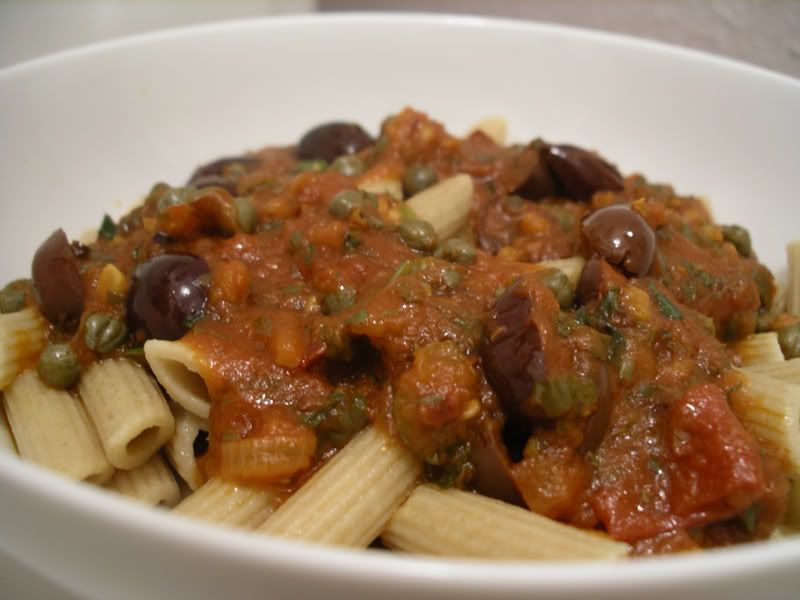
Is whole grain pasta really better for you than regular pasta? Recently I featured pasta puttanesca greened up with a little kale in the sauce. When one reader made this recipe at home, he opted to use whole grain pasta instead (I used a regular rigatoni).

But if I care about health so much why didn’t I use whole grain pasta originally?

You probably already know that I health-heartedly support the regular consumption of whole grains. But I also hold that there is a huge difference between intact grains and processed whole grains. So yes, brown rice is better for you than white rice, but pasta is different.

Noodles are made of dough and are therefore processed no matter what. For this reason they will never be a pinnacle of health food, but that does not mean that there can’t be a place for them in your diet. Italians eat pasta almost every day, and most of them are healthier than us. The important thing to think about when you are eating pasta–any pasta–is quantity.

So to answer the question, is whole grain pasta better than regular pasta? Maybe a little. But because I do not eat pasta very often, and because when I do eat pasta I eat a normal (aka small) portion, I always buy what I think will taste the best with meal. And for me, that is usually handmade fresh pasta (the soft refrigerated kind), not the whole grain stuff.

If you do not mind the taste of whole grain pasta, go ahead and buy it. It might be slightly better for you than the other kind. But the impact of whole grain pasta on your overall health is really small, so this is not a question to get hung up on.

Want a healthier Italian meal? Add more vegetables.

What is your opinion on pasta and health?

Tags: , , , , , , , , , , , ,

Controlling Blood Sugar May Help Preserve Your Memory

by | Jan 5, 2009

High blood sugar levels are known to accelerate aging and decrease longevity in many different species. Now it seems blood sugar may also be tied to how well you keep your memory as you age.

Aren’t you glad you have cut back on refined carbohydrates and sugars since you started reading this blog? I thought so!

A new study published in the December issue of the Annals of Neurology examined the effect of high blood sugar on the region of the brain responsible for memory formation, the hippocampus. Researchers examined patients with either diabetes or stroke (in other, non-hippocampus, parts of the brain) and determined that both groups had defects in the hippocampus compared to normal patients, but the problems were in different hippocampal subregions.

Patients with diabetes had defects in a part of the hippocampus called the dentate gyrus, which has been shown to be especially sensitive to aging and memory loss. Stroke patients had problems with a region of the hippocampus called CA1.

Diabetes is a disease that involves misregulation of blood sugar, so the scientists examined if blood sugar levels alone correlated with problems in the dentate. This is important because some patients that have not been diagnosed with diabetes may still have high blood sugar levels. The scientists did indeed find a correlation between high blood sugar and hippocampal deficits in the dentate gyrus. Interestingly, blood sugar levels were also linked to memory performance.

Correlational findings are very interesting, but it is easy to imagine situations that would give this result without there being a causative role for blood sugar in memory function. One reason this study is particularly compelling is because they repeated the analysis on rhesus monkeys and found the same relationship between blood sugar and hippocampal defects.
Even better, they were able to show a causative relationship between blood sugar regulation and dentate gyrus deficits in mice. In this experiment the scientists induced type 2 diabetes in the animals, then measured hippocampal function. Mice that could not regulate blood sugar had hippocampal deficits in the dentate compared to control mice.
Taken together, this study provides strong evidence that high blood sugar levels are related to hippocampal and memory dysfunction.

What does this mean for you?

This is actually great news for the rest of us because blood sugar is something we can self-regulate fairly easily.
The study’s principal investigator and professor of neurology at Columbia University, Dr. Scott Small says,”This would suggest that anything to improve regulation of blood glucose would potentially be a way to ameliorate age-related memory decline.”

That means both diet and exercise may work together to preserve memory function into old-age by controlling blood sugar.

“We had previously shown that physical exercise strengthens a part of the brain involved with aging but, at the time, we didn’t know why physical exercise would have this selective benefit,” Small affirmed. “Now we have a proposed mechanism. We think it’s because subjects who exercised had better glucose handling.”

Though the role of diet in hippocampal function has not been directly tested in humans, evidence is mounting that it is important for maintaining cognitive function and protecting against Alzheimer’s disease.

——————–

The best way to control your own blood sugar levels is to eat and live in a manner that improves insulin sensitivity. An added bonus is that you will probably lose weight, live longer and reduce your risk of a bunch of other diseases too, including cancer.

Sensitivity to insulin is affected by two dietary factors: 1) How much glucose is in your blood at any one time and 2), the composition of fat in your diet. It is also improved by exercise.

Keep these things in mind when you eat if you want to control and improve your insulin sensitivity:

  • Limit sugars and refined carbohydrates, including all white bread, white rice and pasta.
  • Choose whole, intact grain carbohydrates such as brown rice and oats.
  • Make vegetables the bulk of your diet.
  • Consider substituting legumes for carbs.
  • Reduce saturated fats from red meat and dairy
  • Eat more healthy fats from fish, olive oil and nuts.
  • Avoid processed foods with hidden sugars, yogurts and salad dressings come to mind.

Basically just eat real food and you’re on your way. And don’t forget to keep reading this blog to learn how to make healthy eating both easy and delicious.

Let me know which of the above suggestions you find the most difficult to follow and I may be able to give you a few pointers….

Tags: , , , , , , , , , , ,

You Should Be Taking Vitamin D Supplements

by | Dec 10, 2008
Vitamin D

Vitamin D

For the past several years the data in support of increasing vitamin D intake for every living human has been mounting. This week the American Journal of Clinical Nutrition features a collection of new research articles addressing the trends in vitamin D status and optimal dose recommendations.

This week’s take home lesson: While current research indicates we should be getting more vitamin D than is presently recommended, as a whole our vitamin D levels appear to have decreased in the past 15 years. The best way to combat this deficiency is with vitamin D supplements.

Vitamin D is a fat-soluble prohormone and essential nutrient produced when ultraviolet radiation (UVB) contacts our skin. It is probably best known for its role in bone metabolism (it has been shown to be more important than calcium for maintaining bone health), however recent studies indicate that vitamin D is essential for other physiological process as well.

Low blood levels of vitamin D have now been associated with many different chronic diseases including cancer, coronary heart disease, multiple sclerosis, Alzheimer’s disease, tuberculosis, depression, hypertension, periodontal disease, schizophrenia, seasonal affective disorder and type 1 diabetes.

In light of these findings, many nutrition researchers have argued for increasing recommended levels of vitamin D intake, but making population-wide recommendations have proved difficult for world health agencies because of large variability and uncertainty in vitamin D requirements.

There are several things to consider when evaluating vitamin D status in an individual. Latitude (sun exposure) is probably the single best predictor of vitamin D status. Anyone living in San Francisco or further north cannot get enough sun exposure to achieve sufficient vitamin D status, particularly during the winter months.

Because vitamin D is fat-soluble, it is retained in body tissues for several months after sun exposure. For this reason, people living at far north latitudes are particularly vulnerable to vitamin D deficiency because they frequently do not store up sufficient vitamin D during the summer to sustain their needs during the winter.

To further complicate matters, it is incredibly difficult to obtain vitamin D through dietary sources. Fatty fish and eggs are the only natural sources of vitamin D, though they are probably insufficient to achieve optimal status. Milk and soy products are typically fortified with vitamin D, as are some juices.

Skin pigmentation, sun avoidance and body composition (high body fat) are all associated with vitamin D deficiency. Darker skin tones do not convert sunlight to vitamin D as easily as lighter skin tones. Sunscreen blocks virtually all vitamin D synthesis. Body fat reduces bioavailability of vitamin D tissue stores.

This week’s study by Anne Looker et al, suggests that increased body mass as well as awareness of skin cancer risk and use of sunscreen have contributed to a significant decline in vitamin D levels in north America in the past decade.

The good news is that supplementation does appear to be effective at improving vitamin D status. Though there is still some disagreement on what the optimum blood levels of vitamin D are, it is generally agreed that they are much higher than currently recommended by any world health organization. One of the principle motivations of the present studies is to inform new vitamin D recommendations.

Kevin Cashman et al offers estimations of dietary requirements of vitamin D for healthy adults. They performed a randomized, placebo-controlled study testing the effects of different vitamin D doses and how they effect blood vitamin D levels.

The absolute minimum amount of vitamin D supplementation recommended by the study is 8.7 ug/day, or approximately 400 IU. This was to maintain blood serum levels greater than 25 nmol/L, and is double the current FDA recommendation for people under age 50. However, this suggestion is only sufficient to avoid deficiencies associated with bone loss and not other chronic diseases.

“The data from the present study clearly show that vitamin D tissue stores, developed during summer via exposure of skin to sunshine, were not sufficient to maintain serum 25(OH)D concentrations of greater than 25 nmol/L in most of the population [during winter], and that dietary vitamin D is an absolute requirement to maintain status above this minimum threshold.”

But the recommendations do not stop here. To maintain blood serum levels of greater than 50 nmol/L–a range more consistent with lowering risk of chronic disease–the study recommends 28 ug/day or 1100 IU of vitamin D. To keep blood serum above 80 nmol/L (from all I have read this is what I would recommend), 41 ug/day or 1650 IU is needed.

Remember this is most important if you are overweight, live north of San Francisco, get little sun exposure or have darker skin. Very rarely do I recommend vitamin supplements (they are not usually effective and are sometimes dangerous), but in this case the evidence is unequivocal.

Vitamin D supplements are easier to find than in the past, but they are usually packaged with calcium and are insufficient in dosage. Men should be wary of excess calcium supplementation since it is associated with an increased risk of prostate cancer.

I will continue looking for a good vitamin D supplement and will post when I find one I am happy with. If you have any recommendations, please share them with us.

Look for supplements where vitamin D is in the form of cholecalciferol, or vitamin D3.

Tags: , , , , , , , , , , , , , , , ,

Vitamins C and E Do Not Reduce Risk of Cardiac Events in Men

by | Nov 13, 2008

This week, the Journal of the American Medical Association (JAMA) reports that long-term supplementation with either vitamins C (500 mg) or E (400 IU) is ineffective at reducing major cardiovascular events, including heart attack and stroke.

The study was a ten year randomized, double-blind, placebo-controlled trial in low risk, healthy men over 50-years old.

Unfortunately, results do not get any more conclusive than this. Sorry boys, you are going to have to stick with diet and exercise for now.

It was thought that antioxidants such as vitamins C and E may reduce risk of cardiovascular disease by decreasing oxidative damage and reducing inflammation. But it appears that consuming these vitamins in supplement form is ineffective.

It is still a good idea to get enough of these antioxidants from dietary sources, however. Fruit is a good source of vitamin C. Almonds are good for vitamin E. A bonus is that a diet rich in fruits and nuts actually is associated with a lower risk of heart disease.

**********

Also in JAMA, low-dose aspirin was shown to be ineffective at reducing the risk of cardiac events in patients with type 2 diabetes. This finding is somewhat surprising because aspirin is effective at reducing cardiac events in non-diabetic individuals, and patients with diabetes are considered to be at particularly high risk for heart disease. It was thus reasoned that aspirin should be recommended for people with diabetes. However, in this group of diabetic patients in Japan, aspirin did not the reduce risk of a cardiovascular event.

One thing to note is that this study was relatively small, only 2,539 participants. So it may have lacked statistical power to find a real benefit. If you have type 2 diabetes and are currently taking daily aspirin, I wouldn’t stop just yet.

The good news for everyone is that basic dietary and lifestyle factors are by far the largest contributors to heart disease, diabetes and cancer. You can avoid most of these problems by eating a varied diet of whole foods, maintaining a healthy weight and staying moderately active. I’d choose that over aspirin any day!

Do you take many dietary supplements?

UPDATE: The problems with vitamin C and E supplements were expanded on this week by Tara Parker-Pope at the New York Times Well Blog. It is a great read if you are interested in this topic.

Tags: , , , , , , , , , , , , , ,

Weekday Breakfast: Cereal and Fruit

by | Nov 10, 2008
Healthy Breakfast

Healthy Breakfast

Monday mornings are rough, but skipping breakfast is not an option. Current wisdom recommends you drink a glass of water and eat breakfast within an hour of waking. The quickest, healthiest thing you can have in the morning is a bowl of cold whole grain cereal with fruit.

But buyer beware. Almost all breakfasts cereals these days claim to be “whole grain.” Yet as you can probably deduce on your own, Cocoa Puffs is not a nutritious breakfast. All that sugar negates any benefit of their “whole grain” health claims.

The Truth About Whole Grain Products

The US Food and Drug Administration (FDA) has defined the requirements that must be met for a manufacturer to use the term “whole grain” on its label (along with the respective health claims):

“Cereal grains that consist of the intact, ground, cracked or flaked caryopsis, whose principal anatomical components – the starchy endosperm, germ and bran – are present in the same relative proportions as they exist in the intact caryopsis – should be considered a whole grain food.” (emphasis added by me)

Understand? To be considered “whole,” grains do not actually have to be intact. Armed with this, manufacturers set to work demolishing grains as normal, then adding back the required ratios of grain parts (germ and bran) to meet the standard. Presto! Magic health in Lucky Charms.

Would you then be surprised if I told you that intact grains are much, much better for you than demolished and reassembled grains?

If you really want the benefits associated with eating whole grains you should be able to see an intact grain in what you are eating; something like an oat, for example. If not, there has definitely been some processing involved, which reduces the whole grain benefits. That being said, processed whole grains are better than purely refined grains (without germ and bran). White sandwich bread is indistinguishable from sugar in my view.

So this is the problem with breakfast, and it is difficult to avoid in cold cereals. Real whole grains are tough and bland, so some demolition and sweetening are almost always necessary for most people to eat them regularly.

Oatmeal is a fantastic choice. Steel cut oats are even better, but they take 45 minutes to cook. When you just want to pour, eat and run you will need a quicker alternative.

My Solution

I first turned to granola. Those grains sure do look intact, right? But take a closer look and you will find granola often contains ungodly amounts of sugar. Though I enjoy granola and occasionally eat it during outdoor activities, I cannot bring myself to eat it every day for breakfast. It is just too sweet and dessert-like for me. You can make your own granola and add less sugar if you have the time. But still.

The good news is there are some products that are whole grain, palatable and not packed with sugar. But making a good breakfast out of them requires a touch of creativity. I have found one company that makes a kind of granola without sugar. Muesli is actually the appropriate term for this kind of cereal. It is regrettably difficult to find, but is available at Whole Foods in a variety of flavors. The company that makes it is called Dorset Cereals out of the UK. It is not cheap, but I only use about 1/4 cup per serving, so a box lasts me several weeks.

Another cereal product I like is the Ezekiel 4:9 brand made by Food for Life. Though these cereals are not exactly intact grains, they are made from many different kinds of sprouted whole grains and are free of flour and other bad stuff. To give you an idea of what they are like, think of Grape Nuts with more flavor.

I wish I could say that these products solved all my problems, but there is also the issue of taste and texture. Both these cereals are very dense, and eating them without any additional sweetness is a little brutal. For this reason I do not eat them alone, but instead mix them with my favorite flake cereal, Nature’s Path Flax Plus.

I also always add fruit. These days I am using pomegranate seeds (see pic), but almost anything will do. I even keep a bag of frozen organic wild blueberries for emergencies. Fruit is sweet, but also very good for you. Hooray, problem solved!!

What is your healthy breakfast?

Tags: , , , , , , , , , , , , , , , , , , , , , , , ,