Sign up

You deserve to feel great, look great & LOVE your body

Enter your email for your FREE starter kit to get healthy & lose weight without dieting:

  • This field is for validation purposes and should be left unchanged.

For The Love Of Food

by | Mar 25, 2011

For The Love of Food

Welcome to Friday’s For The Love of Food, Summer Tomato’s weekly link roundup.

The internet was overflowing with nutrition BS this week. It’s so often the same issue, people mistaking one special case for general health and safety. But the body is complicated and there is always more to consider. I also found some great articles defending salt and olive oil, and a brilliant demonstration of why portions matter.

I read many more wonderful articles than I post here each week. If you’d like to see more or just don’t want to wait until Friday, be sure to follow me on Twitter (@summertomato) or the Summer Tomato Facebook fan page. For a complete list of my favorite stories check out my links on Digg. I’m very active on all these sites and would love to connect with you.

Links of the week

What inspired you this week?

Tags: , , , , , , , , , , ,

Fishing For Answers: How To Choose Fish and Seafood

by | Dec 8, 2010

By sektordua

By sektordua

“This is a request for a Summer Tomato series on fish, and seafood in general. This topic is even more difficult to navigate than organic vs. non-organic and it would be great to learn about it in detail.”

I don’t think there is anything more complicated in the food world than fish and seafood. There are so many life or death issues it’s enough to make you want to close your eyes, plug your ears and live out the rest of your life in a cave on Mars.

But this isn’t really one of those issues we can ignore.

Fish and Your Health

There’s no denying it, fish is good for you.

The latest data I’ve read suggests that vegetarians have more cancer than fish eaters, though both have less cancer than meat eaters. There are also well-documented and significant heart and brain benefits associated with seafood consumption.

Omega-3 fatty acids are usually given the credit for the heart-healthy benefits of fish. The most beneficial omega-3 fatty acid, eicosapentaenoic acid (EPA), as well as docosahexaenoic acid (DHA) are only found in seafood. Vegetarian forms of omega-3s including α-Linolenic acid (ALA) can be converted to EPA and DHA in the body, but the conversion rate is very low and likely insufficient.

Personally I think healthy eating is a lot more difficult if you do not eat fish. (Please direct mild-tempered disagreements to the comments below). Yes, you can be healthy if you are vegetarian or vegan, but it is much more work in my opinion.

The fish and health issue seems to be even more important (and more complicated) for pregnant women. Children of mothers who eat less seafood during pregnancy score lower on cognitive tests than those whose mothers ate the most fish. But at the same time, mercury contamination is a serious concern for pregnant women that requires special attention. Mercury is toxic to neurodevelopment and can injure a developing fetus.

Mercury contamination has in fact become so common that regular, non-pregnant consumers also need to be concerned. Recent testing in New York City revealed that most of the top sushi restaurants serve fish that exceeds the FDA safety recommendations for mercury.

Another health and fish issue is polychlorinated biphenyls (PCBs). These things are all sorts of bad for you. I’ve written extensively on mercury and PCB contamination in fish over at Synapse.

For more on omega-3s, mercury, PCBs and the whole mess, Marion Nestle’s What To Eat is a good resource.

For health, the basic guidelines I follow include:

  • Eat fish 2-3 times per week.
  • Avoid large fish that accumulate mercury like tuna, shark and swordfish.
  • Avoid farmed fish that contain PCBs.
  • Seek fatty fish such as salmon, mackerel and sardines.
  • Avoid fresh water fish caught by friends. Lakes and rivers are almost all contaminated with high mercury levels.
  • Enjoy vegetarian omega-3 fatty acid sources such as walnuts, flax and soy.

I don’t take omega-3 supplements, but it is an alternative if you do not eat enough fish. Be sure to get supplements derived from marine sources (and don’t take them before interacting with other humans–icky burps).

All that, and we haven’t even touched on the environmental sustainability issues yet.

*deep breath*

*exhale*

Ok.

Fish and the Environment

I’m going to start with the disclaimer that I am NOT EVEN ALMOST an expert in this stuff. I read about it sometimes and keep up with the basics, but environmental issues aren’t my expertise.

That being said, it is not clear that anyone understands the true damage that the fishing industry is doing to either the environment or the future of the fishing industry. The outlook is not good, but it does seem that there are a few groups that are aware of the problems and taking actions to improve the situation.

The Monterey Bay Aquarium, the group I trust most in these matters, recently issued The State of Seafood Report if you’d like to read more.

New York Times food writer and author of Fish: The Complete Guide To Buying and Cooking, Mark Bittman, chimed in on the issue a few months ago in an article explaining the nearly impossible task of choosing fish these days.

To make matters worse, a new report suggests that many eco-friendly fish labels aren’t exactly accurate.

It’s difficult to say how to handle seafood sustainability and I certainly do not have all the answers, but I’ll tell you what I do.

Things I consider when buying and eating fish for sustainability:

  • Buy from trusted sources. Since I personally cannot keep up on all the fish sustainability issues, I am sure to shop at places that do. Most small, high-end seafood vendors in San Francisco do a good job of at least telling you where their fish comes from, and will often include sustainability labels.
  • Shop at Whole Foods. Though they aren’t perfect, Whole Foods does a great job of labeling the origin of their animal products. This is leaps and bounds over most grocery stores.
  • Eat wild Alaskan salmon. The Alaskan fishing regulations are mostly sustainable. I’ve heard this challenged, but Alaskan is still superior to Atlantic or farmed salmon. Did you know that all farmed salmon is dyed pink? Eeeew.
  • Eat sardines. These little guys are sustainable, healthy and delicious. I prefer fresh sardines, but I even enjoy the boneless skinless sardines from cans. Pair with dry-as-a-bone white wine. Yum yum.
  • Never, ever eat bluefin tuna. These magnificent animals are on the verge of extinction. Don’t do it!
  • Eat fish at responsible restaurants. In SF, many of the high-end restaurants proudly label the origin of their fish on the menu. This is not always true, however, especially in Japanese restaurants. Nobu in Manhattan is still serving bluefin tuna.
  • Never shop at Asian fish markets. Cheap fish = bad news. Sorry. I know a lot of people rely on these, but personally I do not trust them. Many of the fish sold at these stores are shipped in from China (if they deny it they are likely lying to you). Remember when China was putting poison in baby formula? Don’t assume the fish from there is either safe or sustainable.
  • Avoid tuna. Do you still order maguro (tuna) at sushi restaurants? How boring and unethical. Try getting something that you’ve never heard of that may be less likely to be over-fished. And don’t be afraid to ask where it came from.
  • Ask the Monterey Bay Aquarium. When in doubt, visit their Super Green List for the best seafood choices at the moment.

Shellfish

Interestingly, shellfish are common on the Monterey Bay Aquarium’s best choices list. The reason for this is that many kinds of shellfish can be farmed sustainably with very little environmental impact. This is good news, but doesn’t make shellfish a perfect choice.

Oysters, scallops and shrimp are still among the most common sources of food poisoning in the U.S. every year. Oysters alone are responsible for 15 deaths annually. That means your sources for these items are just as important as they are for any other fish, but mostly for your own protection.

The biggest issue is usually refrigeration (but it is not always), so your best bet is to go with trusted sources that are not likely to skimp on costs and resources. Better yet, buy them live and prepare them yourself.

Taste and Other Adventures

As important as all these issues are, the dominant thought in the back of my mind is always: I love seafood, can I have some?

And yes, sometimes this thought wins out over health, environment and sustainability. But I really do try to do the right thing as often as possible, because I want to continue enjoying seafood for many, many more years.

It is not uncommon to hear these days that we could lose our fishing industries within my lifetime, and no one wants that.

No matter how much we want to deny these issues, they effect us all. Even vegetarians have an interest in preserving the oceans and wild fish populations, since entire ecosystems are dependent upon them.

This is one place where we all need to do our part and be conscientious consumers.

Please share your thoughts, this stuff is complicated!

Originally published November 4, 2009.

Tags: , , , , , , , , , , , ,

For The Love Of Food

by | Nov 12, 2010

For The Love of Food

Welcome to Friday’s For The Love of Food, Summer Tomato’s weekly link roundup.

Next week I’ll be celebrating my 31st birthday. If you appreciate the work I do for this site and would like to give back, I’m donating all cakes, presents and well wishes to Charity Water. Charity Water helps bring clean water to children and families in Africa who desperately need it. Follow the link to learn more.

http://mycharitywater.org/darya

How to make food taste better without cooking skills, the best geek food article of all time and why Twinkie’s won’t make your life better.

I read many more wonderful articles than I post here each week. If you’d like to see more or just don’t want to wait until Friday, be sure to follow me on Twitter (@summertomato) or the Summer Tomato Facebook fan page. For a complete reading list join me on Digg. I’m very active on all these sites and would love to connect with you.

Links of the Week

What inspired you this week?

Tags: , , , , , , , , ,

6 Reasons To Eat More Sardines

by | Apr 28, 2010
sardines

Photo by rockyeda

I’m happy to introduce my friend and fellow sardine lover, Benjy Weinberger. Neither of us were particularly happy about the recent news of the last US sardine cannery closing, so I invited Benjy here to defend the honor of one of my favorite sea creatures.

Benjy Weinberger has been eating food for over 30 years, and has held strong opinions for almost as long.

Read his personal blog: http://jamknife.blogspot.com/
Follow him on Twitter: @benjyw

Yes, We Can! Why We Should Be Eating More Sardines

The whole street rumbles and groans and screams and rattles while the silver rivers of fish pour in out of the boats and the boats rise higher and higher until they are empty. The canneries rumble and rattle and squeak until the last fish is cleaned and cut and cooked and canned.
– John Steinbeck, Cannery Row

A few days ago we were told the last sardine cannery in the US closed its doors for good. A symbol, so the story goes, of how far sardines–once a staple of working-class pantries across the nation–have fallen out of favor with the American palate.

But if you get past the bad “last sardine factory canned” puns, this narrative starts to seem, ahem, fishy. Because, in fact, the sardine is like Bad Company, alive, well and making a comeback.

Fresh sardines are showing up on menus in restaurants from San Francisco to New York. Your local supermarket still offers plenty of canned sardine choices, albeit imported. In Monterey, California, where Steinbeck romanticized the sardine industry in Cannery Row, a group of self-styled “Sardinistas” is working to return the sardine to its rightful place in the American diet. Meanwhile, nearby, small-scale gourmet canning operations have resumed. So it seems the supposed death of the sardine industry has been exaggerated.

So what are sardines, exactly? The term means slightly different things in different countries, but in the US it denotes any of several species of small, oily, silvery fish related to herring.

What all types of sardine have in common is that we should be eating a lot more of them.

6 Reasons To Eat More Sardines

1. They’re good for you.

Sardines pack an awesome nutritional punch. A single serving has around 23 grams of protein and is loaded with omega-3 fatty acids, calcium, iron and potassium, and only 200 calories. And even with canned sardines, all this goodness comes with only around 400 mg of sodium, which is relatively little for a canned product. Plus, they’re often packed in olive oil, itself an important component of a healthy diet.

2. They aren’t bad for you.

Sardines are low on the oceanic food chain, and therefore contain low amounts of mercury, PCBs and the other toxins that accumulate in longer-living marine predators such as salmon and tuna. This makes them a particularly good choice for children and pregnant women.

3. They’re sustainably fished.

Monterey Bay Aquarium’s SeafoodWATCH rates sardines as a “Best Choice”. Sardine stocks are, once again, abundant, healthy and are now well-managed.

4. They’re affordable.

Prices per oz. of canned sardines are on a par with canned tuna, poultry, ground beef and other supermarket protein sources. Prices of fresh sardines vary with availability, but they are usually among the less expensive fresh fish on display.

5. They taste like fish.

In a supermarket landscape dominated by bland, artificially dyed salmon fillets, pale tuna steaks, frozen fish sticks, artificial crab meat and other attempts to sell seafood as generic chicken-like protein slabs to people who aren’t sure if they actually like it, sardines stand out. You simply can’t ignore the fact that they are, well, fish. They look like fish, being too small to fillet or grind up. They smell like fish. They are oily. They have heads and tails, scales and bones. And they taste fishy.

This is, as most people who genuinely enjoy food know, a good thing.

6. They’re delicious.

This is ultimately the most important point in favor of consuming more sardines: they are a pleasure to eat. Simple, easy to prepare and downright delicious.

If you get your hands on some fresh sardines, they feature in fabulous recipes originating from all over the Mediterranean basin. But sardines are so simple and basic, you really don’t need a recipe to get the best out of them. Just scale and gut them, brush them lightly with olive oil and coarse sea salt, or whatever marinade you make up, grill them for around 5 minutes per side, until the skin is crispy, and serve them up with a drizzle of lemon juice and your favorite fresh herbs.

And if you can’t be fussed to cook, there are few pleasures greater than mashing canned sardines, bones and all, onto buttered toast, or perhaps over a slice of camembert.

The sardine is dead. Long live the sardine!

What are your favorite sardine recipes?

Tags: , , , , , , , , , ,

For The Love of Food

by | Nov 6, 2009
For The Love of Food

For The Love of Food

Welcome to Friday’s For The Love of Food, Summer Tomato’s weekly link roundup.

We’ve had spectacular conversations on both posts from this week (Orthorexia, Bacon Worship And The Power of Food Culture and Fishing For Answers: How To Choose Fish and Seafood), thank you all for your thoughtful contributions.

Essential reading for today includes the New York Times examination of meat and sustainability. Sadly, 2 people have died and dozens were sickened this week (again) because of an E. coli outbreak from industrial beef. If you’re wondering why this keeps happening, check out the article about how these poor cows are fed chicken poop. Seriously. Also, Europe steps up to shut down health claims about probiotics, and Cynthia Kenyon gives us one more reason sugar is evil.

I still need votes for the People’s HealthBlogger Award by Wellsphere and would greatly appreciate your support. Wellsphere is a fantastic resource for anyone interested in healthy living. To vote for me you have to create an account with them, but you can delete it when you’re done (I have yet to get any spam). If you enjoy this blog, please take a minute to show your support. Much thanks to those who have already voted.

I read many more wonderful articles than I post here each week. If you’d like to see more or just don’t want to wait until Friday, be sure to follow me on Twitter (@summertomato) or the Summer Tomato Facebook fan page. For complete reading lists join me on the social bookmarking sites StumbleUpon and Delicious. I’m very active on all these sites and would love to connect with you there. (Note: If you want a follow back on Twitter introduce yourself with an @ message).

For The Love of Food

  • The Carnivore’s Dilemma <<Exceptional article on the issue of meat eating and sustainability. It’s more complicated than you think. Now could you pass the bacon? (New York Times)
  • 7 Food Groups That Will Help Boost Your Mood <<Not sure about how much science rests behind these recommendations, but they are all healthy foods and if they help with mood too, woohoo! (Dumb Little Man)
  • The Omega-3 Battle: Which Margarine Is Healthier? <<Don’t eat margarine. However, since we discussed the health benefits of fish and omega-3 fatty acids this week, you might be interested in reading up on the debate going on in Europe right now. (Time)
  • Grain Relapse <<B.S. of the week People who follow the primal/paleo lifestyle adhere to a diet of only meat and vegetables, refraining entirely from grains and legumes in any form. Though it is hard to find health flaws in a diet like this, I have a lot of trouble understanding the purpose of this much dietary restriction–it eliminates virtually every cuisine on the planet. Mark Sisson argues there is no reason to eat grains at all, but does this much dogma really make your life better? In my experience, small amounts of grains (preferably intact) make existence a whole lot more enjoyable. I also feel better and weigh less. (Mark’s Daily Apple)
  • The Claim: A Person Can Pay Off a Sleep Debt by Sleeping Late on Weekends <<It takes longer than you think to make up for lost sleep, and it costs you in both physical and cognitive performance. Do yourself a favor and make sleep a priority. (New York Times)
  • Sugar Negates Worm’s Life-Extending Mutation <<Sugar won’t just make you fat, it also slowly kills you. Seriously, if you’re going to bother with sugar make sure whatever you’re eating is worth it. (Scientific American)
  • Europe rejects droves of health claims <<Although I’m proud of the FDA for essentially shutting down the Smart Choices campaign, Europe has always been better about making sure health claims on food labels actually mean something. This week they called bullshit on hundreds 🙂 (Food Politics)
  • From The “Who Knew?” File: Cattle Commonly Fed Chicken Poop <<Can anyone name a way that industrial beef isn’t completely and utterly nauseating? I love a good piece of meat, but not when it was grown on chicken poop. Did I mention at least 2 people died this week because of a new E.coli outbreak from beef? So gross. (Treehugger, Marler Blog)
  • Phys Ed: Why Doesn’t Exercise Lead to Weight Loss? <<Exercise is good for you, but it is nearly impossible to experience meaningful weight loss without dietary changes. Exercise is more beneficial for weight maintenance. A new study helps illuminate why. (Well Blog)
  • How to Poach Pears <<I have never tried poaching pears, but now I want to. This recipe looks relatively easy, delicious and healthy. A perfect fall dessert. (David Lebovitz)

What awesomeness are you reading?

Tags: , , , , , , , , , ,

Vegetables, Nuts and Overall Healthy Diet Protect Against Heart Disease

by | Apr 20, 2009
Vegetables

Vegetables

Most scientists agree that diet plays an important role in heart disease, but until now there has been no comprehensive analysis of which dietary factors most strongly affect disease outcome. A new meta-analysis published in the Archives of Internal Medicine reviews six decades of research (1950-2007) to assess how different dietary factors affect heart disease. Vegetables, nuts, “Mediterranean” and high-quality dietary patterns are strongly protective, while trans-fat, foods with high glycemic index or load and a “Western” dietary pattern were shown to be harmful.

The Study

This new study is unique for several reasons. First, the authors were only interested in factors that influenced heart disease directly, not simply heart disease risk factors such as cholesterol levels. Also, emphasis was placed on high-quality studies designed to identify strong dietary associations (cohort studies and randomized controlled trials) with long periods of follow up (at least one year). They asked whether the studies they reviewed were consistent with other data such as epidemiological reports, and sought to establish a causal link between diet and heart disease outcomes. Another important goal of the analysis was to identify factors that lack sufficient evidence to be conclusive and require further research.

Results

In addition to identifying vegetables, nuts, high-quality and Mediterranean dietary patterns as being strongly protective against heart disease, they also found monounsaturated fats (e.g. olive oil), dietary folate (e.g. whole grains, not supplements), dietary vitamins C and E (not supplements), alcohol consumption (in any form) and omega-3 fatty acids from fish (not plants, e.g. flax) to be moderately protective.

Factors that were not associated with heart disease in this study were dietary supplements (e.g. vitamins C and E), total fat, saturated fats, polyunsaturated fats (from plants), meat, eggs and milk. It is important to note, however, that negative findings in this analysis are not necessarily indicative of a lack of causality. Rather, it may indicate insufficient data to observe a significant positive association.

Dietary Patterns

The authors point out that “only overall healthy dietary patterns are significantly associated with coronary heart disease” in the controlled trials, while “evidence for most individual nutrients or foods is too modest to be conclusive.” They suggest that the reason an association exists for dietary patterns and not individual nutrients is that patterns “have the advantage of taking into account the complex interactions and cumulative effects of multiple nutrients within the entire diet.” The authors recommend future trials test various dietary patterns for disease outcome, including cardiovascular disease and cancer.

Taking this further, most dietary factors that were shown to be protective when consumed as part of a healthy diet were not protective when taken in supplement form. This finding bolsters the argument that overall diet rather than individual foods or nutrients are the best strategy for protecting against heart disease. The authors conclude that their findings suggest “investigating dietary patterns in cohort studies and randomized controlled trials for common and complex chronic diseases such as coronary heart disease.”

Based on their analysis, the dietary pattern that best protects against heart disease is rich in vegetables, nuts, fish, healthy fats, whole grains, and fruit. Likewise, the worst dietary pattern consists of refined carbohydrates and artificial trans-fats. The lesson: the best diet consists of plants, fish and whole foods, while processed foods contribute to heart disease.

What about red meat and saturated fats?

Interestingly, there was insufficient data to conclude that red meat or saturated fats are harmful for the heart. This is not terribly surprising, since the data has always been inconsistent. However, I would point out that many studies have looked at the role of red meat and saturated fat in coronary risk and the outcome always shows either harm or no result. And as explained above, no result can be indicative of a lack of statistical power rather than lack of causation. Importantly however, I cannot recall a single study suggesting that red meat and saturated fat is actually good for you.

From this the best we can conclude is that red meat or saturated fat may be involved in promoting heart disease, but if they are the effect is likely to be less harmful than a diet of processed foods. Practically this means small doses of saturated fat may not do much harm when eaten as a part of an overall healthy diet. This is a fairly compelling argument for exercising moderation.

Conclusions

Before you run out and order a ribeye, keep in mind that heart disease is not the only debilitating chronic disease that plagues our culture. Red meat is also associated with several kinds of cancer. Likewise, refined carbohydrates are highly correlated with type 2 diabetes. Vegetables and whole grains are protective against these other diseases as well, and fish may play a role in protecting against neurodegenerative diseases.

The take home lesson is that both diet and disease are complex systems that involve innumerable factors in several different regions of the body. When choosing what to eat it is important that you consider the context of your overall diet and do not get caught up is single foods or a single disease threat.

Tags: , , , , , , , , , , , , , , , , , , , , , , , , ,

How To Get Started Eating Healthy: Balanced Meals

by | Apr 17, 2009
Collards, Carrots and Lentils

Collards, Carrots and Lentils

Once you have everything you need to cook healthy meals, you are well on your way to a better healthstyle. But first let’s stop and make sure we know what a healthy meal looks like.

(This post is part five of the series How To Get Started Eating Healthy. Part one is Stock Your Pantry, part two is Essential Groceries, part three is Seasonal Shopping and part four is Stock Your Freezer. The recipe pictured is posted here.)

My goal here at Summer Tomato is to help you permanently adopt healthy eating patterns. Why? Because short-term weight loss diets, “cleansing” diets and ignoring your health completely will never do you any good. In contrast, healthy eating habits can add years and in some cases decades of high-quality time to your life.

I am not being sensationalist. The data is very convincing that your eating habits are the most important factor in your long-term health.

For many people the first big step in getting healthy is losing weight, and this means eating better and eating less. But my advice is generally the same (with a few exceptions) if you are not overweight. Healthy eating is the same for everyone–eating for fat loss and eating for health and longevity are the same thing.

How can you permanently eat better?

You cannot expect to let yourself go hungry and stick to that eating plan forever. It is therefore critical that you get the most out of your meals by making sure they have enough nutrients and flavor to keep you satisfied. I would go so far as to say you should love the food you eat and should walk away from it not wanting another bite. With balanced meals and wonderful ingredients, you can feel this way about what you eat.

Your body needs many things to function properly. It runs on complex carbohydrates, vitamins, fats, fibers, minerals, proteins and probably many more things we have not yet discovered. If you follow some trendy diet that encourages you to eliminate one or more of these, your body will feel deprived and ultimately find a way to get what it wants (usually in binge form). So let’s forget the starvation option and instead choose foods that give us all the nutrients we need. What we will reduce (not eliminate) are foods with fewer nutrients, the ones your body can be happy without. These foods will be addressed in a future post.

The best strategy is to give yourself a steady supply of what your body needs throughout the day. Every day. And because scientists have been unable to replicate a healthy diet with a pill, we need to focus on eating food. Real food. The kind that comes from the earth, not from a drive-thru.

The following is a guide to creating a perfect, healthy meal from food. It is only meant to be a blueprint, not a rigid plan. But I feel it is important to spell this out at the beginning because it is so different from how most people eat. I can assure you that it is very doable and more than satisfying. I eat this way, and I can say without hesitation that food is my favorite part of my day.

Eat Your Vegetables

Size Matters

As I alluded to in my post on seasonal shopping, the bulk of your diet must be vegetables if you hope to permanently lose weight and avoid heart disease, diabetes, cancer and dementia. The science is very clear on this point. If you do not like vegetables, I suggest you try and learn to like them. Chances are you have not eaten many high-quality vegetables from your local farmers market or that the ones you have tried were not prepared very well. Keep trying! Explore different recipes. Try different vegetables at high-end restaurants. Go out of your way to find vegetables cooked a way you like.

Here are some tips on learning to love foods you don’t like.

I recommend finding a friend who loves to cook and inviting him or her to explore your local market together–the enthusiasm of a chef at a farmers market can be contagious! You could even volunteer to help make a meal afterward with the fresh ingredients you found. It is amazing how quickly a kitchen becomes demystified when you spend a little time in one. Start with simple recipes. Delicious food does not have to be complicated if you cook with wonderful ingredients.

To reiterate, your first task is to increase your vegetable intake. Aim for about half of your (medium-sized) plate to be covered in vegetables. Make this happen for both lunch and dinner. If for whatever reason your choice of meal makes this difficult, try to get at least some green on your plate. Adding kale or spinach to whatever you’re making is usually pretty easy.

Diversify

You also want to try to get as much diversity as you can in the types of vegetables you eat. If you have seen those obnoxious lists of “superfoods,” you may have started to realize that any fruit or vegetable can be considered super. The fact is that all vegetables have some unique benefit and you maximize your health by eating many kinds of them, not by eating a lot of one kind. I try to mix up my weekly shopping cart to reflect the diversity of the farmers market, and I usually try to buy something I have never eaten before.

One wonderful thing about seasonal shopping at your local farmers market is that vegetables and fruits come and go pretty quickly, so diversity comes with the territory.

Smart Protein

I mentioned above that it is important to feel satisfied by your meals, and protein can go a long way in helping you achieve this. However, there are many misconceptions about protein, particularly regarding how much and what kinds you should eat.

I’ll start by saying that virtually no one in the Western world is protein deficient. It is relatively easy to get the protein your body needs to maintain its muscle mass. I do not recommend counting protein grams unless you are a professional body builder, in which case this probably isn’t the best website for you.

Despite what some people may say, many vegetables and grains contain protein. For instance, a cup of brown rice has 5 grams of protein. A cup of black beans has 15 grams of protein (and 20% of your daily iron). Some will argue that these are not “quality” sources of protein because they are not “complete proteins,” meaning that they are lacking in some essential amino acid. However, this argument is irrelevant if you follow my advice above and enjoy diversity in your diet. Yes, if all your protein comes from brown rice then you may be deficient in lysine, but presumably you are eating more than just brown rice and the rest of your food will easily make up the difference.

Getting all your protein is important, but since it is relatively easy to get I find the biggest value of protein is helping you feel satisfied after a meal. Protein digests more slowly than carbohydrates and can help you feel full longer. From this perspective, it matters very little where your protein comes from.

Personally I try to get my protein from beans, eggs or fish, because they offer more than just protein. Beans are a great source of fiber and iron. Eggs are a perfect size and are rich in vitamins. Fish has wonderful oils that have been shown to protect your heart and brain.

I’m fairly neutral on poultry and red meat in reasonable quantities.

Intact Grains

Despite what disciples of Dr. Atkins may say about carbohydrates (a lot of which I agree with), intact whole grains are essential to a healthy diet. Unfortunately, real whole grains are not very easy to come by in our culture. I have explained before, there is a tremendous difference between an intact whole grain that still looks like a grain and the “whole grains” in Lucky Charms that have been mutilated then reassembled. Real, intact grains digest slowly and are an essential source of fiber, vitamins, minerals and other wonderful things.

Like protein, whole grains should comprise about a quarter of your plate. However, since whole grains are rather difficult to get, I usually choose to make intact grains the bulk of my breakfast, and usually incorporate other grains such as brown rice or quinoa into either lunch or dinner. These will also go a long way to increase the satisfaction you feel from a meal.

Healthy Fats

One of the reasons the low fat diet from the 20th century failed so miserably is that it did not account for the necessity of healthy fats. Oils from plants and fish are critical for protecting against disease. And, like protein and grains, they contribute greatly to how satisfying your meal is.

Because fats have a high caloric density, a little really goes a long way and there is no definitive space on your plate that I allot to them. However, generally I recommend dressing or cooking all your vegetables in minimally processed oil, such as cold-pressed olive oil. I also recommend cooking with nuts (many different kinds, of course) regularly and enjoying avocado and other oily plants frequently.

Fish provide a different kind of oil than plants, and both are important. But if you are eating substantial amounts of fish you should be aware of the dangers of mercury contamination.

Conclusion

Strive to eat a diverse array of fresh vegetables, healthy proteins, intact grains and plant and fish oils as a part of your daily healthstyle, particularly in the meals you have control over. However, this is not something you should approach as all-or-none. Any meal can be made more healthy by adding these ingredients, and it is worth it to work them in if possible.

But most important, be sure that whatever you eat you enjoy. None of this is “diet food” and all of it should make you happy.

Subscribe now to get free healthy eating tips delivered to your inbox.

My goal here at Summer Tomato is to help you permanently adopt healthy eating patterns.
Why? Because short‐term weight loss diets, “cleansing” diets and ignoring your health
completely will never do you any good. In contrast, healthy eating habits can add years and
in some cases decades of high‐quality time to your life.
I am not being sensationalist. The data is very convincing that your eating habits are the
most important factor in your long‐term health.
For many people the first big step in getting healthy is losing weight, and this means eating
better and eating less. But my advice is generally the same (with a few exceptions) if you are
not overweight. Healthy eating is the same for everyone–eating for fat loss and eating for
health and longevity are the same thing.
Tags: , , , , , , , , , , , , , , , , , ,

How To Get Started Eating Healthy: Stock Your Freezer

by | Apr 15, 2009
Rice Balls

Rice Balls

There are many places you can turn when you’re feeling lazy or are too busy to cook a fresh meal, but instead of reaching for the take-out menu I prefer to turn to my freezer. For one thing, even the taqueria directly downstairs from my apartment cannot whip up something as quickly as I can. And their grilled veggie burrito (not to mention the carne asada burrito!) is substantially more expensive than anything I would make–I’m sure you can guess which is healthier too.

(This post is part four of the series How To Get Started Eating Healthy. Part one is Stock Your Pantry, part two is Essential Groceries and part three is Seasonal Shopping.)

Your freezer is an invaluable resource for storing foods that are best made in large batches. Frozen fruits and vegetables from the grocery store can also come in handy when you are in a pinch. Below is my personal list of freezer essentials, but please add your own in the comments and tell us how you use them:

  • Frozen rice balls The single most essential item in my freezer is my giant bag of frozen brown rice balls. When I first explained the best way to make rice, I mentioned that I prefer to make a large batch and freeze it in individual servings. This is a trick I learned from a former housemate that always cooked traditional Japanese food (thanks Kiyoshi!). He used white rice, but I think this method is even more valuable for whole, intact grains since they are not particularly easy to integrate into your meals unless you make them yourself. Whole grains take quite a while to cook, but if you make a lot and freeze them you only need to cook grains occasionally. In addition to rice, you can also freeze other grains like barley and steel cut oatmeal.
  • Cooked legumes To know me is to know that I love beans and lentils. Legumes are some of the healthiest food you can eat, and are among the best sources of protein on the planet. The only problem is they can take a long time to cook. Lentils cook pretty quickly (~20 minutes), but I like to make beans in large batches in the pressure cooker and freeze the rest in 1-2 tupperware containers that I thaw at my leisure. Lentils can be frozen as well.
  • Green legumes In addition to beans I have cooked myself, I also keep a stock of shelled, frozen soy beans and petite green peas in the freezer. These cook in just a few minutes and are delicious tossed with nuts, garlic and fresh herbs. My recipe needs some serious updating, but if you want an example of what I mean check out my Edamame and Peas Quick Fix.
  • Frozen fruit I always have a few bags of frozen wild organic blueberries for the days I run out of fresh fruit for my cereal. They thaw pretty fast (sometimes I put them in the microwave for 30 seconds) and are pretty tasty. They are great in oatmeal and pancakes as well.
  • Walnuts I keep my walnuts in the freezer to prevent the unstable omega-3 fatty acids from going rancid. Other nuts likely store well in the freezer too but tend to be more stable at room temperature than walnuts, which are particularly high in omega-3s.
  • Soups I love soup and cook it often. If you have ever browsed through James Peterson’s book Splendid Soups, you know why. The problem with soup is there is only one of me and the recipes tend to serve at least 4 people. Unless you want to eat the same thing all week long, freezing your left overs is your best bet. An added bonus is that you end up with a freezer filled with your favorite creations that can be eaten on lazy days.
  • Bread I do not eat bread often, but love to have it in the house just in case. But I never buy regular, sliced grocery store bread that is full of preservatives, dough conditioners and other bizarre ingredients that belong in the lab. Instead, I like to go to my local bakery (Acme or Tartine), get a fresh loaf, cut it up into single servings and freeze it in gallon freezer bags. You would be shocked at how nicely frozen bread reheats in an oven set to 325. Alternatively you can take it out a day early and thaw it in the fridge.
  • Meat Most of you already know that meat stores well in the freezer, but you can also store scraps and bones to make your own stock. Conveniently, you can also freeze your homemade stock.
  • Sauces During the summertime my local markets are practically giving away basil. It is such a wonderful herb, I cannot help making big batches of pesto all season. Leftover sauces can be frozen and taken out in winter when your favorite flavors are harder to find.
  • Spices I have recently started grinding my own spices, but like many things it is easier to do it in large batches. Extra spices store well in sealed containers in the freezer.

Your freezer is a great resource and I encourage you to be creative. It can make healthy eating much easier by giving you quick access to healthy foods, and also spares you from monotony when you cook in large batches.

How else can your freezer help you eat healthy?

Subscribe now to get more free healthy eating tips delivered to your inbox.

Tags: , , , , , , , , , , , , , , , , , , , , , , ,

How To Get Started Eating Healthy: Stock Your Pantry

by | Apr 8, 2009
Pantry

Pantry

Nothing has a bigger impact on your health than the food you choose to eat (unless you smoke cigarettes). A diet rich in whole vegetables, grains, legumes, fish and fruit can prevent and even reverse most of the diseases that devastate our society. The good news is that farm-fresh, seasonal produce happens to be some of the most delicious food on the planet.

Unfortunately, our culture does not make it easy to eat foods that are both healthy and delicious. Your typical grocery store is filled with processed, packaged junk that barely resembles the plants and animals it came from (usually corn and soybeans). Even the produce section is populated with clones shipped from halfway around the globe.

But eating healthy is not impossible. I manage to pull it off, despite a long-ish commute and impossible work schedule. All you need is a little planning and a road map.

For many people the most difficult thing about starting to eat healthy is learning how to prepare and cook food. It is very difficult to upgrade your healthstyle by eating in restaurants. You have got to be able to shop and cook for yourself.

This is the beginning of a series of posts designed to give you detailed instructions on How To Get Started Eating Healthy. It is the perfect place to begin if you are new to Summer Tomato. Once you have learned to integrate these instructions into your normal routine, nothing on this blog should pass over your head. You will be able to follow any recipe, conquer any ingredient, get healthy and love every minute of it.

For more free healthy eating tips be sure to subscribe to Summer Tomato.

Keep in mind I was once as clueless in the kitchen as I was at the farmers market. I found my healthstyle through trial and error and created Summer Tomato to share what I have learned.

If you are beginning with a barren kitchen and are not sure what you need to get started, check out the Summer Tomato Shop. Once you are there, use the navigation in the sidebar on the right and browse through Kitchen Gear.

Once you have all your pots, pans and cutting boards you need to Stock Your Pantry. I have created a list of essential items that should always be in your kitchen. Because these things all store well and can be purchased in large quantities, you do not need to buy them often. But check your supplies regularly and be sure you always have everything here:

    • Olive oil You really cannot cook anything until you have olive oil. I go through olive oil relatively quickly, so I am sure to buy large bottles. Look for cold-pressed olive oils in dark bottles. For cooking I try to get the highest quality oil I can find at a reasonable price. My current favorite is Whole Foods 365 Organic brand extra-virgin olive oil. I buy the full 1 liter bottle.
    • Sea salt Whenever I come across vegetables I do not like they tend to have two things in common: they are 1) over-cooked or 2) under-salted (or both). But salt is bad for you, right? Yes, it is bad to eat the inconceivable volumes of sodium present in processed and packaged food. But you would be hard pressed to ingest that much salt if you add it yourself. It is possible to over-salt your vegetables, but under normal circumstances you can determine the appropriate saltiness by taste. In contrast, processed food tastes gross (grosser, I should say) without salt. You can add a reasonable amount of delicious sea salt to natural foods to enhance their flavor without much worry. Sea salt helps make fresh vegetables taste amazing, and if you eat them you are substantially better off. (note: If you have very high blood pressure, potassium salt might be better for you. Talk to your doctor about your options.)
    • Pepper Pepper is an essential spice you should always have in your pantry. It has better flavor if it is freshly ground.
    • Vinegar Frequently the easiest way to salvage a struggling dish is to add some kind of acid. Acid has a slightly sour flavor that can help brighten a dish. Vinegar and lemon are the go to choices for most cooks, so you need to have them around. Vinegar (and oil) is also what I use to dress salads. Balsamic vinegar is particularly wonderful because of its sweetness. But if you don’t like it experiment until you find a vinegar you like. Red wine vinegar is my next recommendation. Rice vinegar is also handy to have around, particularly if you like cooking Asian cuisines.
    • Fancy olive oil Speaking of salads, I always keep a top-shelf, fancy olive oil in the house for when the dish I’m creating depends on olive oil itself for flavor. Salad is the most basic example, but there are many instances where a better oil is worth the investment. You should enjoy the taste of your food, a few extra dollars for an outstanding olive oil is more than worth it.
    • Soy sauce One of the easiest ways to change up the flavor profile of a dish is to add a splash of soy sauce. You should always have some. Keep it in the fridge after opening it though.
    • Whole grain cereal I have found it incredibly difficult to find cereals–even whole grain cereals–that aren’t loaded with sugar. Muesli is my best recommendation, but it usually needs some help in the flavor department. I add fruit to fix this. Oatmeal (stove top) is a perfect breakfast if you have time for it (10 minutes). Whatever you choose, make sure you find a cereal made of intact grains that you are happy to eat most every day. For variety, I alternate between cold and warm cereals and change the fruit I use with the seasons.
    • Assorted whole grains Intact grains are so old-fashioned these days they are pretty hard to come by. If you do not eat them at home, you will almost certainly never eat them. Brown rice and quinoa are the two I rely on most. Quinoa cooks easily in 15 minutes. Brown rice takes longer, but I make it in large batches and freeze it in single servings that microwave in 1 minute. I also keep whole grain couscous around, even though it isn’t a real whole grain. I just love it in Moroccan food.

    • Dried legumes Legumes are some of the healthiest foods on the planet, and are notoriously under-appreciated. Lentils and beans are not just a vegetarian protein source, they are essential to a healthy diet regardless of carnivory. One benefit of them being out of fashion is that they are incredibly cheap and can usually be purchased in an unadulterated form. Lentils are wonderful because they cook quickly, in about 20 minutes. There are many varieties of lentils with different purposes. I recommend starting with regular brown or French green lentils because they keep their shape well. Beans require soaking and still take at least an hour to cook, unless you have a pressure cooker (I couldn’t live without a pressure cooker now). You can buy canned beans if you prefer, but they are far more expensive and have inferior taste and texture.
    • Bouillon cubes I had never heard of these until I started cooking, but I use them pretty regularly now. Bouillon cubes are essentially dried, concentrated broth. I keep chicken bouillon around for couscous and soups. Beef bouillon tastes amazing and I love to add it to beans and richer dishes. They make veggie bouillon too. You can get these everywhere, probably even your local liquor store.
    • Boxed broth Since these keep for at least a year, it is good to always have a few boxes around. Soups are great to whip up for dinner when you are tired and don’t feel like cooking anything fancy. If you always have broth, you can always have soup. I buy the 1 qt chicken and veggie broths. The smaller boxes or cans are good for making sauces.

  • Canned tomatoes I keep at least one 28-oz can of diced tomatoes at all times. Canned tomatoes are the base of so many different cuisines and make for wonderful meals. Tomatoes are, ironically, one of the few canned vegetables that don’t repulse me.
  • Nuts You should see the shoebox I use to store all the nuts I buy, it is bursting at the seams. Nuts are healthy, filling and turn food from average to awesome. I throw cashews in stir frys, cook my chard with pistachios and have almonds for a snack almost every day at work. Get in the habit of cooking with nuts or adding them to salads rather than just eating them plain. My kitchen always has raw walnuts (store in the freezer, they go rancid the quickest), roasted unsalted pistachios and sliced almonds. Hazelnuts, macadamia nuts and peanuts are also wonderful. Go nuts!
  • Dried fruit With plump, juicy raisins in my oatmeal I do not need to add sugar or honey. Dried apricots are wonderful in Moroccan soups or couscous. Dates are a great after dinner treat. Dried fruits store well and come in handy, you should keep the ones you like around and be creative with them while cooking.
  • Canned fish My canned fish of choice lately is sardines. Sardines are incredibly rich in omega-3s and vitamin D. When skinless and boneless, they are also delicious on bread or in a stir fry. My second choice is canned salmon (again, please get boneless–even if it costs extra). Tuna is okay, but it is too high in mercury for me to eat it at the frequency I prefer (you should limit tuna to 1-2 servings per month, particularly if you are a woman of childbearing age). Salmon is high in omega-3s and lower in mercury than tuna. I eat canned fish 2-3 times per week.
  • Basic spices When I first discovered cooking I went to the seasoning aisle of my grocery store and bought every spice and herb I had ever heard of. This was a mistake. I have since learned that most of the ones I bought are much better fresh (e.g. parsley, sage, rosemary and thyme). But there are a few spices I still use a lot. I always keep Saigon cinnamon, cayenne pepper, chili flakes, coriander, cumin (seeds and powder), ground ginger, garlic salt and chili powder in the house. I recently got a spice grinder, so sometimes I grind my own. But these are spices that are good to have around.
  • Natural nut butter Almond butter on good bread is one of my favorite quick, filling midday snacks. It is high in calories, but very effective at curbing the appetite. I always keep an unopened jar in my pantry. If you buy the natural kind (which you should), refrigerate after opening.
  • Pasta I know it sounds sacrilegious, but I do keep pasta in my pantry because sometimes it is just the easiest option. A healthy-ish choice is Japanese soba noodles that are made from buckwheat rather than semolina. I do not have pasta very often, so I do not worry too much if I eat it occasionally.
  • Plastic wrap and zipper bags I know these aren’t food, but I consider them essential items that need to be stocked regularly. I also happen to keep mine in the pantry. Don’t forget to buy them!

Once you have these basic ingredients you are ready to start cooking for yourself. In future posts for the How To Get Started Eating Healthy series I will discuss items you need to regularly stock in your refrigerator and freezer. I will also explain how to shop seasonally and outline a few basic cooking techniques you can use to cook almost anything.

Please do not consider this list exhaustive. This is simply a blueprint for how to get started stocking your pantry to cook healthy food.

Subscribe now to get more free healthy eating tips delivered to your inbox.

Tags: , , , , , , , , , , , , , , , , , , , , , , , , , , , , , ,

The Curious Case of HDL Cholesterol

by | Mar 9, 2009

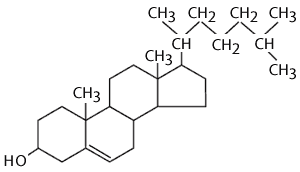
cholesterol chemical structureDrug treatments that raise the “good” high density lipoprotein (HDL) cholesterol do not improve health outcomes, according to a new analysis. But some researchers suspect raising HDL through lifestyle changes may still be effective in treating heart disease.

HDL is the form of cholesterol that actively removes dangerous lipids from the blood, and has long been thought to be protective against heart disease. This form of cholesterol is believed to work in opposition to low density lipoprotein (LDL) cholesterol, which is strongly correlated with heart disease and cardiovascular mortality. Thus the ratio of HDL to LDL cholesterols is often considered the most important indicator of heart disease risk.

Strong clinical evidence shows that LDL lowering drugs like statins can protect against heart disease and cardiovascular mortality. However there is still no effective way of improving cardiovascular outcomes by directly targeting HDL cholesterol.

Pharmacological treatments that raise HDL cholesterol levels include fibrates, niacin and a Pfizer drug called Torcetrapib. However, trials that tested these drugs for improved cardiovascular outcome have yielded mixed results. Rather than lowering mortality risk, evidence suggests that fibrates and Torcetrapib actually increase mortality in patients. Some trials have shown niacin to be effective at reducing cardiovascular events, but the data are inconsistent.

A new meta-analysis published in the British Medical Journal asked whether pharmacological treatments that are known to raise HDL can improve cardiovascular outcomes. After adjusting for several known confounders (including the effect of LDL cholesterol) pharmacological treatments that raise HDL were not effective at protecting against heart disease.

Does this mean that HDL is not important for heart disease? Not necessarily.

The original studies that implicated HDL in heart protection were observational. For example, it was shown in the Framington Heart Study that people with HDL levels greater than 60 mg/dL have a reduced risk of heart disease compared to individuals with lower HDL. Likewise, individuals with less than 40 mg/dL of blood HDL are considered at risk for coronary heart disease, even when LDL cholesterol is relatively low.

Additionally, lifestyle choices that contribute to raising HDL are associated with a lower risk of heart disease. Examples of these are physical activity, weight loss, not smoking, increased omega-3 fatty acid consumption, decreased trans fat consumption, alcohol consumption and dietary soluble fiber. Also, diets low in saturated fat but relatively high in unsaturated fats have been shown to raise HDL and decrease heart disease risk.

All these HDL raising activities can improve cardiovascular outcome. However, this does not mean that HDL itself prevents heart disease. Rather, it seems to be a good biomarker (observational correlate) of heart disease.

Why are pharmacological methods of raising HDL not helpful (and possibly even harmful) at treating heart disease?

One possible explanation for this discrepancy is the observation that HDL has different forms, some that are protective and others that are harmful. For instance, some interventions may raise HDL cholesterol by limiting its breakdown (harmful), while others raise it by increasing HDL production (more beneficial). Also, some methods that increase HDL do so in a way that creates new problems, such as increased blood pressure.

The complex interaction between pharmacological interventions, HDL metabolism and cardiovascular outcome may have made it difficult to detect any benefit of raising HDL cholesterol in this meta-analysis. Since pharmacological intervention for raising HDL does not consistently help (and sometimes harms) cardiovascular outcome, lifestyle changes remain the most promising target for raising HDL to protect against heart disease.

Anyone want to guess how high my HDL cholesterol is??

Tags: , , , , , , , , , , , , , ,